

In a year when Israel is grappling with a complex security reality marked by sirens and uncertainty, some have chosen to come precisely now — not out of necessity, but out of a deep sense of belonging.
Penina Zeitchik, 87, and Helen Charash, 94, both Holocaust survivors, immigrated to Israel in recent months. They arrived with the assistance of Nefesh B’Nefesh, in cooperation with the Aliyah and Integration Ministry, the Jewish Agency, Keren Kayemeth LeIsrael and JNF-USA, after entire lifetimes abroad.
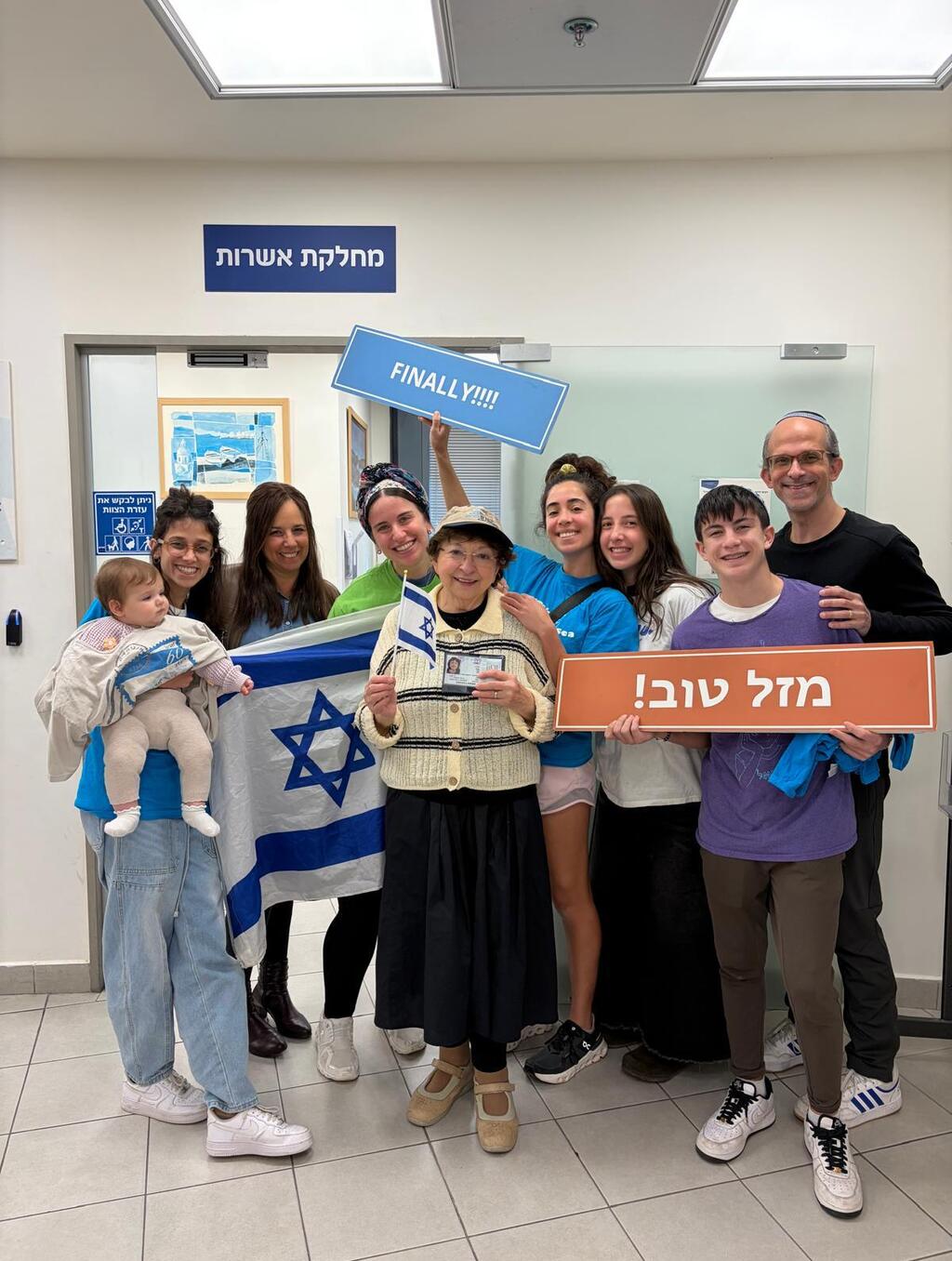
For them, aliyah — immigration to Israel — is not just a geographic move, but the closing of a circle spanning decades, even the late fulfillment of a childhood dream.
A life that took a different path
Zeitchik’s story begins with a childhood shaped by flight and survival. She was born in Czechoslovakia, and during World War II her family was forced to flee repeatedly, living as refugees under harsh conditions of scarcity and hardship. They eventually reached Uzbekistan.
“Food was very limited,” she recalled. “People stood in long lines to receive small portions.”
Amid that reality, small moments left lasting impressions. “My mother sent me to an older woman, and I remember she made something square and flat with holes … only years later did I understand it was matzah,” she said, referring to the unleavened bread eaten during Passover. “That memory stayed with me my whole life.”
As a child she saw and experienced much, but also learned how to cope. “My parents didn’t focus on the hardships. The difficulty was there, but it didn’t define everything. The family stayed together and kept a positive outlook, and that shaped our experience.”
After the war, the family moved to a displaced persons camp in Berlin, where emissaries asked children whether they wanted to go to Palestine, then under British rule. “I was always the first to raise my hand, even though I was only 8,” she said. “For me it was obvious. I wanted to go to Palestine.”
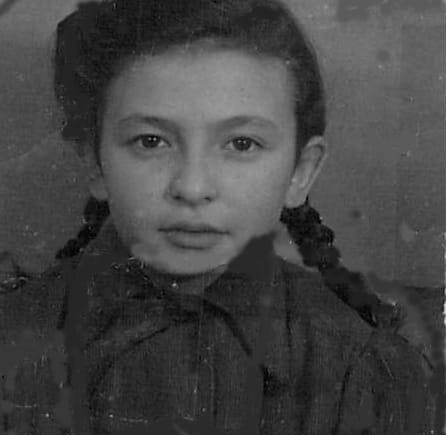
Penina Zeitchik in the displaced persons camp
(Photo: Courtesy)
But life took her in a different direction. The family immigrated to the United States aboard an American military transport ship and settled in Brooklyn, where Zeitchik built her life, became an educator and taught for three decades.
Still, her connection to Israel and to Hebrew remained strong. “When I arrived at the displaced persons camp, I didn’t even know the alphabet, but I quickly fell in love with Hebrew. The dream of reaching Israel stayed with me all those years. I remember writing to my uncle in Israel: ‘My parents are taking me from one exile to another. I only want to reach Palestine.’ Only now, decades later, that dream has become reality,” she said.
'I feel fortunate'
About a year ago, Zeitchik’s husband, Rabbi Nehemiah, died, and she decided to bring him to be buried in Israel. “My late husband was originally from Jerusalem,” she said. His mother Alta and two siblings — 11-year-old Zvi Akiva and 6-year-old Yocheved — were killed in shelling during Israel’s War of Independence in 1948.
“Afterward, his father immigrated with the remaining children to the United States. He grew up there and built his life, but always dreamed of returning to Israel. We talked about it over the years, but didn’t carry it out.”
After her husband’s death, and as her youngest son and his family — including grandchildren and great-grandchildren — moved to Israel, she felt the time was right. “I waited a long time for this,” she said. “I decided to fulfill both our dream and make aliyah.”
The security situation did not give her pause. “I didn’t think twice before coming,” she said. “I’ve been through harder things in my life.”
She now lives in Hashmonaim, near her son, surrounded by a large family: seven grandchildren and 12 great-grandchildren, while two other children remain in the United States.
“I feel fortunate,” she said. “There is a good community here and excellent services for seniors, and I try to stay busy.”
Zeitchik completed her immigration process in February 2026. “It feels like a miracle,” she said. “My grandfather was murdered in the Holocaust along with other family members. When I think about what happened over the generations and that we are here today, in our own country, it is beyond words.”
Her message to younger generations is clear: “I would like young people to understand how important it is to be Jewish. We are living in a very special moment in our history, but it requires commitment and hard work. Above all, it’s important to appreciate what we have and not take it for granted. I hope future generations will see it as a gift, build strong families, live meaningful lives and preserve what they have.”
'Everything pales in comparison to what I went through'
Charash’s story also begins with a childhood abruptly interrupted. She was born in Hamburg and, at just 5 years old, was sent with her sister on the Kindertransport to the Netherlands, separated from their parents. “We were very young children — I was 5 and my sister 2 — and we left Germany alone,” she said.
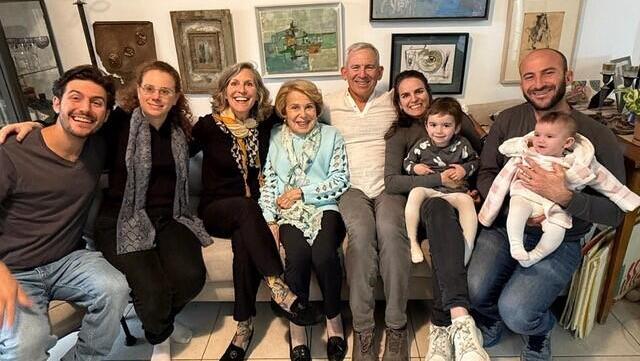
Helen Charash and her family in Israel
(Photo: Courtesy)
In the Netherlands, the sisters were cared for by nuns until the family was reunited. They later moved to London and eventually to the United States. Her father, a lawyer, documented those years in diaries.
“I’ve read the documents many times,” she said. “They help me better understand what we went through.”
Her sister, Eva Hesse, later became a well-known artist whose work is displayed in major museums, including the Israel Museum, the Tel Aviv Museum of Art, the San Francisco Museum of Modern Art and the Museum of Modern Art in New York.
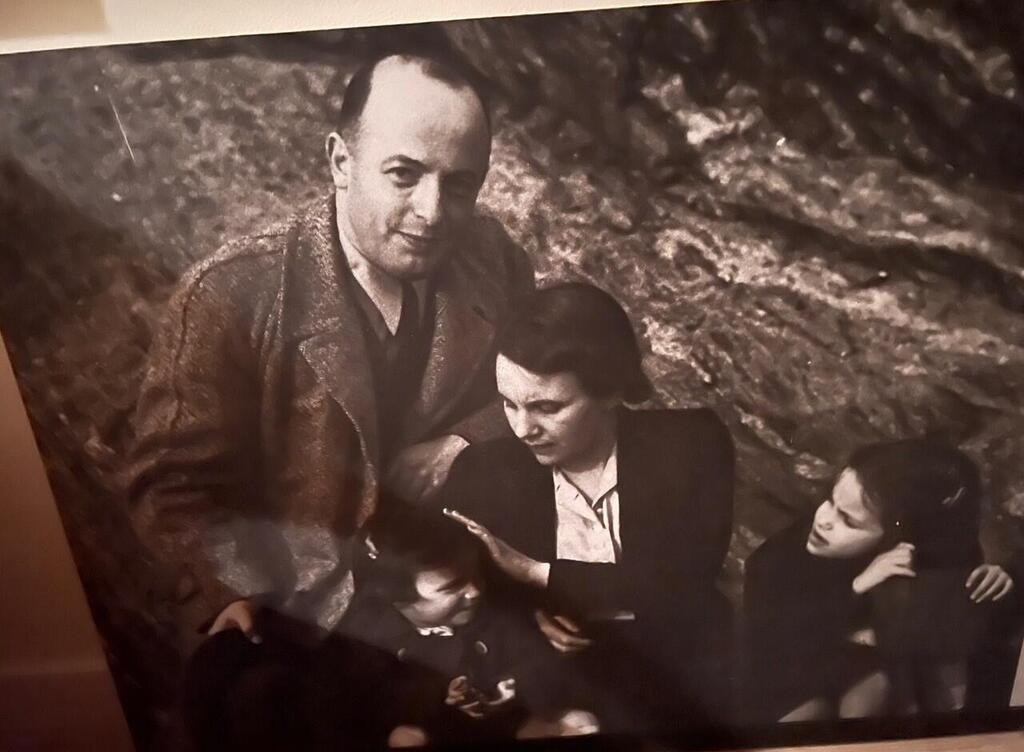
Helen, her sister and her parents after arriving in America
(Photo: Courtesy)
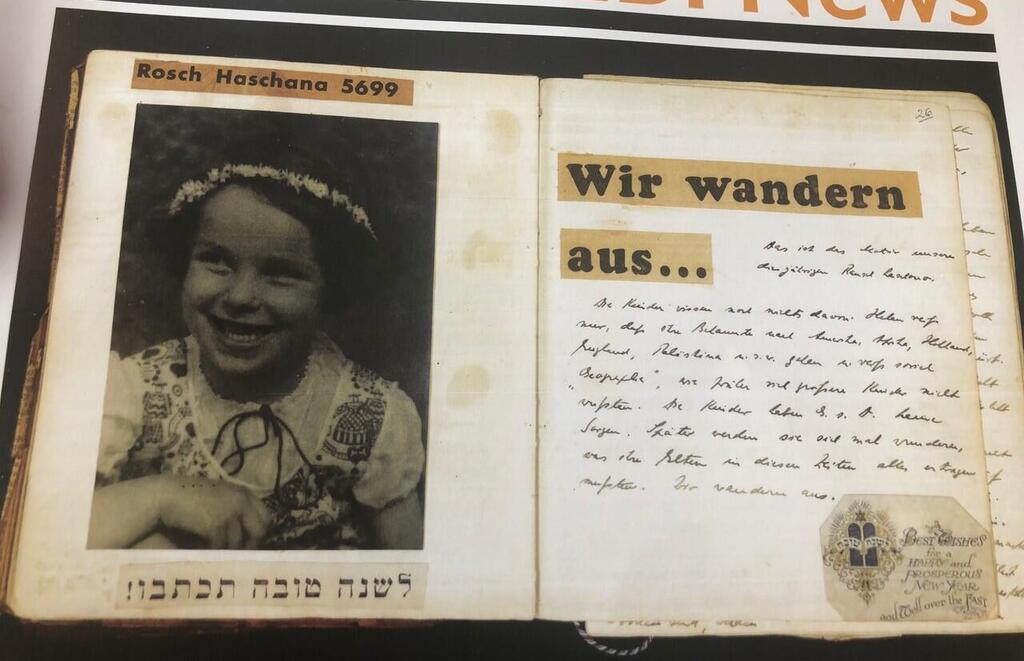
Helen Charash during her immigration to America
(Photo: Courtesy)
Charash built her life in the United States, but after her husband died in 2019, she found herself alone. “My husband was born in Palestine and always wanted to return to Israel,” she said. “He grew up in the United States and built his life there, but he dreamed of going back. We talked about it, but didn’t carry it out.”
After his death, she faced growing loneliness. “I had friends, but not family. My family is here. I wanted to be with my children, grandchildren and great-grandchildren.”
Of her decision to immigrate, she said: “There wasn’t a single moment when I said, ‘Now,’ but once I started thinking about it seriously, it happened quickly — in less than a year.” She moved to Israel in September 2025 and now lives in Jerusalem. Despite the complex security situation, she said her sense of safety has not been shaken.
“It’s hard for me, like it is for everyone,” she said, referring to sirens and tension, “but compared to what I went through — fleeing Nazi Germany and the antisemitism in the world — everything pales in comparison.”
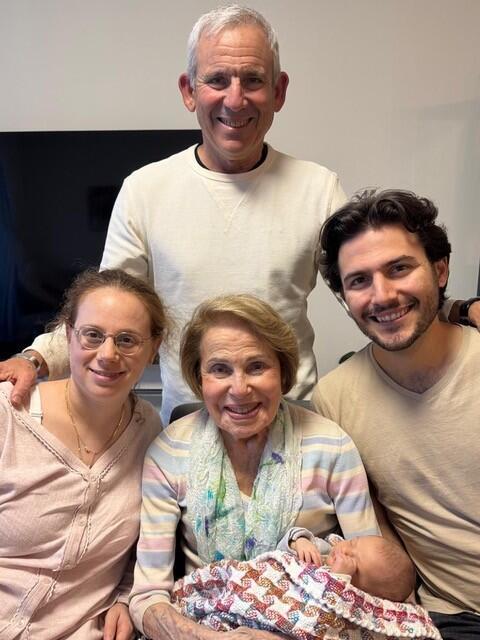
Helen Charash, her son, her grandson and his wife with the new great-granddaughter
(Photo: Courtesy)
Her main difficulty is the language. “I don’t read or write Hebrew, and that makes daily life harder,” she said. “But it has nothing to do with the decision to come. I don’t regret it for a moment.”
She summed up her choice in a single sentence: “Antisemitism frightens me more than sirens. Here, in Israel, I feel safe.”
For Charash and Zeitchik, aliyah is not only a move to a new place, but also a long-delayed answer to a question first asked in childhood: where they belong. Their personal stories take on broader meaning on Holocaust Remembrance Day.
Rabbi Yehoshua Fass, Co-Founder & Executive Director of Nefesh B’Nefesh, said: “On Holocaust Remembrance Day, we remember the horrors and the unimaginable loss, but also the strength of the human spirit and the ability of the Jewish people to rebuild. The stories of Penina and Helen prove that it is never too late to choose life and fulfill a dream, even in the face of today’s complex reality. For them, making aliyah is a double victory: a victory over those who tried to destroy them and a victory of life, renewal and hope as Jewish citizens of the State of Israel.”
First published: 11:26, 04.14.26