

Until recently, the story of Leokadia Justman seemed fairly typical for a Jewish woman born in Poland in 1922: a liberal family, a childhood in Lodz, deportation to a ghetto after the Nazi occupation and escape with her parents from the Warsaw Ghetto. Later, her mother volunteered to go to Treblinka in an attempt to save her daughter’s life. In March 1943, Leokadia fled with her father to Tyrol in Austria, using forged papers identifying them as Catholic Poles.
Leokadia and her father lived for a full year under assumed identities as forced laborers, until a local resident informed the Gestapo. Her father was murdered at the Reichenau camp, and she was imprisoned at the Innsbruck police station, whose officers refused to hand her over (In 1980, five police officers from the station and three women from the city were recognized by Yad Vashem as Righteous Among the Nations).
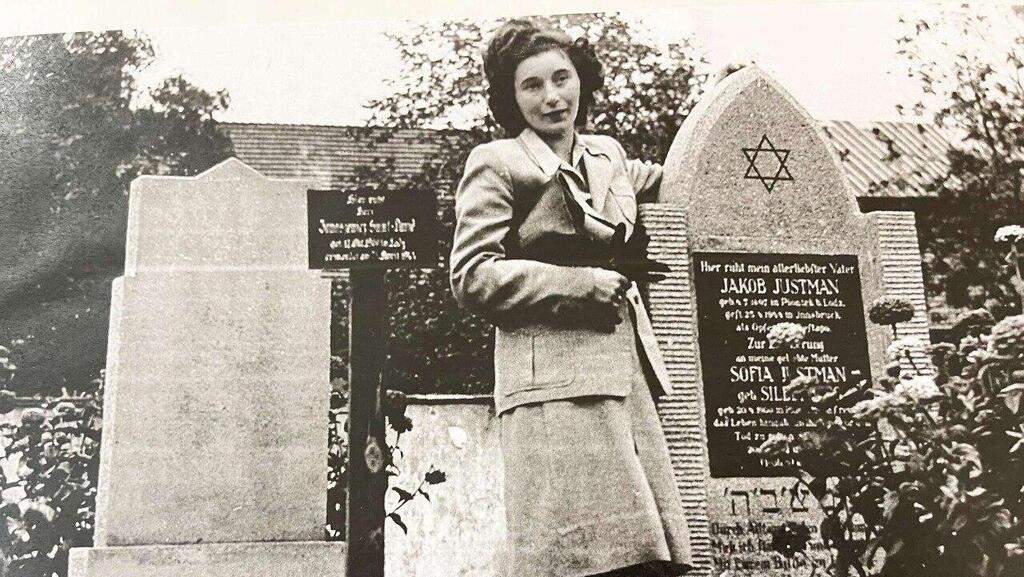
After the prison was bombed by American aircraft, Leokadia escaped in January 1945 with her friend Marysia Fuchs, just before the final transport to the Ravensbrück concentration camp. She survived the war, returned to Innsbruck, became the first secretary of the Jewish committee and married Josef Wisnicki, a Jewish refugee who, like her, survived thanks to forged documents and help from local residents. The two were married on September 16, 1946, in the first Jewish wedding in the city after the war, attended by several members of the underground who had helped them escape. In 1950 they immigrated to New York. Leokadia died in Florida in 2002.
In 2016, Martin Tyler recalled a single scene from his parents’ home, even though he was only 3 at the time: Gestapo officers storming into the house and arresting the father and daughter who had been hiding there. Years after the war, “Lotte,” as Tyler called her, never left his mind.
He approached a friend who worked at the Innsbruck city archive and asked him to investigate her story. The archivist sought help from a historian and a theologian, who enlisted their students and two retired police officers to research the case. They eventually located Jeffrey Wisnicki, Justman’s son, in Florida and discovered that she had written her memoirs shortly after arriving in the United States. The memoirs were later translated and published as a book, "Brechen wir aus!" (Let's Break Out).
The book was translated into German and accompanied by an exhibition in Innsbruck. It offers a harrowing account of the persecution of the Jews, the flight of Leokadia and her father, Jacob, and the collaboration of local residents. But alongside them were citizens who refused to cooperate with Hitler, despite having sworn loyalty to him. These individuals showed humanity and compassion toward her and toward other Jews under nearly impossible circumstances.
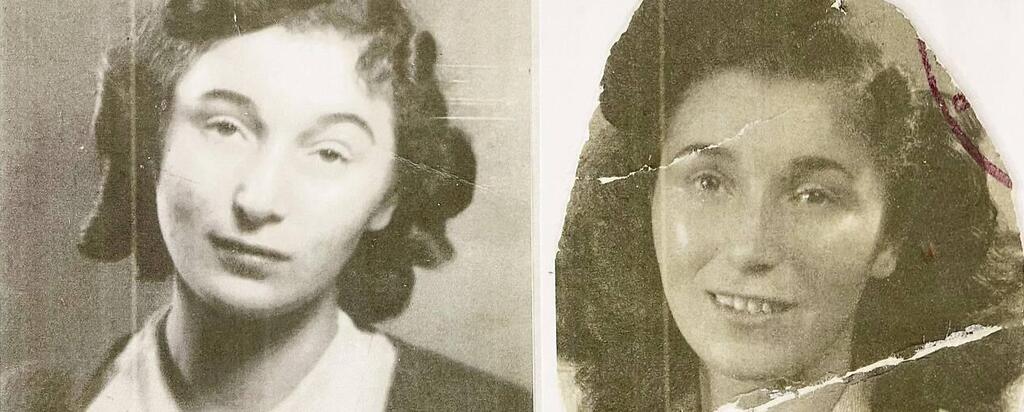
Leokadia Justman
(Photo: Photo: Innsbruck City Archives/ORF)
The book also records the final words of her mother, Sofia, to Leokadia after volunteering to board a transport to the extermination camp in order to save her daughter: “My dear, you are everything to me. My future. You must survive. This wish of mine is stronger than my wish to live. I trust your father to pave your way to a safe place. I gave you life, my little girl, and I want that life to continue.”
Research into Justman’s life uncovered 15 additional poems she wrote, some of them while she was imprisoned. The young Jewish woman described the daily lives of the women in prison, including during her escape from the Innsbruck jail. At first, she wrote the poems on the walls of her cell, but Wolfgang Neuschmidt, the station commander, told her this violated regulations and brought her a notebook in which she could write her poems, even though that too was against the rules.
The newly discovered poems describe the hardship and oppression of imprisonment, a longing for peace and freedom, mourning for her parents and a sense of orphanhood, the cruelty of some guards and reflections on faith and God. All of them are marked by an intense optimism despite the circumstances in which they were written. The research found that the poems were written in German rather than her mother tongue, out of fear of the guards, and that she had planned to publish them immediately after the war. No one in Austria showed interest at the time.
Eighty years later, Leokadia Justman is finally receiving the recognition she deserves, for her life story and for her parents. In Vienna, she is already being called “the Austrian Anne Frank.”