


When Israeli filmmaker Sharon Pais sat across from hundreds of Holocaust survivors while recording their testimonies for Yad Vashem, Israel's Holocaust remembrance center, she listened not only to names, places and dates. She paid attention to the smallest details, the expressions in their eyes and the objects they had held on to through years of unimaginable suffering. With more than three decades of experience as a director, cinematographer and editor, she came to believe that preserving these memories was no longer enough. The challenge was finding a visual language powerful enough to make younger generations stop scrolling, listen and feel.
As the generation of Holocaust survivors dwindles, the opportunity to record firsthand testimony is rapidly disappearing. That realization inspired Pais to create "Pieces of the Heart," an independent documentary animation project consisting of short films, each approximately five minutes long, that tell stories of survival through the personal objects Holocaust survivors preserved. Rather than relying on conventional historical narration, the films bring these keepsakes to life through animation and the survivors' own recorded voices.
Sketch from Romek's Curl
(Video: courtesy of Sharon Pais)


The project, which received initial development support from the Yehoshua Rabinovich Foundation for the Arts, is now in advanced production. A crowdfunding campaign on Giveback is seeking funding to complete the animation, original musical score and sound design.
"Most of the Holocaust survivors we document today are around 90 years old, people who were very young children during the war," Pais explains. "When I meet them, I always ask why they decided to give their testimony only now. Many tell me they agreed because a grandson or granddaughter insisted. Their own children found it difficult to hear these stories, and the survivors remained silent. It's the third generation that manages to gently open the door to testimony, which is itself an extraordinarily difficult emotional step for survivors."
Those grandchildren, she says, along with the fourth generation of Holocaust descendants, are the primary audience she hopes to reach. For Pais, animation offers a way to bridge the emotional and generational distance separating today's young people from events that took place more than eight decades ago.
"Animation is a powerful, sensitive and accessible way to tell a complex and painful story," she says. "The goal isn't to teach theoretical history but to create an immediate human connection. An object is a physical anchor. When a teenager sees something that belonged to a child their age 80 years ago, and hears the survivor's actual voice explaining how that object was the only thing they had left in the world, the distance disappears in an instant."
At a time when Holocaust denial is gaining ground around the world, she believes traditional methods of remembrance must be supplemented with new approaches. "We have to find a focused, brief and emotionally compelling visual language to reach younger generations, not only in Israel," she says.
Pais has long been interested in the emotional relationships people develop with seemingly ordinary possessions. Objects, she explains, often become repositories of memory, carrying symbolic and spiritual significance long after the people or places associated with them have disappeared. Psychologists have studied attachment to possessions as a way of coping with separation and loss, allowing people to maintain a sense of connection with loved ones.
"People hold on to the intuitive belief that someone they loved remains present in an object associated with them," she says. "To me, it's a wonderful way not only to commemorate the past but also to teach respect for human dignity. Sometimes I see the belongings of an elderly person who has died thrown out onto the street, including photographs and personal objects, and it breaks my heart. People don't appreciate that these things once meant the entire world to someone, and now there's nobody left to preserve them."
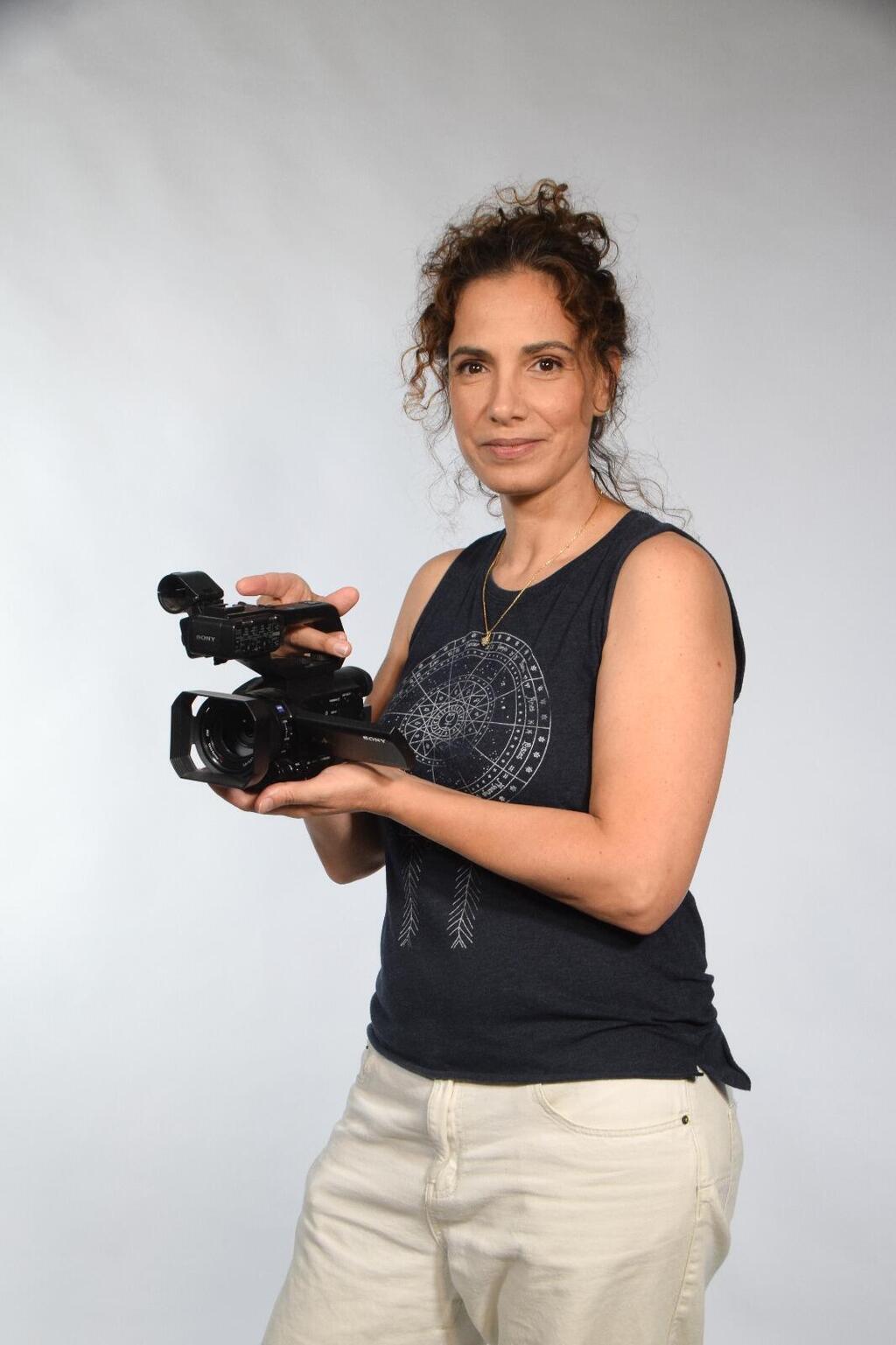
Sharon Pais
(Photo: Moshe Cohen)
The objects featured in Pieces of the Heart are not simply museum exhibits or historical documents. They are deeply personal possessions that accompanied their owners through persecution, separation and survival. Some were carried through concentration camps or hidden during desperate escapes, providing reminders of a lost home, a loved one or the possibility that life might one day begin again.
A child's curl, a wedding photograph and a silver spoon
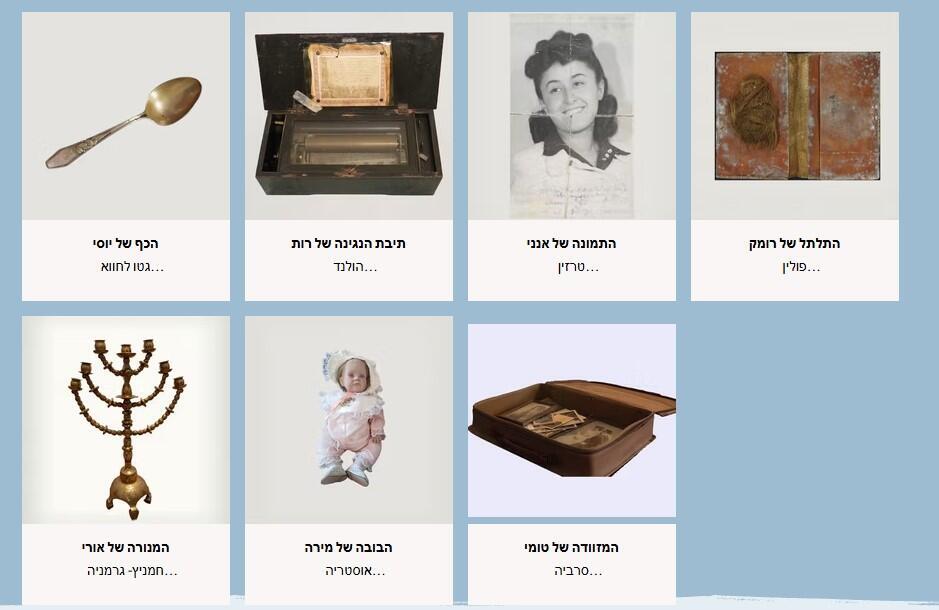
One of the most heartbreaking stories centers on a lock of hair belonging to four-year-old Romek. When Hermann Kopetz was separated from his wife and young son in the Krakow Ghetto, a farewell from which neither would return, he cut a small curl from his son's hair. He carried it throughout his imprisonment in Auschwitz, through a death march and for the rest of his life. The fragile keepsake became a silent symbol of love and grief, passed down through the family as a sacred link between generations.
Another film follows Ruth's music box, a treasured family possession handed down from mother to daughter in the Katz family. Ruth grew up listening to its melodies before the Holocaust shattered her childhood. Years after surviving Bergen-Belsen, she returned to her childhood home in the Netherlands, knocked on her former neighbors' door and demanded the return of the music box that had been taken from her. Reclaiming it meant recovering not only a family heirloom but also the familiar sounds of a childhood stolen by the war.
Sketch from Yossi's Spoon
(Video: courtesy of Sharon Pais)
Then there is the photograph Pavel Pisk called his "mezuzah." Just three days after marrying Annie, Pavel was deported to Auschwitz. Determined to preserve her image, he smuggled a small photograph of his bride into the camp by hiding it in his mouth, later keeping it concealed inside his sock. The photograph survived with him, offering a connection to love, hope and the life the Nazis sought to erase. He described it as his mezuzah, invoking the small religious object traditionally affixed to Jewish doorposts, which for him symbolized a sacred connection to the world beyond the camp.
Another episode focuses on a silver spoon that survived the destruction of an entire family's possessions. Yossi Chen was just five years old during the uprising in the Lakhva Ghetto, when he escaped with his family and spent years hiding and struggling to survive in the forests. After liberation, he returned with his father to the ghetto to dig up belongings they had buried before fleeing, including a set of family silverware. Today, only a single spoon remains, a tangible reminder of courage, survival and a childhood forever changed by the Holocaust.
Other planned episodes will explore Tommy's suitcase, discovered as a rare time capsule containing family photographs preserved from the years before catastrophe engulfed Europe, and Mira's doll, which belonged to a young girl who loved playing with dolls. Her story, Pais says, carries a message of hope, healing and reconciliation. Each episode will have its own distinctive visual style, shaped by the personality of the survivor and the emotional significance of the object.
Alongside traditional animation and documentary techniques, Pais is incorporating advanced artificial intelligence tools into the production process. She views the technology not as a gimmick but as a new artistic instrument capable of translating memory, pain and hope into images.
Sharon Pais explains her project, Pieces of the Heart
"Technology is developing at an extraordinary pace, and the quality improves every day," she says. "It allows us to create an artistic language that respects the original material while speaking to contemporary audiences."
Her ambitions extend far beyond the initial series. "My project is endless because there are so many objects waiting to tell the stories of Holocaust survivors," she says. "My dream is for the project to be displayed in every Holocaust museum in the world and distributed on every possible platform so it can reach young audiences. And of course, I would love for it to become part of the education system."
For Pais, the urgency is both personal and historical. The survivors who can still explain the meaning behind these objects are growing older, and with every passing year, another firsthand voice is lost. The objects may endure, but without the stories attached to them, much of their meaning could disappear.
"We are living through a moment when the responsibility is passing to us," she concludes. "If we don't learn how to tell their stories in a language our children and grandchildren understand and connect with, the memory will simply fade. These objects survived the horrors so that we could continue telling their stories."