


Ultra-Orthodox women in the United States have launched an unusual coordinated social media campaign in recent days under the hashtag #FREEADEENA, aimed at putting public pressure on a man who has refused to grant his wife a get, or Jewish divorce, for about five years.
As part of the campaign, called “Gett Naked,” the women are posting photos on social media in which they reveal parts of their bodies as an act of protest against get refusal.
Gallery
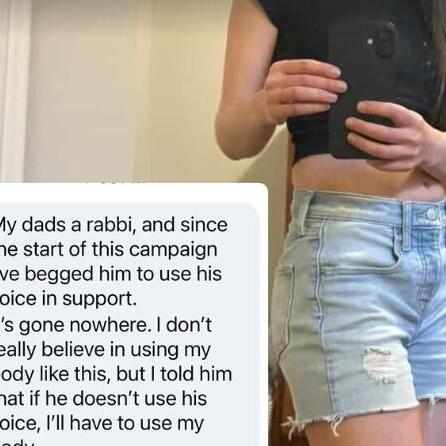
One of the women who identified herself as the daughter of a rabbi(
(Photo: Instagram, Section 27A)
The campaign is led by social activist Adina Sash, who in recent years has worked in the United States on behalf of agunot — women trapped in marriages because their husbands refuse to grant them a get, or a Jewish religious divorce. Unlike in Israel, rabbinical courts in the United States do not have the authority to impose significant sanctions on men who refuse to grant a get, so the struggle is waged mainly through social and communal pressure. But activists say that in many cases, the community itself protects the refuser rather than pressuring him.
The current case concerns Raphi Stein, who activists say has refused to grant his wife, Adeena, a get for about five years. They say that, while refusing to release her, he also has acted publicly against his wife and portrayed her negatively, while receiving some support from those close to him. According to the women, conventional demonstrations and protests failed to produce a breakthrough, leading them to adopt a sharper and more provocative form of protest.
As part of the campaign, ultra-Orthodox women have been posting photos in recent days showing parts of their bodies that are usually covered in ultra-Orthodox society. Some women chose to reveal their hair, others an arm or shoulder, and some posted bolder images. Some photos were taken in symbolically significant places, including mikvehs, Jewish ritual baths.
The images appear alongside the hashtag #FREEADEENA, which has stirred heated debate in Jewish communities in the United States in recent days. The campaign’s organizers say the shock it has generated shows how much more the public is preoccupied with bodily modesty than with the reality of women trapped in marriages.
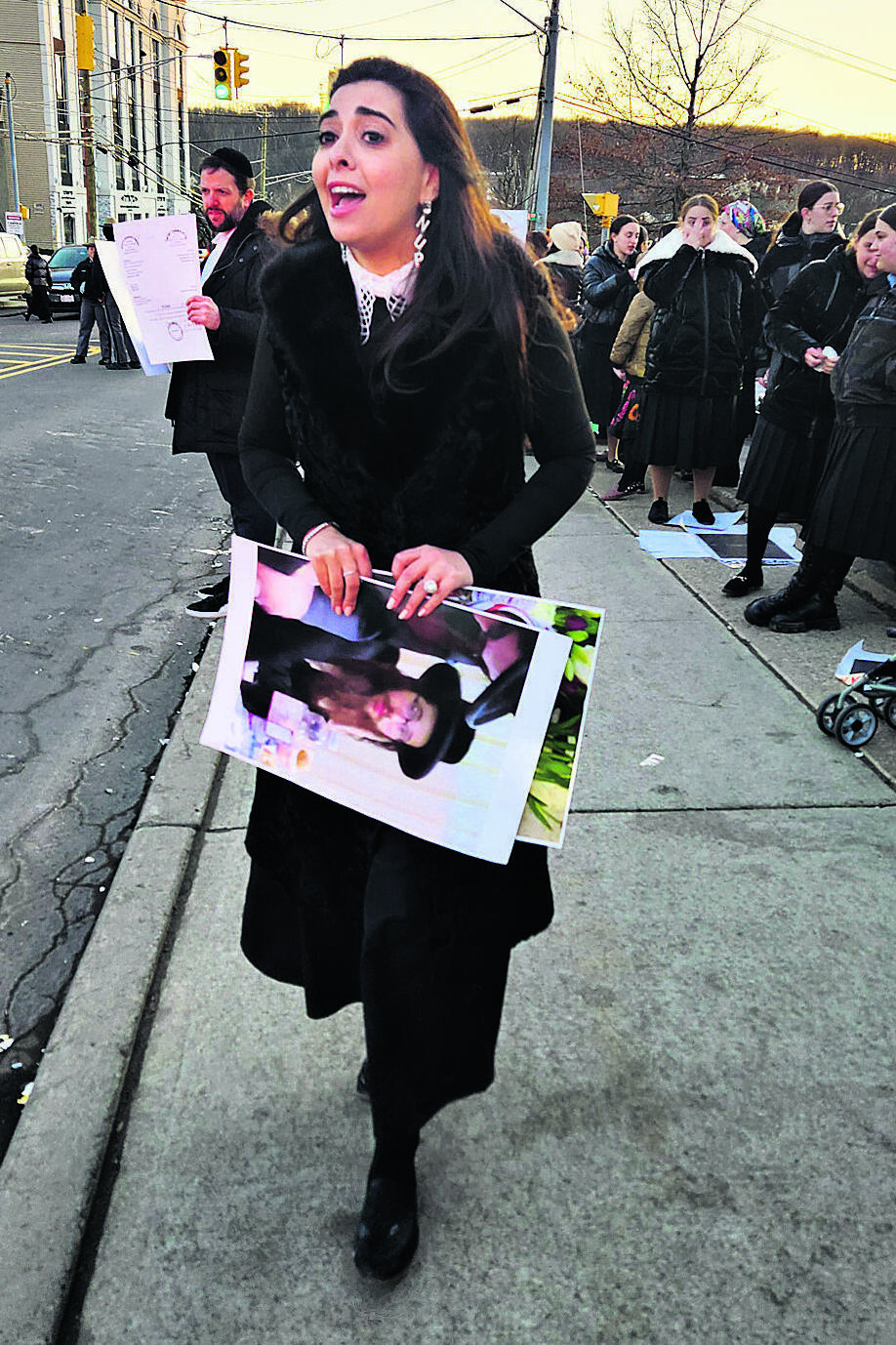
Adina Sash at a previous protest on behalf of an agunah
(Photo: Courtesy of Adina Sash)
“The fact that people are more shocked by the protest than by the agunah situation itself is exactly the problem,” the activists said. They said that had the community treated the violation of women’s freedom with the same severity, such extreme steps would not have been necessary.
This is not the first time Sash has led an unusual protest over get refusal. In 2022, she was behind another campaign that caused an uproar, in which ultra-Orthodox women called for a sex strike in solidarity with a woman who had been trapped in her marriage for four years. She also faced sharp criticism then, but supporters said the campaign succeeded in bringing the issue into public debate and ultimately ended with the granting of a get.
The activists now hope the current campaign will lead to a similar result. “Get refusal is not only a women’s problem,” participants in the campaign said. “It is the responsibility of the entire community.”

Photo and message in support of the agunah Adeena
(Photo: from Instagram; Section 27A )
Alongside public protests, Jewish law also includes traditional tools meant to deal with men who refuse to grant a get. These include “Rabbeinu Tam’s sanctions,” a series of social penalties intended to isolate the refuser from the community, including avoiding social and business ties with him, not inviting him to events and sometimes denying him honors in synagogue, such as reading from the Torah, being called up to the Torah, reciting Kaddish and delivering sermons or lectures on Torah topics.
In Israel, legal sanctions can also be imposed in some cases through rabbinical courts, but in the United States, the power of Jewish courts is significantly limited. As a result, enforcement depends largely on public and communal pressure. Activists say that when the community chooses not to use those tools against the refuser, many women remain agunot for years.
Ultra-Orthodox social activist Tzipi Lavi praised the protesters. “I think it is very difficult for an ordinary person to understand how much courage and inner strength are required for an ultra-Orthodox woman to photograph and distribute an exposed picture of herself," she said. "Here we have a number of women who did this for another woman. This sisterhood is very special. The saddest thing in this story is that history is repeating itself. It is a disgrace to the entire community that women have to undress or refuse sex for men to care about them.”