

Israel’s Jewish public continues to embrace the basic framework of Yom Kippur, including fasting, avoiding driving and maintaining the day’s traditional quiet, even among people who do not plan to attend synagogue, according to a new survey by the Tzohar Index for Judaism and Tradition, conducted with the Mashav channel ahead of the High Holy Days.
The survey found that 61% of respondents plan to fast this Yom Kippur, including 54% who intend to observe a full fast and another 7% who plan to fast partially. Among respondents who own a car, 96% said they do not intend to drive on the holiday. In addition, 46% of all respondents said they plan to attend synagogue, while 51% said they intend to donate to charity before Yom Kippur.
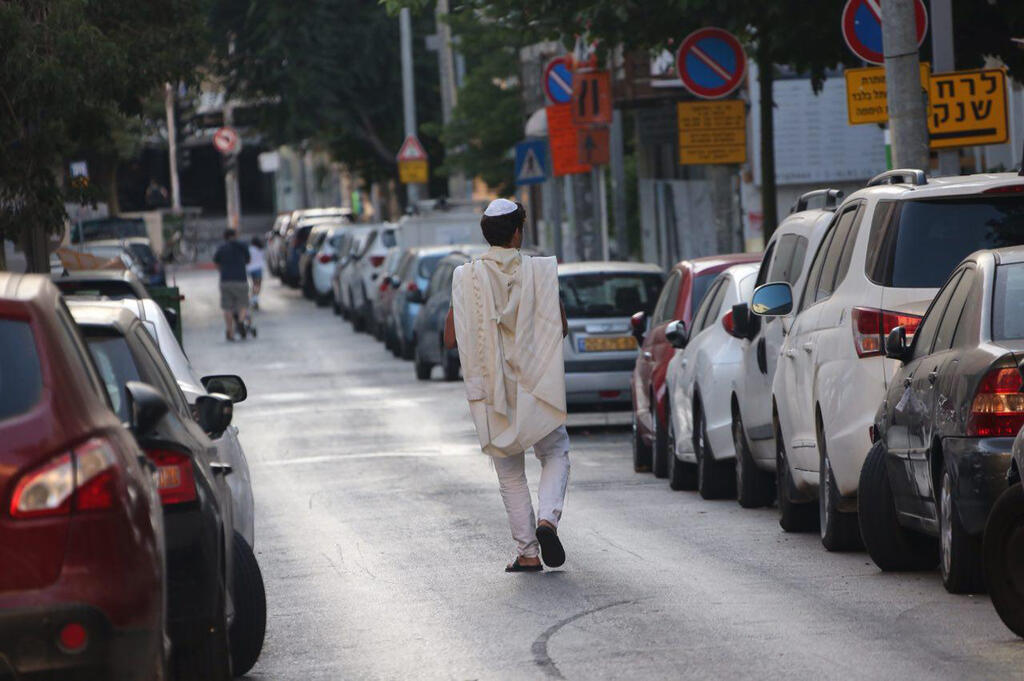
(Photo: Moti Kimchi)
The data also showed differences between Jewish communities. Among Mizrahi and Sephardic respondents, 68% said they plan to observe a full fast, compared with 48% of Ashkenazi respondents.
The survey was conducted in late August 2026 among 1,330 Jewish Israeli adults aged 18 and over who use the internet. The sample was designed to represent Israel’s adult Jewish population, with a margin of error of 2.7 percentage points at a 95% confidence level.
Yom Kippur’s distinctive place in Israeli life is particularly evident among those who define themselves as secular. Among secular car owners, 92% said they do not plan to drive on Yom Kippur. At the same time, 34% said they expect to fast, including 24% who plan a full fast and 10% a partial one. Only 14% said they intend to visit a synagogue.
Part of that gap may reflect discomfort in religious spaces. Among secular respondents, 51% said they do not feel comfortable in a synagogue, including 26% who said they do not feel comfortable there at all. Yet only 5% said they plan to participate in public prayer events outside traditional synagogue settings.
Instead, secular respondents described a largely private, home-centered Yom Kippur. Sixty-one percent said they plan to rest or sleep, 55% to read, 54% to watch content on a computer or phone, 44% to take walks or meet neighbors and friends, and 31% to play board games.
Only 22% said they expect to do household chores and just 9% said they plan to perform work-related tasks.
The findings suggest that even among Jews who neither fast nor pray, Yom Kippur is still rarely treated as an ordinary weekday. For many Israelis, the holiday remains a national and cultural pause as much as a religious one.