

A group of prominent New York rabbis urged Mayor Zohran Mamdani to reconsider how he speaks about Israel, warning in a private City Hall meeting that his rhetoric is contributing to a climate in which many Jewish residents feel increasingly vulnerable.
The hourlong discussion, convened Monday by the Mayor’s Office to Combat Antisemitism, brought together 10 Reform, Conservative and modern Orthodox rabbis for what participants described as a candid but respectful exchange.
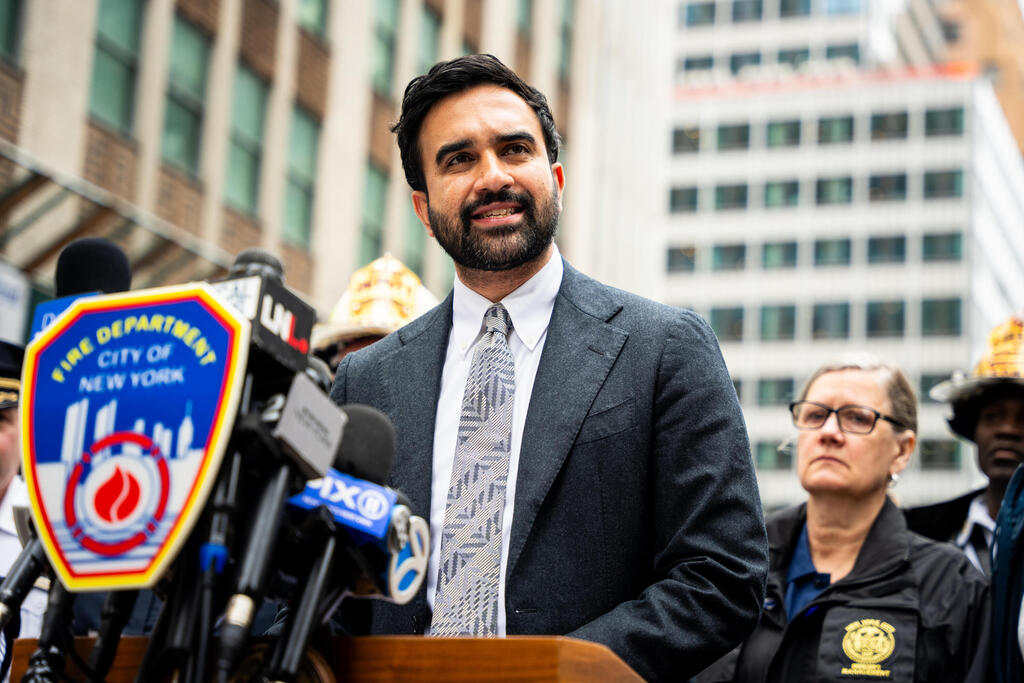
New York City Mayor Zohran Mamdani
(Photo: Angelina Katsanis/AP)
According to The New York Times, the rabbis did not present a single political position on Israel. Some urged Mamdani to soften his criticism, while others said they would prefer that he stop focusing on Israel altogether and concentrate on issues under his authority as mayor.
Others defended his right to criticize Israel and Prime Minister Benjamin Netanyahu but urged him to do so with greater nuance, including by condemning Hamas more consistently and making clear that American Jews should not be held responsible for the actions of the Israeli government.
Rabbi Rick Jacobs, president of the Union for Reform Judaism, said he told Mamdani that the mayor himself had enormous power to change the atmosphere.
“I’m happy to work in partnership with your administration, but Mr. Mayor, you are 90 percent of what could be different here,” Jacobs recalled telling him.
“If instead of vilifying Israel, you spoke constructively, in measured tones, that would move the needle more than anything else, and I’m hopeful you’ll use that power.”
Despite their differing views, participants shared a sense that Mamdani’s relationship with the city’s Jewish community needed to change, one rabbi told The Times on condition of anonymity because the discussion was private.
Mamdani, New York City’s first Muslim mayor and a longtime critic of Israel, has had an uneasy relationship with significant parts of the city’s Jewish community since taking office.
“There was no tiptoeing around the elephant in the room,” said Rabbi Jonathan Leener, who leads Prospect Heights Shul, a liberal modern Orthodox congregation in Brooklyn.
“The mayor’s comments have ramifications and he needs to be aware of how in the current climate, that just adds to the temperature and creates an environment that I think a lot of Jews feel vulnerable in,” Leener said.
Two other rabbis who attended the meeting said those concerns about antisemitism and Jewish safety were widely shared in the room.
The meeting came after Mamdani delivered a high-profile address last month denouncing Netanyahu as a “war criminal.” He later acknowledged that New York law would prevent him from carrying out a campaign pledge to arrest the Israeli prime minister.
For some Jewish New Yorkers, including those who strongly oppose Netanyahu’s government, Mamdani’s rhetoric has raised concerns that anger over Israel could spill over into hostility toward Jews in the city.
Rabbi Rachel Timoner of Congregation Beth Elohim in Brooklyn said Mamdani needed to draw a clearer distinction between criticism of the Israeli government and the treatment of American Jews.
“If he is going to criticize Israel or speak for Palestinian freedom, which I do regularly, then it really matters that there is complexity in his message,” she said.
“We can’t vote there, we don’t have any ability to change what’s happening, yet people are profiling us and spewing hate at us because they’re angry at the Israeli government.”
Timoner said she also told Mamdani that he had spoken powerfully about Islamophobia in New York after the Sept. 11 attacks and could bring the same clarity to speaking about threats against the Jewish community.
Several rabbis said Mamdani listened closely and expressed appreciation for their candor.
Phylisa Wisdom, executive director of the Mayor’s Office to Combat Antisemitism, called the discussion “open, positive and constructive.”
“Mayor Mamdani has and will continue to engage with Jewish life in New York City in order to meet the needs of our communities and reaffirm his commitment to the thriving of Jewish communities across the five boroughs,” she said in a statement.
Mamdani, a democratic socialist, rose politically through the pro-Palestinian movement. As a student at Bowdoin College, he founded a chapter of Students for Justice in Palestine and led an unsuccessful effort to persuade the school to join an academic boycott of Israel.
Since becoming mayor, he has maintained his longstanding positions on Israel even as he has moderated some of his views on other issues.
Leener, who describes himself as a Zionist and has family in Israel, said he did not attend the meeting expecting to change Mamdani’s position on the Israeli-Palestinian conflict.
Instead, he said, he wanted the mayor to focus on protecting Jewish New Yorkers, including by directing more police resources toward synagogues and other Jewish institutions.
“That should be his focus and not making comments unnecessarily about the conflict,” Leener said. “Or having a bit more nuance around it. That it’s not just good versus evil.”