


The Jewish DJ took the stage, hundreds of people began protesting and waving signs against her, bottles were thrown at the stage and the atmosphere shifted from a party to a violent and aggressive event. After 20 minutes, the DJ left the stage, the performance was stopped “for security reasons” and the protesters won — the event did not continue to the end.
It would have been possible to frame the incident as another antisemitic episode, one of many that took place in France in 2026, a country where waves of antisemitism have long since ceased to surprise. But this time, something different happened: It was an incident that managed to shake even those who had grown accustomed to a reality in which Jews are attacked for being Jewish. It was an incident that may mark the limits of protest.
Gallery
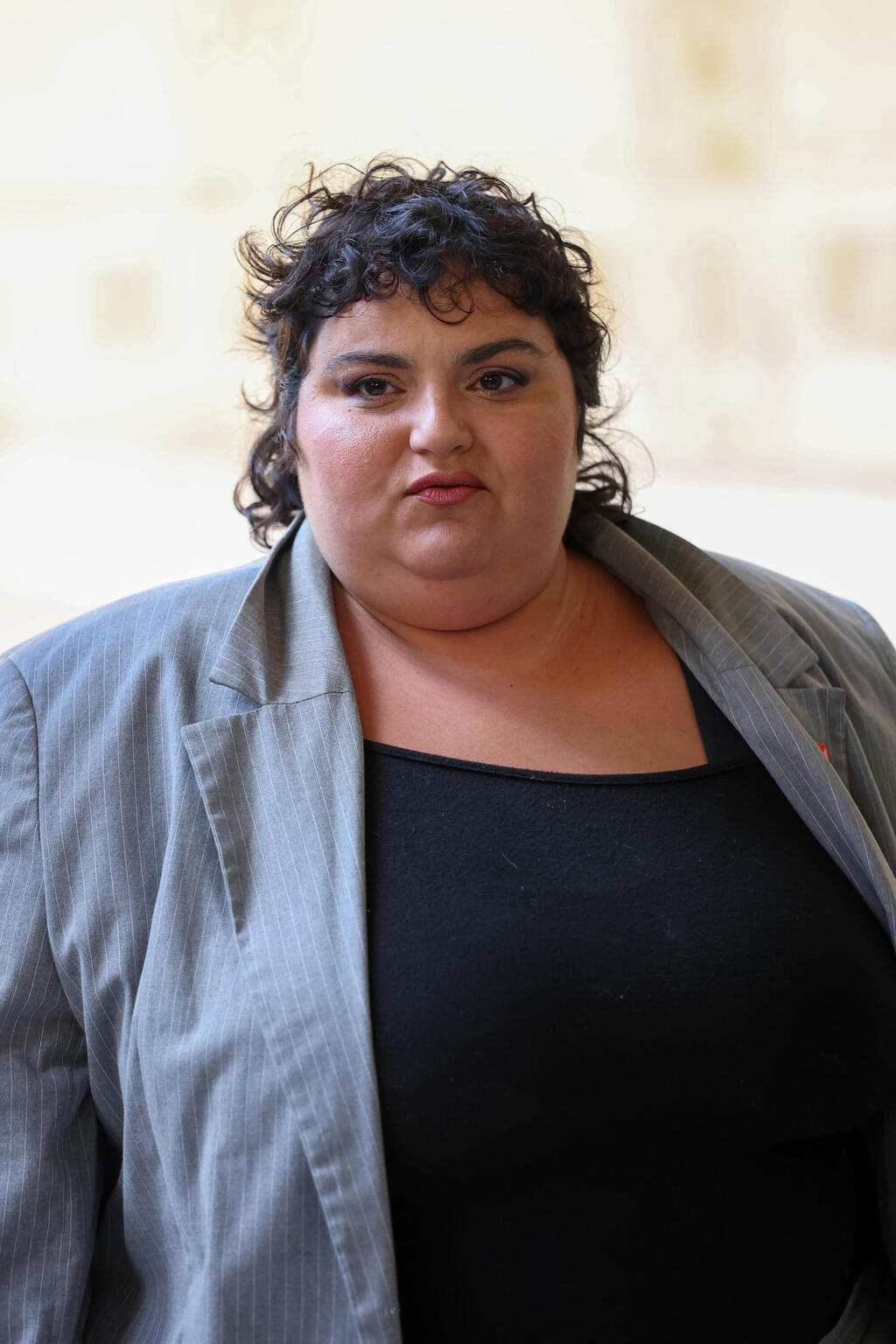
Jewish DJ Barbara Butch: 'I am French. I am not Israeli'
(Photo: Aurore Marechal / Getty Images)
Barbara Butch, the DJ who was attacked, grew up in a traditional Jewish family, the daughter of an Ashkenazi Jewish mother and a father of Sephardic Jewish origin from Morocco. She is openly lesbian, part of French nightlife and the party scene, and has relatives in Israel.
Why did the far-left activists who disrupted her performance single her out? They said she supports the State of Israel, expressed sympathy for pro-Israel legislation, performed at the Tel Aviv Pride Parade and spoke out against antisemitism in France while offering little criticism of the war in Gaza. The protesters, most of them from the far-left France Unbowed party, or LFI, claimed it was “legitimate political protest” against the artist’s positions, but for many it was clear that this was a cover for classic antisemitism. During the demonstration, glass bottles were thrown at her, and she was subjected to severe abuse and harassment on social media, including racist, antisemitic and homophobic references.
Why this could be a watershed moment
So far, everything was business as usual — people attacking Jews, finding excuses involving a connection to Israel and, along the way, trying to score more points on the political field and ride the polarization in French society. But this time the protesters may have gone too far. A wave of harsh reactions raised the basic question: Who has the right to judge artists based on their origin or opinions?
Retour de Scène, the association responsible for planning the festival, said that “canceling a performance on the basis of opinions is a serious act that would turn cultural organizations into ideological judges.” Grenoble’s deputy mayor for culture, Alexis Monge, who took the stage that evening, justified the DJ’s invitation on the grounds of “artistic and creative freedom.” French Interior Minister Laurent Nuñez condemned the interruption of the performance and wrote that antisemitism, threats and pressure have no place in the republic. A petition against the incident, published the following day, stressed that “attacking a Jewish DJ will not free Palestine.”
Footage of the violent protest and attack until DJ Barbara Butch left the stage:
Later, the echoes of the disrupted performance reached France's Parliament, the National Assembly, with great force, and the incident became the focus of a sharp and direct political confrontation between centrist and right-wing parties and the far-left party. Representatives of the center and right attacked LFI lawmakers from the parliamentary podium. They accused the far-left leadership of backing local activists who were running a “thought police” and an antisemitic targeting campaign against Jewish French citizens.
In response, the head of the LFI faction in the National Assembly, Mathilde Panot, was forced to face the cameras and criticism. Panot partially defended the protesters, arguing that it was not antisemitism and that Butch had signed a petition supporting a bill that, she claimed, was intended to silence pro-Palestinian voices.
Following the uproar in Parliament and on the French street, Culture Minister Catherine Pégard personally intervened in the incident. She met with Butch, condemned the disruption of the performance in media interviews and called the violence and throwing of objects at her “completely unacceptable in a democracy.”
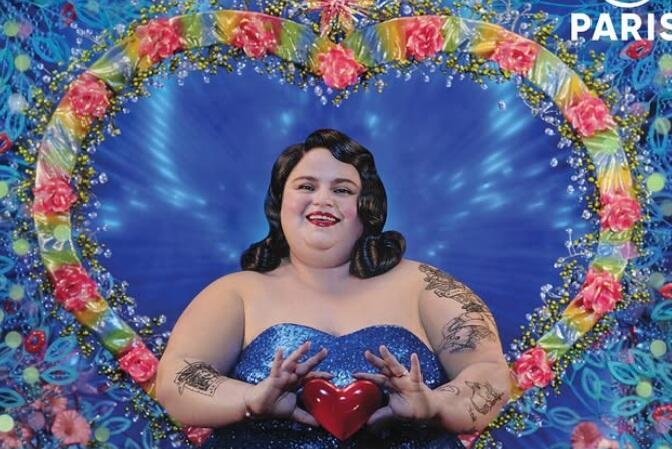
Barbara Butch is in the crosshairs of the far-left in France
(Photo: Paris festival poster)
Butch herself published an opinion piece in Le Monde two days after the incident in which she condemned “political violence” and “defamatory reactions.” She wrote: “That evening, a line was crossed. The line separating protest from coercion, disagreement from intimidation, speech from violence. They did not respond to an artist — she was expelled from the stage.”
Part of Israeli 'pinkwashing'?
The protest against Butch did not begin with the performance in Grenoble. She suffered harassment after appearing in a musical-dance segment at the opening ceremony of the 2024 Paris Olympics, which many viewers interpreted as a parody of Leonardo da Vinci’s “The Last Supper.” She stood before a long table wearing a blue dress with a large silver head covering that looked like a halo around Jesus’ head, surrounded by more than 12 drag queens on both sides of the table — something seen as parallel to the 12 apostles in Christianity. Later, a man in revealing clothing and painted blue appeared on the table in the role of Dionysus, the Greek god of wine.
Following the uproar, she herself became a target of severe attacks. Her lawyer said she was subjected to threats of death, torture and rape, and also was targeted with antisemitic, homophobic, sexist and body-shaming insults. She received “tens of thousands of hate messages,” and a special team managed to identify hundreds of people who sent the most violent messages.
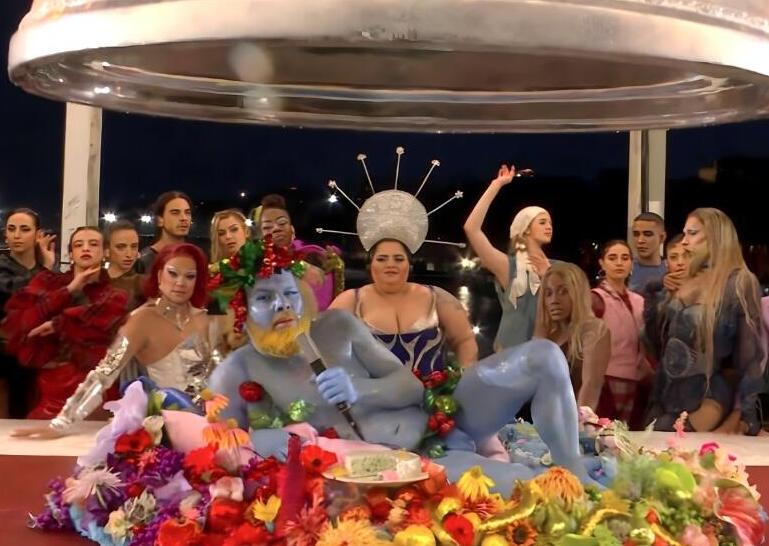
Butch (center) in a segment from the Olympics opening ceremony
(Photo: Official X page of the Paris Olympics)
That protest, which was mainly Christian and homophobic in nature, was joined by claims about “pinkwashing” — the use of a progressive and LGBTQ-friendly image to “whitewash” or distract attention from criticism of controversial policy, in this case Israel’s policy toward the Palestinians. In other words, the claim was that Israel holds the Tel Aviv Pride Parade, for example, to market a liberal image, and that it uses this to “whitewash” the war in Gaza.
A spokesperson for the Trans Solidarity Organization says the organization thinks Butch is part of this pinkwashing. “As trans activists, we are against Israeli pinkwashing. Barbara Butch has a queer image that fully serves a political agenda.”
An open letter by the group Vallées En Lutte claimed that Barbara Butch “actively supports the colonial and murderous war of the State of Israel against the Palestinians,” and called for canceling her invitations to festivals, arguing that she “serves Israeli pinkwashing,” in the letter’s words.
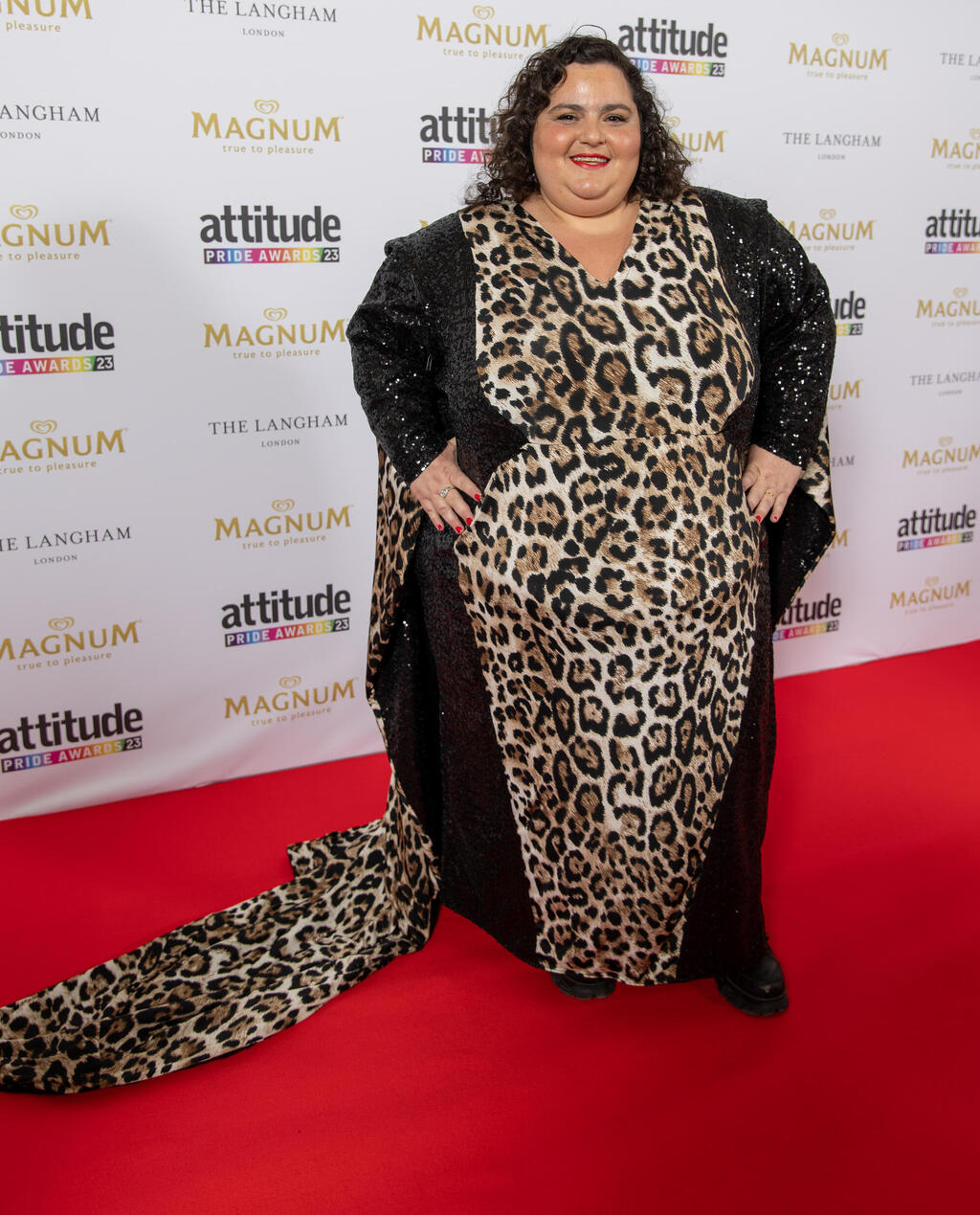
Barbara Butch: 'The anti-Zionism used in Grenoble was only a disguise for antisemitism'
(Photo: Shane Anthony Sinclair / Getty Images)
Regarding these claims, Butch wrote in her special column that “the anti-Zionism used in Grenoble was only a disguise of antisemitism. Singling out people from a certain minority for attack, under the pretext of opposition to their views — real or presumed — has nothing to do with conducting a proper democratic debate.”
Butch also declared: “I am French. I am not Israeli.” She added that Israel’s politics and policies do not concern her, that she votes only in France, and that the protesters are making a complete and improper conflation between French Jews and the State of Israel. She stressed that she is a woman of culture, music and love, and that attempts to remove her from public space or impose a “violent political boycott” on her because of her origin or a mistaken perception are dangerous bullying.
What happens next?
Against the backdrop of the incident’s reverberations, it has moved into the realm of a broad criminal investigation and has led to practical, constitutional and political conclusions in France. An official criminal investigation was opened by the attorney general into “an intentional and organized infringement of freedoms,” and police are examining the throwing of glass bottles and other objects at the stage, severe verbal harassment and acts of deliberate sabotage against the festival’s electrical system to shut down the performance.
Butch and her lawyer filed criminal complaints in Grenoble and Paris. The complaint was filed directly against France Unbowed, against its local representatives and against online activists. The complaint includes charges of public incitement to hatred and violence, aggravated violence, infringement of artistic freedom and aggravated cyberbullying.
Culture Minister Catherine Pégard announced that operational conclusions had been drawn and issued two urgent government circulars. The new directives significantly toughen enforcement and punishment for interference with and disruption of cultural events, and require law enforcement authorities to act firmly and immediately against protest activists who try to censor artists through violence.
It is difficult to know if the incident will inspire real change on the ground. But it was not met with indifference, and perhaps the actions taken will deter the next protesters who try to harm an artist only because of their origin or views.