

About six months after an initial hearing, the Administrative Court in Berlin will take a deeper look at Jewish student Lahav Shapira’s lawsuit against the Free University of Berlin (Freie Universität Berlin) following an antisemitic attack by another student. The proceedings are set to continue on February 26, the court announced Tuesday in response to a query from the German Press Agency.
At issue is whether the university took sufficient measures to protect its Jewish students.

The attack, legally determined to be antisemitic, occurred in the late hours of February 2024. Mustafa A. (full name withheld) punched and kicked Shapira — the grandson of Amitzur Shapira, one of the 11 Israeli athletes murdered in the 1972 Munich Olympic massacre — while he lay on the ground. Shapira suffered serious facial fractures, a brain hemorrhage and severe eye injury. He underwent multiple surgeries and was unable to eat solid food for a month.
After the incident, Shapira accused the university of failing to act adequately against antisemitic discrimination, in violation of Berlin’s Higher Education Act, which obligates universities to prevent discrimination.

The attacker, who is hiding his face, and his attorney
(Photo: Lisi Niesne/Reuters)
German newspaper Die Welt reported that the Free University of Berlin rejected claims that it stood by passively. University representatives told the court that they have an anti‑discrimination and diversity framework, including a “Diversity and Anti‑Discrimination Headquarters” and anti‑discrimination policies. Their lawyers have asked the court to dismiss Shapira’s suit, arguing it is too broad and lacks specific allegations.
Shapira testified that he faced a hostile atmosphere on campus after the October 7 events, including leaflets calling him a “Zionist” and “devil.” He said he moved around with a bodyguard and was chased on campus because of his activism against antisemitism.
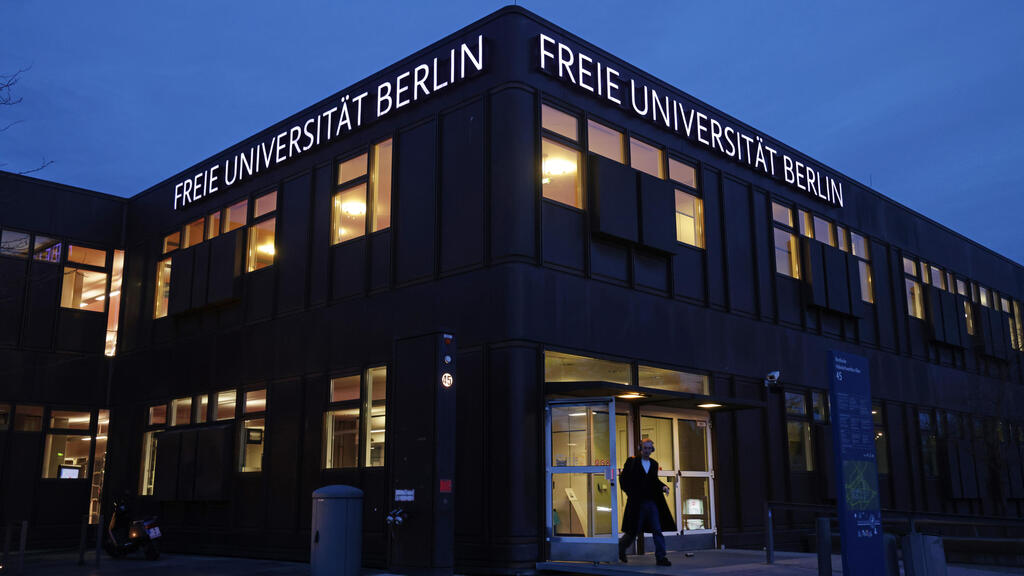
(Photo: Sean Gallup / Getty Images)
Nevertheless, the court believes further investigation is needed — especially after Shapira emphasized how the campus environment affected his studies. “He clarified that he feels his fundamental rights have been violated,” Judge Edgar Fischer said at the first hearing in July 2025. Die Welt also reported that the court determined the attack on Shapira was motivated by antisemitism.
In April 2025, a court sentenced the attacker to three years in prison. The verdict is not final, as the defense has lodged an appeal. A hearing on the appeal in the Berlin Regional Court is expected to begin in early March, a court spokesperson told the German Press Agency.