


When Dr. Chen Marx, a lecturer in rabbinic literature, the Bible and Hebrew culture at The Max Stern Yezreel Valley College, is asked what on earth Asmodeus wants from us, he answers:
"In the Book of Tobit, for example, a Jewish work from antiquity that is part of the Apocrypha, Asmodeus attempts to invade and take control of the most intimate place in human existence, the place where two people try to become 'we.' In that sense, Asmodeus is not a demon of death; he is a demon of loneliness."
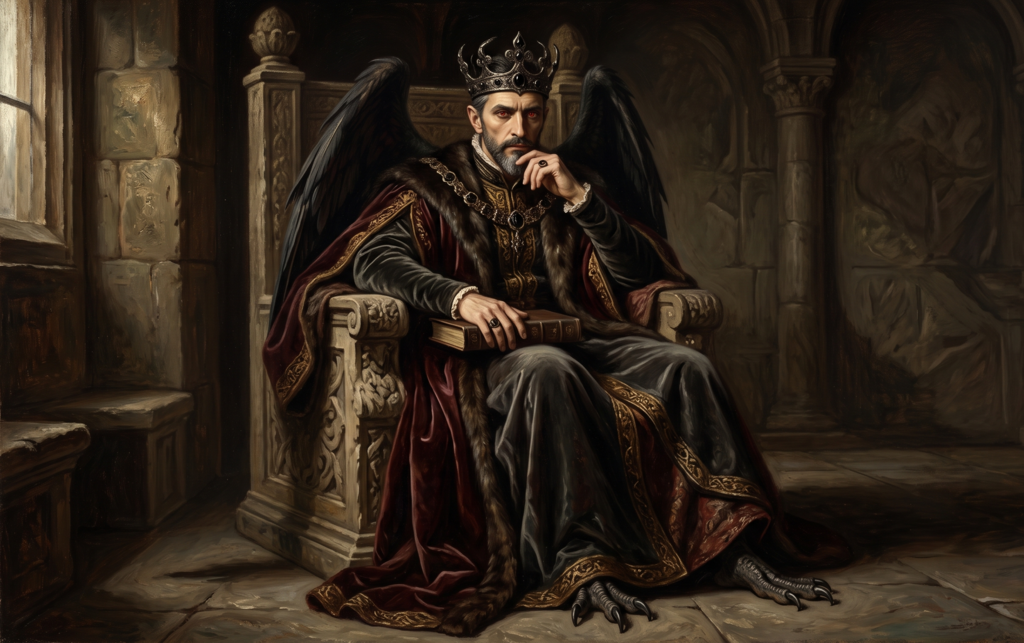
Although many associate the name Asmodeus (Ashmedai in Hebrew) with the Hebrew root sh-m-d, meaning destruction, Marx explains that the name comes from two words in the Persian-Zoroastrian tradition: "Aēšma," referring to rage, violence or destructive force that opposes moral order, and "Daēva," meaning demon, although the word originally meant "god."
It turns out that the first appearance of Asmodeus in Jewish culture is in the Book of Tobit, one of the Apocryphal books that were not included in the Hebrew Bible.
"The work is dated to the period between the third and second centuries BCE," Marx says. "Asmodeus appears there as a figure with a central characteristic that will accompany him in later traditions as well: He is not satisfied with physical destruction, but intervenes in the most intimate aspects of human life."
Explain, illustrate and elaborate.
"It appears that in the Book of Tobit, Asmodeus is in love with a woman named Sarah. Every time someone tries to marry her, he kills the intended groom. Seven grooms die one after another. Sarah remains alone, while on the other side of the world a young man named Tobiah sets out on a journey during which he meets Raphael, an angel disguised as an ordinary person. During the journey, Raphael instructs Tobiah to catch a fish and preserve its heart and liver. When these organs are burned, it becomes clear that they are used to drive away Asmodeus, allowing Tobiah to marry Sarah."
For Marx, the story is not merely a legend about a murderous demon:
"Asmodeus is not trying to harm Sarah's body. His main action is to prevent her from becoming a married woman capable of having children, and that is the focus: the human social order. Asmodeus, as I said, is not a demon of death, but a demon of loneliness. He wants to prevent human beings from forming couples, and as we know, 'It is not good for man to be alone.'"
The connection to the female body
About four years ago, Marx published the book Why Do Bad Things Happen to Good People, and several months ago his second book, The Dark Side of Beauty and Ugliness, was released. In it, he examined a long series of Jewish interpretations and legends about beauty and ugliness, analyzed them in a fascinating way and compared them with modern research, seeking, among other things, to understand how our ancestors viewed female beauty.
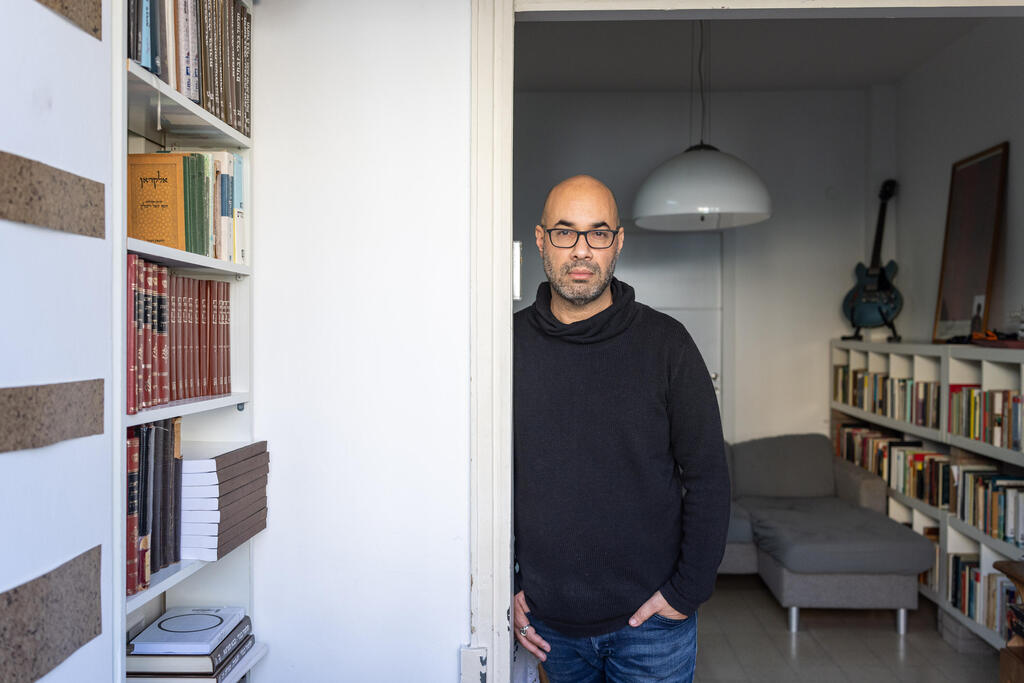
Dr. Chen Marx, a lecturer in rabbinic literature, the Bible and Hebrew culture at The Max Stern Yezreel Valley College
(Photo: Avishag Shaar-Yashuv)
"In the eyes of people who lived in the ancient world, the female body was perceived as a kind of gateway, between what exists and what does not, between potential and an actual body. In their view, wherever there is a gateway, supernatural forces may appear," he explains.
According to him, this is one of the reasons demon figures are repeatedly linked to the female body and sexuality:
"Demons are drawn to the female body not because it is weak, but because it represents a transition, a place where life is created."
Jewish tradition does not feature only Asmodeus. Over the generations, other demon figures also appear, such as Lilith or Azazel. In later traditions, particularly in the Zohar and Kabbalah, Asmodeus and Lilith even become a couple. This creates an entire system of dark forces, with each one acting at a different point of vulnerability in human society.
Marx describes Azazel, who rules the desert, Lilith, who operates in the sexual realm, and Asmodeus, who in some stories attacks the world of the family. Each of these demons, he says, represents a different human fear, and in some cases that fear is accompanied by desire and attraction.
He notes that in Tractate Pesachim of the Babylonian Talmud there is an extended discussion in which a demon named Yosef explains how Asmodeus acts when people drink wine from an even number of cups. The discussion ends with the claim that Asmodeus is particularly concerned with those who believe he operates according to the number of cups they drink. The message that emerges is that if people do not believe in Asmodeus' power, he will look for someone else to target.
Taking the king's place
The most significant mention of Asmodeus in the Talmud appears in Tractate Gittin, in the famous story about the construction of the Temple by Solomon.
"In the story, because Solomon was forbidden from using metal tools to carve and shape the stones of the Temple, the king sets out in search of a miraculous creature, the shamir, which is capable of splitting rocks," Marx says.
"Solomon sends the commander of his army to capture Asmodeus, king of the demons. Asmodeus does know where the shamir is, and he helps Solomon capture it. In doing so, Asmodeus assists in the construction of the Temple. Later in the story, Asmodeus deceives Solomon, throws him a great distance away, takes on Solomon's form and sleeps with his wives and his mother, Bathsheba."
Excuse me?
"I hope ynet commenters will not be angry, but that is what is written in the Talmud, and I did not write it."
What is your conclusion from this midrash?
"It seems that if you want to build the house of God, you must come into contact with the dark world, and that contact has consequences. In other words, once Solomon brings the demon into his home, the demon does not remain a force of labor without its own desires. Once we open the door and bring the demon inside, it is only a matter of time before it takes our place.
"In my view, this is a brilliant story. On one side stands a human king who was granted divine wisdom, and on the other stands the king of demons, who also possesses extraordinary power and knowledge. Once the king of demons replaces Solomon, the entire story takes on a new meaning. It recalls the idea of Jewish-American sociologist Erving Goffman, that every social interaction involves wearing a 'mask.' Once Asmodeus takes Solomon's external form, the mask of 'the king,' the world treats him as Solomon without examining what truly lies beneath the mask.
"This is a story that asks: Is relying on what our eyes see a good idea? Did I correctly judge the person standing before me? How much are we drawn to brands, such as the brand of 'the king'? Between the lines, we are told that what happened to Solomon can also happen to us. It raises the question of who we really are, whether there is anything behind the masks and brands we wear, and if so, when and where the true self is revealed."
Marx continues:
"Sigmund Freud has a 1919 essay called 'The Uncanny,' in which he describes how he himself sat in a train carriage and realized that someone frightening was in his compartment. It took Freud a moment to understand that the frightening person staring at him was actually his own reflection in a mirror. Similarly, at the heart of the story of Asmodeus and Solomon lies the possibility that Asmodeus is not a frightening stranger, but a reflection of ourselves."
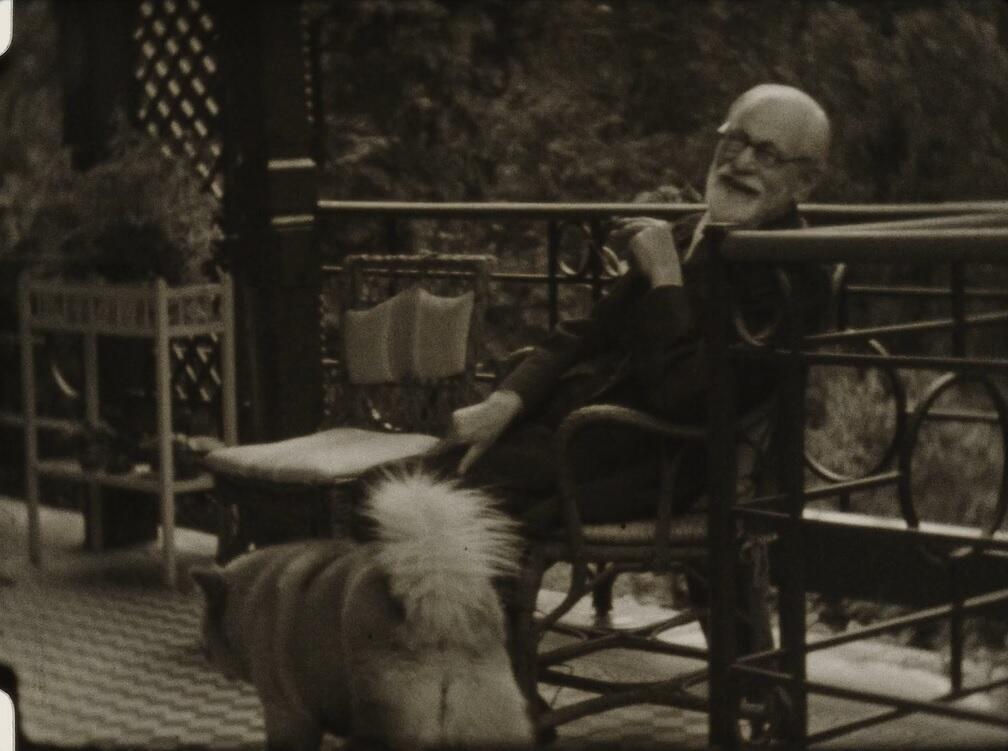
Sigmund Freud. It took him a moment to understand that the frightening person staring at him was actually his own reflection in a mirror
(Photo: Library of Congress)
Do our eyes know how to judge?
Next week (Aug. 9-13), Beit Avi Chai will host a free Zoom lecture series by Dr. Marx, titled "Forces of Darkness in Rabbinic Literature: Demons, Devils and Sons of God." The lectures will cover, among other topics, the story of the sons of God and the daughters of men from Genesis and midrash, Rabbi Mattia ben Heresh's encounter with Satan, the fateful encounter between Solomon and Asmodeus and later Solomon's encounter with the Angel of Death.
Marx says he is happy to host many ultra-Orthodox men and women at his lectures as well. About a month ago, for example, one of his students invited him to a Zoom meeting with religious and ultra-Orthodox women who own private businesses.
"I spoke about the fact that studies have proven that when we meet beautiful people, we respond one way, and when we meet ugly people, we respond differently. At the end of the lecture, I asked the participants whether they have a strong ability to judge people. Forty-seven women took part in the survey, and all of them, without exception, answered that they have excellent judgment," he says with a broad smile.
And what is your conclusion?
"In my book about beauty and ugliness, I asked how we respond to beautiful and ugly people, and how beauty or ugliness shapes the identity of the person who carries it. Now I am dealing with demons, and the question that interests me here is what happens when the demon in a story hides its identity. Do we really know how to identify the person standing before us?
"In such cases, demons present a test of human recognition. When I asked the women whether they have the ability to judge people, I was actually trying to hint at the anxiety involved, not that we are bad at judging people, but that we are so certain we are good at it that we cannot imagine otherwise.
"Both ancient literature and modern research try to teach us that our eyes are not only a window to reality; they are also a constant source of illusions. The great wisdom is not knowing how to judge people, but knowing how easy it is for us to be wrong in that judgment."