


From the 27th floor of an office building on the edge of Bnei Brak, the entire city spreads out below. The conference room is fully equipped. There is a coffee station, rows of workstations and pairs of hands typing rapidly. It looks like any successful high-tech company in a prime location.
But at KamaTech, a Haredi high-tech organisation, the successful startup is not an app or a new product. It is the people themselves, especially the ultra-Orthodox women filling the offices as they prepare to integrate into some of Israel’s largest technology companies.
Over the past decade, about 7,000 ultra-Orthodox women have passed through these offices on their way into Israel’s high-tech industry. The most outstanding among them, roughly 2,000 women, now work at leading companies such as Google, Apple, Facebook and Amazon.
“I thought I’d be a teacher or a kindergarten teacher,” says a Haredi woman in her early 20s we meet in the hallway. “But this world opened up to me, and I realised I could do something meaningful and earn salaries that Haredi women could only dream of in the past. And here I am, on my way into a big company.”
She says proudly that in recent days she received confirmation that she has been placed at one of the major firms.
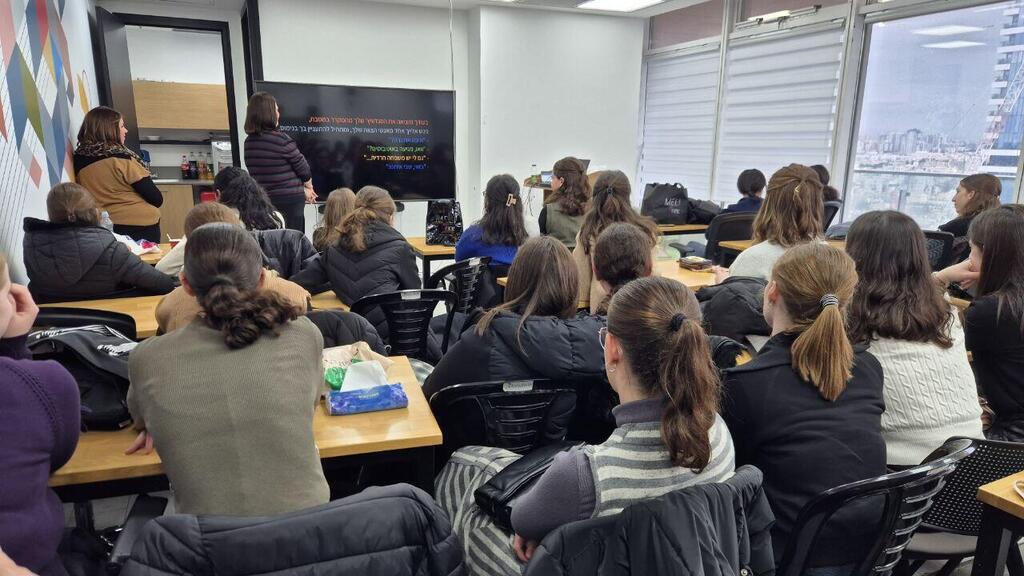
Like her, another 20 young women sit in lectures preparing them for work in what they call “the big world.” They decline to be photographed. Some are already married. One arrives carrying a baby just two months old, holding him throughout the lecture.
Beyond professional training, they learn how to conduct themselves as ultra-Orthodox women in workplaces far removed from anything they have known.
“I really struggled with the decision and asked a rabbi,” says another young woman who will soon begin a coveted job in high tech. “He recommended that I go into computers, both for financial reasons and because it would be interesting.”
“If a man comes and sits next to you just to chat, you don’t say, ‘It’s not appropriate for you to sit here,’” explains Yael, one of the pioneers of integrating Haredi women into high tech. “You say, ‘I’m uncomfortable.’ It’s received better.”
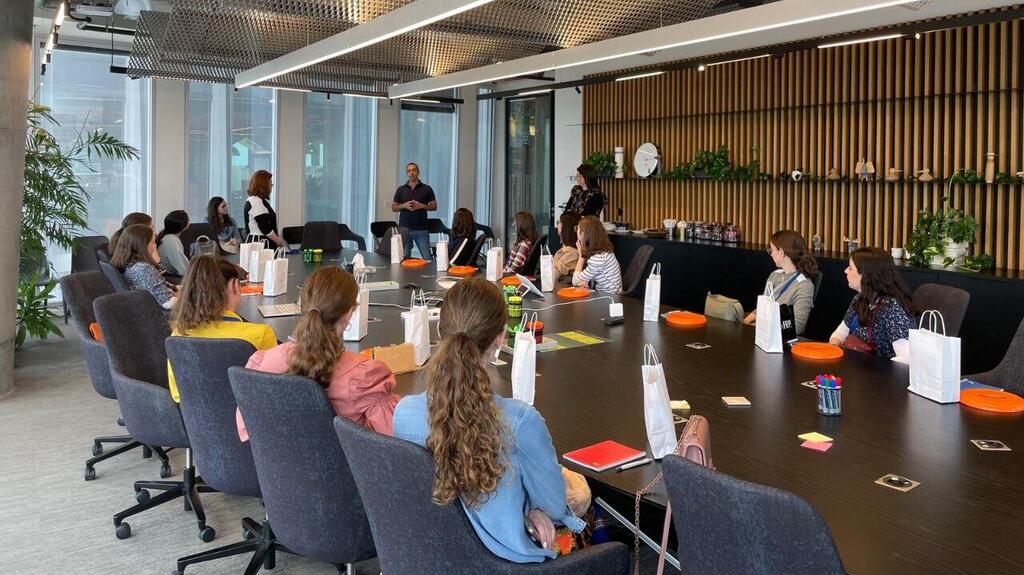
Yael, the wife of a senior rabbi at prominent yeshivas, entered the field 16 years ago and now mentors the women. “If they invite you to sit with everyone at lunch, you can stand your ground politely. The most important thing is that you are 100% professional. You do your job as well as possible, even if your social boundaries are different.”
“I’ve worked in high tech for 16 years,” Yael says. “I started the way it used to be for Haredi women who studied computers, when a staffing company would place you in a local authority for 5,000 shekels a month. Today, thanks to these programs, we’re in a revolution.”
She adds that today, even women who are not top performers can earn 15,000 to 20,000 shekels a month. “These are no longer exploitative wages. That’s hugely significant.”
Yael, a mother of eight whose husband teaches in a yeshiva, says she has worked alongside secular women far removed from her world. “I always said, I’m as busy as you are, just with three or four more children. Sometimes a Haredi woman has to work in a position that isn’t her dream, but I don’t call that a compromise. It’s a choice. We make our choices in life.”
‘We don’t target those who study Torah’
Behind this quiet revolution stands Moshe Friedman, often described as the father of Haredi high tech. Friedman, 47, is the CEO and co-founder of KamaTech, an organisation that integrates ultra-Orthodox Jews into the technology sector.
A father of six, Friedman grew up deep within the Haredi community and is a descendant of Rabbi Yosef Chaim Sonnenfeld, a leading figure of Jerusalem’s old Yishuv. He studied at prominent yeshivas and later at the Chazon Ish kollel in Bnei Brak.
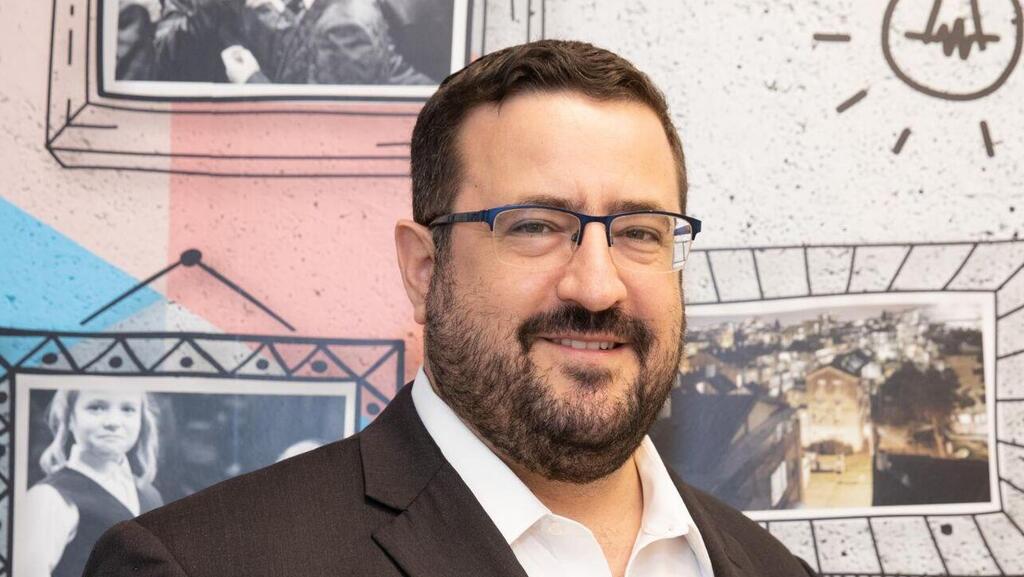
Moshe Friedman
(Photo: Moriya Marsha)
“Around age 30, I thought I’d invent a startup,” he recalls. “I had no background in entrepreneurship. I’d spent my entire life in yeshivas. But I learned from the internet, attended lectures and went to high-tech conferences in Tel Aviv to try to interest senior figures in my idea.”
At one conference, he met veteran entrepreneur and investor Dr. Yossi Vardi. “At first he didn’t understand what I was doing there,” Friedman says. “I told him, ‘You keep complaining that Haredim don’t work and don’t join the economy. Then when a Haredi person comes to a high-tech event, you wonder what he’s doing here?’”
Vardi listened to Friedman’s idea and told him the startup itself was not very interesting, but Friedman was. “He said my mission should be to be a bridge between Haredim and high tech,” Friedman recalls.
Vardi argued that the major boom in Israeli high tech came with immigration from the former Soviet Union, which brought tens of thousands of engineers into the industry. “The next major influx won’t come from another country,” Friedman says. “It will come from the Haredi community, when its best minds enter high tech.”
Friedman is careful to clarify his boundaries. “We are absolutely not targeting those who study Torah. That is the core, and they sustain the world. But for those looking for something else, we open a door, especially for Haredi women.”
He says a kollel wife does not have to work in a daycare center or kindergarten. “If she has the ability, she can earn a starting salary of 25,000 shekels a month. This revolution strengthens both the Israeli economy and the Haredi community.”
The barriers facing Haredi women entering high tech came from both sides. “You can’t just take a talented young woman and drop her into a workplace where she doesn’t speak the language or understand the culture,” Friedman explains. “And companies weren’t really thinking about it either.”
Haredi women do not typically earn university degrees, nor do they come from elite military units or institutions like the Technion. Their usual path is through seminaries, followed by post-secondary vocational programs that grant professional certificates, not academic degrees.
“A woman with a practical engineering certificate wouldn’t stand a chance competing with advanced degree holders,” Friedman says. “So we created an alternative track.”
Since rabbis would not approve academic degrees, KamaTech developed what Friedman calls a premium practical engineering certificate, adding about 700 hours of study to upgrade the training.
Once a year, a large exam is held, drawing students from seminaries across the country. “With the results, we know who the real geniuses are,” he says.
Separate lunches, shared success
This week, data released by the Knesset showed that only 2.4 percent of employees in government companies are ultra-Orthodox, far below the sector’s share of the population, estimated at 12.3 to 13.6 percent. What the government struggles to achieve, Friedman says, KamaTech is trying to do through high tech.
“In this field, Haredi women are approaching 5 percent of the younger layer of the industry,” he says. “They sit in major companies.”
He says companies had to be convinced that these women are just as capable as graduates of elite institutions, and that they require certain accommodations. “Often they sit together as a group. They don’t join communal lunches or team-building days, and that’s understood. But they deliver value and profit no less than any other employee.”
Asked how the initiative was received within the Haredi community, Friedman says the model required constant dialogue. “We sat with company executives on one side and the most senior rabbis on the other. We created a kind of traffic light system. What would be red, what would be green, and what would be in between.”
One of the main challenges was filtered internet access. “High-tech companies don’t like installing filtering tools on their systems,” he says. “We found solutions. Some companies still refuse, but most large and small firms make it work.”
The seminary students arriving here, excited about their next jobs, know the change will affect everything from matchmaking to financial independence.
“But on a personal level, they’re also part of a revolution,” Friedman says. “Israel’s universities produce about 7,000 computer science and engineering graduates a year. The Haredi sector produces about 2,000 graduates annually. The revolution is happening at full speed.”