

Russia’s Federal Security Service (FSB) has published transcripts of interrogations conducted by the German army during World War II with Yakov Dzhugashvili, the son of Soviet leader Joseph Stalin.
Dzhugashvili was born in Georgia in March 1907 and was Stalin’s eldest son from his first wife, Kato Svanidze. He was captured by the German army in July 1941. Stalin famously refused to trade him for captured German generals, reportedly declaring, “I will not trade a private for a field marshal.” Yakov later died in the Sachsenhausen prisoner-of-war camp. He was posthumously cleared of treason.
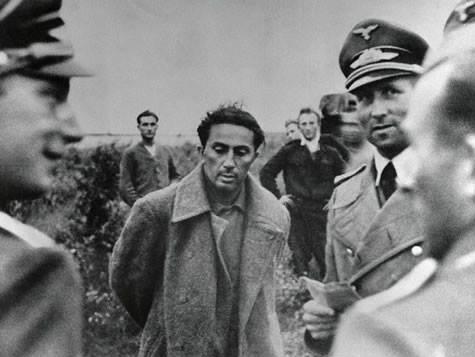
The Nazis recorded the interrogations to use them as propaganda. According to the transcripts, Dzhugashvili expressed antisemitic views, despite being married to a Jewish woman, Yulia Isaakovna Meltzer. He argued with his German interrogators on several issues but agreed with them on one: hatred of Jews.
Discussing Jews in the Red Army, Dzhugashvili claimed Jews “rush to wherever conditions are good” and that “the Russian people have always harbored hatred for Jews.” He added, “They don’t know how to work. Jews and Gypsies are alike—they don’t want to work. From their perspective, trade is everything,” and “that’s why they aren’t respected.”
Even this conversation sparked disagreement. The Nazi interrogators claimed Stalin’s wife was also Jewish. Dzhugashvili grew angry and responded, “My father’s wife? That’s just rumors you’re spreading. Nothing in common. Never. No, no, nothing like that! Nothing like that. What are you saying? That never happened! His first wife was Georgian, the second was Russian. That’s all!”
The interrogation, which resembled a heated argument, ended with a discussion on the war’s prospects and the state of the Soviet air force. Dzhugashvili believed a prolonged struggle lay ahead and that, despite early losses, Soviet air power would still trouble the Germans. He argued that Germany would not be able to conquer Russia as easily as it anticipated.
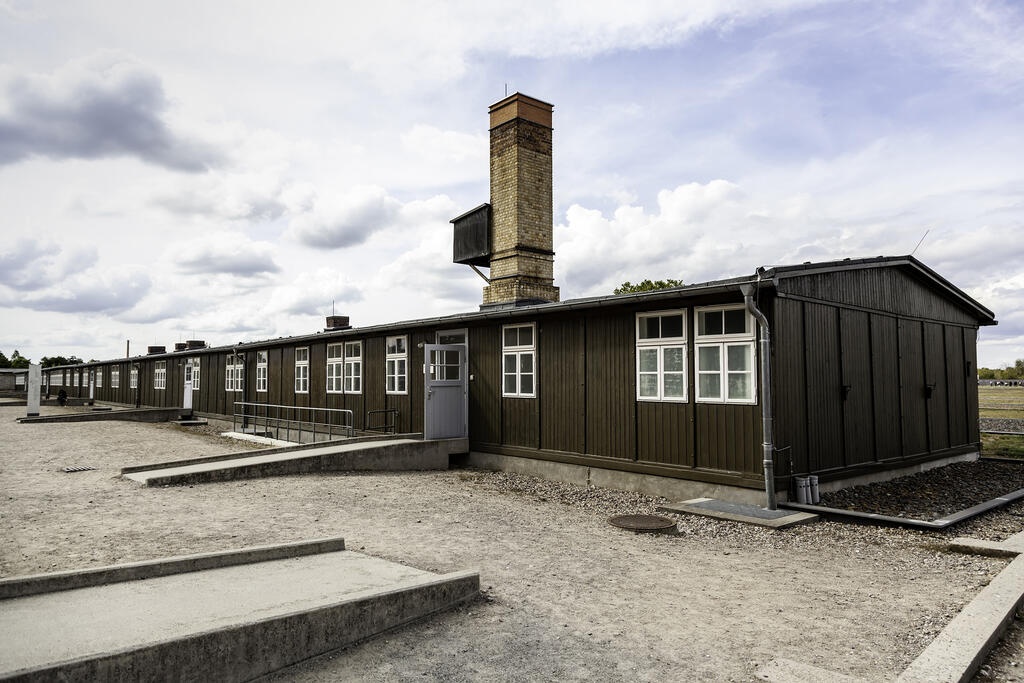
Sachsenhausen
(Photo: Shutterstock)
Dzhugashvili was held at Sachsenhausen. On April 14, 1943, he ran into the camp’s barbed-wire fence and was shot by SS guard Konrad Hafrich—possibly during an escape attempt. However, he died before the bullet struck, likely due to electric shock from the charged fence. Another account claims he committed suicide by deliberately touching the electric wires.
Get the Ynetnews app on your smartphone: Google Play: https://bit.ly/4eJ37pE | Apple App Store: https://bit.ly/3ZL7iNv
Documents show that although he was considered a high-value prisoner, Dzhugashvili never cooperated with the Germans or participated in their propaganda. He endured captivity with dignity until his death. Upon learning of his son’s death, Stalin reportedly stared silently at a photograph of him. Over time, Stalin softened his stance, later describing Yakov as “a real man” who had been treated unjustly by fate. In 1977, Yakov was posthumously awarded the Order of the Patriotic War, First Class.
Social activist Alex Tenzer, who monitors Russian media and FSB publications, noted that Stalin had ordered the arrest of his son's Jewish wife—the mother of his grandson. However, after Yakov’s death, Stalin released her following a year and a half in detention.