

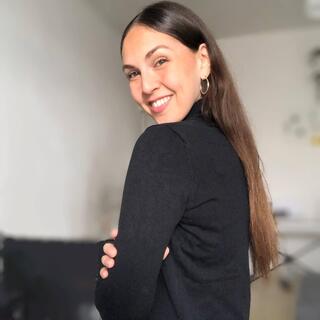
Noa Mevorach, an activist with the “Partnership for Service” forum that opposes legislation granting a draft exemption to the ultra-Orthodox, was supposed to take part Tuesday in the 15th conference of national-religious administrators, held under the banner “Building National Resilience” and attended by senior figures from religious Zionism. On her way to the conference in Eilat, however, she was informed that her participation had been canceled.
According to Mevorach, her participation had been coordinated more than a month in advance, and the organization she belongs to was even among the conference’s sponsors. But on Tuesday, after she had already arrived at Ben Gurion Airport ahead of her flight to Eilat, Mevorach was notified that her scheduled discussion at the conference had been canceled and that she was asked not to attend the event at all. “Those involved in or funding the conference asked that we not come,” she said, sharing the explanation she was given.
Mevorach linked the decision to a report aired Monday on Channel 14, which she said portrayed the forum’s activities in a biased manner. “They said we are controversial and that this is a religious education conference that is supposed to deal with positive things, and that it would create unpleasant situations of disagreement, so it was better that I not come,” she said. Under the original plan, she was to appear in an onstage interview.
Gallery
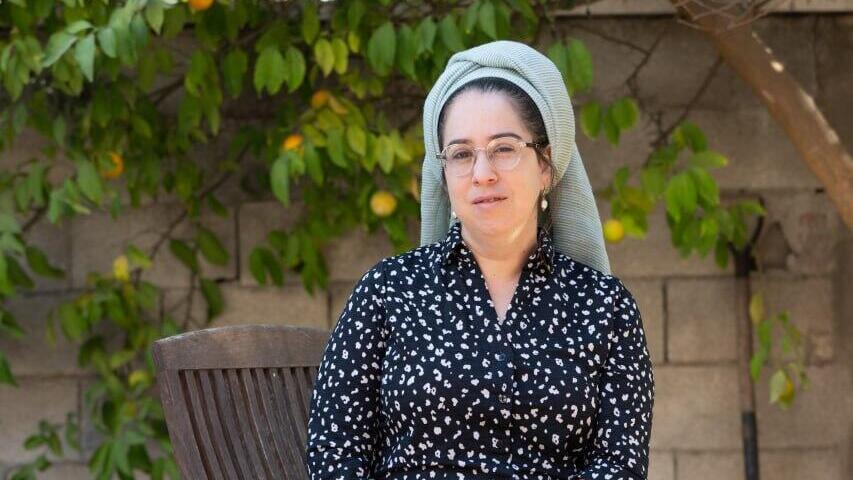
Noa Mevorach, a reservist's wife, leads the "Partnership for Service" organization; She fights for equality in the burden
(Photo: Yuval Chen )
When she was told her participation had been canceled, Mevorach said she pushed back against the decision. “I told them this was silencing and bullying, and that as people of faith we should conduct disputes for the sake of heaven, where we listen to one another even when we disagree. I have no problem with people arguing with me or disagreeing — but how can it be that we are excluded while those who threaten to blow things up are honored? This is how you harm the serving public of religious Zionism. I am not the issue.”
Among those attending the conference in Eilat were Finance Minister Bezalel Smotrich, Heritage Minister Amichai Eliyahu, Knesset lawmaker Avi Maoz, Cabinet Secretary Yossi Fuchs and others. The event’s main sponsor is Bank Leumi.
In response, the organizers of the 15th “Building National Resilience” conference said: “The conference of administrators and senior figures of the national-religious public has been held for 15 years with leading members of the sector from across the spectrum, who come together for three days of rich content focused on connections and a unique, professional atmosphere. After we understood that the topic was charged and controversial among conference participants, we decided to remove it from the schedule.”
'It only makes us stronger'
Noa Mevorach is married to Tomer, a combat physician in the Carmeli Brigade’s reconnaissance battalion, who has completed six reserve duty tours totaling more than 350 days. The couple lives in Lod and has four children: Ayala (13), Neta (10), Lavi (4) and Plia (3). “It only makes us stronger,” Mevorach told Ynet. “Those who are unable to deal with us substantively and invite us to a respectful discussion apparently cannot cope with the truth we are voicing. This is a bogus law. It’s already transparent. They can’t deal with it, so they choose bullying and improper methods.”
She added about her feelings: “I come from the heart of religious Zionism. I grew up in Gush Etzion, on the legacy of my grandfather, who was among the founders of Gush Emunim. From him I learned that those who don’t act don’t get hit, and that it’s better to be among those who act, because that’s how you change reality. What hurt me most is where my sector has ended up — how bullying conduct of silencing entered my society. How we reached a point where it is more important to preserve ultra-Orthodox alliances than to look us, the serving public, in the eye. Above all, it’s sad that we’ve reached a situation where politics stands above security.”
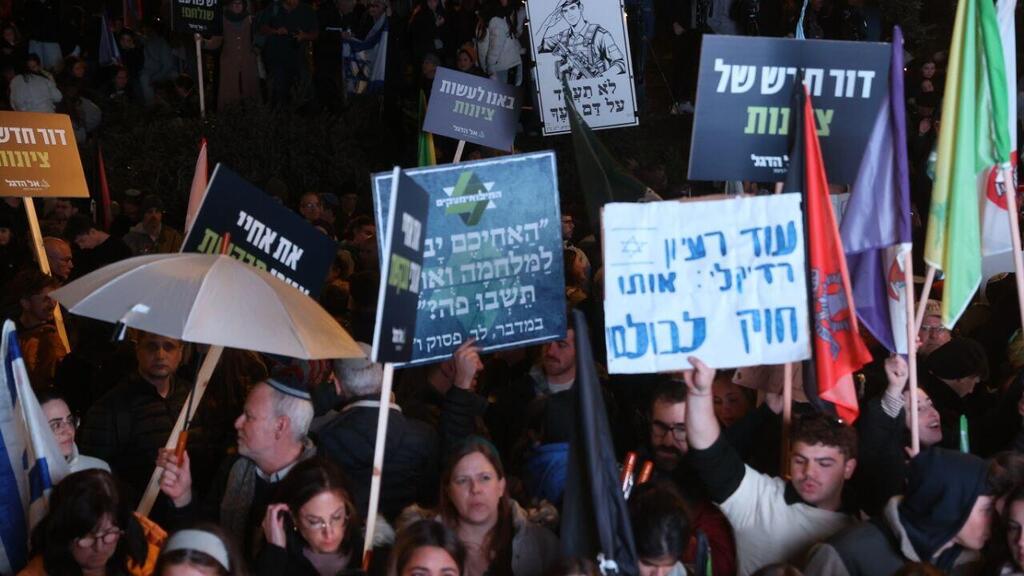
Protesters at the draft rally in Jerusalem against the exemption law
(Photo: Alex Kolomoisky)
According to Mevorach, “If six exhausting and grueling reserve tours didn’t break us and didn’t cause me personally to give up worrying about our security, and didn’t make us say we’re out of strength and won’t come anymore — then slander and mud won’t do it either. Partnership for Service and all of our activity believe in the State of Israel and in the need for a strong, large army that can deal with all fronts, now and in the future. We will continue to speak the truth out loud and care for our next generation.”
Following the decision to cancel their participation and bar representatives of the Partnership for Service forum from the conference, the forum issued a statement titled “Silencing and Political Bullying in the Name of the Draft Law.”
The statement said: “The Partnership for Service forum was scheduled to take part in the 15th administrators’ conference of religious Zionist education organizations, currently taking place in Eilat. Just hours before going on stage, we were informed that we were excluded from the conference, after political actors exerted pressure on the conference organizers, claiming that we are ‘controversial.’ Partnership for Service represents some 5,000 women from serving families within religious Zionism, families that together have accumulated hundreds of thousands of reserve duty days for the security of the state.”
The statement added: “Our struggle for a fair draft law is a struggle of the national-religious public, not against it. We were educated on ‘dispute for the sake of heaven,’ and the crude silencing of critical voices through pressure and political bullying, simply because they do not fall in line with the draft law promoted by the government, is a disgrace and a shame. Whoever chooses to harm Partnership for Service harms the serving public and the values of religious Zionism as a whole.”
Kalman Liebskind, editor of the newspaper Makor Rishon, addressed the cancellation of Mevorach’s participation in a speech at the conference. “I want to make a suggestion to the organizers — I don’t know who told them not to come, but mistakes happen, and mistakes can be corrected. I want to suggest that the organizers pick up the phone and call Noa Mevorach, who was on her way here. Tell her you made a mistake and that she should come here today or tomorrow,” Liebskind said. “Even though I’m finishing my part in the conference in about an hour, I volunteer to stay here, and let someone from the other side come and have a debate here, because that’s how discussions are held. I volunteer to stay and conduct this debate.”
At the start of his remarks, Liebskind said: “Following the story of Partnership for Service, who were supposed to appear here yesterday and received last-minute notice canceling their participation, I received many inquiries about this, because we at Makor Rishon appear as one of the event’s sponsors. First, on a technical level: We do sponsor the event, but we have nothing to do with the guest list or the list of those not invited, not the list of topics, not the list of panels, and not anything connected to the editing of this conference.”
He stressed: “If anyone thinks I said all this to avoid taking a position, then on the contrary. I’m saying it in order to preface taking a position. I want to tell a small story that will clarify what polemics and debate mean to me, and the formative experience I’ve carried with me for many years in this context, which I try to bring to the place I edit today. Almost two and a half decades ago, I arrived at Maariv as a young reporter. One day I went into the office of editor Amnon Dankner, of blessed memory, and told him I had criticism of the line he was leading at the newspaper. The second I said that sentence, he told me: 'Go up to your office and write 450 words against me for tomorrow’s paper.' The next day I published a scathing article against my own editor.
“That story has stayed with me because, in my view, it captures the entire idea of the ability to argue, and how important that is — how important it is to do so even within the home when there is a major dispute. This is regardless of my position on the draft law, and anyone who reads Makor Rishon knows my position, but it is not important here — neither my position nor the paper’s.”
He added: “What matters is the need to know how to argue, to allow debate and polemics, because you cannot conduct a debate or discussion with only one side present. There is no such thing. Even when there is a dispute within a family — and religious Zionism is a kind of family — you cannot manage the argument by sending one of the arguing children to their room, or worse, to a storeroom or the bathroom, locking them in and saying, ‘OK, now that he’s not here, we can have the discussion.’ That cannot happen and it cannot pass. I express my sorrow over what happened and regret that the women of Partnership for Service are not here.”