

As tensions in the Middle East continue to escalate, Jewish communities around the world are once again feeling the impact far beyond Israel’s borders. For Toronto’s Jewish community, the connection between events in Israel and life in Canada has become increasingly visible since the October 7 attacks, bringing both heightened concerns and renewed solidarity.
"Anything that happens in Israel eventually has a ripple effect on Jewish communities around the world," said William Kleinbaum, Managing Director, Israel and Overseas at UJA Federation of Greater Toronto. Speaking in an interview, Kleinbaum noted that spikes in regional conflict have repeatedly been followed by increases in antisemitic incidents, violence and threats directed at Jewish communities abroad.
William Kleinbaum interview with ynet Global
(Video: Yaron Berner)



According to Kleinbaum, Canada has experienced a significant rise in antisemitic attacks since October 7, including shootings targeting synagogues and schools, as well as other violent incidents aimed at Jewish institutions. Yet despite these challenges, he says support for Israel within Toronto’s Jewish community has only grown stronger.
That commitment was on full display during a recent march in Toronto that drew nearly 60,000 participants, making it one of the largest public demonstrations of support for Israel in the city’s history. Marchers carried Israeli and Canadian flags, joined by allies from other communities who came to show solidarity.
Sarah Mali, director general of JFC-UIA Canada in Israel, said the images from Toronto carried a message beyond the march itself.
“The images that came out of Toronto yesterday told a story far greater than that of a community march,” she said. “At a time when Jews in Canada are feeling increasing pressure and difficulty in maintaining their identity, Toronto’s Jewish community chose to take to the streets with heads held high, with Israeli flags, with their families, and with a message that could not be mistaken: We are here, we are the people of Israel, and Israel is a vital part of our identity as Jews.”
Mali said the march was not only “a moment of Jewish pride,” but also one of responsibility. “Support for Israel is not symbolic; it reaches real people in Israel — families uprooted from their homes, trauma victims, and communities in need of long-term recovery,” she said.
For many participants, Kleinbaum said, that bond is deeply intertwined with Jewish identity itself. "Their ability to feel Jewish is very closely linked to their ability to feel close to Israel and its people," he explained.

William Kleinbaum interview with ynet Global
(Photo: Yaron Berner)
The event also highlighted the extensive security infrastructure built around Toronto’s Jewish institutions. UJA Federation, together with its security network and local law enforcement, coordinated significant measures to ensure participants could gather safely despite ongoing concerns about protests and threats. While a small number of arrests were reported around the event, organizers said the overwhelming majority of attendees were able to participate without disruption.
Kleinbaum believes October 7 has fundamentally strengthened the bond between Toronto’s Jewish community and Israel. Because of longstanding personal, family and organizational ties, many community members know someone directly affected by the attacks or the ongoing war. As a result, he said, many have become more engaged in Jewish life and more active in supporting Israel.
That engagement has translated into unprecedented levels of philanthropy. Kleinbaum noted that Toronto’s Jewish community has raised more than CAD $100 million in support of Israel and its people since October 7. Considering that the city is home to fewer than 200,000 Jews, he described the response as extraordinary and reflective of a community that sees itself as an active partner in Israel’s recovery and future.
Mali said this was the deeper meaning of the march: “a community that did not settle for solidarity from afar, but turned love for Israel into action — and, in doing so, fulfilled its Jewish identity.”
The ongoing climate has also sparked increased interest in aliyah. Kleinbaum said organizations are seeing more inquiries from Canadian Jews exploring the possibility of moving to Israel and opening aliyah files. However, he emphasized that this interest has not yet translated into a dramatic increase in immigration numbers.
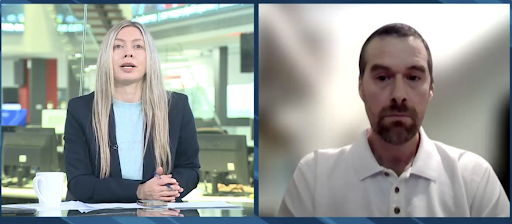
William Kleinbaum interview with ynet Global
(Photo: Yaron Berner)
Many Canadian Jews, he said, view Israel as both a homeland and a safety net while remaining deeply committed to life in Canada. "People feel Canada is their home as well," Kleinbaum said. Rather than feeling pushed out, many are determined to preserve both their Canadian and Jewish identities while closely monitoring developments.
For now, Toronto’s Jewish community appears focused on resilience — standing publicly with Israel while continuing to fight for its place within Canadian society. As tensions abroad continue to reverberate locally, community leaders say the challenge is not choosing between two homes, but ensuring that both remain places where Jewish life can thrive.