

Yom Kippur 2025 will begin on Wednesday evening, Oct. 1, 2025 (the eve of 10 Tishrei), and end on Thursday evening, Oct. 2.
Fasting Times
Beginning of the fast - Wednesday, Oct. 1, 2025
Jerusalem: 5:48 p.m., Tel Aviv: 6:05 p.m., Haifa: 5:57 p.m., Be'er Sheva: 6:06 p.m., Petah Tikva: 5:45 p.m., Modi’in: 6:07 p.m., Netanya: 6:04 p.m., Ashdod: 6:04 p.m., Ashkelon: 5:56 p.m., Safed: 5:57 p.m., Tiberias: 5:55 p.m., Eilat: 5:55 p.m., Kiryat Shmona: 5:52 p.m., Gaza: 5:58 p.m.
End of the fast - Thursday, Oct. 2, 2025
Jerusalem: 6:59 p.m., Tel Aviv: 7:01 p.m., Haifa: 7:00 p.m., Be'er Sheva: 7:01 p.m., Petah Tikva: 7:01 p.m., Modi’in: 7:00 p.m., Netanya: 7:01 p.m., Ashdod: 7:02 p.m., Ashkelon: 7:02 p.m., Safed: 6:58 p.m., Tiberias: 6:58 p.m., Eilat: 7:00 p.m., Kiryat Shmona: 6:58 p.m., Gaza: 7:02 p.m.
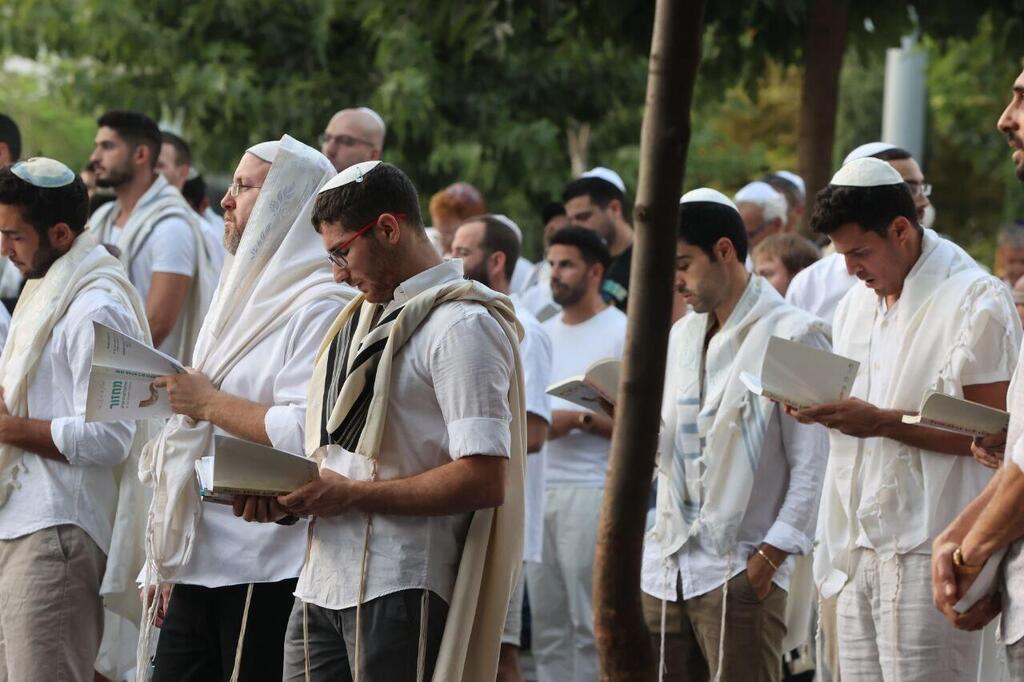
Shabbat Shabbaton or the 'Sabbath of Sabbaths'
Yom Kippur, which falls on 10 Tishrei, is called in the Torah a “Shabbat Shabbaton,” a Sabbath of Sabbaths. The day involves both abstention from work, as on every Shabbat, and abstention from physical pleasures, such as eating and drinking, bathing and anointing, wearing leather shoes and marital relations. These restrictions create the framework for the day’s spiritual focus and its positive content.
Work and general restrictions
Work is prohibited, as on Shabbat.
Eating the pre-fast meal must be completed before candlelighting.
Cycling and watching movies are also considered prohibited activities, though less severe.
Acts that harm others, such as stone-throwing, are even more serious because they involve moral transgression and potential danger to life.
Those not attending synagogue are encouraged to spend the day in study, reflection and self-observation, or engage in meaningful conversation.
Eating and drinking
Fasting is obligatory, and brushing teeth or rinsing the mouth is traditionally avoided. But the fast does not override Pikuach Nefesh (the Jewish legal principle that preserving life takes precedence). Those who are ill, require medication, pregnant or nursing women, and soldiers whose duties could endanger themselves or others may receive permission to eat and drink.
Sephardic Chief Rabbi David Yosef has stated that combat soldiers on active duty are exempt from fasting and may not take on unnecessary stringencies.
When necessary, eating and drinking may be done alternately in small amounts, up to about 27 grams (0.9 oz) of food (two small cookies, roughly the size of a matchbox) or 37 milliliters (1.2 fl oz) of liquid every nine minutes.
A marked measuring cup is recommended. It is better to eat and drink alternately in small amounts from the start if required, rather than waiting until the fast must be completely broken.
Bathing and anointing
Washing and applying creams or ointments are forbidden, except for limited handwashing upon waking or after using the restroom. Infants may be washed and cleaned as needed.
Shoes
Leather shoes are prohibited. Fabric or plastic footwear is permitted. Athletic shoes containing leather are also forbidden. Soldiers, nurses and others whose duties require protective shoes may wear them during their tasks.
Marital relations
Intimacy is forbidden, and couples should also refrain from physical closeness, following the same practices observed during a woman’s niddah (menstrual impurity) period.
Fasting or prayer?
A guiding principle of Yom Kippur law is that prohibitions outweigh positive commandments. Therefore, it is better to remain home and fast fully than to attend synagogue at the cost of breaking the fast, even in limited amounts.
Preparing for Yom Kippur: Customs, prayers and traditions
On the eve of Yom Kippur, several practices help set the spiritual tone for the day.
Morning customs: The selichot (penitential prayers) are shortened, and many immerse in a mikveh (ritual bath) or a natural source of water such as a spring, flowing river or the sea. The Talmudic teaching that “just as the mikveh purifies the impure, so does G-d purify Israel” (Yoma 8).
Mincha prayer: The afternoon service is recited earlier than usual, and includes the first vidui (confessional prayer). In total, worshippers will recite the vidui 10 times throughout Yom Kippur.
Vidui (Confession): According to Rambam (Maimonides), confession is the central mitzvah of repentance and atonement. Without it, there can be no full teshuva (repentance). The penitent enumerates sins, expresses regret and seeks forgiveness.
The Kohen Gadol, (High Priest) in Temple times recited the simple formula: “I have sinned, I have transgressed before you"
Today’s brief, poetic version begins with “Ashamnu, bagadnu, gazalnu…” - an alphabetical acrostic of 22 verbs of sin.
The extended Yom Kippur version, “Al chet shechatanu…” follows a double alphabetic sequence and concludes with a list of sins categorized by their biblical punishments. Some also add personal confessions beyond the set liturgy.
Final meal before the fast: The Seudah Mafseket (pre-fast meal) must be completed before candlelighting. Eating on the eve of Yom Kippur is itself considered a mitzvah, preparing body and spirit for the fast. Families combine holiday traditions with practical advice about foods that help ease fasting.
Candlelighting: Candles are lit with the blessings for Yom Kippur and Shehecheyanu, marking the sanctity of the day. Many light a candle to burn through the holiday for use in the Havdalah ceremony at the close of Yom Kippur. Memorial candles for deceased relatives are also common, as their souls are remembered during the Hazkarat Neshamot prayer.
Clothing: Many dress in white as a symbol of purity, and unlike other times of year, some put on a prayer tallit already in the evening service.
Yom Kippur prayers
Kol Nidre: Most Jewish communities begin Yom Kippur with this solemn prayer of Hatarat Nedarim (annulment of vows), chanted by the cantor with two respected congregants standing beside him to form a symbolic rabbinical court. The declaration does not legally erase financial obligations and its halachic power is debated, but its spiritual impact is undisputed.
Over the centuries, Kol Nidre has become one of Judaism’s most powerful and recognizable prayers, opening the holy day with a sense of collective renewal. Its emotional force lies in its timing, the assembly of the entire community, the historic weight it carries across generations, and its theme: releasing the past and beginning anew.
Arvit (evening service ): The regular evening prayer is recited with several changes unique to Yom Kippur. Most notable are the loud communal recitation of “Baruch Shem k'vod malchuto le’olam va’ed” (“Blessed is the name of His glorious kingdom for ever and ever”) during the Shema prayer; the Amidah prayer with the special Yom Kippur sanctification; and the addition of piyyutim (penitential poems), selichot and confessions. Some communities add hymns of Shir HaYichud and Psalms.
Shacharit (morning prayer) and Mussaf (additional prayer): Practiced as on every Shabbat and Yom Tov, with special Yom Kippur additions. Confessions are recited both in private and in the Chazarat HaShatz (repetition of the prayer leader).
The Torah reading is from Leviticus, describing the atonement service of the Kohen Gadol in the Temple. A second scroll is read from Numbers, recounting the additional sacrifices. The haftarah, from Isaiah, emphasizes the deeper meaning of fasting.
In Mussaf, the cantor and congregation together recite the Seder HaAvodah of the Kohen Gadol. Before Mussaf, the Hazkarat Neshamot, or Yizkor memorial prayer is said.
Mincha (afternoon prayer): The Torah reading is from Leviticus, listing Parashat Ha'Arayot (forbidden sexual relations). The haftarah is the Book of Jonah, the great biblical story of repentance of the people of Ninveh. Two confessions are recited, while fewer penitential poems are included so the congregation can begin Neilah before sunset.
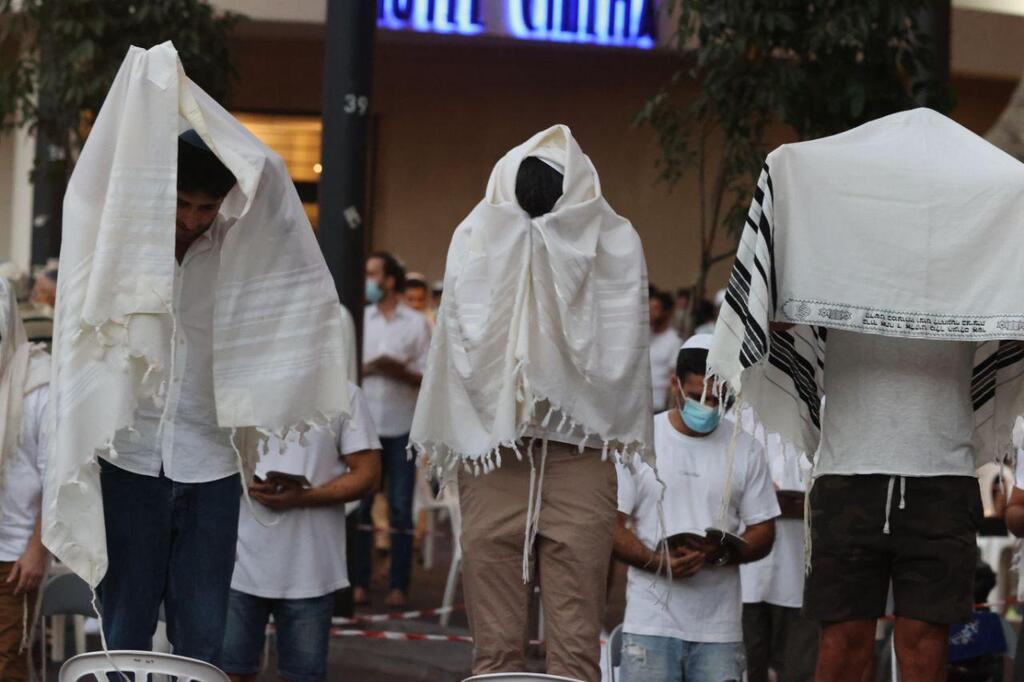
Neilah prayer in Tel Aviv
(Photo: Moti Kimchi)
Neilah (Closing Prayer): Unique to Yom Kippur, a fifth prayer of Neilah is added, which marks the final service of the day.
It begins late in the afternoon, “when the sun is on the treetops," and concludes at nightfall. The congregation recites the Shlosh Esreh Midot (Thirteen Attributes of Mercy), and phrases that earlier read “written for life” are changed to “sealed for life,” reflecting the closing of the heavenly books of judgment. The Birkat Kohanim (priestly blessing) is timed before sunset, and the service concludes with a long blast of the shofar.
The end of the fast: The evening service follows, and many communities recite Kiddush Levana (sanctification of the new moon).
A common custom is to begin building the sukkah for the upcoming holiday of Sukkot immediately after breaking the fast, fulfilling the teaching “they go from strength to strength.”
Praying alone on Yom Kippur
For those who cannot attend synagogue due to illness, weakness, or other limitations, Jewish law provides guidelines:
The former Chief Rabbi David Lau ruled that an individual recites the Thirteen Attributes only with Torah cantillation, as when reading the Torah. Confession (vidui) and Avinu Malkeinu are said as usual, as is Hazkarat Neshamot.
Some add the prayer “El na, rapeh na tachluei gefen poriyah” (“Please, G-d, heal the afflictions of Your fruitful vine”), based on the Ta'anit in the tractate of the Mishnah.
Rabbi Yosef Tzvi Rimon has argued that Kol Nidre may be said privately in an abbreviated form. Rabbi Oren Duvdevani disagrees, holding that Kol Nidre is a Hatarat Nedarim (legal annulment of vows) requiring a court. However, if at least four men are present in a household, they may recite it together, symbolically forming a court, provided it is said before sunset.
The blessing Shehecheyanu is recited before sundown. Women recite it at the time of candle lighting.
After the evening Amidah prayer, individuals may say the selichot from the Machzor holiday prayerbook, but either omit the Thirteen Attributes or chant them with Torah cantillation. Vidui should be repeated after each Amidah, as in communal prayer. Requests in Aramaic are omitted when praying alone.
Yizkor may be recited privately, along with a pledge of charity in memory of the deceased. The Seder HaAvodah may be recited and even reenacted with prostrations, though this is optional. The Piyyutim (liturgical poems) may also be read individually, without their accompanying blessings.
Neilah must be recited at the proper time, beginning before sunset. After sundown, the Shema and the declaration “HaShem is G-d” are said seven times. An individual may blow the shofar 21 minutes after sunset (sunset on Oct. 1, 2025, in Israel is at 6:37 p.m.).
After the evening service, one may recite Kiddush Levana. Havdalah and regular weekday activity are permitted only once Yom Kippur has ended.