


On the title page of a book printed in Venice in 1665 appears an extraordinary image: a figure riding a lion. The volume is an edition of Maimonides’ Mishneh Torah, but the rider is Sabbatai Zevi, the 17th-century mystic whose followers proclaimed him the Messiah and whose movement shook the Jewish world.
“The book was printed at the beginning of the Sabbatean movement’s transformation into a mass movement,” said historian Dr. Hadar Feldman Samet, curator of a new exhibition marking 400 years since Zevi’s birth. She said the printer was likely an enthusiastic Sabbatean believer who added the image based on a vision attributed to Nathan of Gaza, Zevi’s leading prophet, in which he would ride a heavenly lion across the legendary Sambation River as a sign of the return of the Ten Lost Tribes and the coming redemption.
Gallery
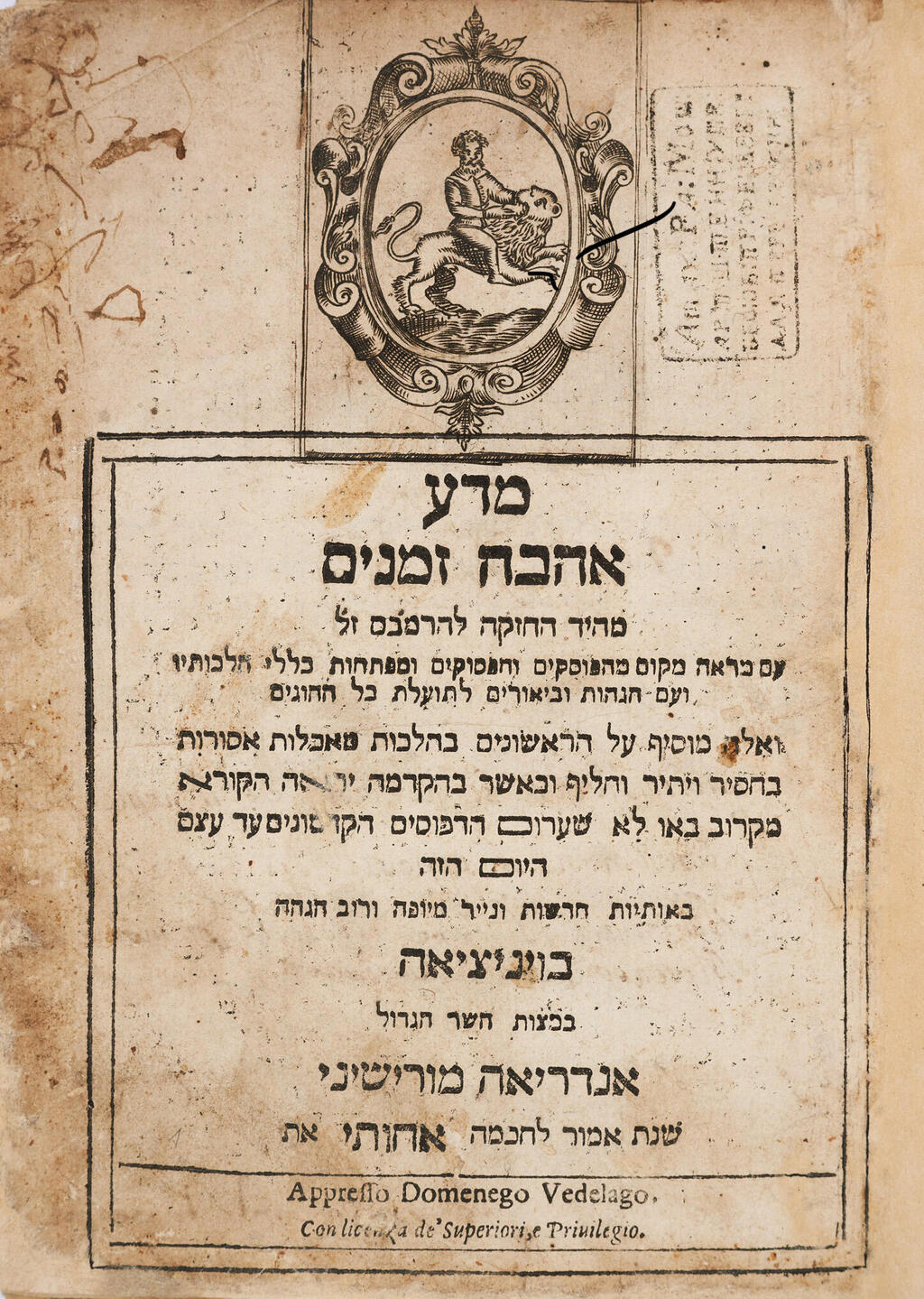
Sabbatai Zevi riding a lion, Venice, 1665. From the Hartman Family Collection of Manuscripts and Rare Books
(Photo: Ardon Bar-Hama)
The rare volume is among the objects displayed in “Sabbatai Zevi: Truth or Falsehood,” at Jerusalem’s Museum for Islamic Art, which runs through November 7, 2026. Rather than presenting Zevi only as a “false messiah” or focusing solely on his conversion to Islam, the exhibition examines the many ways Jews, Christians and Muslims imagined and interpreted him over four centuries. “Visitors will not meet one figure but many,” Feldman Samet said. “He is a king, a messiah, a heretic, a living memory and also an object of love and inspiration.”
Zevi was born in Izmir in the Ottoman Empire in 1626 and studied Torah and Kabbalah from an early age. His status as a charismatic mystic rose dramatically after he met Nathan of Gaza in 1665, who publicly declared him the Messiah. The message spread rapidly across Jewish communities, and belief that redemption was imminent became a mass phenomenon. Support came not only from ordinary Jews but also from prominent rabbis and scholars, including Rabbi Shalom Shabazi, one of the most revered figures in Yemenite Jewish tradition, who wrote devotional poetry expressing messianic hopes around Zevi.
Evidence of that fervor survives in a 1666 letter sent by Jewish leaders in Amsterdam, then one of the most important centers of Jewish life. They addressed Zevi as “our lord, our king” and “our righteous Messiah,” accepted his authority and waited eagerly to hear from him. Feldman Samet said the movement also included ecstatic popular practices and reports of mass prophetic experiences involving women and children.
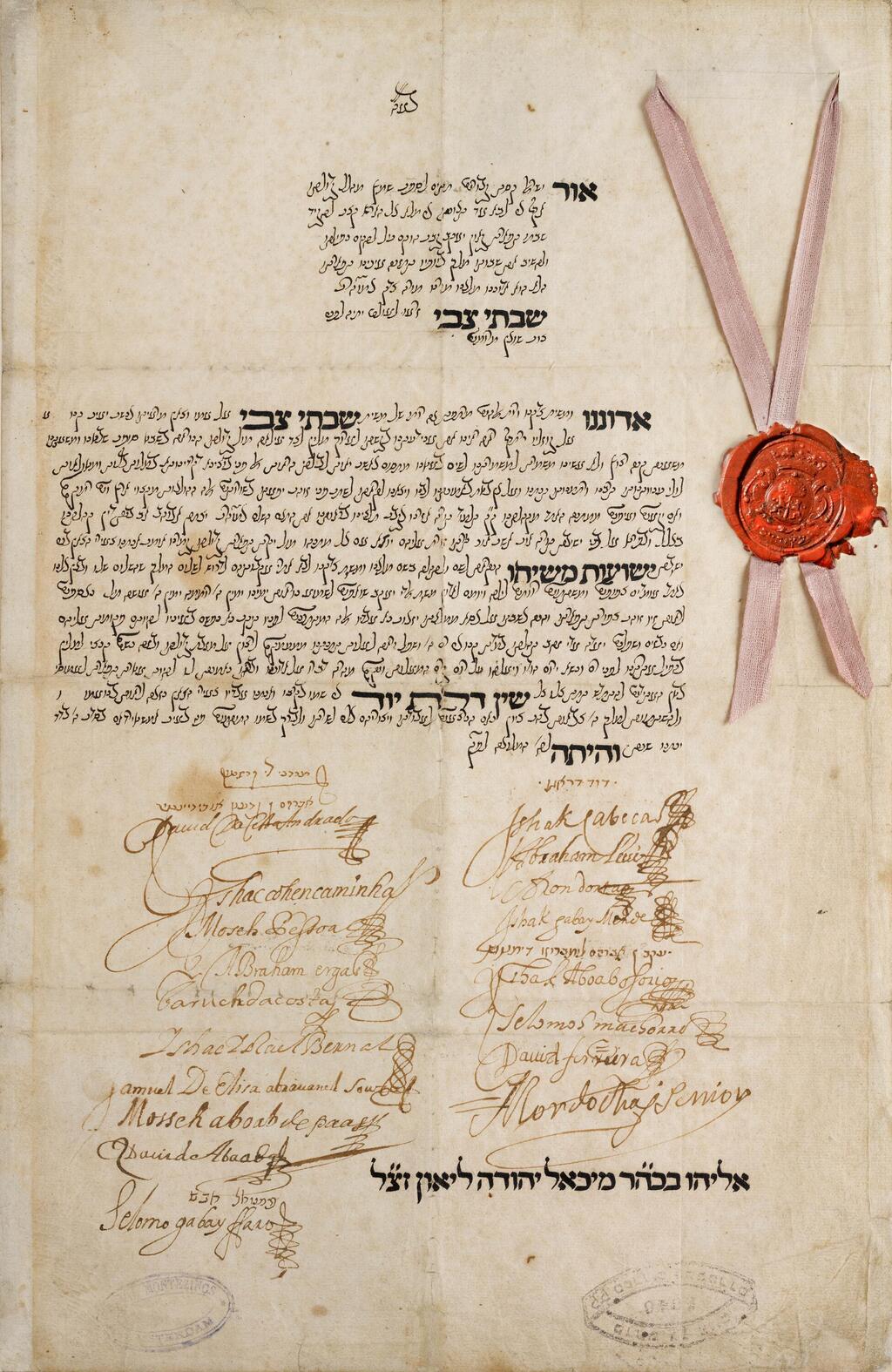
Letter from the leaders of Amsterdam’s Jewish community to Sabbatai Zevi, 1666
(Photo: Montezinos Library, Ets Haim Library)
Yet reconstructing Zevi’s story is complicated because nearly every historical source came with an agenda. One important account was written by Thomas Coenen, a Calvinist minister in Izmir, who sought to present the episode as proof of Christianity’s truth and Jewish blindness. Sabbatean sources, by contrast, portrayed Zevi as a genuine redeemer already bringing salvation into the world. Feldman Samet said historians must therefore combine competing accounts while recognizing both their value and their limitations.
The crisis came in 1666, when Ottoman authorities arrested Zevi and brought him before the sultan’s court. Under what is generally understood to have been a threat to his life, he converted to Islam. The move devastated many believers, but it did not end the movement. Some continued to see him as the Messiah, while Zevi himself maintained contact with Jewish followers even after formally becoming a Muslim.
His final years reflected that ambiguity. In 1672 he was arrested again and, after several months in prison, exiled to Ulcinj, in present-day Montenegro. He died there three years later at the age of 50. Not long before his death, he wrote to Jews in the region asking them to send him a prayer book for Rosh Hashanah and Yom Kippur. In that letter, he signed himself “Messiah of the God of Israel and Judah, Sabbatai Zevi.” In another, he used the hybrid name “Sabbatai Mehmed Zevi,” inserting the Muslim name he had received after his conversion into his Jewish name.

Dr. Hadar Feldman Samet
For Feldman Samet, such documents reveal a figure who continued to move between religious worlds. Contemporary descriptions portrayed him symbolically with a Torah scroll in one hand and a Quran in the other. Zevi himself also presented his conversion not simply as coercion but as part of a divine plan, arguing in his writings that entering Islam formed part of the redemptive process. Even the form of his signature carried mystical meaning: in some late letters his name appeared in the shape of a serpent, whose Hebrew numerical value, 358, is the same as that of the word Mashiach, Messiah.
The shock of the Sabbatean movement continued long after his death. Its memory contributed to a broader Jewish suspicion of explosive messianic movements and charismatic leaders who claimed that exile had ended and redemption had arrived. Feldman Samet cautioned, however, against drawing a direct line from Sabbateanism to later opposition to Zionism, noting that modernity, secularization, the Jewish Enlightenment and the development of Orthodox Judaism all shaped those debates.
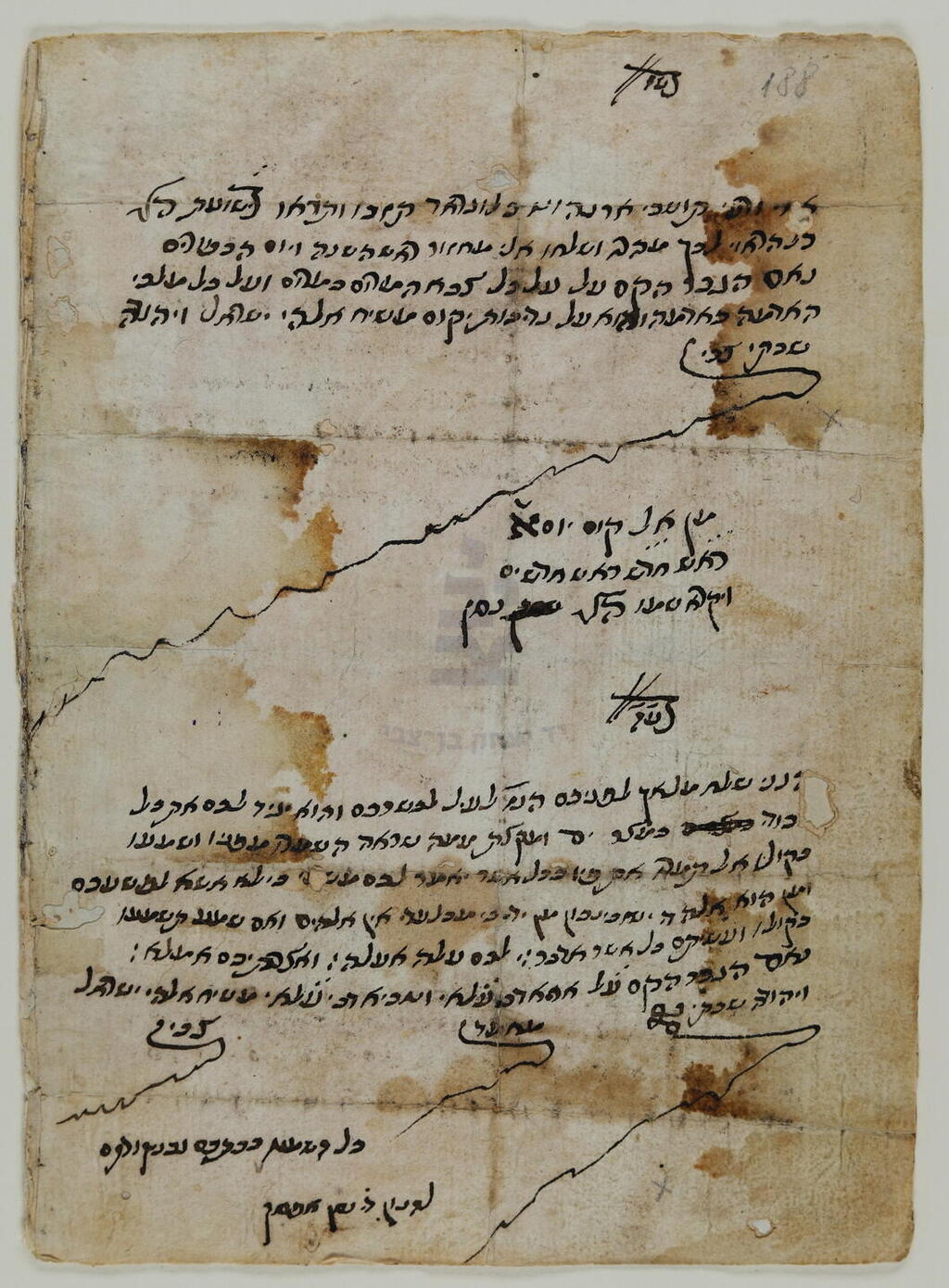
Letter sent by Sabbatai Zevi to Jews shortly before his death, requesting a prayer book for the High Holy Days
(Document: Sabbatai Zevi letter, Abraham Amarillo Collection, Yad Izhak Ben-Zvi Library)
Zevi nevertheless became an enduring Jewish warning symbol, and his name still appears in modern political discourse as an insult directed at charismatic leaders accused of promising sweeping transformation. At the same time, his cultural afterlife has been far more complex. Theodor Herzl referred to him, writers and artists repeatedly returned to his story, and poet Uri Zvi Greenberg even called him “my true Messiah, Sabbatai Zevi,” illustrating how far his image has extended beyond the conventional label of religious impostor.
His legacy also survives through the descendants of followers who converted to Islam after him. These communities became known in Turkish by the derogatory term Dönme and were concentrated largely in Ottoman Salonica, today Thessaloniki. Under the compulsory Greek-Turkish population exchange of 1923, they were transferred to Turkey despite attempts to argue that they were not Muslim. Most settled in Istanbul.
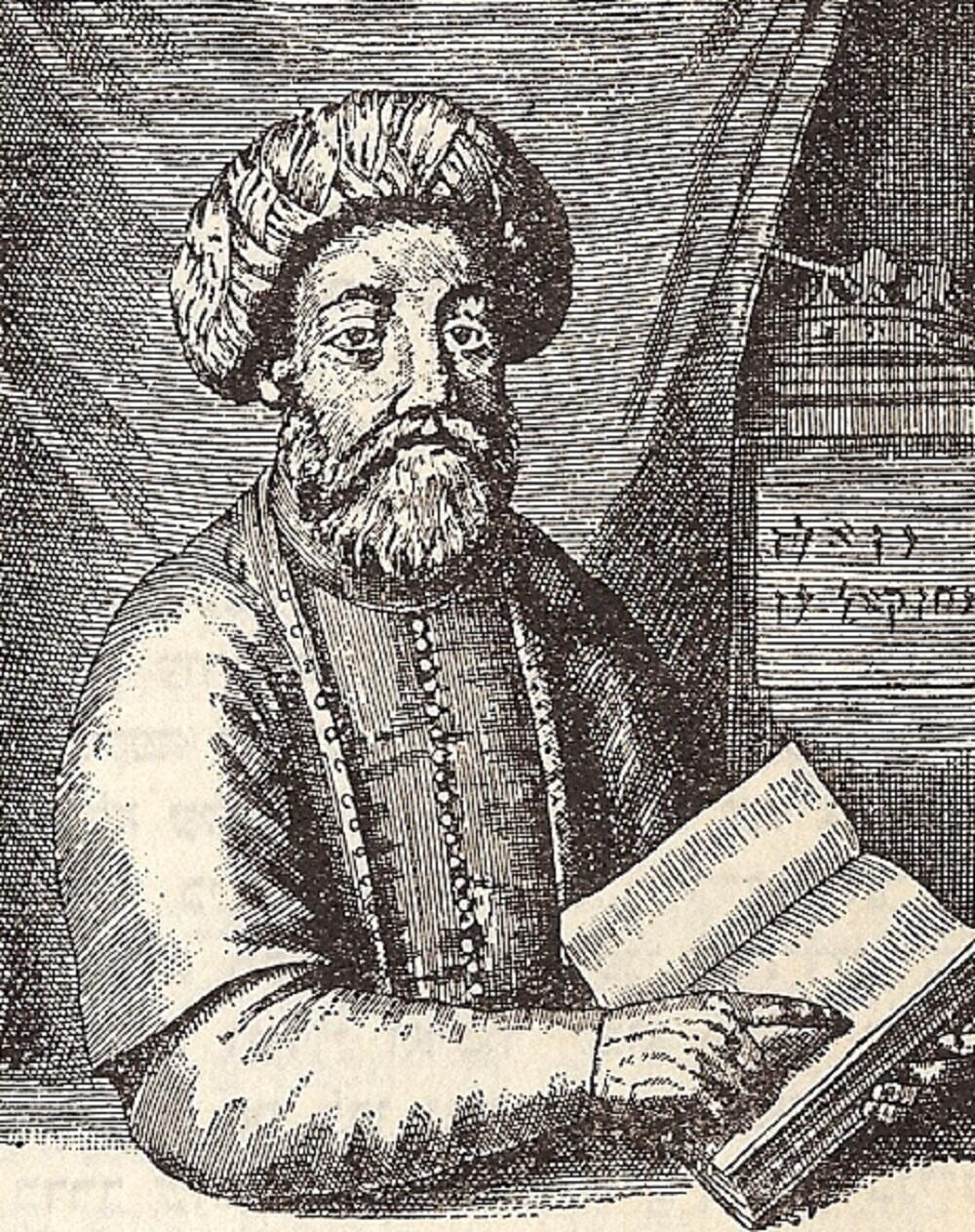
Engraving of Sabbatai Zevi
(Illustration: From the book by Thomas Coenen, Amsterdam, 1669)
That forced relocation later took on a haunting meaning. After about 96% of Thessaloniki’s Jews were murdered during the Holocaust, mostly at Auschwitz-Birkenau, a tradition developed among Sabbatean descendants that their removal to Turkey had inadvertently saved their lives. Over the 20th century, many underwent processes of secularization, nationalism and assimilation, while others continued to preserve a more closed communal identity. Descendants outside the community have increasingly turned to books, films and historical research to explore what Sabbateanism means for their own identity.
For Feldman Samet, that long and complicated afterlife is precisely why the simple label “false messiah” is inadequate. As a historian, she said, she avoids the term because it reduces a phenomenon that has been experienced and reinterpreted in radically different ways for 400 years. The historical Zevi remains central to the story, but just as revealing is what generations after him chose to make of him: messiah and apostate, warning and inspiration, religious scandal and enduring cultural symbol.