


As young Jews navigate rising antisemitism and questions of identity after Oct. 7, leaders at Masa say more are turning to Israel not out of curiosity, but with a sense of purpose. For some, that experience has become a launching pad for public advocacy, Holocaust education and a more assertive Jewish identity.
That was the message from Masa CEO Meir Holtz and British activist Dov Forman, a Masa alumnus, in an interview with ynet Global about how Jewish engagement is changing amid war, rising hostility and growing pressure on young Jews around the world.
interview studio Masa, Meir Holtz, Dov Forman


“The past few years have been turbulent, to say the least, for all of us,” Holtz said, pointing to the pandemic, the war between Russia and Ukraine, the Hamas attack of Oct. 7 and the subsequent regional escalation. But amid that upheaval, he said, “we’re seeing young Jews showing up in very, very special ways.”
“This generation is such a special generation of young adults that are really showing up in ways that no other generation before,” Holtz said. “They’re there, they’re active, they’re learning, they’re interested, and they are here for us.”
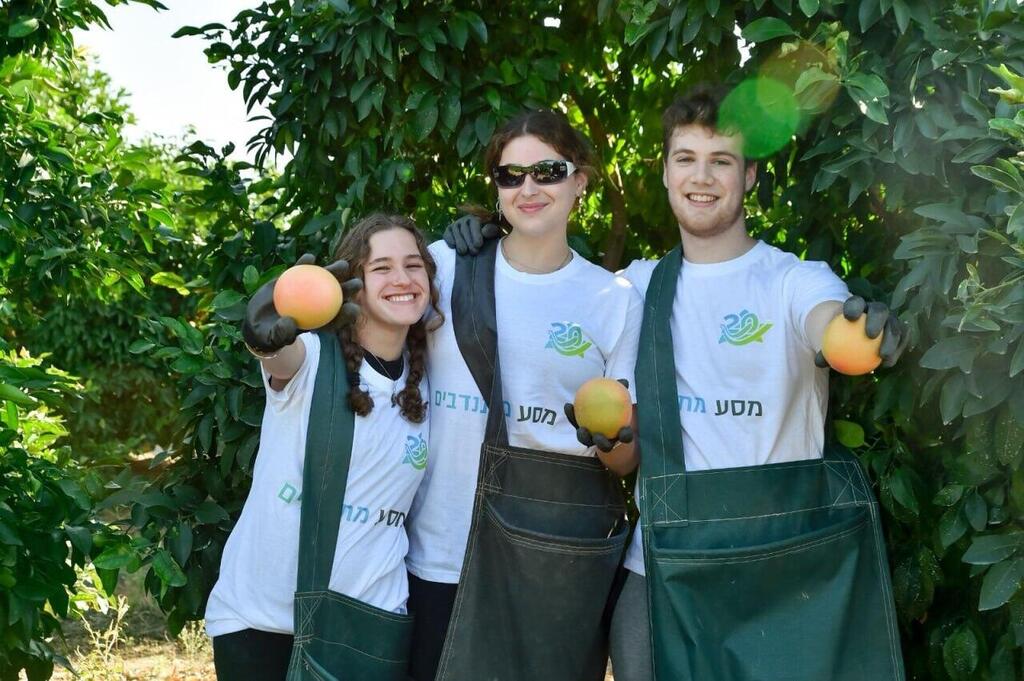
Founded more than 20 years ago by the Jewish Agency and the Israeli government, Masa has brought more than 220,000 young Jews to Israel through long-term programs, Holtz said. He argued that the experience is not just educational, but immersive.
“The biggest thing in the core is they’re actually living here like locals,” he said. “They’re getting involved within Israeli society. They’re getting the opportunity to live like Israelis, to meet Israelis, to meet Jews from other programs... a real opportunity to have a completely different perspective from what they would have from anywhere else in the world, no matter where they're coming from."
For Forman, who took part in a Masa religious Jewish studies program in 2022, before Oct. 7, that experience helped shape the public role he has taken on since. “I grew up here in London,” Forman said. “It really helped me shape my Jewish identity, learn more about history.”
Forman, now known for his Holocaust remembrance work on social media, said one of the central challenges facing Jews today is widespread ignorance, not only about the Holocaust, but about Jews themselves.
“Most people across the UK, and even across the world, will never meet a Jewish person,” he said. “So I do think it’s our responsibility as young Jews to learn more about our history, to learn more about our only Jewish country in the world, and to be able to defend it, and to be able to teach people what being Jewish really means.”
After returning from Israel, he said, he began using social media to educate his audience of more than 2 million followers about Jewish identity, Holocaust history and current events. “I think you can only do that if you spend time and if you learn, and you can do that through programs like Masa,” he said.
Both men described a generation under pressure. Forman said young Jews have been “thrust over the past few years” into a fight over identity, truth and public visibility, particularly on campuses and online. “I don’t think young Jews have ever been in the situation that we are now,” he said, “where on their social media feeds, they’re being attacked every single day, on campuses, in person, they’re being attacked every single day.”
Still, he said, many are choosing engagement over retreat. “It’s up to us to decide whether we want to use those for the positive,” Forman said of social media platforms and public voices. “Because we know that no one else is going to stand up and speak up for us.”
Holtz said Masa has seen that same resolve firsthand, including during wartime. The organization, he said, did not suspend its programs after Oct. 7 or during subsequent military operations, but instead adapted while prioritizing participants’ safety. “Masa doesn’t stop. We adapt,” Holtz said.
He said participants logged “thousands and thousands of hours of volunteering” during recent emergencies, focused less on leaving Israel than on helping others. “One of the most amazing things to me was we have a call center with all calls coming in from parents, from participants and from future participants, and we expected those calls to be primarily about, ‘How do we get out of here?’” Holtz said. “The number one question was, ‘When does registration open for next year?’”
That demand, he said, led Masa to open registration for its next program year earlier than it had in nearly a decade. “We’ve opened only days ago, people are signing up,” Holtz said. “People want to be here.”
For Forman, the impulse to engage grew out of his own family story. He said he began interviewing his great-grandmother, an Auschwitz survivor, during the COVID-19 pandemic and later realized more needed to be done to preserve and share survivor testimony online. “I quickly saw that people were thirsty for this knowledge, knew very little about the Holocaust, especially Americans,” he said.
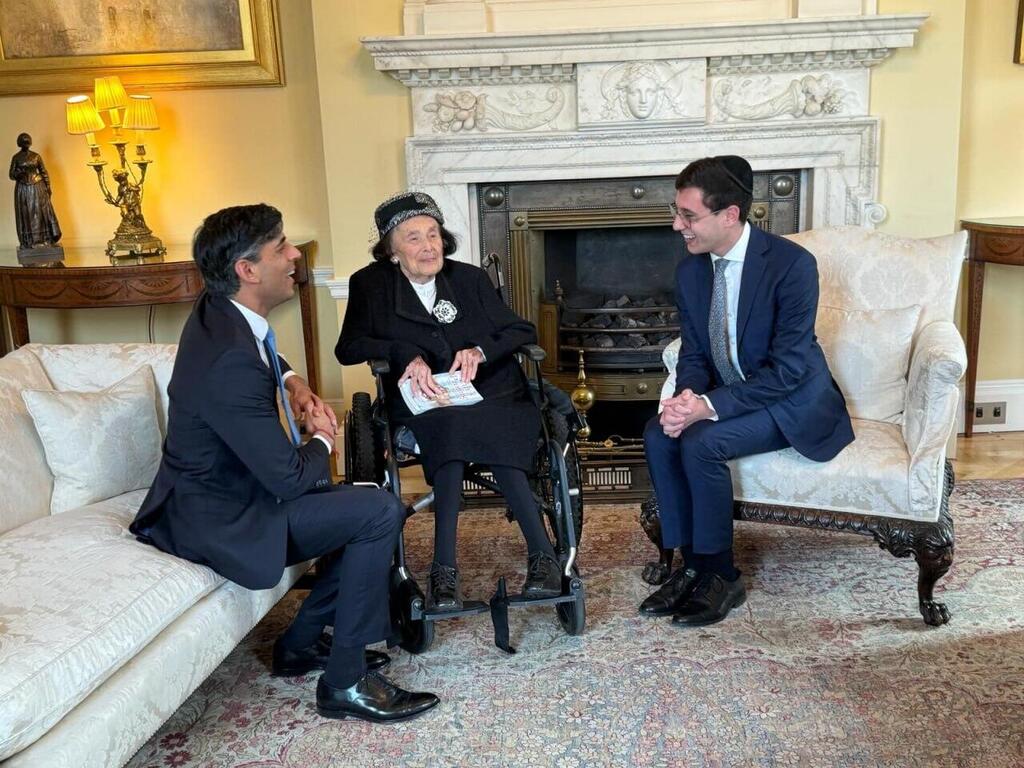
Dov Forman (right) and his Holocaust survivor great-grandmother Lily Ebert meeting with then-UK prime minister Rishi Sunak, January 2024
(Photo: 10 Downing Street)
Over time, he said, his posts reached a vast audience. “Now over a billion people have watched my great-grandmother’s testimony and other Holocaust survivors online through my platforms,” Forman said.
But he said advocacy does not require a massive audience. “If you can impact one person in your school, on your university campus or online, that should be a success,” he said. “They might go and educate another.”
Looking ahead, both men said meaningful Jewish engagement will have to be personal, flexible and rooted in a stronger sense of identity. “There isn’t one way in which we’re going to educate,” Holtz said, explaining why Masa offers hundreds of different programs. “Different people are looking for different ways to connect, and they also need different avenues to really express that connection.”
He said the goal is not simply institutional growth, but personal growth. “We need to be using this institution ... to make sure that we connect individually to as many people as possible so that each and every one of them can really move that and send that message forward,” Holtz said.
Forman struck a similar note, framing the moment as both a challenge and a test. “We all know the challenges. We know the situation that Jews across the world find themselves in, and we know that we need to continue to learn, we need to continue to speak up,” he said.
“No one else is going to do this before us, but we should take hope and strength from the people that came before us that they too have been through much worse in the time of the pogroms, and the time of the Holocaust throughout Europe, and they came through it too, and look what they built, they built a generation of strong, proud Jews who can rise to this moment. It's up to us to do that, it's up to us to use our platforms in whatever way people might feel fit to do so.”
Ultimately, he said, the question facing young Jews is simple: “What are you going to do about it?”

First published: 15:45, 04.19.26