

University College London has barred a former academic from entering its campus after she repeated a centuries-old antisemitic blood libel during a student-organized lecture, sparking outrage and prompting a police complaint.
Dr. Samar Maqusi, a former researcher at UCL’s School of Engineering and a former employee of the UN agency for Palestinian refugees (UNRWA), told students during a talk last week that Jews murdered an Italian monk, Father Thomas, in Damascus in 1840 and used his blood to make “pancakes”—a reference widely understood to mean matzo.
The claim refers to the infamous “Damascus affair,” one of the most notorious antisemitic hoaxes of the modern era, in which Jews were falsely accused of ritually murdering Father Thomas and his Muslim servant. Both disappeared in February 1840 while passing through the Jewish quarter in Damascus. Rumors quickly spread that Jews had abducted and slaughtered them to use their blood in religious rituals.
According to a report by The Jewish Chronicle, Maqusi repeated this fabricated accusation as historical fact in her lecture, titled “The Birth of Zionism,” the first in a series hosted by the official campus group Students for Justice in Palestine (SJP). She also alleged that Jews “controlled” the banks and accused Zionists of dominating all narratives about Israel’s history.

UCL President Michael Spence condemned the remarks, which were secretly recorded by a student. “I am utterly appalled by these heinous antisemitic comments,” he said. “Antisemitism has absolutely no place in our university, and I want to express my unequivocal apology to all Jewish students, staff, alumni, and the wider community that these words were uttered at UCL.”
Spence added that although Maqusi is no longer employed at the university, the administration has banned her from campus, reported the incident to police and launched a full investigation. The student group that hosted the event has been suspended from holding further events until the inquiry is complete.
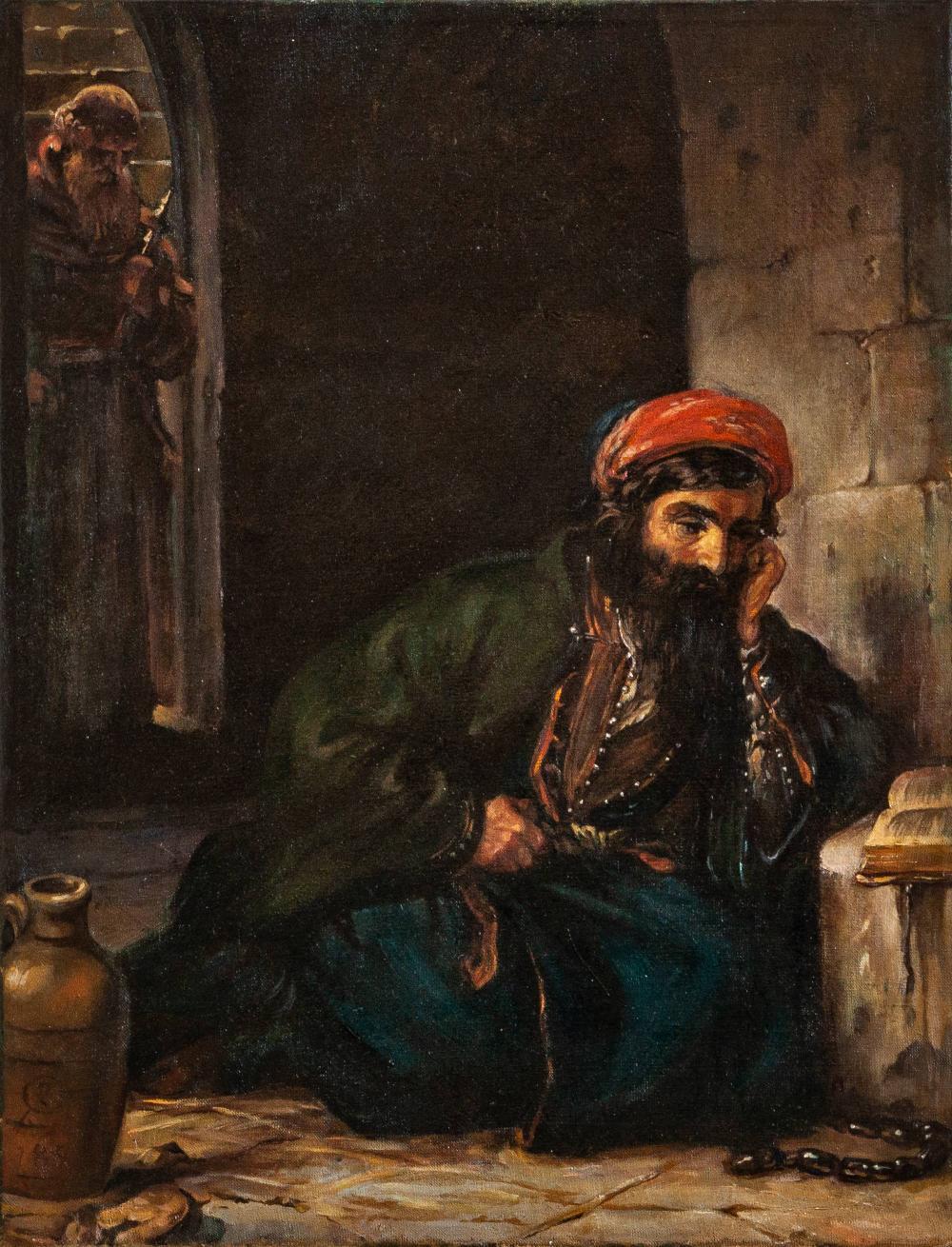
A Jewish prisoner in Damascus awaits trial, in a painting by Jewish artist Moritz Daniel Oppenheim. The scene references the 1840 Damascus affair
The Damascus affair, often cited as a watershed moment in modern Jewish history, led to the arrest and brutal torture of Jewish community leaders. Several died under interrogation. International Jewish figures, including British financier Moses Montefiore and French-Jewish statesman Adolphe Crémieux, intervened to secure the release of the surviving prisoners. Their efforts would later inspire the founding of Alliance Israélite Universelle, one of the earliest Jewish global advocacy organizations.
Despite fabricated “evidence,” including bones later believed to belong to a dog, and the support of antisemitic French consul Ratti-Menton, the accusations were eventually discredited—though not before causing lasting damage to the Jewish community in Syria and beyond.