

Police in the eastern German city of Halle have launched an investigation into allegations that a politician from the far-right Alternative for Germany (AfD) party was insulted during a confrontation with Jewish students who blocked him from attending a memorial ceremony for victims of the city's 2019 antisemitic terrorist attack. One or more protesters allegedly called the politician a "Nazi," German media reported.
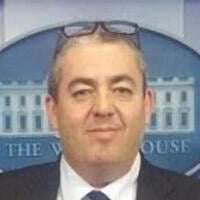
The investigation concerns Hans-Thomas Tillschneider, deputy speaker of the Saxony-Anhalt state parliament, who was prevented from entering the memorial by members of the Jewish Student Union of Germany (JSUD). According to the German Jewish newspaper Jüdische Allgemeine, police are investigating a suspected criminal insult against the politician.
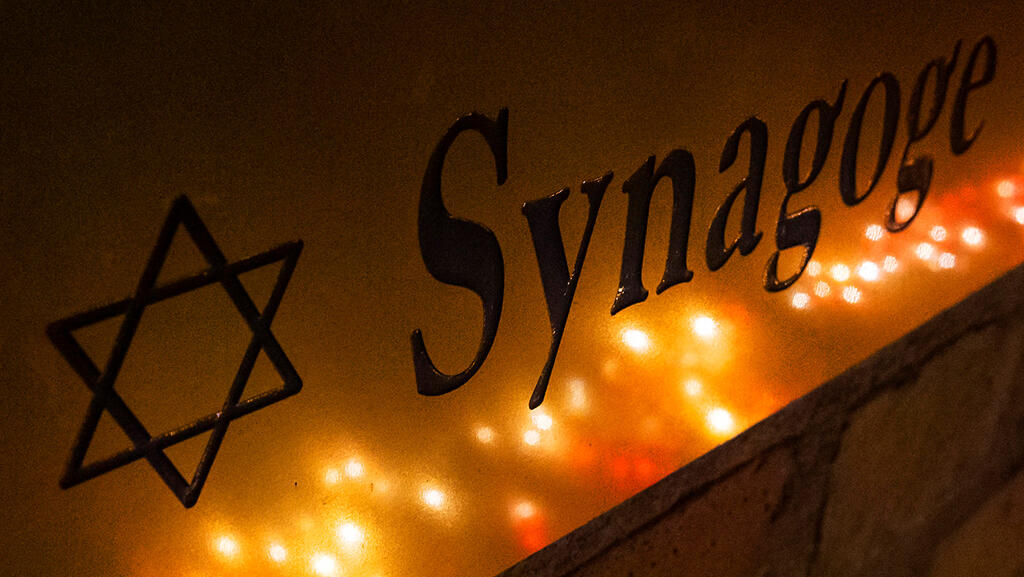
The confrontation took place on October 9, the seventh anniversary of the attack on the Halle synagogue. On Yom Kippur in 2019, a 27-year-old far-right extremist named Stephan Balliet attempted to enter the synagogue and murder worshippers gathered inside. Between 50 and 70 people were in the building at the time, but the attacker was unable to gain entry. He subsequently shot and killed a woman and a man, the latter at a nearby food stand, and wounded two others. Before the attack, Balliet had published a video expressing antisemitic views and blaming Jews for the world's problems.
During last week's memorial ceremony in the synagogue courtyard, the Jewish students formed a human chain to prevent Tillschneider from entering. They demanded that he "show decency and not desecrate the memory of the victims," accusing him and his party of helping create a political climate in which antisemitic violence could flourish.
Ron Dekel, president of the Jewish Student Union, said politicians such as Tillschneider had pushed the boundaries of acceptable public discourse so far that attacks of this kind had become possible. The organization declined to comment on the ongoing investigation.
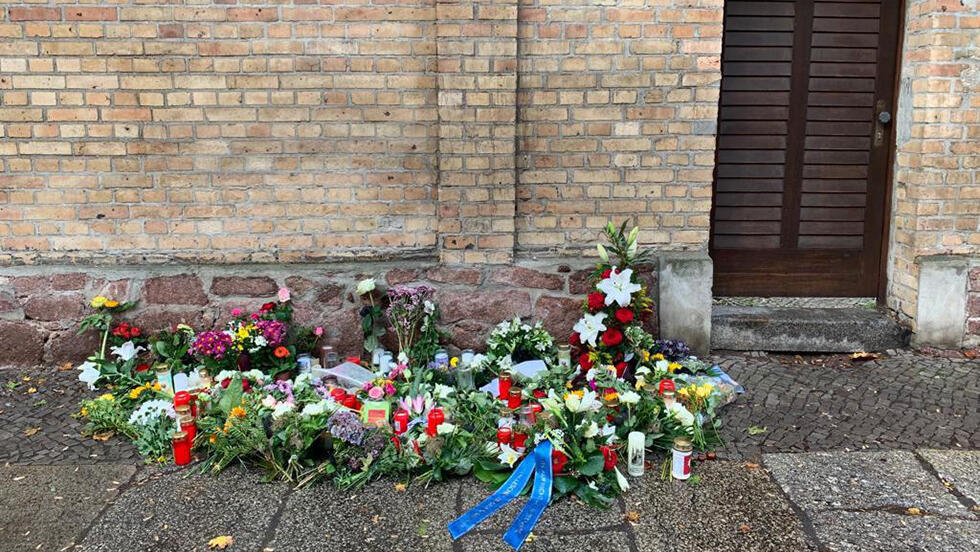
Wreaths at the site of the 2019 antisemitic attack
The protest was also prompted by Tillschneider's remarks following the 2019 attack, in which he appeared to minimize the perpetrator's antisemitic motives. He described Balliet as a "confused lone attacker" and argued that his actions were not political but rather resembled "a sequence from a video game," driven by a "distorted urge to play." He also claimed that the term antisemitism did not adequately describe the attack.
German Chancellor Angela Merkel and members of the Jewish community gather at a synagogue in Berlin following the Halle attack


Under German law, investigations into criminal insults generally require a complaint from the person allegedly targeted. However, in cases involving public officials or politicians, authorities may initiate proceedings without such a complaint under certain circumstances. Tillschneider said he had not filed a complaint and had no intention of doing so.
Following the confrontation, Tillschneider described the Jewish activists on X as "a group of radicalized students."
Tobias Rausch, president of the Saxony-Anhalt state parliament and also an AfD member, claimed that his party colleague had been rudely prevented from attending the ceremony. He accused police and municipal authorities of failing to intervene to secure Tillschneider's access to the memorial.
Rausch subsequently invited Max Privorozki, chairman of Halle's Jewish community, to what he described as a "clarifying discussion" at the state parliament. Privorozki responded that no personal invitations had been issued for the memorial ceremony.