


Three months after the Supreme Court of Israel ruled that the Chief Rabbinate of Israel must allow women to sit for its rabbinic certification exams—something never previously permitted— the Rabbinate, through the State Prosecution, has now requested a rehearing of that decision. In that hearing they will effectively ask for a revised arrangement: allowing women to be examined only in certain specific subjects.
To obtain a rabbinic certification from the Chief Rabbinate in Israel, candidates must pass three mandatory exams in Jewish law—covering religious law (halacha), kashrut (dietary laws) and taharat habayit (family‑purity laws)—and three additional elective exams chosen from less rigorous subjects such as laws of mourning, prayers and blessings, marriage and betrothal laws, and synagogue law.
Traditionally, the Rabbinate has only allowed men to sit for these exams. In response to past petitions demanding equality, the Ministry of Religious Services created a parallel examination system for women and a certificate outside the Rabbinate system. Later, upon formation of a new government, the ministry cancelled that option and the matter was returned to the Supreme Court, which directed the Rabbinate to open its exams to women.
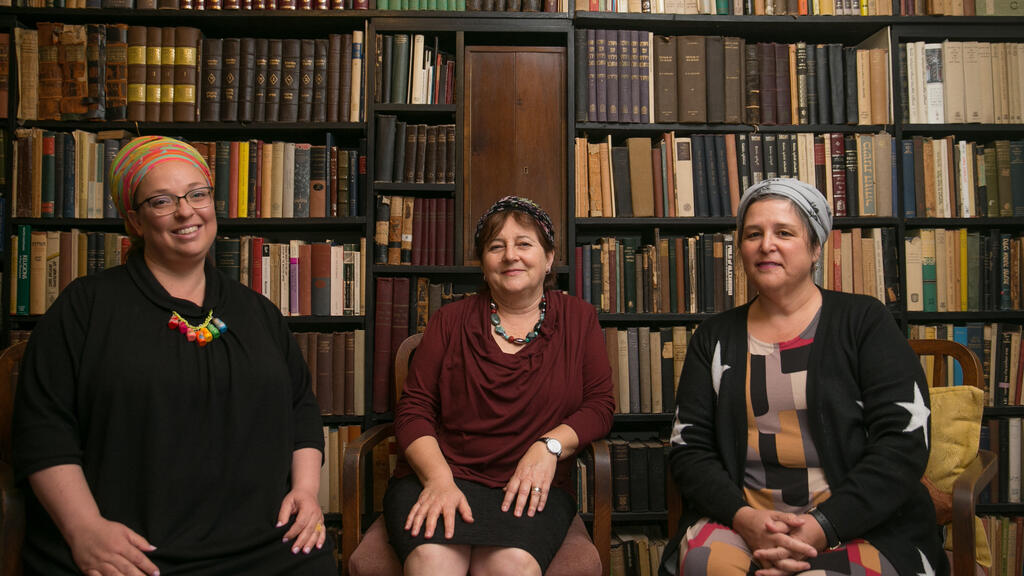
Facing the court’s decision, the Rabbinate chose a workaround: they decided not to conduct the exams at all—not for men, not for women. As a result, many male students who had been studying for months for a November exam were unable to register for it, because the Rabbinate refused even to open pre‑registration, citing concern that women might register.
This move by the Rabbinate constitutes not just a violation of the Court’s ruling—and a delay of its implementation—but also has harmed thousands of who were preparing for a scheduled exam. The state has now submitted a request for rehearing on behalf of the Rabbinate.
In its request, the Rabbinate states that it would be willing to permit women to sit for exams on the subjects of Shabbat and family‑purity laws (taharat habayit), but not for other exams. According to the text of the request: “From the position of the Chief Rabbis, the prevailing halachic stance is that there is a relevant difference between men and women in respect of eligibility for rabbinic certification or capacity for the rabbinate, and in matters relating to Torah study. At the same time, there is no prohibition on women learning certain subjects (including, principally, halachot of everyday life, as conveyed by the Chief Rabbis).”
The request further states: “Accordingly, the Chief Rabbis hold that there is no objection to women sitting—via the Chief Rabbinate—in certain parts of the exams in question, concerning those halachot. Specifically, the Chief Rabbis noted that they are prepared to allow women to be examined in daily‑life laws such as laws of Shabbat and laws of menstruation (niddah). In the remaining subjects, about which the petitioners assert there is a halachic‑religious difficulty in women’s study, the Chief Rabbinate maintains that a relevant difference between men and women exists, which flows from the nature and essence of the matter.”
Attorney Yair Mavorach Shag, from the legal department of Itim – Jewish Life Advocacy Center, decried the request.
“This is a request that raises shameful arguments regarding the status of women and their ability to study Torah and engage in it," he said. "The State of Israel boasts of equality of rights and significant progress for women’s status, and yet simultaneously undermines that equality. These arguments were raised now, on a matter already ruled by the Supreme Court, and therefore do not justify reopening the process of additional hearings—certainly not justify delaying the implementation of the historic ruling that enables women to sit for rabbinate exams.”

Chief Rabbis David Yosef and Rabbi Kalman Bar
Rabbanit Sara Segal‑Katz, one of the petitioners before the Court, told ynet and Yedioth Ahronoth that a rehearing would be a step backwards for the women who want to take the exam.
“The request of the Chief Rabbinate for a rehearing pushes us backwards. Even the attempt to plant the division as if women are exempt from certain mitzvot does not permit blocking them from obtaining the knowledge or taking the examination thereof," she said. "Never has an applicant’s status as a Kohen, a Levi or an Israelite been the basis for deciding which exams he can take. It should be noted that the argument of error in the judgment may open an extensive discussion that will deeply undermine the institution of the Rabbinate as a ‘men’s club’ and make clear why discriminations within it are inconsistent with the values of the State of Israel.”
Dr. Elad Kaplan, CEO of Na’amanei Torah v’Avodah‑Kolech, also a petitioner, said that "the Rabbinate’s demand to close the door in the face of women of halacha undermines its role in bringing the public closer to Torah and mitzvot. Women of halacha strengthen the world of Torah, and their rejection hurts not only them, but all of us. It would have been appropriate for women of halacha to find at the Rabbinate a warm home, not a locked gate.”