

Dr. Na'ama Shik, a researcher at the International Institute for Holocaust Research at Yad Vashem, is 57 and lives in Tel Aviv. She is in a relationship and has one child and two cats. Her doctoral dissertation was later adapted into the award-winning book “Silent Screams: Jewish Women in Auschwitz-Birkenau, 1942–1945,” which received the Goldberg Prize.
Her research focuses on the differences between the experiences of women and men during the Holocaust. “There are significant differences between women and men,” she said, noting that scholarly work on the subject began in the United States in the 1970s and reached Israel in the late 1990s.
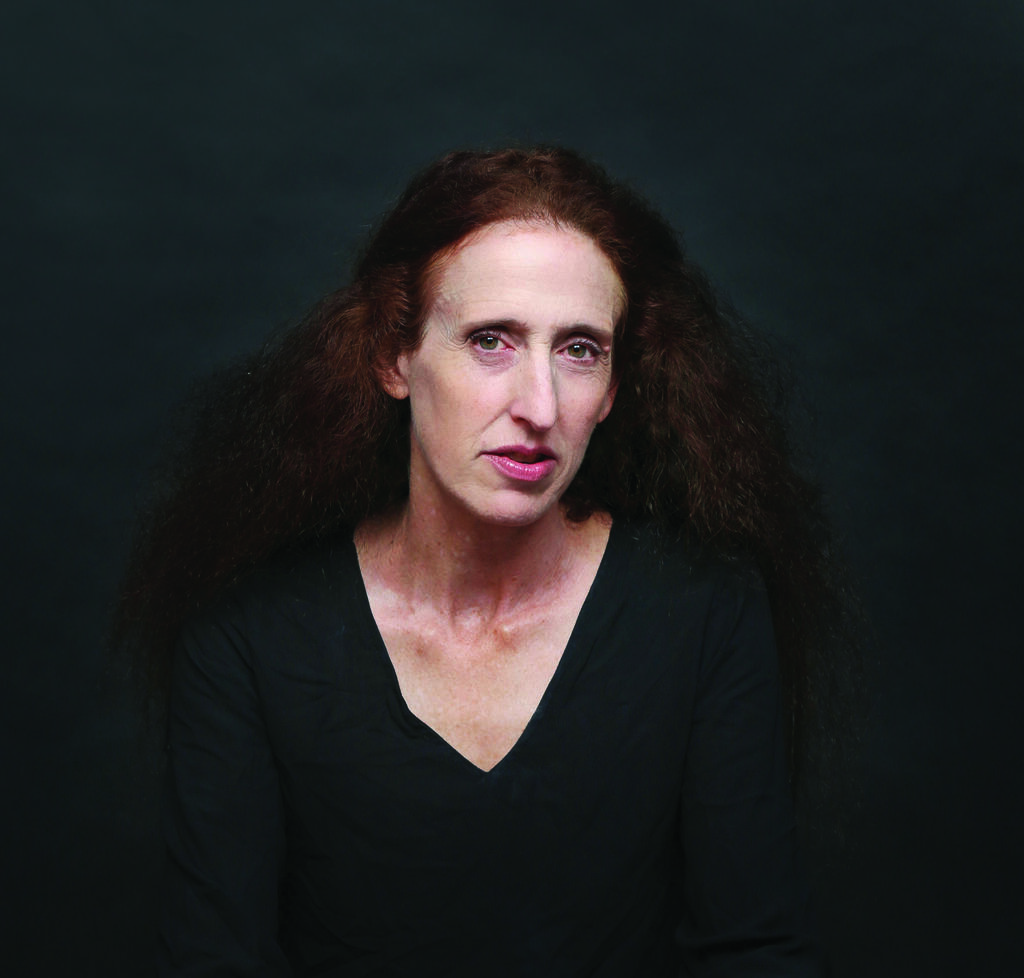
Dr. Na'ama Shik
(Photo: Farag studios )
How did you get into this field?
“I studied for a master’s degree in history with Prof. Billie Melman, who is receiving the Israel Prize in history this year, and Dr. Raya Cohen, both of whom also worked on gender. During discussions with them, a conversation about gender in the Holocaust began, and it fascinated me. Within the seemingly monolithic concept of ‘the destruction of the Jewish people,’ there should not be differences between men and women, but clearly there are. I focused on Auschwitz because no one had studied the women there, even though it was the largest concentration camp and the largest camp for Jewish women. There were 132,000 female prisoners in Auschwitz, including 82,000 Jewish women — most of whom did not survive.”
How do you research this?
“Like any historian’s work, it is a careful process of cross-referencing information from many sources, along with analysis and close reading — not only of what is said, but also of what is not said. I read diaries of Holocaust survivors. In Auschwitz itself, almost no diaries were written because it was strictly forbidden to possess paper and pencil, precisely for that reason. The Germans were constantly engaged in concealing what they were doing. As Himmler said in one of his speeches, ‘A glorious page in history that has never been written and never will be written.’ I also read German sources to understand laws and orders, diaries of Germans, diaries of the Sonderkommando — special units composed of Jews and non-Jews forced to work in the gas chambers — and diaries written by women in camps to which they were transferred after Auschwitz. New diaries are still being discovered. Just now, I found three that no one knew about from a labor camp in Austria.”
What are your conclusions?
“Jewish women and men were both destined to be murdered, but the path to murder was very different. This is due to female physiology, including pregnancy, menstruation and motherhood, as well as attitudes toward the body and appearance. According to Nazi ideology, women ages 16 to 40 — their reproductive years — were murdered simply because they could bear the next Jewish generation. Men of that age were sent to labor camps.
My grandmother was in Auschwitz and was selected for labor, even though she was of reproductive age. Her son was taken from her and murdered along with her mother.
“Your grandmother arrived in Auschwitz around mid-1943. By then, the Germans were making what can only be described as a horrific ‘concession’ to ideology because they needed labor after suffering heavy losses in the war. They took the children and kept the mothers for work.”
What other gender dimensions did you find?
“Sexual exploitation. Under the Nuremberg Laws, Germans were forbidden from having sexual relations with Jewish women due to so-called racial defilement. This is almost the only genocide in history in which the ruling and exterminating army was formally prohibited from rape. However, what I define as ‘genocidal rape’ did occur, with characteristics similar to the sexual violence seen on Oct. 7 — gang rape followed by the murder of the women.
“Already upon arrival at the camp, during the process in which women were forced to undress, had their heads shaved and were tattooed, veteran prisoners and SS officers would touch intimate parts of their bodies and mock them. There are testimonies of ‘gynecological examinations’ intended to check whether valuables were hidden and to enforce a ban on pregnancies. Any Jewish woman whose pregnancy was visible was immediately sent to her death.”
What surprised you most?
“I did not think I would find solidarity in a place that sanctified death — a place where women did not even have control over their bodily needs, where the toilets were a single long block of holes and 30,000 women were ordered to use them for 10 minutes at a time, sitting back to back. It surprised and amazed me to see the bonds that formed between them.
“There was, for example, a network of Jewish doctors, nurses and midwives who performed abortions and induced early births for women who discovered they were pregnant, in order to save the mothers. Of course, if they had been caught, they would have been murdered, yet they still did it. I have testimonies from girls as young as 14 whose mothers were taken during selections. They arrived alone and waged a joint struggle for survival, trying to protect one another — extraordinary things.
“I was also surprised by how certain things are no longer told in later testimonies. In wartime diaries, women wrote about pregnancies, the meaning of losing menstruation — many experienced amenorrhea due to malnutrition — about sexual exploitation and the loss of children. In later testimonies, these issues are far less present, partly because they were not properly asked about and partly because survivors went on to live full lives and build new families, and they want to forget.”
What is the main challenge in your research?
“It was very difficult emotionally — as a woman, as a person and as a mother. My son was born while I was doing my master’s degree, and it became much harder after he was born. At the same time, there is a world of strength and even goodness in this material, and I feel a strong need to restore these women’s voices.”
What is the next stage of your research?
“To expand the research to other camps. There are hundreds of diaries that have not yet been read, and I cannot do this alone. Future generations of researchers will continue the work.”