

The winners of the 31st Annual International Manuel Hirsch Grosskopf My Family Story Competition were announced during a global closing ceremony broadcast live from Israel to participants across six continents.
The international event last week brought together students, educators and family members from 31 countries around the world. Hosted by ANU - Museum of the Jewish People, the ceremony was streamed live via Zoom and featured the official announcement of the 2026 competition winners. The event was conducted in English, with simultaneous translation into Hebrew, Russian, French and Spanish.
The ceremony was held with the support and sponsorship of Arkia Airlines, which donated round-trip airline tickets for the winning students and their families to attend the awards program in Israel.
This year, hundreds of students worldwide submitted original projects exploring family, identity, memory, migration, heritage and community
(Photo: ANU - Museum of the Jewish People)
The Manuel Hirsch Grosskopf My Family Story Competition is the flagship educational initiative of the Koret International School for Jewish Peoplehood Studies, the educational division of ANU - Museum of the Jewish People. For 31 years, the program has connected young people in Israel and around the world with their family histories, encouraging them to explore their roots, document their heritage and transform their discoveries into creative and artistic projects worthy of museum exhibition.
The program was founded by Martha Mazu, director of Spanish-Language Educational Programs at ANU. Today, it operates in partnership with schools, educational institutions, Jewish museums, summer camps and families worldwide.
This year, hundreds of students from across the globe participated in the competition, submitting original projects exploring themes of family, identity, memory, migration, heritage and community. The entries were evaluated by an international panel of judges led by ANU.
Widely regarded as one of the longest-running, largest and most influential international Jewish educational initiatives in the world, My Family Story brings together generations, communities and young people from diverse countries and cultures through a shared exploration of family heritage and Jewish identity.
“In a rapidly changing world, the ability to pause, listen to the stories that have shaped us, and connect the past, present and future is an extraordinary educational and moral gift," said Oded Revivi, CEO of ANU - Museum of the Jewish People. "‘My Family Story’ gives young people the opportunity to discover their roots and understand how their personal stories fit into the broader mosaic of the Jewish people. The participation of hundreds of students from 31 countries each year demonstrates the remarkable power of family stories to connect individuals, communities and cultures.”
Naama Klar, director of education at ANU - Museum of the Jewish People, added: “My Family Story helps children see themselves not only as inheritors of the Jewish past, but as builders of the Jewish future. By discovering their family stories, they come to understand that they are the next chapter in the ongoing story of the Jewish people.”
The winning projects will be featured in the competition’s international digital repository and in the interactive exhibition "We Are the Museum of the Jewish People." They will join a growing collection of thousands of family stories gathered over the years from Jewish communities around the world.
First-place winners
Alex Aloush
A. D. Gordon, Givatayim, Israel
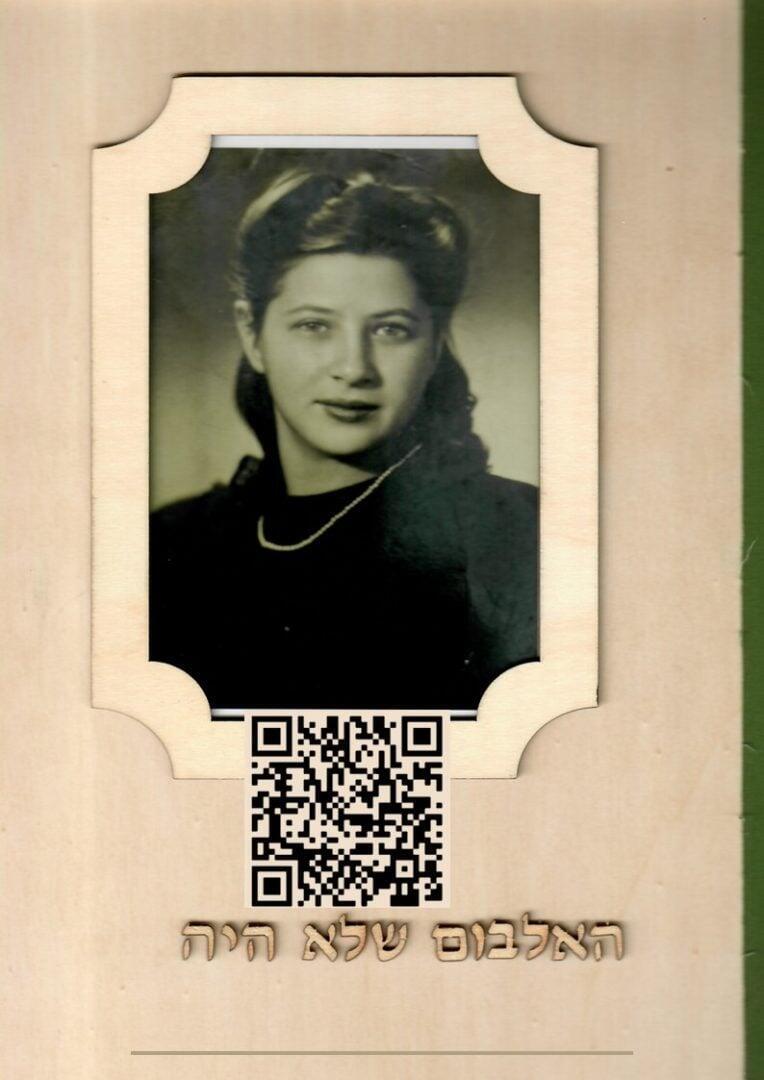
In my family roots project, titled “The Album That Never Existed,” I chose to give my great-grandmother, Gita, a gift that had been taken from her: the memory of her childhood. My grandmother was born in Belarus in 1933, but at the age of 10, she was forced to flee the ghetto alone and hide in the forest, leaving behind her family and every trace of her past.
Because of the war, her first photograph was only taken when she was 13 years old in an orphanage, creating a painful gap in our family memory. The use of modern technology does not replace reality, but rather gives visual form to a story passed down from generation to generation.
Through the use of artificial intelligence as a tool for historical and emotional restoration, I recreated lost moments, from the warmth of her childhood home to her dramatic escape, transforming abstract memories into living images that can finally be seen.
For me, this project is far more than a school assignment. It is an act of love meant to restore what was taken from my grandmother and complete the missing pieces of her story. Today, thanks to these reconstructions, “The Album That Never Existed” finally exists, preserving forever the story of my grandmother’s courage and strength in the heart of our family.
Sara Sitton Masri
Or HaHayim School, Mexico City, Mexico
My ancestors were all merchants of Syrian origin. I honor their legacy through this SHUK/SHOCK cultural piece, where aromas, textures, colors and flavors come together, representing the uniqueness and “flavor” of my heritage.
The two lamps with my family names written on them represent the light I receive from the past and radiate toward future generations.
Daniel Voloshchuk
Shalom Educational Center, Rockville, USA
Daniel approached his family history through the visual language of albums and scrapbooks. A family album is typically a repository of cherished moments, passed down through generations.
Yet, as Daniel discovered while researching his Jewish family’s experience during the tragic events of the 20th century, such archives are often incomplete. They are marked by gaps, silences and at times deliberate omissions.
His project stood out for its tactile, handmade quality, conveying the warmth and intimacy of a personal collection. Particularly striking were his material experiments, such as aging paper with tea and coffee, incorporating small pockets of information about places and events, including the village of Dirazhnya and the Shoah.
The jury especially appreciated Daniel’s effort to work in Russian handwriting, a challenging task for a bilingual participant, which added authenticity and depth to the project.
Aaron Levy
Marianne Picard, Neuilly-sur-Seine, France
Hello, my name is Aaron Levy. I was born in France and I live in Paris. My maternal family comes from Tunisia and my paternal family from Morocco. We are Sephardic Jews.
For my project “My Family Story,” I created a board game called “The Journey of Our Roots.” Through this project, I learned a great deal, especially by interviewing my parents and my four grandparents. It was an incredible experience for me.
I wanted to tell my family story, from myself to my great-grandparents, through a question-based game in order to pass on memories and better understand my origins while having fun. The game is played with pieces representing my family, which are moved from square to square. Each square corresponds to a theme and contains a question. There are also key, more difficult questions with clues.
I chose an old suitcase, symbolizing my family’s journey, as they sometimes had to leave their country.
Zoe Scharf
Mount Scopus Memorial College, Melbourne, Australia
I chose to explore how legacies of giving are passed from one generation to the next, shaping who I am today. My investigative journey led me to uncover stories of courage, kindness and resilience that have defined my family for generations.
My heirloom Tzedakah box, made from transparent acrylic and engraved copper coins, layers faces, documents and values, each coin representing a life lived with purpose.
My great-grandmother’s first act of Tzedakah was caring for her younger brother while surviving a Siberian labor camp during the Second World War, an act that became the foundation of our family’s values. She later guided at the Jewish Museum for over thirty years, sharing her story of survival and educating others about Jewish history.
My Saba and father’s healing as doctors, and my Safta’s volunteering for Magen David Adom Australia, continue that same legacy.
Through creating this piece, I learned that, just as a Tzedakah box fills over time, my identity is shaped gradually, coin by coin, value by value, continuing the chain of compassion and courage that links my family’s story to the shared spirit of the Jewish people worldwide.