

When Rabbi Laura Geller studied at Hebrew Union College in the 1970s, she was the only woman in a class of 30.
Ordained in 1976, Geller went on to become one of the first women rabbis in the Reform movement. Nearly five decades later, she looks back with pride at helping break a barrier that reshaped Jewish leadership in the United States.
(Photo: Antonio Sapienza / Shutterstock)
“Women have transformed Judaism,” said Geller, rabbi emerita of Temple Emanuel of Beverly Hills, California. “All the different movements have realized that Judaism needed to change because women’s voices were ignored in the past.”
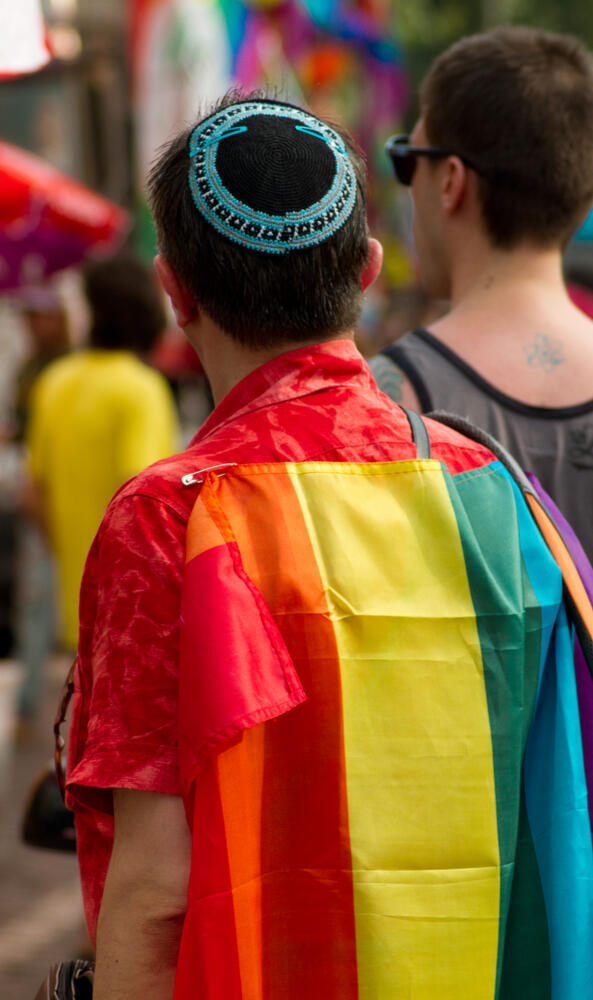
Today, rabbis and rabbinical students in the United States are more diverse than ever, with growing numbers of women, LGBTQ+ people, Jews of color and members of interfaith families. Women who entered the rabbinate in earlier generations say the range of opportunities now available would have been unimaginable when they began.
Orthodox branches of Judaism generally do not ordain women as rabbis, though there are limited exceptions. Reform and Conservative Judaism — the two largest movements in the United States — do, as does the growing nondenominational sector.
As Jewish communities themselves have diversified, it follows that the rabbinate would evolve as well, said Janet Krasner Aronson, interim director of the Cohen Center for Modern Jewish Studies at Brandeis University.
“People are entering the rabbinate from very different backgrounds, and many of them want to shake things up,” she said.
That shift is visible in congregations such as New York City’s B’nai Jeshurun, where several women serve as rabbis. Associate Rabbi Rebecca Weintraub said the change is generational.
“For a lot of younger people, when they picture a rabbi, many of them imagine a woman,” Weintraub said. “When I was growing up, a rabbi was always a man.”
A diversifying rabbinate
New research by Atra: Center for Rabbinic Innovation documents the changing makeup of the U.S. rabbinate and its pipeline of students. The organization surveyed rabbis, students, seminaries and Jewish institutions nationwide.
Men still make up the majority of the more than 4,000 non-Ultra-Orthodox rabbis in the United States, the study found. But women now form a substantial minority, alongside increasing numbers of LGBTQ+ clergy, Jews of color and rabbis from interfaith backgrounds. In non-Orthodox seminaries, women are now the majority.
“There is an opening that simply didn’t exist for many populations in the past,” said Rabbi Shira Koch Epstein, Atra’s executive director. “We don’t yet have parity in the field, but we clearly see it in the seminaries.”
Sarah Livschitz, who moved from New Zealand to Los Angeles to study at Hebrew Union College, said her all-female cohort reflects that shift.
“To me, it’s completely normal that a rabbi would be a woman,” said Livschitz, who is set to be ordained in May. “It’s a very different world than even 10 or 20 years ago.”
Progress — and persistent challenges
Eleanor Steinman, senior rabbi of Temple Beth Shalom in Austin, Texas, sees the increased diversity as a sign of vitality, but says institutions still struggle to adapt.
“The challenge is that synagogues and organizations aren’t always fully prepared for that diversity,” said Steinman, who is gay and known for her advocacy on social justice and LGBTQ+ rights.
Rabbi Tiferet Berenbaum, who is Black and was ordained in 2013, recalled anxieties about whether congregations would hire her.
“My Jewish experiences had been almost entirely white,” she said. “When it came time to look for a job, the question wasn’t ‘Who will hire a woman rabbi?’ It was ‘Who will hire a Black rabbi?’”
She also encountered lingering patriarchal expectations, including limited support when she became a mother and assumptions about her husband taking on traditional “rebbetzin” roles.
“Earlier generations were often accepted only if they molded themselves to a masculine idea of what a rabbi is,” Berenbaum said. “Now women are increasingly able to bring their full selves.”
A calling under pressure
Despite the challenges, many rabbis say the work remains deeply meaningful.
“I love teaching, pastoring, leading services — even funerals,” said Felicia Sol, the first woman to serve as senior rabbi in the nearly 200-year history of B’nai Jeshurun. “We are present for the most important moments in people’s lives.”
But the job is also demanding. Political polarization, tensions over the Israel-Hamas war, emotional labor and financial pressures have fueled widespread burnout, according to Atra’s research.
“The line between personal and professional life is incredibly blurry,” said Rabbi Rachel Isaacs of Maine’s Beth Israel Congregation. “It makes it very hard to unplug.”
Still, students preparing to enter the rabbinate say the path forged by earlier generations has made their own journeys possible.
“My leadership is welcomed and not treated as exceptional because of who I am,” said Sarah Rockford, an LGBTQ+ student at the Jewish Theological Seminary. “We forget how quickly things have changed.”
Rockford said she hopes the diversification of Jewish leadership continues.
“The more voices we have at the table,” she said, “the stronger and more resilient our communities will be for the next century.”