

When is Purim 2026?
Purim this year will be observed on Monday–Tuesday, March 2–3, 2026, the 14th of Adar. The holiday begins on Monday evening, March 2, and continues through sundown on Tuesday, March 3.
Shushan Purim, observed in Jerusalem and other walled cities from the time of Joshua, falls on Tuesday–Wednesday, March 3–4, 2026, the 15th of Adar. In Jerusalem, the holiday begins Tuesday evening, March 3, and continues through Wednesday, March 4.
The Fast of Esther will take place on Monday, March 2, 2026, the 13th of Adar. The fast lasts, according to Jewish law, from dawn until nightfall.
School vacation for Purim will run from Tuesday, March 3, through Wednesday, March 4. Students are expected to return to school on Thursday, March 5, 2026. Classes will be held on the Fast of Esther.
Why is Purim celebrated on two different dates?
The Book of Esther recounts that Jews in unwalled cities rested and celebrated their victory over their enemies on the 14th of Adar, while Jews in the capital city of Shushan celebrated on the 15th. According to Jewish law, cities that were walled in the days of Joshua observe Purim on Shushan Purim (15th of Adar). This is why Jerusalem celebrates on that day.
In several other ancient cities in Israel, some observe both days out of halachic doubt. This custom exists in places such as Hebron, Tiberias, Acre, Lod and others; Chabad communities in Haifa also follow this practice.
The four mitzvot of Purim
According to Jewish tradition, Purim includes four commandments:
Reading the Megillah (Book of Esther)
Gifts to the Poor (Matanot La’evyonim)
Festive Meal and Rejoicing (Seudat Purim)
Sending Food Gifts (Mishloach Manot)
Reading the Megillah
The Megillah is read from a kosher scroll both at night and during the day. According to Jewish law, one may not interrupt the reading with speech until it concludes, and every word must be heard. Missing even a single word invalidates fulfillment of the obligation.

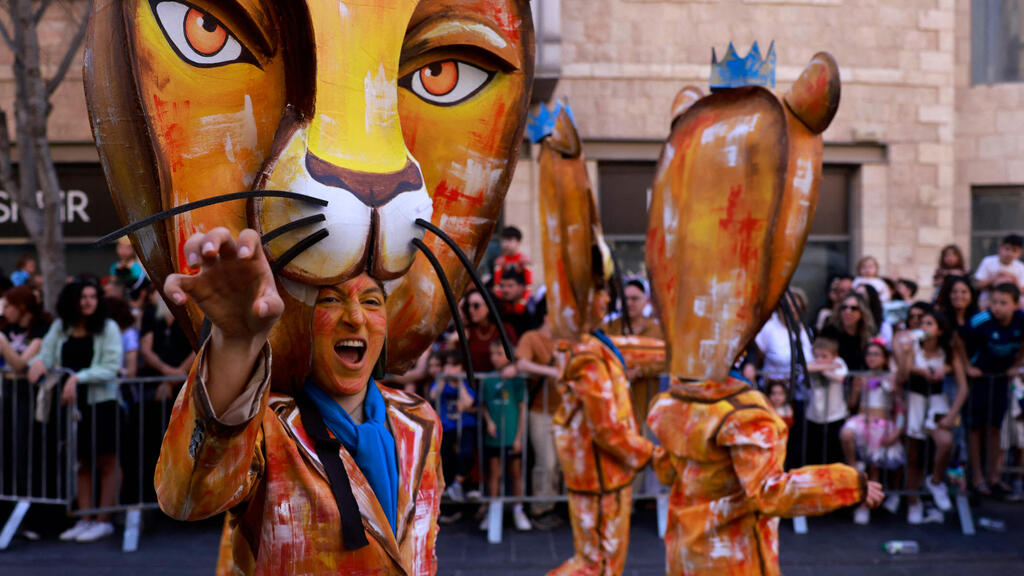
Jerusalem citizens celebrate Purim
(Photo: Alex Kolomoisky)
Publicizing the miracle is the primary mitzvah of Purim, and its proper observance takes precedence over other customs. Those who miss the public reading may, in certain circumstances, fulfill the obligation by reading privately from a parchment scroll.
Are women obligated to hear the Megillah?
Yes. Women are obligated to hear the Megillah both at night and during the day, since they too were included in the miracle.
Rabbi Ovadia Yosef ruled that women may not only fulfill their own obligation but may also read the Megillah on behalf of men. He rejected the view that the prohibition of hearing a woman’s voice (“kol b’isha erva”) prevents men from fulfilling the mitzvah through a woman’s reading, stating that “this is not the halacha.” He clarified that although the Megillah is read with cantillation, it is not considered singing.
However, he noted: “Certainly this is not done casually. Who would go to a woman to fulfill the obligation for men? But if there is a village or moshav where no one knows how to read the Megillah, and there is a young woman who studied and knows how to read it, she may fulfill their obligation… if there is no one else.”
Today, special women’s readings are common, and these are unquestionably permitted. Rabbi Yosef also ruled in 2009 that hearing the Megillah via radio—even live broadcast—does not fulfill the obligation. However, hearing through amplification or a hearing aid is acceptable.
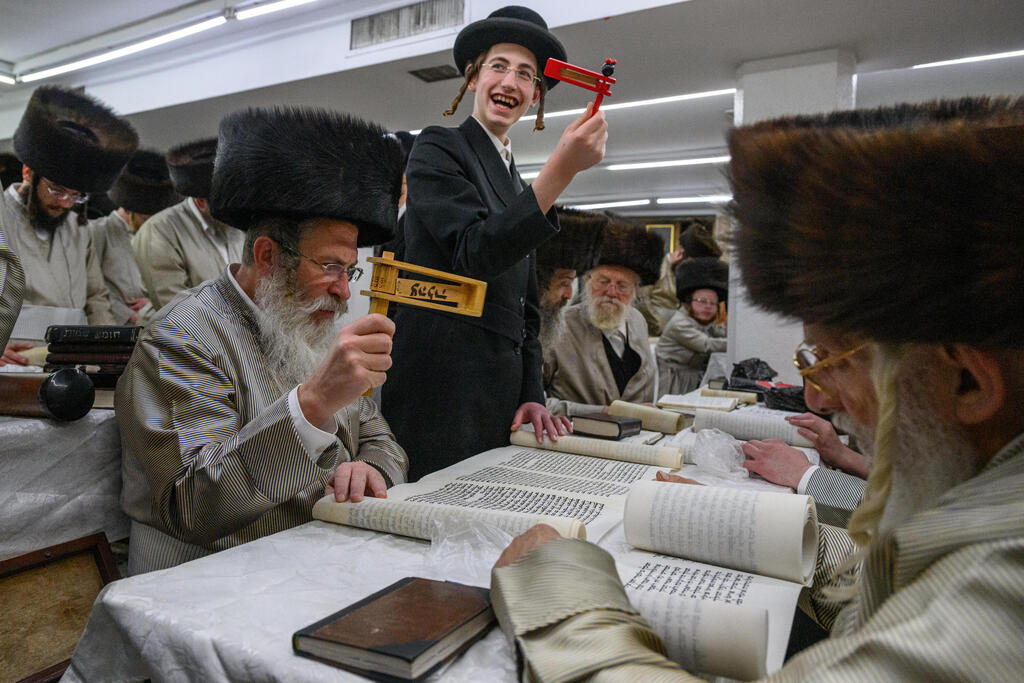
Reading the Book of Esther on Shushan Purim in Jerusalem
(Photo: Alexi J. Rosenfeld/Getty Images)
Why make noise at Haman’s name?
The custom of “blotting out Haman” with noisemakers symbolizes the commandment to erase the memory of Amalek, as Haman is described as “the Agagite,” linking him to Amalek. The Rema (Rabbi Moshe Isserles) stressed that the custom should not be treated lightly. Since Haman’s name appears 54 times in the Megillah, care should be taken not to disturb the congregation excessively.
Gifts to the Poor (Matanot La’evyonim)
At least two gifts must be given to two poor individuals—one gift per person. The gift may be food or money. It must be given during the daytime of Purim (before sunset), not beforehand, and may be delivered via a messenger.
Halacha teaches that it is preferable to increase gifts to the poor rather than to expand one’s festive meal or gifts to friends. Many donate in advance to charities that distribute funds specifically on Purim day.
Festive meal and rejoicing
The Purim meal is held during the day, commonly after the Mincha (afternoon) prayer, due to concern that excessive drinking might interfere with prayer.
Regarding wine, Jewish sources encourage increased drinking on Purim. Maimonides writes that fulfilling the requirement of drinking “until one does not know” (the difference between Haman and Mordechai) may be achieved by drinking more than usual and then sleeping.
Sending food gifts (Mishloach Manot)
The minimum requirement is to send two different food items that require two different blessings to one person. A roll and chocolate milk, or hamantaschen and a bottle of wine, suffice. This mitzvah must also be fulfilled during the daytime.

Celebrating Purim in Netanya
(Photo: Dana Koppel)
Customarily, women send to women and men to men. Gifts may be sent through a messenger—even a child. Mourners send gifts to others, though gifts are generally not sent to them (some authorities are lenient). It is permitted to send to their family members.
Purim Customs
Why wear costumes?
The custom of dressing up does not appear in the Megillah or in early rabbinic sources. It likely developed in the Middle Ages under the influence of surrounding carnival traditions. Some rabbis opposed the custom, while others defended it.
One explanation links costumes to the verse: “Many of the peoples of the land became Jews” (Esther 8:17), interpreting “became Jews” as “disguised themselves as Jews.” In Hasidic thought, costumes symbolize revealing one’s inner authenticity.
Costumes add to the joy of the day, which is Purim’s central theme. However, care should be taken that dressing up does not become burdensome. Sephardic custom is stricter regarding men wearing women’s clothing. Even those who do not dress up traditionally wear festive Sabbath clothing and increase joy through humor. Care must be taken not to embarrass others or belittle Torah values.
Additional prayers
In the Amidah and Grace After Meals, the prayer Al HaNissim is added. If omitted, one does not repeat the prayer.
Halachic responses provided by Rabbi Yehuda Brandes.