


Visits by Jewish pilgrims to Joseph’s Tomb in the West Bank city of Nablus will be expanded from nighttime hours into part of the daytime in the coming weeks, officials said Monday, in an agreement reached between political leaders and the military.
Under the new arrangement, Jews will be permitted to remain at the tomb compound during daylight hours for the first time in about 25 years. The site had been largely restricted to nighttime visits after repeated clashes led to the evacuation of the Od Yosef Chai yeshiva and the withdrawal of Israeli Border Police from the area following the fatal shooting of officer Madhat Yousef during unrest.
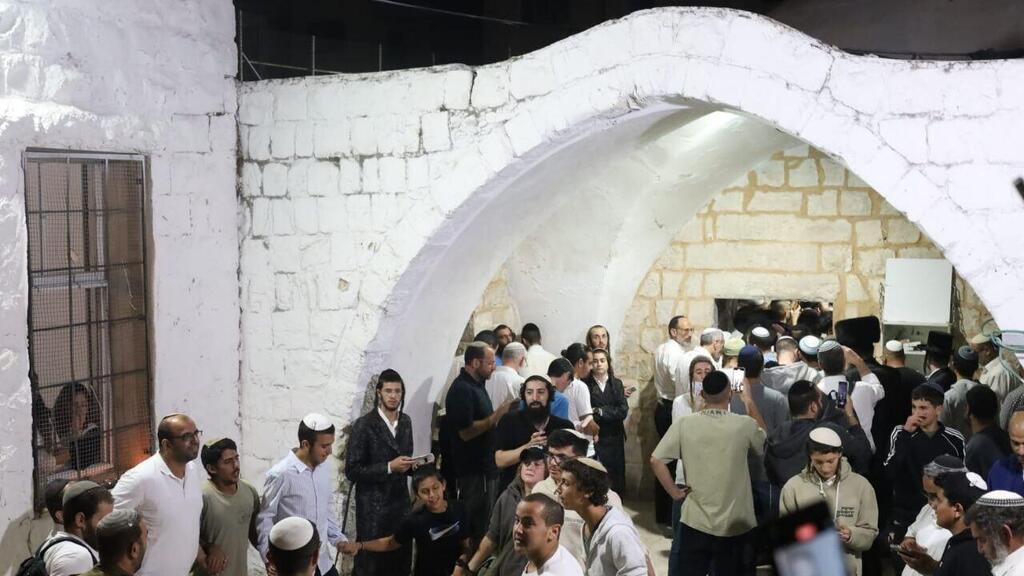
Archival: praying at Joseph's Tomb
(Photo: Roy Hedi)
The change was agreed in talks involving Defense Minister Israel Katz, Knesset member Tzvi Succot, the head of the World Zionist Organization’s Settlement Division, Yishai Merling, and IDF and Central Command representatives.
Regular visits to the site, on the outskirts of the Palestinian West Bank city, have been organized by the Samaria Regional Council and secured by IDF troops. Until now, pilgrims were allowed only to arrive at night and were required to leave the compound by 4 a.m. Under the new guidelines, visitors will be permitted to stay until 8 a.m. to hold the morning Shacharit prayer, and others will be able to enter at 6 a.m. and remain for two hours.
Defense Ministry officials said the expanded access would not require additional troops. Security for early morning prayers will be provided by the same soldiers who guard the site overnight. Officials said that a further extension of visiting hours could be considered later on.
The decision follows a campaign by settler groups to deepen Jewish access and control of Joseph’s Tomb, with goals that include allowing full daytime presence and eventually reestablishing the Od Yosef Chai yeshiva. The issue was raised during discussions in the Knesset Foreign Affairs and Defense Committee, prompting lawmaker Succot to bring it to Katz’s attention and prompting Monday’s agreement with the military.
The move comes amid a series of changes in the West Bank overseen by the government, which may gather further momentum as elections approach. Over the past three years, authorities have implemented wide‑ranging policies, including reforms of the Civil Administration with the creation of a Settlement Administration, authorization of thousands of housing units in settlements, the establishment of more than 130 agricultural outposts and a decision to return to northern Samaria settlements evacuated during the 2005 disengagement.