

If you had Googled the word “circumcision” recently, you’d have thought that the end of the practice of Brit Milah was upon us. In parts of Europe, Mohalim are being targeted for investigation. Governmental bans are being proposed and anti-circumcision movements are louder than ever before.
Beyond the Jewish practice, circumcision is facing growing challenges globally. In recent years there were botched procedures in India and the death of a six-month-old in the Muslim community in the United Kingdom. The UK incident resulted in the Crown Prosecution Service’s attempt to classify neonatal circumcision as child abuse.
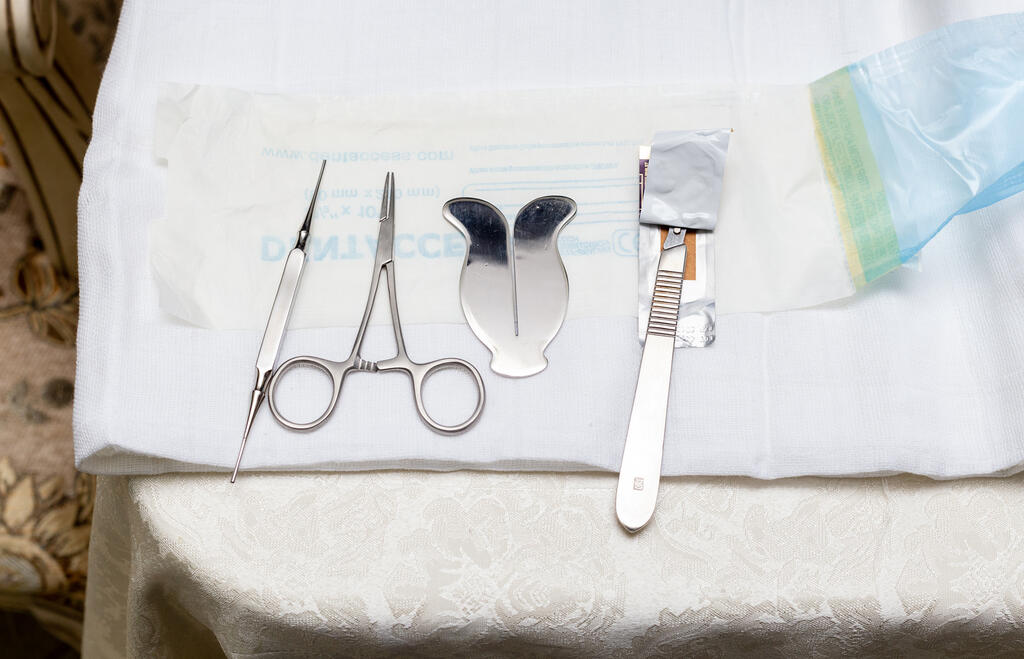
(Photo: Shutterstock)
African communities also practice circumcision as a rite of passage. Every year there are numerous deaths due to the conditions and techniques employed by traditional practitioners, and this season has seen 54 teenage deaths in the past few weeks alone.
However, the news isn’t all bad. The European Jewish Association and the Rabbinic Center of Europe have just announced the establishment of the Center of Excellence for Religious Male Circumcision (CERM). The Brussels-based program is a direct response to the indictments of Mohalim in the area. Its goals are to provide structured medical and safety training, as well as practical assessment and certification for those who perform Brit Milah. The aim of the program is also to coordinate with health authorities across Europe, "ensuring competence is recognized through rigorous medical standards and independent supervision — rather than becoming a matter of political debate."
In truth, I did not see this coming and I must admit that my own suggested course of action would have been a mistake. When the indictments of Mohalim were first announced, I suggested Belgium enact the Nordic method of Brit Milah oversight. This has proven effective in places like Germany and Sweden, as well as other locations around Europe. It requires a medical professional to be present at every Brit Milah a mohel performs. I feared the outcomes of these indictments could pose a threat to our fundamental Jewish practice, resulting in a complete ban on underaged circumcision for non-medical purposes.
Colleagues challenged my suggestion, finding it problematic that I’d offer government regulation over a mohel’s daily practice. At first I didn’t understand the critique because I couldn’t imagine any other solution. My intention was to protect our religious freedoms the best way possible and it would certainly be better than an outright ban.
But CERM is well-positioned to mitigate many of the issues at hand. Keeping the oversight internal preserves our ability to protect Brit Milah as we see fit. And being proactive with governments throughout Europe will hopefully stave off future incidents such as the open investigations in Belgium, Austria, and Switzerland.
The rabbis of Europe are taking the correct course of action, but there’s a chance that this may not solve the problem which was its impetus. Although many have voiced support for CERM, to the public’s knowledge, the Belgian government did not request this training and certification. Therefore, while much is gained in developing standards, especially when it comes to safety of those who undergo the procedure, there is no guarantee that the initiative will resolve the indictments throughout Europe. It will certainly not appease the anti-circumcision movement that’s determined to outlaw the practice.
As impressive and commendable as this initiative is, there still could be a missed opportunity here. Although Muslim practitioners could, in principle, participate in CERM’s training, the program could have an impact far beyond the Jewish community of Europe. In addition to those in the UK, there are many in India and Africa practicing non-Jewish circumcision who would benefit from collaboration. From joint advocacy to training, our years of knowledge and commitment to high medical standards could save numerous lives if we extend the organization’s goals to other regions around the world.
I pray that the Center of Excellence for Religious Male Circumcision is successful on all fronts. It has the potential to improve and safeguard our tradition like nothing before. It may also reverse the legal action taken against the Mohalim throughout Europe. And unlike the reactive Nordic Method, CERM could obviate future challenges to Brit Milah. In a sense, this proposal is much more than a ‘bandage’ solution.
- The writer is a rabbi, a wedding officiant, and a mohel who performs britot (ritual circumcisions) and conversions in Israel and worldwide. Based in Efrat, Israel, he is the founder of Magen HaBrit, an organization protecting the practice of brit milah and the children who undergo it.