

Seder night is famously known as the Night of Freedom. It is the night we celebrate our transition from slavery to liberty, the moment we became a free people. However, a glaring question emerges from the pages of the Haggadah: what kind of "freedom" is this, given the rigid "seder" (order) dictated to us?
We are bound by a meticulous order and a fixed text established by the Sages thousands of years ago. We are commanded to drink exactly four cups of wine, follow a specific recipe for charoset, and adhere to a menu of matzah, maror and meat.
Gallery
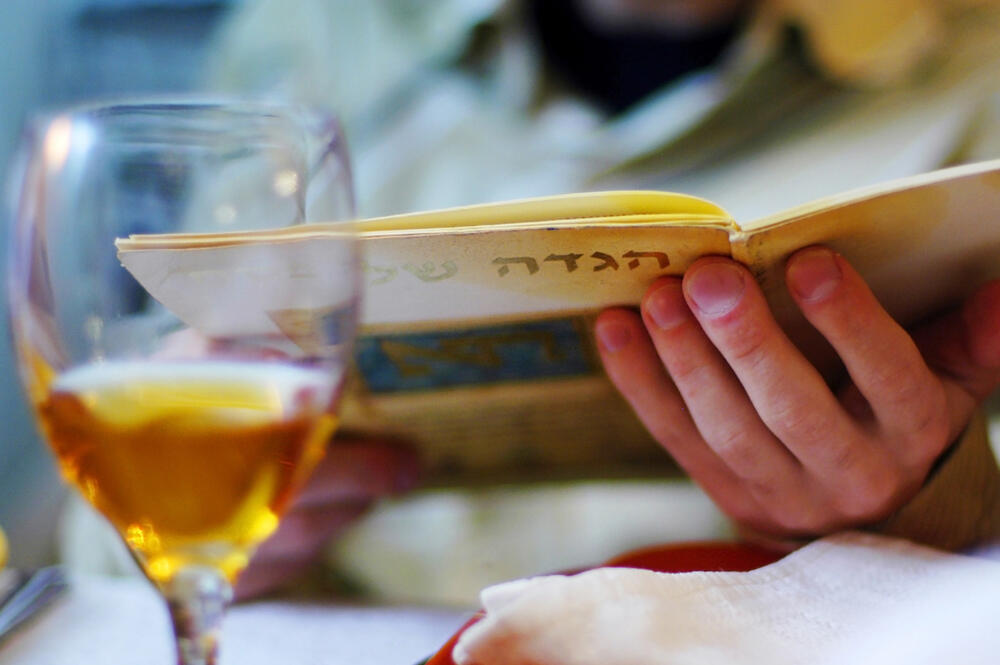
On seder night, we are bound by a meticulous order and a fixed text established by the Sages thousands of years ago
(Photo: ChameleonsEye / Shutterstock)
The modern enslavement to choice
To understand this tension, we can look to Barry Schwartz’s 2004 book, "The Paradox of Choice." Schwartz illustrates a paradox at the heart of modern life: our supposed "freedom" of infinite choice has become a new form of slavery. While an abundance of options was intended to increase the effective liberty of the individual.
Schwartz describes the "Maximizer" - the person who cannot rest until they have found the absolute best option. Ironically, the more successful the Maximizer is, the more their dissatisfaction grows due to two mechanisms: the regret over unchosen paths and the rapid habituation to the good they already possess. There is a heavy price for this constant need.
To maintain psychological well-being, Schwartz recommends "self-limitation." He suggests we must decide when to decide, recognizing that not every choice - like picking toothpaste - is worthy of the effort of maximizing. He advises limiting the number of stores we visit and making decisions irreversible, as the brain performs "psychological work" to justify a choice once it cannot be undone, thereby increasing satisfaction. He encourages becoming a "Satisficer" - one who finds satisfaction in what is "good enough," even if it isn't perfect or every option hasn't been vetted.
Freedom through structure
Long before Schwartz, the Torah anticipated these findings. The "Seder" of the night, and of Jewish life in general, uses a variety of commandments and limitations touching every area of existence, helping us be truly free. It prevents us from being enslaved to the "tyranny of the need to choose." True freedom is demonstrated through order and produced from within constraints. In the long run, "good enough" is indeed excellent.
The boldness of 'enough'
This brings us to the poem "Dayenu." This liturgical text is a profound response to the slavery of the paradox of choice. While its exact origins are debated, it appears in the siddur of Rav Amram Gaon in the 9th century and from there to all of our Haggadah books.
The unknown author of "Dayenu" takes a unique liberty. Each stage concludes with "Dayenu" ("it would have been enough"). This is a daring literary-religious statement because it asks the audience to imagine Israel without the Torah, without the Land, or without the Temple. By saying "this would have been enough," the poet suggests that each stage was fundamentally possible and sufficient on its own.
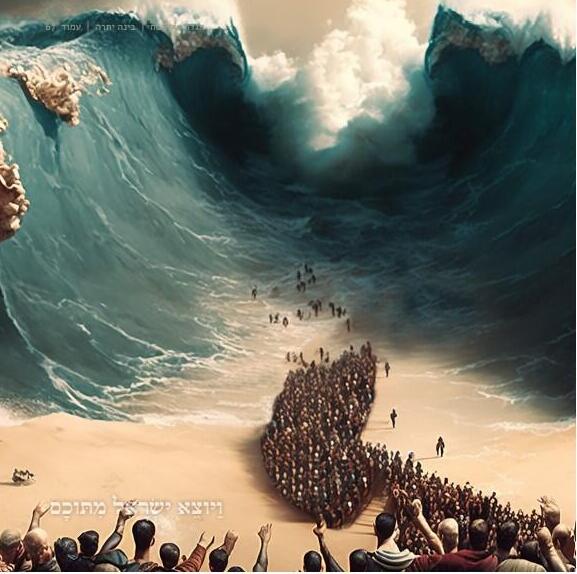
The parting of the Red Sea - it would have been enough
(Photo: Bible and AI)
Every Jew knows that the Torah, the Land, and the Temple are not "options" but the core of our existence. Yet, the poem intentionally plays with these expectations, daring to say: even if we didn't have those, it would be okay.
A "Maximizer" like Schwartz’s subjects would see a paradox here: if splitting the sea was "enough," why continue? If we were going to receive the manna and the Torah anyway, why declare that less would suffice? The answer is that the declaration of "Dayenu" redefines the threshold of expectation. Anything above that threshold becomes "excess joy."
"Dayenu" manages to produce the worldview of a "Satisficer" while the reality experienced is far above what a "Maximizer" could even dream of. It creates abundance out of limitations. This is the exact reversal of the paradox of choice: while Schwartz shows that multiplicity leads to disappointment, the piyyut shows that if each stage is absorbed separately with explicit gratitude, multiplicity leads to cumulative joy rather than frustration.
Training the soul
The goal of "Dayenu" is not to diminish the value of the Torah or the Land. When we say "Dayenu" for the Torah alone or for physical freedom alone, we teach ourselves that value is not contingent on what follows. It releases us from a mechanism where a good thing only gains meaning through the next achievement.
Ultimately, happiness is a ritual skill, not the result of a calculation. The power of "Dayenu" lies in its repetition, which functions as cognitive training for the soul. It teaches us not to always want more. Not because "more" isn't better, but because we must not live as hostages to a demanding "more."
Conclusion
Schwartz offers technical strategies for the individual, but "Dayenu" offers a communal solution: song, rhythm and a shared voice. It is not about managing freedom, but educating toward it; not changing our decisions, but changing the perspective through which we live them.
This Seder night, we gather with family and friends just as our ancestors did for thousands of years. We eat the same matzah and ask the same questions. It is possible that this year, the sounds of the seder will be joined by the rising and falling tones of sirens, forcing us into shelters. These sirens remind us of the ups and downs of our people throughout history and today.
Yet, we will sing "Dayenu" together with a longing for the next level of success for our nation because, despite the shelters, Am Yisrael Chai (the people of Israel live). We roar "Dayenu" while yearning for doubled and redoubled goodness for ourselves and our children.
Dayenu - It Would Have Been Enough
How many degrees of favors has the Omnipresent conferred upon us!
- If He had brought us out from Egypt and had not carried out judgments against them - Dayenu.
- If He had carried out judgments against them and had not against their gods - Dayenu.
- If He had destroyed their gods and had not slain their firstborn - Dayenu.
- If He had slain their firstborn and had not given us their wealth - Dayenu.
- If He had given us their wealth and had not split the sea for us - Dayenu.
- If He had split the sea for us and had not led us through it on dry land - Dayenu.
- If He had led us through it on dry land and had not drowned our oppressors within it - Dayenu.
- If He had drowned our oppressors within it and had not provided for our needs in the desert for 40 years - Dayenu.
- If He had provided for our needs in the desert for 40 years and had not fed us the manna - Dayenu.
- If He had fed us the manna and had not given us the Shabbat - Dayenu.
- If He had given us the Shabbat and had not brought us before Mount Sinai - Dayenu.
- If He had brought us before Mount Sinai and had not given us the Torah - Dayenu.
- If He had given us the Torah and had not brought us into the Land of Israel - Dayenu.
- If He had brought us into the Land of Israel and had not built for us the Chosen House (The Temple) - Dayenu.
Thus, how much more so should we be grateful to the Omnipresent for all the doubled and redoubled goodness He has bestowed upon us: For He brought us out from Egypt, and carried out judgments against them, and against their gods, and slew their firstborn, and gave us their wealth, and split the sea for us, and led us through it on dry land, and drowned our oppressors within it, and provided for our needs in the desert for 40 years, and fed us the manna, and gave us the Shabbat, and brought us before Mount Sinai, and gave us the Torah, and brought us into the Land of Israel, and built for us the Chosen House to atone for all our iniquities.
First published: 00:49, 03.31.26