

The survival story of 89-year-old Warsaw Ghetto survivor Aviva Landau ultimately led to the family of the woman who saved her, Anna Neklaws, who was posthumously recognized as Righteous Among the Nations at a recent ceremony at the Israeli Embassy in Warsaw.
Landau, a Tel Aviv resident, widow, mother of three daughters and grandmother of eight grandchildren and five great-grandchildren, found Neklaws' family thanks to extensive research by her own relatives using Facebook and other platforms. At the ceremony, she stood alongside members of her immediate family and relatives of Neklaws, who has since died.
Gallery
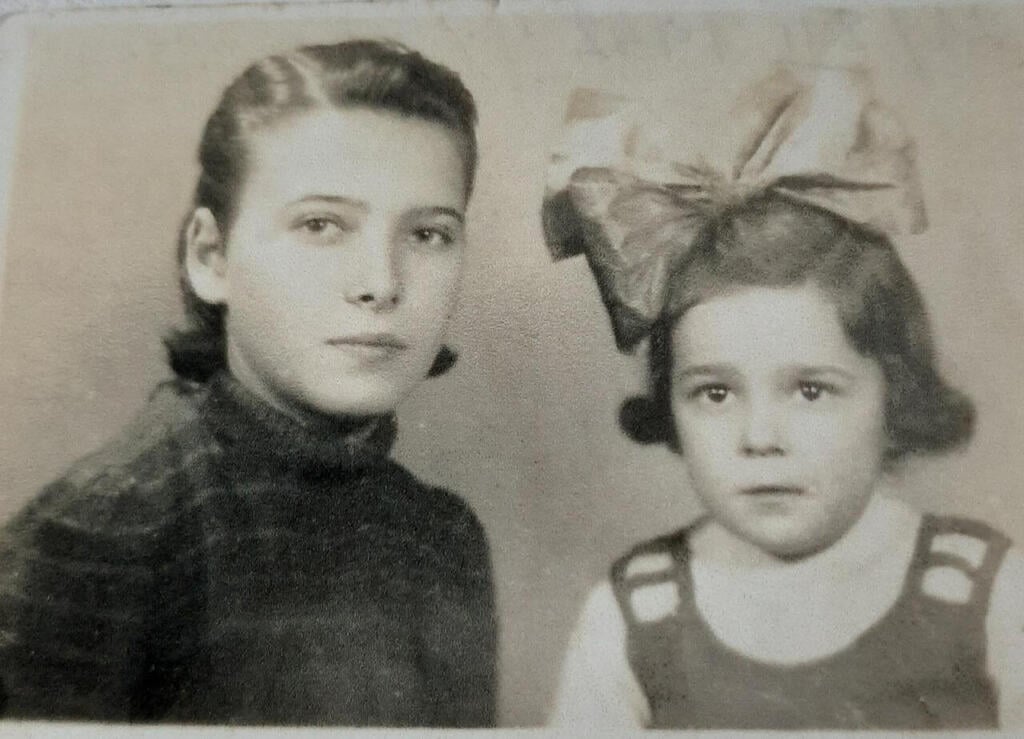
Aviva and her sister Hadassah in the Warsaw Ghetto, December 1942
(Photo: Courtesy of the family)
"For me, this is coming full circle, and I am happy from the bottom of my heart," Landau said. "Anna did not just save my life as a little girl. She instilled in me the love, warmth and faith in humanity that allowed me to return to life and build a wonderful family. Anna will remain with me forever, until the day I die.
"Anna's presence was always strongly felt in our home. My daughters and grandchildren grew up hearing stories about the beautiful blonde woman who saved my life. I always regretted that I could not show them photographs as well, and they could only imagine what she looked like — until that moment in 2021 when everything changed."
Landau and her family contacted Yad Vashem several times in hopes of having Anna, who had already died, recognized as Righteous Among the Nations. But because they did not know Neklaws' family, the process could not begin.
About five years ago, when Aviva decided to return to Poland for the first time, her granddaughter Gal decided to try to locate Anna's grave. During the search, she also found members of Anna's family, leading to an emotional meeting between the two families.
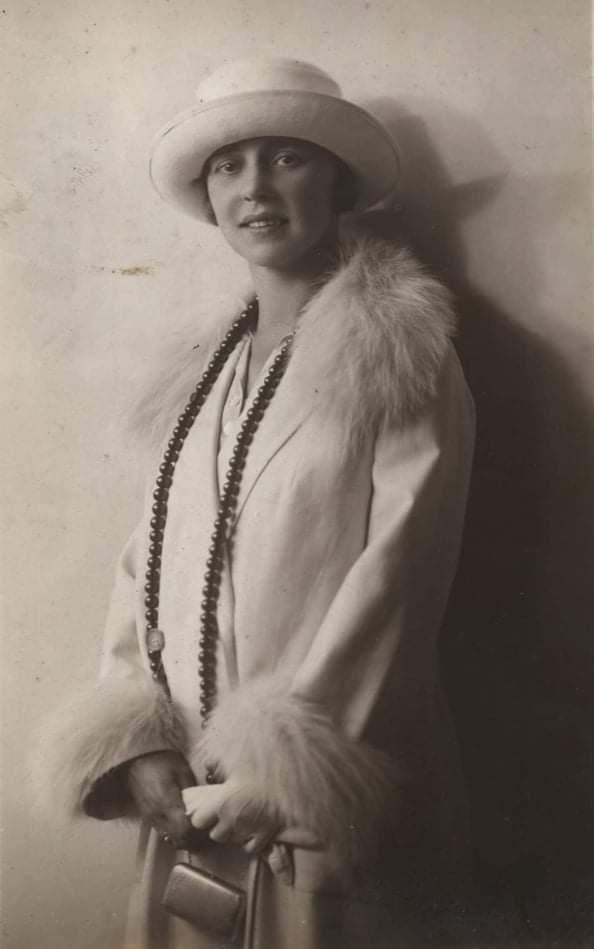
Anna Neklaws
(Photo: Courtesy of the family)
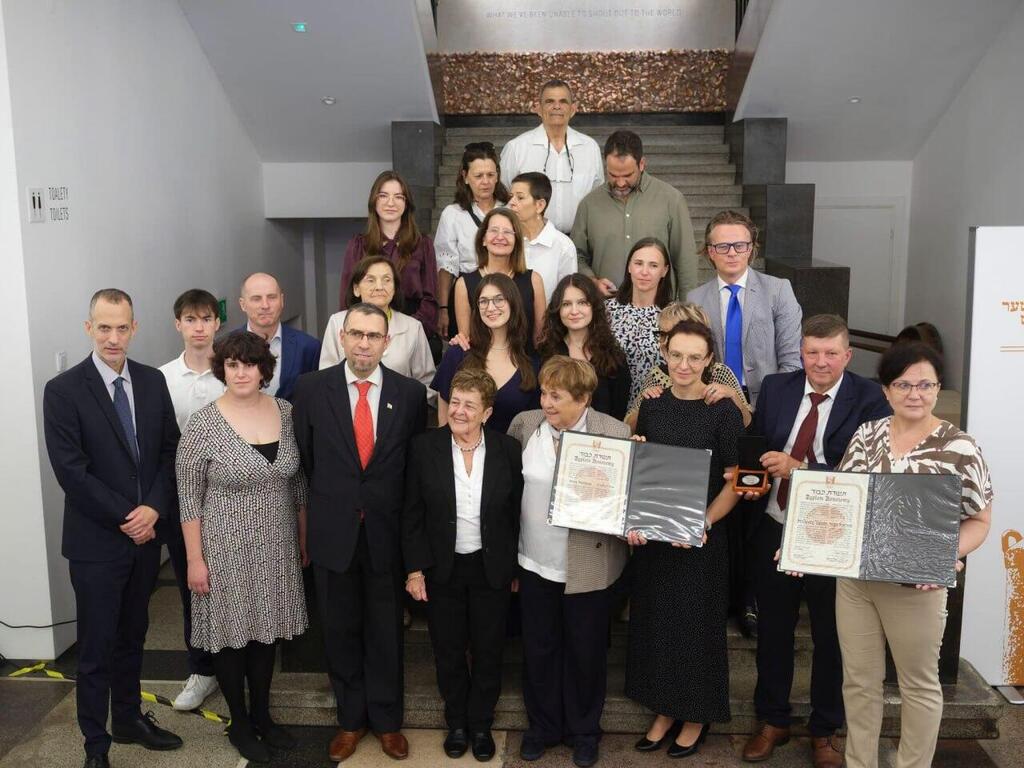
The ceremony held in Poland
(Photo: Courtesy of the family)
"The bond we formed with them is very special, and they have become part of our family," Landau said with a smile. "Finding the family made it possible to begin the process of having Anna recognized as Righteous Among the Nations.
"For decades, I refused to return to Poland. Only in 2021 did I decide that, in the ninth decade of my life, it was time to see the place where I grew up. I was afraid that returning there would bring painful memories from the past flooding back, but my curiosity and longing for the country where I was born overcame the fear."
She continued: "A few days before the trip, my daughter Gal found Anna's family through social media. When Gal told me, I said it couldn't possibly be true, that it was like a dream coming true.
"She showed me photographs of Anna that she had received from the family, and I was so moved to see Anna's kind face, which I had not seen since I was a child. We traveled to Poland filled with emotion and met Anna's family. We arrived as two families of strangers and left as one family.
"Through the family's stories, I was able to learn about the woman Anna had been — brave, noble and extraordinary. I also had the privilege of laying flowers on her grave, thanking her and giving her the honor she deserved."
'I loved her very much, and she loved me'
Aviva Landau was born in Warsaw in 1937 to her parents, the late Dawid and Genia Brachfeld. She grew up alongside her older sister, Hadassah, who is still alive.
"Our life before the war was very good," Landau recalled. "We were wealthy, and my mother had a large family in Warsaw. By the end of the war, only we were left — my mother, my father, my older sister and me. My mother's entire family was murdered by the Nazis."
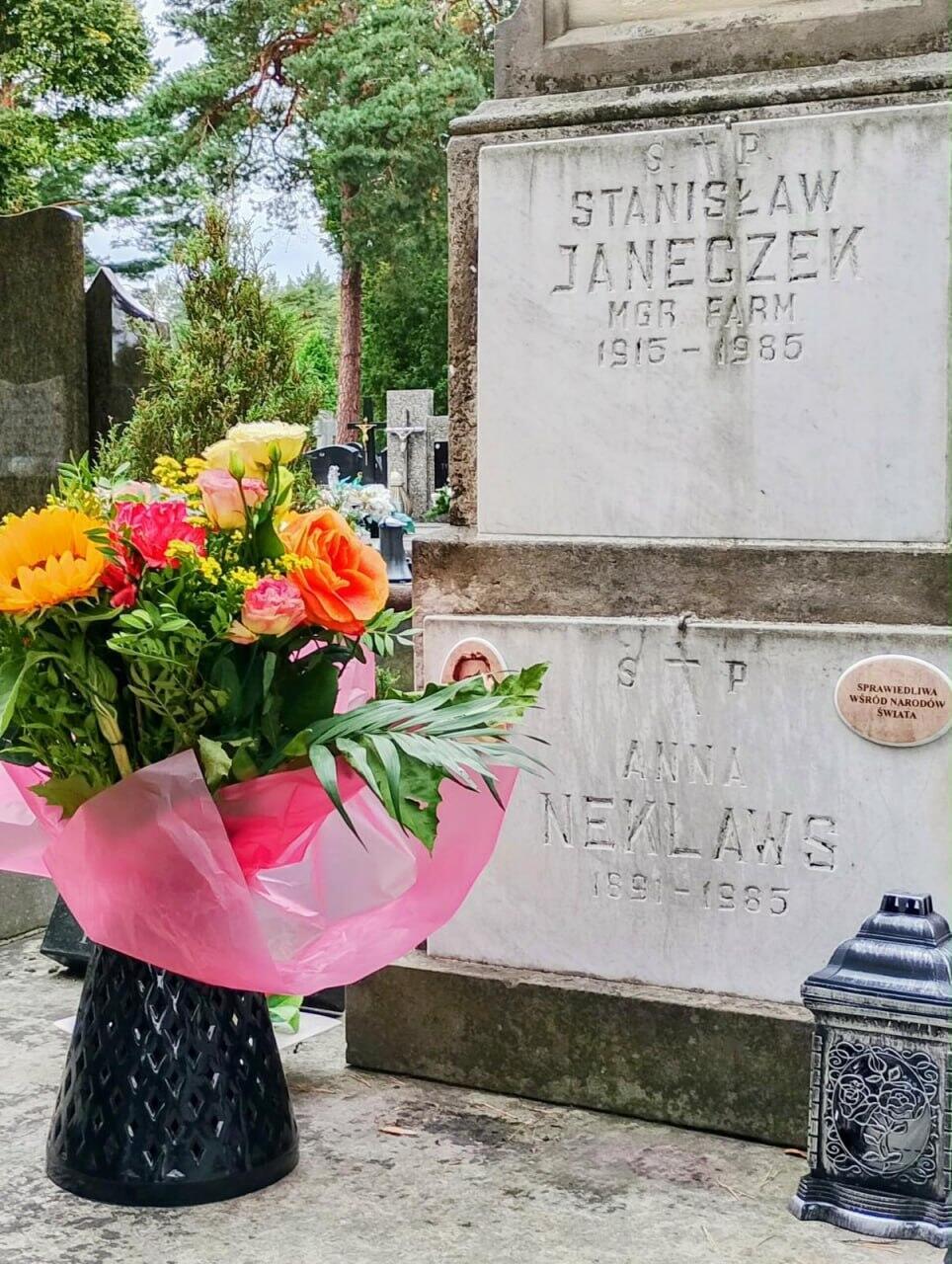
Anna Neklaws' grave
(Photo: Courtesy of the Israeli Embassy in Warsaw)
Life in the ghetto was extremely difficult and bore no resemblance to the life they had known before.
"There was terrible hunger, overcrowding, disease, typhus, filth and bodies everywhere. We were in danger of death all the time. We went through a selection and, by a great miracle, survived," she said.
"In 1942, my father was afraid that if he did not get us out of the ghetto, we would not live. He searched for hiding places for my sister and me where we would be protected from the Nazis. My father had been friends with two Christian women before the war and asked them to hide us. I was sent to Anna.
"Anna was like a mother to me. She was a good, noble woman who cared for me as though I were her daughter. I loved her very much, and she loved me."
Aviva was raised in Neklaws' home as a Christian.
"We would go to church together, I would make the sign of the cross, and I was sent to a Christian kindergarten," she said. "It was a warm home filled with the smell of wonderful cookies Anna baked herself. If Anna had not agreed to take care of me, I would not have survived.
"My parents were hiding separately and constantly fleeing from place to place. Staying with them would have endangered both me and them.
"Over time, I forgot the family I had left behind, and Anna became my entire world. My parents feared they would not survive the war and worried about what would happen to me. Anna reassured them and promised: 'I will protect her, and she will grow up with me as though she were my daughter.' And she truly kept her word.
"She was like a mother to me and risked her life for me for about two years. I was fortunate to be with a woman like her, warm and wise. At a time when 1.5 million Jewish children were murdered, I was fortunate not only to survive but to live in a warm, loving home with Anna."
Anna's photograph now preserved for future generations
At a certain point, remaining in Neklaws' home was no longer safe.
"She hid me until the very last moment, and when Nazi officers knocked on her door, she immediately understood that I was in danger. So she arranged for me to be moved somewhere safe — to a nursing home.
"I will never forget the moment when I was literally torn from Anna's arms. I screamed and cried, but we had no choice. We had to part so that I could survive. At the end of the war, my father found me at the nursing home Anna had sent me to."
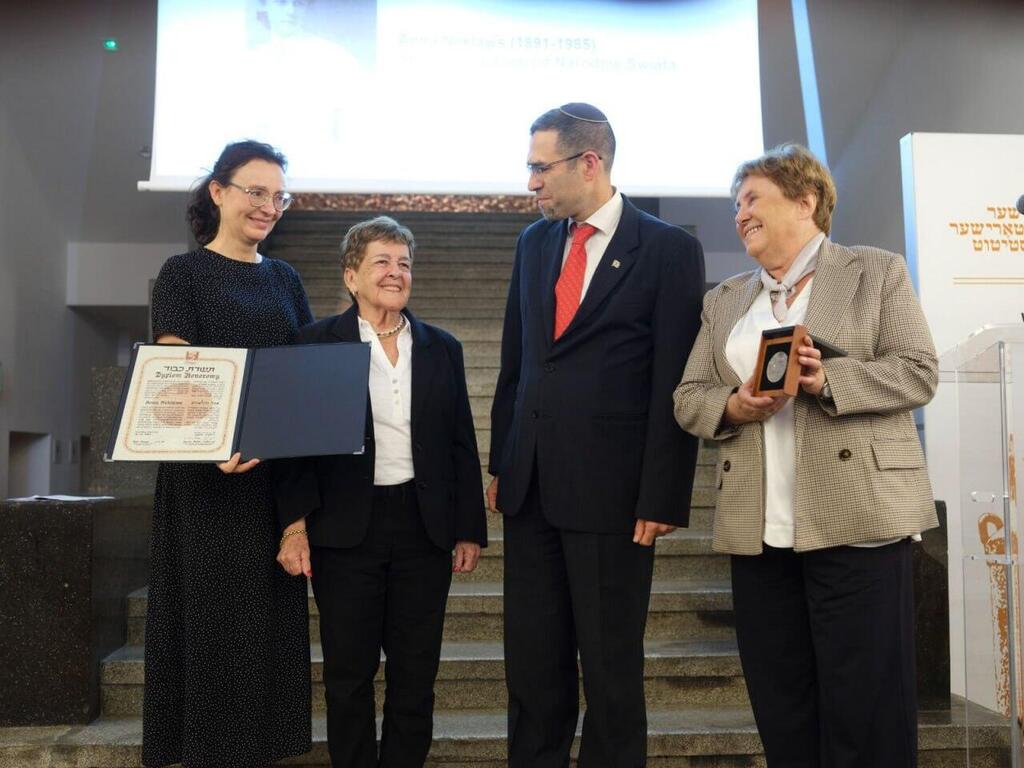
The certificate presentation ceremony
(Photo: Courtesy of the family)
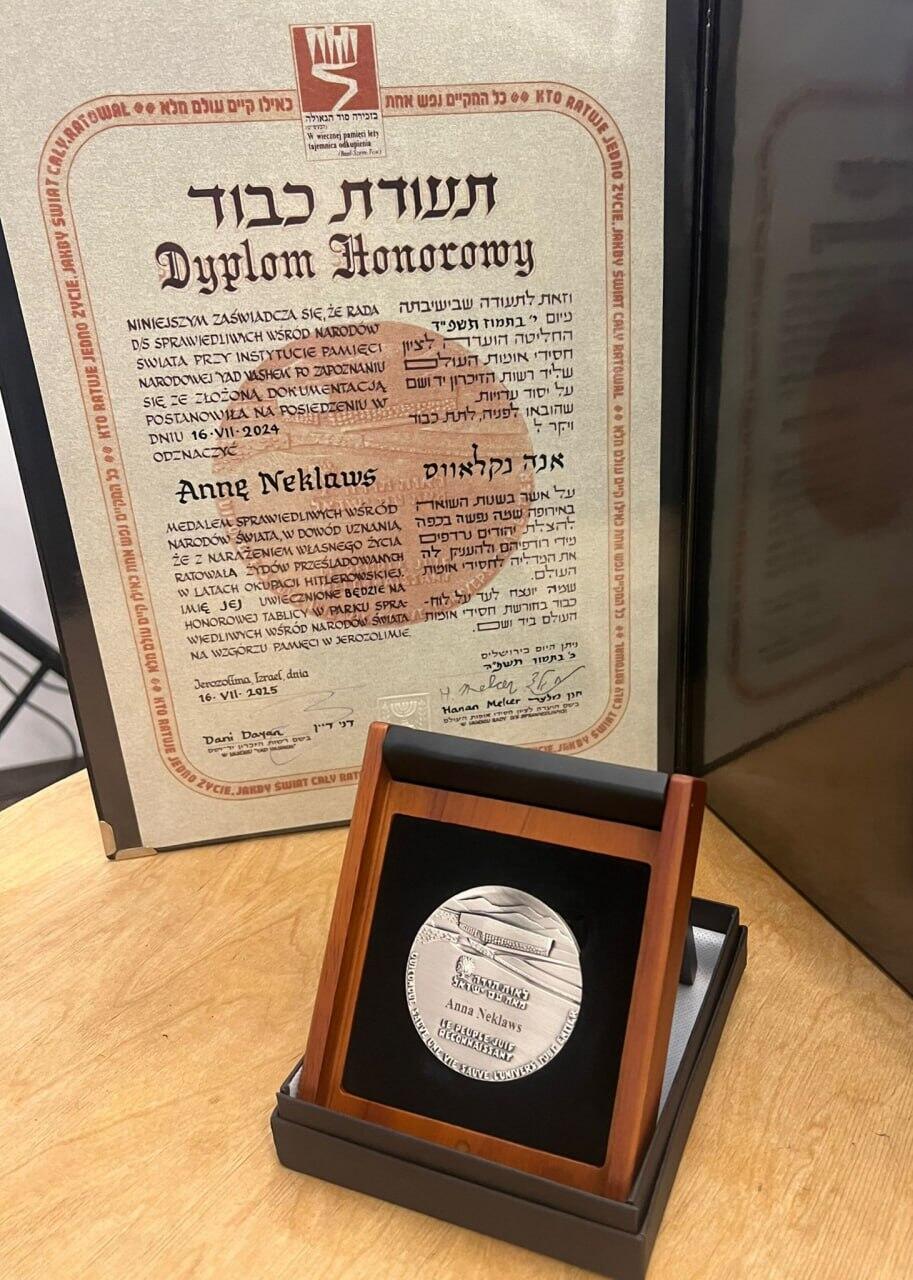
The certificate honoring Anna Neklaws
(Photo: Courtesy of the Israeli Embassy in Warsaw)
Did you lose contact completely?
"No. After the war, I managed to resume contact with Anna. She sent me letters, and I sent letters to her. They were very emotional and affectionate.
"She told me about her life and about the beautiful garden beside her home, the same garden in Kozienice that I still remember well. It was important to her to know about my life, my daughters and the generations of my family that followed.
"She always told me about her niece, whom she raised and loved very much. By the way, Anna never called me Aviva. To her I always remained little Zosia — the Christian name I was given during the war. All the letters began with 'kochana Zosia' — 'dear Zosia.'
"When conditions in Poland were difficult, I sent her packages of food, oranges, money and whatever else she needed. I gave the letters to Yad Vashem."
That niece, mentioned in Neklaws' letters, was named Agnieszka.
"Thanks to her testimony, we were able to complete the process at Yad Vashem and have Anna recognized as Righteous Among the Nations," Landau said.
"One of my great-granddaughters is named Alex-Anna, after Anna Neklaws, who saved my life during World War II.
"For many years, we tried unsuccessfully to have Anna recognized as Righteous Among the Nations because there was no testimony from her family. After several failed attempts, we came to understand that having Anna recognized would probably remain only a dream.
"We knew Anna had lost her only son in the war and had no other descendants. We never believed we would succeed in contacting her family, certainly not someone like Agnieszka, who had known her so closely and had heard from her the story of how I was saved."
Landau tells her story every year as part of the Israeli Holocaust remembrance initiative Zikaron BaSalon, or "Memory in the Living Room."
"It moves me that every year dozens of strangers, young and old, fill the living room to capacity to hear the story of how I was saved and the story of Anna's heroism," she said.
"For many years, when I spoke about Anna, her name appeared in the presentation and I described her from memory because I had no photograph.
"Thanks to the miracle of finding Anna's family, her face now exists not only in my memory but is shown to future generations as well. The ceremony at the Israeli Embassy moved me deeply. For me, as a survivor of the Warsaw Ghetto, it is a moment of coming full circle — and of victory."