

A video posted by tattoo artist Sagi Kurs showing a tattoo of tefillin sparked an online storm. In the video, he shows the process of creating the tattoo and shares the thoughts he had while working on it.
“Let’s tattoo tefillin. Yes, yes, you heard me right, tefillin. To be honest, I don’t fully know what I think about it,” Kurs says in the video. “On one hand, tattooing tefillin can sound like something meant to provoke and do the opposite, but if that’s not the reason, if the reason actually comes from a place that is whole and true for you from within, is that OK? I’m still thinking about it.”
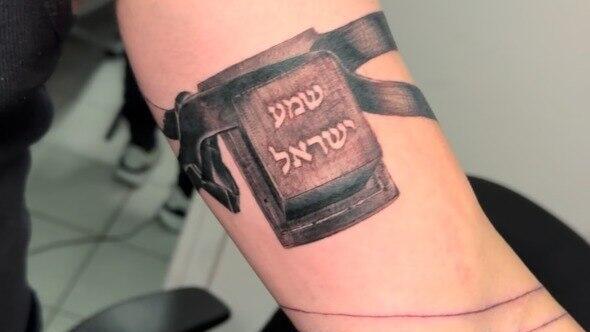
In the video, Kurs says, “I am formerly Haredi, and as time passes, I also meet people who do not follow a certain path, but carve out a unique path of their own. But when you speak with them, you discover a person with a rich inner world... It is easy to judge something that seems so bizarre to us, but the question is whether it is our place to judge at all. If you ask me, I think meaning is created by the person, not by the symbol.”
The Torah states in Leviticus 19:28, “You shall not etch a tattoo on yourselves,” yet Kurs chose to tattoo tefillin on a client’s arm, at the client’s request. In an interview on Sunday with ynet, he explained that as a tattoo artist, it is not his role to grapple with that contradiction.
“We are in 2026 today, and it is much more legitimate for people to have different beliefs,” he said. “I will not judge a person I know who believes in God in his own way. I think that as long as a person does not hurt the people around them, I will respect their faith. Whatever he decided, I respect that.”
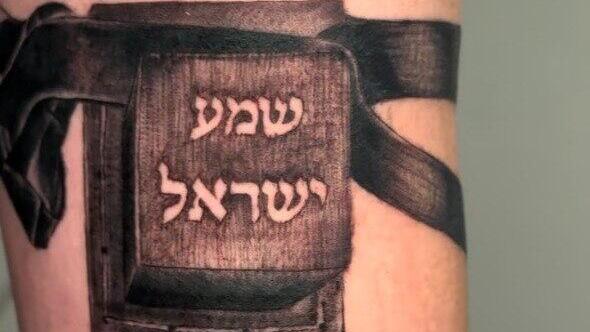
(Photo: Sagi Kurs)
Kurs, 24, from Moshav Neve Mivtah, grew up in Ashkelon in a very conservative environment. He comes from a family of Chabad Hasidim, and says he could have been described as a Chabadnik until age 16. He has been tattooing for two years, and for the past six months has worked at the Cyber Tattoo studio in Rishon Lezion.
When you shared the video of the tefillin tattoo, you didn’t just say it might be provocative, because you knew what kind of reactions it would spark, and there were indeed many. Did you also receive reactions from your private circle, from home?
“Yes. I actually expected worse reactions from my private circle at home, but people relatively understood. Most of the bad reactions came from the internet. But it’s OK, I understand it, I accept it. I understand that it hurts people and that people saw it in a bad light. I am a person who likes to debate issues, certainly ones that are controversial. Among all the bad reactions, the bad things people wrote to me, I enjoyed the small conversations that were actually more positive. People really said what they thought, people answered them, and there were all kinds of people there in the comments. That, I actually did enjoy.”
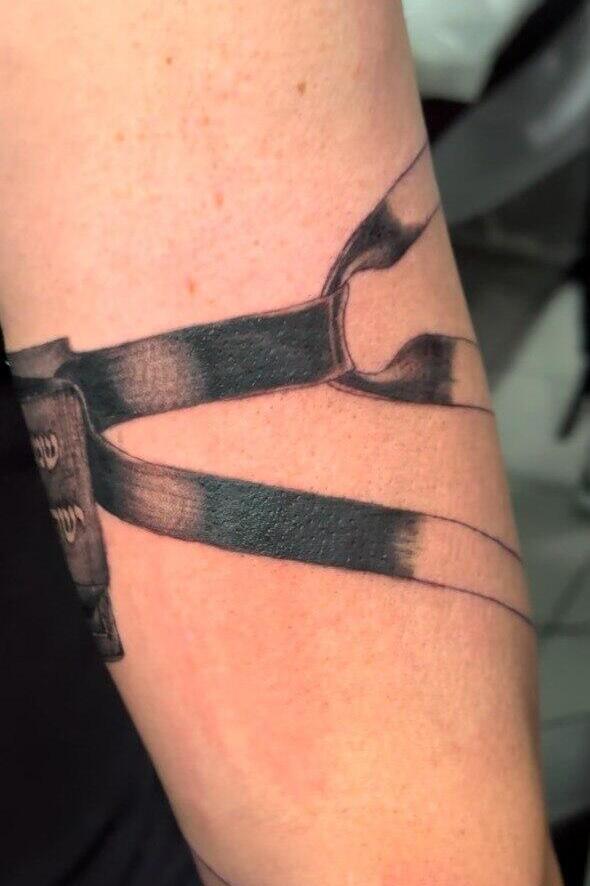
(Photo: Sagi Kurs)
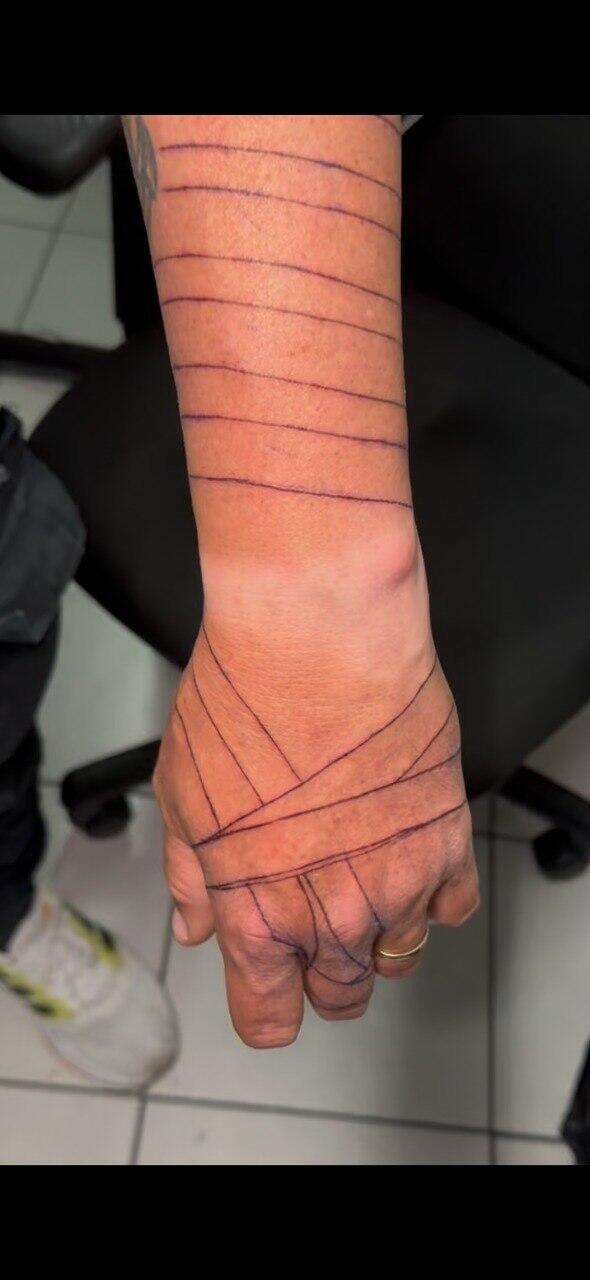
The tattooed marks of the tefillin straps on the arm
(Photo: Sagi Kurs)
When that young man came to get this tattoo, I assume you had a conversation. Did you ask him why?
“Yes, of course. If I had felt from the initial conversation with the person that he was doing it from a place of contempt or disrespect toward religion or Judaism, there is no chance I would have done something like that for him. Once I understood that he really was doing it from a place that was whole for him, I said: OK, I am not judging, I accept it, and if this is really what you want to do, we’ll go for it.”
Are there things you would not be willing to tattoo?
“I believe so. You know, if someone comes to me and wants to tattoo a swastika, I believe there is no way to see something like that in a normal way. But as I said in the video, I believe that meaning is created by the person, not by the symbol, and it does not matter what you decide to tattoo. What matters is what you think about it and how you see it. As long as a person does it for himself and it is something that gives him meaning, I will do it for him, because this is my profession and this is what I chose to do.”
Do you now also see religious people, or people with a stronger connection to Judaism, coming to get tattoos?
“The truth is that there are many religious people who get tattoos, surprisingly. There are many who get one and then say, ‘I need to become stronger,’ and things like that. Although the Torah says very clearly that it is forbidden, there are still people who do it.”
Speaking about his family’s reaction, he says: “My mother is religious and it took her time to accept the fact that I tattoo, in general, but in the end she accepted it. I expected her to say things to me like, ‘What are you doing, you’re degrading religion,’ but no. She simply said to me: ‘OK, I understand, it makes sense, apparently it is something very meaningful for him.’ I was shocked, but yes, it happened.”
Do you have tattoos yourself, or do you practice what you preach?
“I am tattooed on my arm, and also a little on my leg.”
How did your mother react to that?
“I don’t know if I want to say that on air. Let’s say I left the Kiddush... But God bless my mother. I love her very much.”