

Belfast, the capital of Northern Ireland, is a city with a turbulent history and a bloody conflict that left scars. It is also the birthplace of giants - from the Titanic ship to Israel's sixth president, Chaim Herzog. Today, the Jewish community in the city, which has roots here for over a hundred years, is struggling to stay alive and thriving. With fewer than a hundred active members, the community's story is one of perseverance, warmth, and a slow farewell.
As part of my business travels, I make sure to dedicate time to exploring fascinating Jewish communities. During a pre-arranged meeting with members of the community, I discovered that what seemed like a sad story on paper, with dwindling numbers, is actually a story of human heroism. It's the story of a tiny community forced to face various challenges and even threats to its history - just as recently happened in neighboring Ireland, with the attempt to remove the name of Belfast-born Chaim Herzog from a park in nearby Dublin.
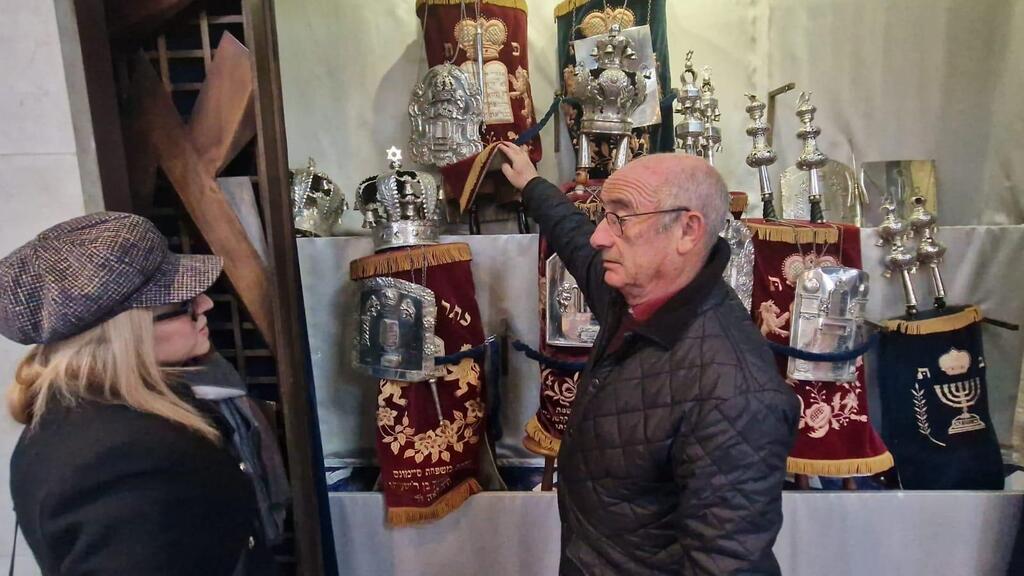
I was hosted for a warm lunch at the synagogue, and in a meeting with the chairman of the local Jewish community and his deputy, one thing became clear to me: in Belfast, the Jewish spark not only survives – it fights and triumphs thanks to the same warmth, the same perseverance, and the unwavering desire to be part of a larger story.
The Jewish presence in Belfast began to take shape seriously at the end of the 19th century, primarily as a result of waves of Jewish immigrants from Eastern Europe (mainly from Lithuania and Poland) who fled pogroms and economic hardship. Like many other communities in Britain and Ireland, the immigrants brought with them hard work and entrepreneurship, and they established themselves primarily in commerce and industry.
The community built synagogues and communal institutions. In the 20th century, its size peaked, with several hundred families. One of the important Orthodox synagogues operated in the city center and became a focal point for community life.
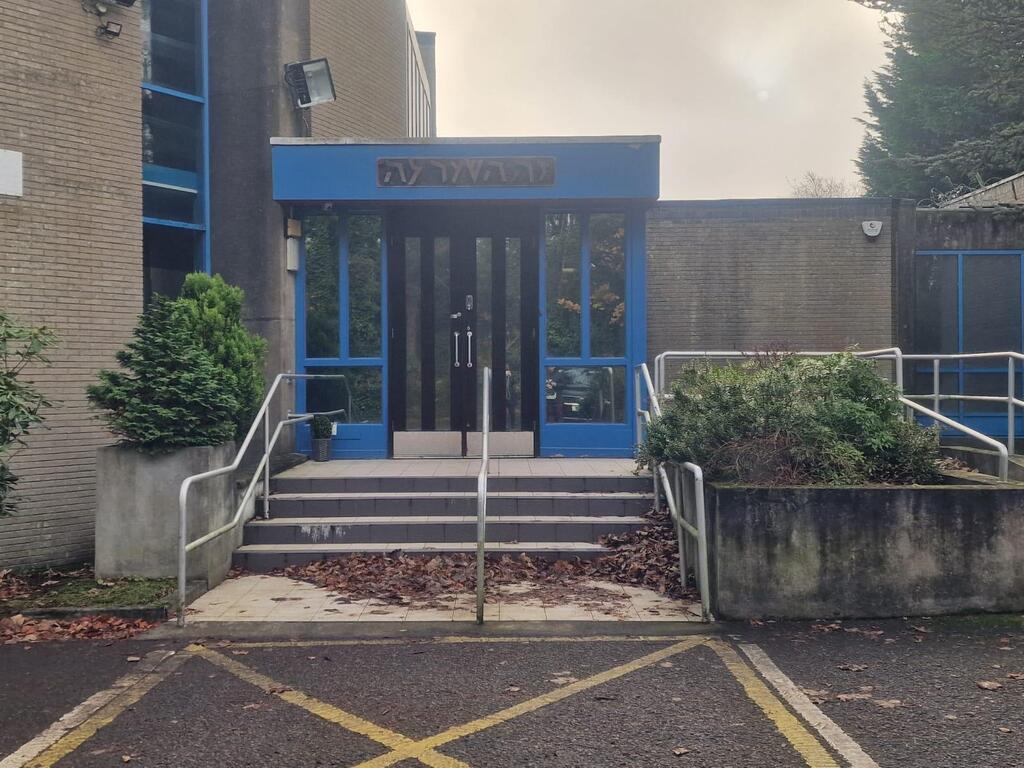
Entrance to Belfast's Synagogue
(photo: Ayelet Mamo Shai)
The period of "The Troubles" in Northern Ireland, a violent conflict between Catholics (Republicans/Irish Nationalists) and Protestants (Loyalists/Pro-British), which lasted from 1969 to the 1990s, did not directly impact the community physically. However, after World War II, and particularly following the establishment of the State of Israel, there was a large emigration of the community's youth. Many of them immigrated to Israel, or moved to England, the United States and Australia.
Although the Jews were not directly involved in the conflict, the violence and instability made life in the city challenging. The small Jewish community felt alienated within the social divide. Many had to deal with the peculiar question: "Are you a Catholic Jew or a Protestant Jew?" – a question that reflected the local population's inability to understand an identity that did not belong to either side.
A small ,aging community
As of recent years, the active members of the Jewish community number fewer than 100 individuals (out of approximately 439 who identified as Jewish in the 2021 Northern Ireland Census). The community is largely made up of elderly members.
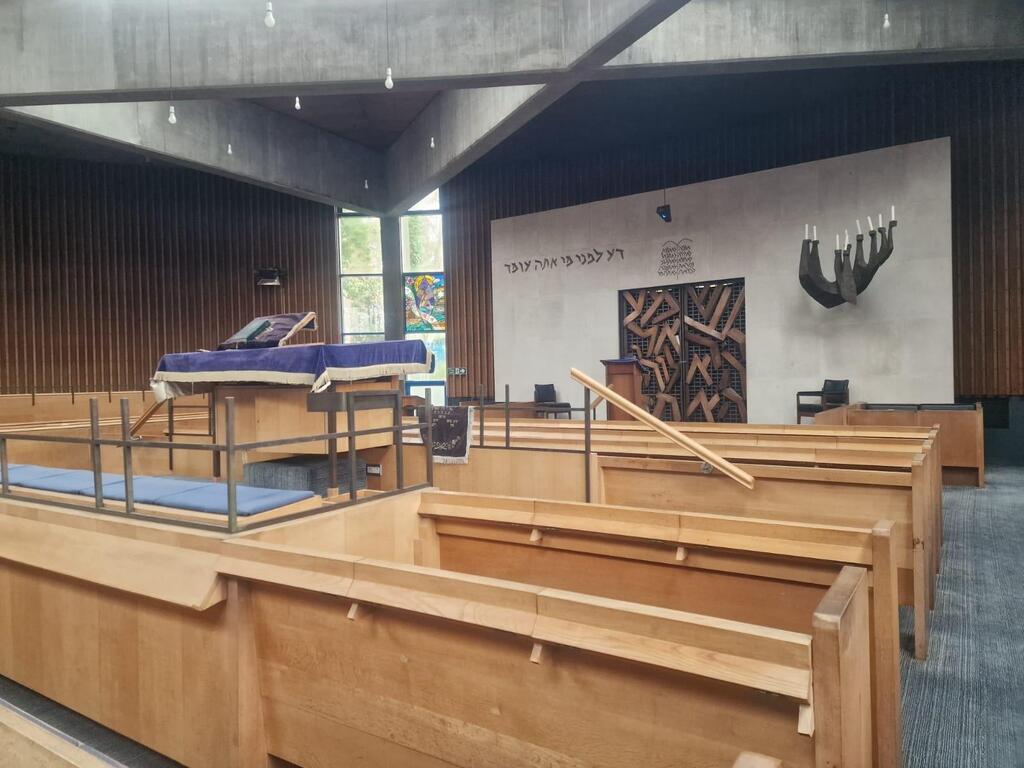
Belfast Synagogue
(photo: Ayelet Mamo Shai)
The center of the Jewish community is the Belfast Hebrew Congregation, located on Somerton Road, which holds Orthodox Ashkenazi-style prayers. The synagogue itself is beautiful and impressive, a testament to the wealth and strength of the community in the past. On the ark, the inscription reads: "Hear, O Israel, the Lord our God, the Lord is One".
The challenges make maintaining the routine of Jewish life almost impossible. In recent years, the community has faced difficulties in recruiting a spiritual leader. Rabbi David Kale served in the central role until his departure. At times, it is very challenging to gather a minyan for prayers on weekdays and Shabbat.
The Jewish community center also includes a small event hall where various occasions are celebrated, a small study hall, and a meeting room. There is no active Jewish day school in Belfast, and the few remaining Jewish children attend regular public schools in the city.
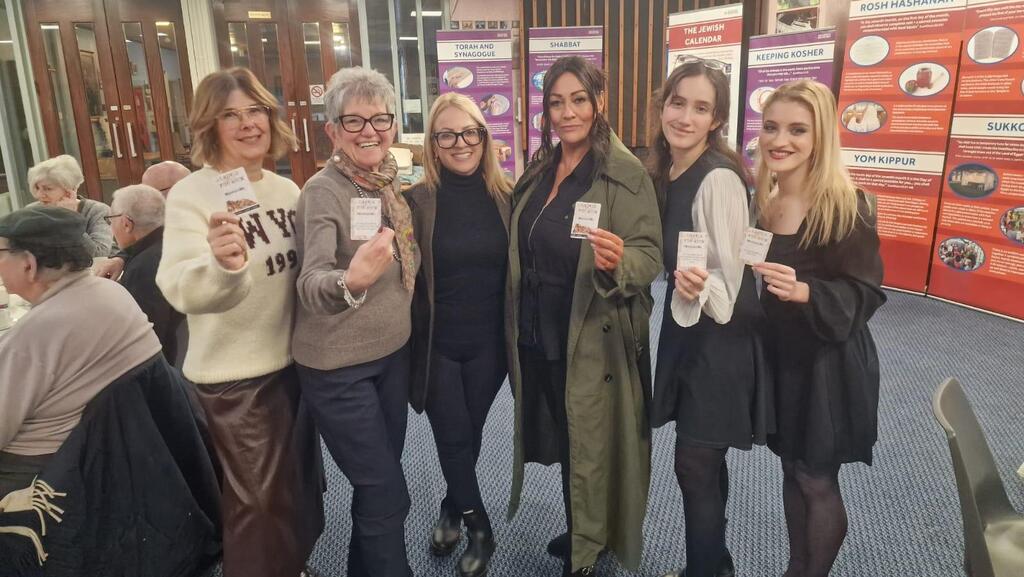
Ayelet Mamo Shai (third from left) with members of the Jewish community
(photo: Ayelet Mamo Shai)
There is no permanent mohel in the city, and the community relies on mohels who come occasionally from larger communities in England, Scotland, or other European countries. The situation regarding kosher food is particularly challenging: over the years, kosher butcher shops and delicatessens in the city have closed, and currently, the community does not have a permanent and active kosher store. In fact, most of the community members are not strictly observant of kosher laws, and those who do observe kosher laws have to order kosher meat from larger communities in the UK (such as London or Manchester) or purchase products with basic kosher certification from regular supermarkets.
As mentioned, much of the social activity takes place at the synagogue complex, where kosher meals are organized for events and for meetings with retirees, who have a rich life experience as Jews in the area. The lunch was organized for both community members and non-Jewish supporters of Israel. For me, it was an especially moving experience, and the people were welcoming, warm, and wonderful.

Torah books, Belfast Synagogue
(photo: Ayelet Mamo Shai)
In Belfast, there are two Jewish cemeteries. One is old and no longer in use, while the other is newer and still active today.
Flags of Palestine versus Flags of Israel
Chaim Herzog, later the sixth president of the State of Israel, was born in Belfast and grew up in Dublin. His father, Rabbi Isaac Herzog, was the first Chief Rabbi of Ireland. While I was staying in Belfast, a proposal was raised at the Dublin City Council, in neighboring Ireland, to remove the name of the late president from Herzog Park in the south of the city. The public outcry following these developments was felt all the way to Belfast in Northern Ireland.
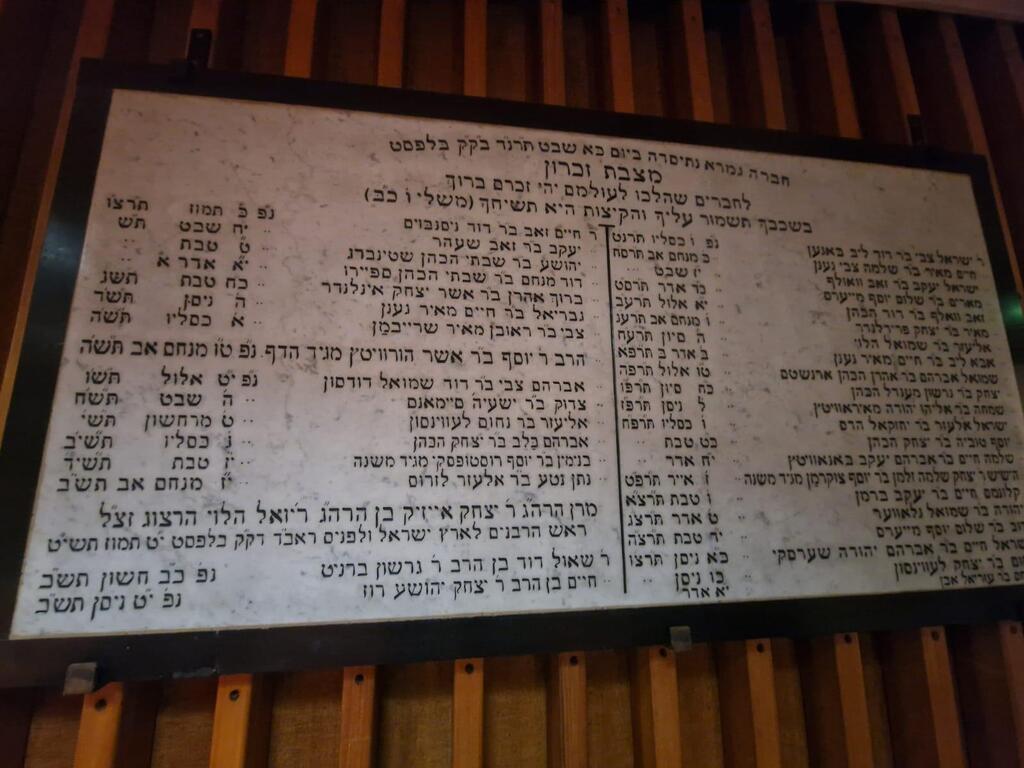
A memory plaque with Rabbi Herzog's name on it
(photo: Ayelet Mamo Shai)
The storm erupted following a campaign by pro-Palestinian activists, amid international tensions. Some called for the renaming of Herzog Park to "Free Palestine Park". The controversial move faced widespread condemnation, not only from the Jewish community but also from political leaders. The Jewish Representative Council of Ireland stated that removing the name would be an attempt to erase Jewish-Irish history and would send a "hurtful and isolating" message to the small Jewish community. This reflects the growing anti-Israel sentiments, sometimes intertwined with antisemitism, which complicate the lives of the community. For now, Dublin City Council has reversed its stance, and the move has been suspended.
Meanwhile, in Northern Ireland, the Jewish community remains highly active in the social and cultural spheres despite its small size. It has made significant efforts to build strong relationships with Christian neighbors, including hosting public events and collaborating with Christian organizations. Additionally, the community organizes social gatherings and cultural festivals, such as "Jews Schmooze", which attract thousands of non-Jewish visitors.
Similar to what's happening in Ireland, the Belfast community faces an increase in antisemitic incidents, including graffiti and damage to the synagogue. However, according to reports from community members, these are primarily "verbal harassment" rather than direct physical threats.
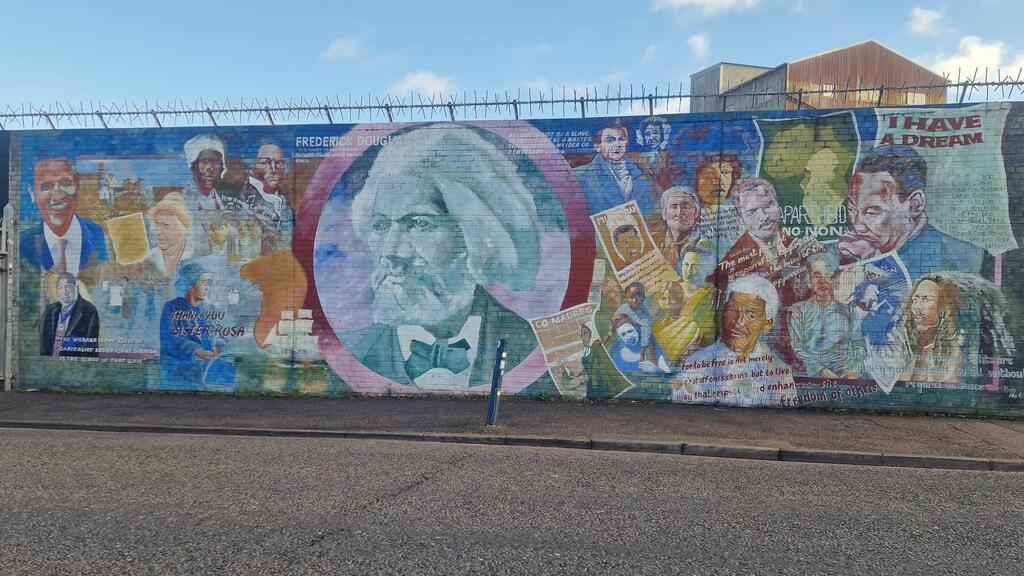
Graffiti wall in Belfast
(photo: Ayelet Mamo Shai)
Due to the history of the conflict in Northern Ireland, there is a unique sensitivity regarding the situation in Israel. A visit to Belfast reveals that Palestinian flags are commonly seen in Catholic nationalist neighborhoods, while Israeli flags occasionally appear in loyalist Protestant areas, symbolizing a form of solidarity that doesn't necessarily stem from a deep understanding of the Israeli-Palestinian conflict.
The story of the Jewish community in Belfast is one of pioneering founders that evolved into a community of survivors. Despite its small size, the community continues to maintain a living Jewish spark in Northern Ireland, standing as a testament to the long history of Jewish presence in this remote corner of the United Kingdom.
Ayelet Mamo Shai is a businesswoman, chairwoman of the Gibraltar-Israel Chamber of Commerce, an international speaker, author, and researcher of Jewish communities worldwide.