

Why did some elders in the Ethiopian Jewish community eat only roasted chickpeas for the three days before Passover? Did they read from a Passover Haggadah? Did they drink four cups of wine? Was there an afikoman—the piece of matzah traditionally eaten at the end of the seder meal? What counted as chametz, or leaven, in their eyes? Did they offer the Passover sacrifice? And what does all of this have to do with the red heifer about which we read on Shabbat Parah a few weeks ago?
These are not merely anthropological questions about a distant tradition. They open a path to a deeper understanding of some of Judaism’s central concepts: sacred time, purity, freedom, and moral discernment. A close look at the customs of Ethiopian Jewry, together with rabbinic teachings, reveals a rich and thought-provoking picture—one that speaks not only to the past, but also to the spiritual and moral challenges of our own time.

The rabbis distinguished between “the Passover of Egypt” and “the Passover of future generations.” The Passover of Egypt was a one-time event, marked by unique features: sacrificing a lamb on the tenth of the month, placing its blood on the doorposts and lintel, and eating in haste on a single night. The annual Passover holiday, by contrast, became a recurring festival with a fixed structure. Yet when one reads the Torah itself, the distinction is not quite so sharp. Scripture binds the original historical event to its ongoing remembrance: “This day shall be for you a memorial… throughout your generations” (Exodus 12:14). Why, then, did the rabbis separate the two so clearly?
Perhaps the answer lies in a deeper question: how do you preserve the living force of redemption within the repetitive structure of the calendar? How do you prevent memory from becoming habit? Here the tradition of Bete Israel, the historic Jewish community of Ethiopia, offers a striking answer. In many ways, it preserved the consciousness of “the Passover of Egypt” as something immediate and real. Passover is not merely symbolic remembrance. It is an existential event—more than “as if we ourselves went out of Egypt” (as we read in the Haggadah). It is a felt experience of departure, transition, and movement.
The month of Nisan, called Lisan in the Bete Israel tradition, was understood as the true beginning of the year, in keeping with the biblical verse, “This month shall be for you the first of the months.” Preparations for Passover began at the start of the month: an intensive cleaning of the home, replacing utensils, and removing anything that had come into contact with water. Old clay vessels were broken and replaced with new ones, a powerful symbol of renewal. On the tenth of the month, a lamb or goat was selected and tied near the synagogue until the fourteenth, when it was offered as the Passover sacrifice.
Three days before the holiday, elders and spiritual leaders customarily ate only roasted chickpeas. This was not because of poverty or deprivation, but out of a deep consciousness of entering Passover with a body cleared of chametz. Most of the community, however, continued eating chametz throughout the entire fourteenth of Nisan. According to the plain sense of the Torah, chametz may be eaten until the festival itself begins on the evening of the fifteenth. Rabbinic law later established earlier time limits as a safeguard around the Torah.
At this point, an important difference emerges in the very definition of chametz. In rabbinic tradition, chametz is defined by substance: it refers specifically to leavened food made from the five major grains. In the Ethiopian tradition, the definition was more process-oriented. Any food—even meat or dairy—could in some sense become “leavened” if it sat too long and lost its freshness. Chametz was not only a matter of ingredients, but of delay, aging, and fermentation. That understanding gave rise to a strong preference for fresh food. Chametz was not just what was on the plate, but what happened to it over time.
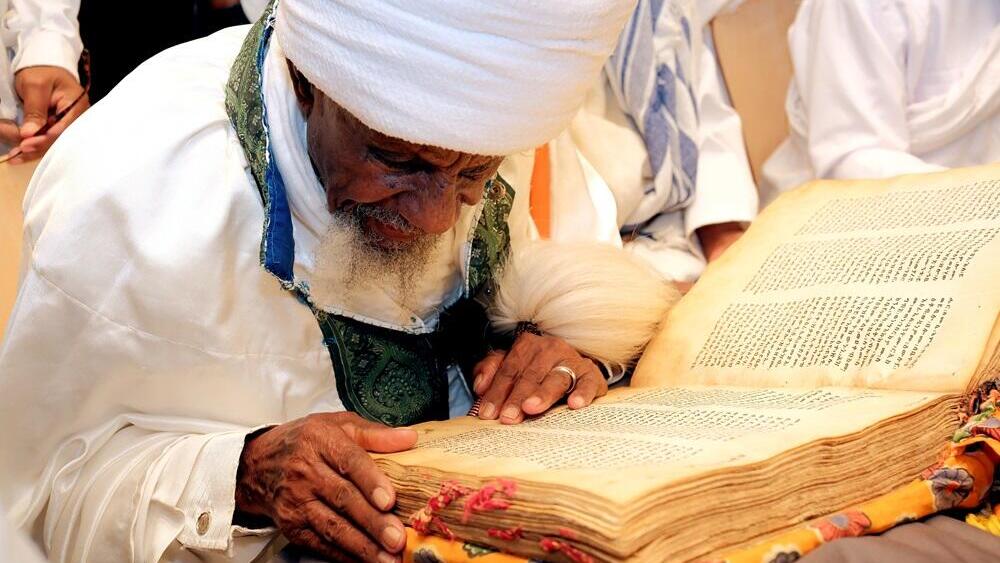
(Photo: Michael Zickry)
This offers a profound lesson about life itself. What matters is not only what we do, but also when and how we do it. Indeed, this understanding seems to resonate with the Haggadah’s explanation of matzah: “This matzah that we eat—why do we eat it? Because our ancestors’ dough did not have time to rise before the King of Kings revealed Himself and redeemed them.” The focus shifts from the type of food to the dimension of time.
In the early hours of the fourteenth day of the month, members of the community would go out and immerse themselves in the river near the village. After immersion, they returned home for the final preparations. The matzah was baked quickly, though certainly not with a stopwatch. The Israelites in Egypt did not measure eighteen minutes; what mattered was the spirit of haste in performing the commandment. Some members of the community—especially the shmaglotch, the elders, and the kahen, the priests—also fasted on that day.
Toward evening, the entire community gathered in the courtyard of the synagogue, dressed in holiday clothes, united in the feeling that something extraordinary was about to occur. The kahan (traditional Bete Israel spiritual leaders, sometimes referred to today as a keis) approached the lambs or goats that had been selected beforehand and slaughtered them. The sacrifice was then brought to a stone altar erected in the synagogue courtyard, known as the mesgid, where the Passover offering was made. Once the meat had been roasted over the fire, the priests began to pray and chant. The meat was then distributed to each family together with the kitta, the unleavened bread prepared in advance. The elders customarily ate while holding a staff, girded with belts, and dressed in a way that recalled a people about to set out on a journey—an echo of the Exodus from Egypt as recorded in the bible.
After the meal, the priests recited a special prayer. During the ritual, a bundle of hyssop—at least three stalks—was dipped into the blood of the sacrifice and applied to the lintel and the two doorposts of the home.
In Ethiopia there was no Passover Haggadah in the familiar rabbinic form, no four cups of wine, and no afikoman. Instead, at the end of the prayers, one of the priests read directly from the Torah, from the passages in the Book of Exodus that recount the departure from Egypt. The story of the Exodus is already in the Torah—so why not read it there, directly? After the reading, it was translated into the local spoken language, and the story was further passed on orally. The experience was not merely ritualized; it was alive, concrete, and present.
When the meal and prayers were over, whatever remained of the sacrifice was gathered and burned. Some members of the community returned home, while others remained in the synagogue all night, listening to the priests tell the story of the Exodus and experiencing it as if it were unfolding in the present.
The next day, the first day of Passover, was observed as a festival day on which work was forbidden in the villages. At the same time, certain basic activities—such as food preparation and small tasks within the village—were still permitted. Another distinctive custom was the counting of the Omer, the seven-week count leading to Shavuot, which in this tradition began from the last festival day of Passover as contrasted with the Rabbinic tradition of beginning the count on the night of the second day. Bete Israel understood the biblical phrase “the morrow after the Sabbath” as referring to a festival day, though not the first day of Passover but the last.
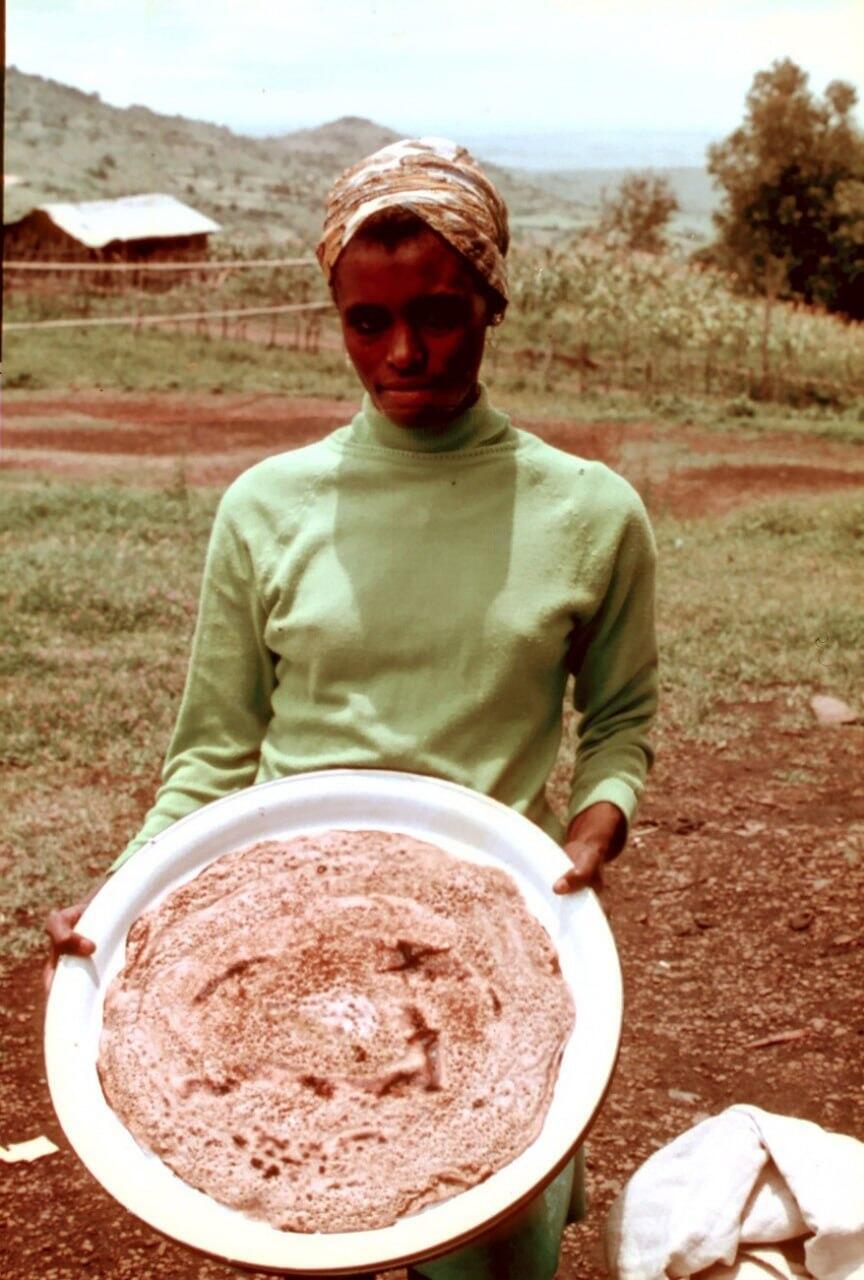
(Photo: Sharon Shalom)
Personally, every year on Passover, I do not feel as though I left Egypt “as if” I had been there. I feel that I truly did. Together with the sons and daughters of Ethiopian Jewry, we set out on a journey, left our villages in great haste, crossed the deserts of Sudan, lost those dearest to us, and were privileged to reach Jerusalem.
The encounter between Israeli Jews and Jews from Ethiopia, then, is not merely an encounter between veteran Israelis and more recent immigrants. It is also an encounter between two models of Judaism: the biblical and the rabbinic. In many ways, Passover illustrates the difference with particular clarity. Ethiopian Jews restore to the Jewish people a dimension of the holiday whose biblical meaning—the living reality of “the Passover of Egypt”—was largely lost.
But the community restores something else as well: the mystery of the red heifer. Remarkably, Ethiopian Jews continued using the ashes of a red heifer until the twentieth century. The commandment of the red heifer, which deals with purification from corpse impurity, is one of the Torah’s most enigmatic laws. It contains a built-in paradox: it purifies the impure, yet renders impure the one who performs the rite. The rabbis saw in this a sign of the limits of human reason. Not everything can be explained simply.
Perhaps that is precisely why the rabbis placed the reading of the red heifer passage close to Passover. Before the festival of freedom, a person must undergo a process of purification—not only physical, but also mental and moral. One must learn to distinguish, to understand that not everything is self-evident, and to develop a refined moral sensitivity capable of recognizing complex situations. Passover, with its fine distinction between chametz and matzah, its call to remember the Exodus, and the preparatory reading of the red heifer, invites us into a process of clarification. It is not only historical memory, but inner work: learning to discern, to be precise, to recognize the moment when something small changes an entire reality.
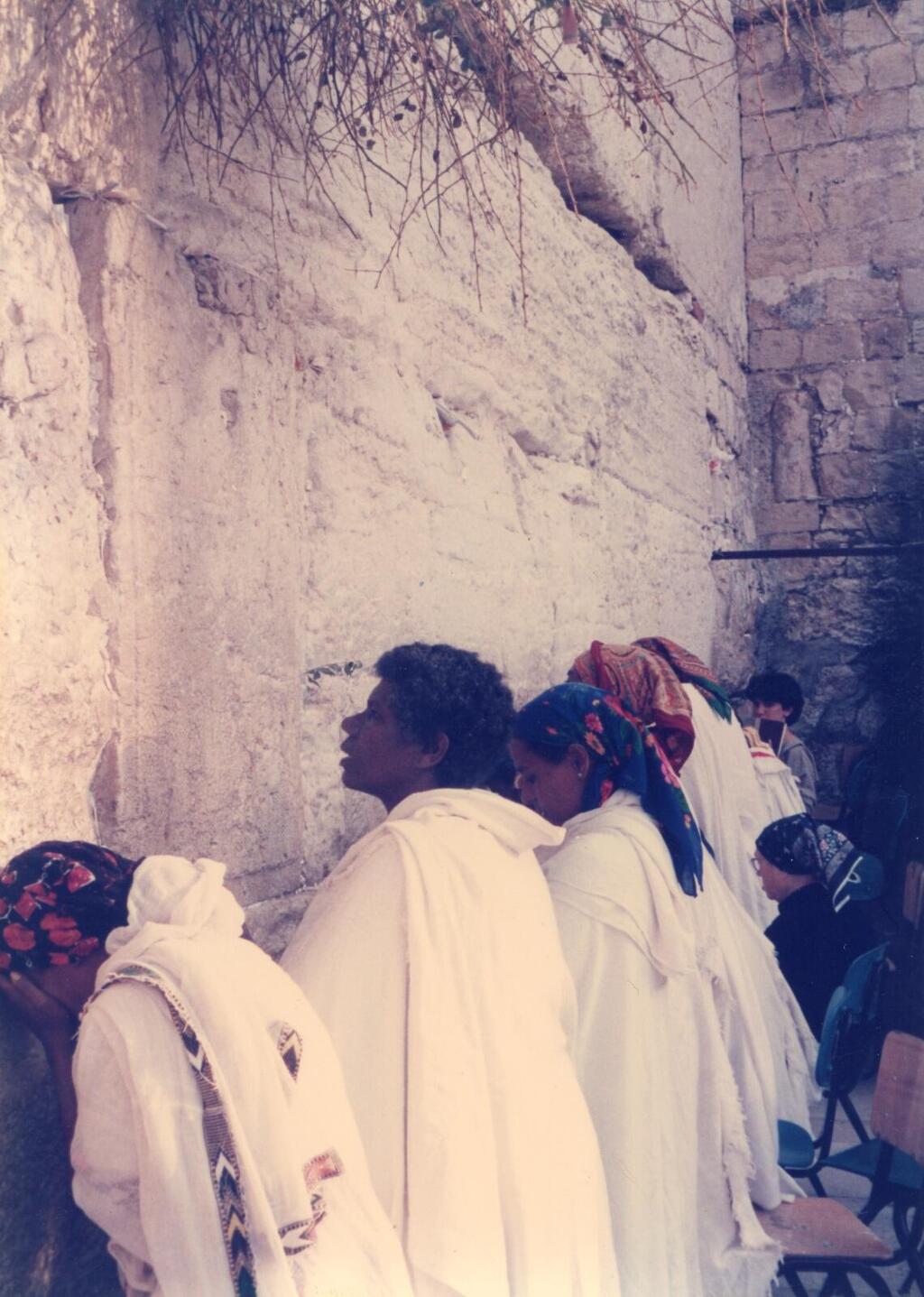
A group of women visit the Western Wall after immigrating, 1985
(Photo: Courtesy of the Ethiopian Jewish Heritage Center Archive)
The connection between the red heifer and our own time becomes clearer when we look at contemporary public and international discourse. The boundaries between good and evil seem increasingly blurred. It is often difficult to distinguish between those who defend life and those who justify destruction, between victim and aggressor. Even international institutions sometimes struggle to make these distinctions. Reality becomes chaotic, nonlinear, and full of contradictions.
Perhaps this is Passover’s deepest meaning: not only a movement from slavery to freedom, but also a movement from confusion to clarity; not only external liberation, but freedom of consciousness—the ability to discern, to choose, and to act with awareness. The ability to distinguish between falsehood and truth. This is what Israel and the United States are now fighting over in Iran, and it is what Israel has been fighting over continuously, especially since October 7. In an age when boundaries are blurred, we are called to even greater moral subtlety: to distinguish between chametz and matzah, between purity and impurity, to notice small differences and understand their enormous significance.
Rabbi Dr. Sharon Zeude Shalom is the founding director of Ono Academic College's International Center for the Study of Ethiopian Jewry. He is also the author of The Living Geniza (Open University, 2022), Dialogues of Love and Fear (Koren, 2021) and From Sinai to Ethiopia (Gefen, 2016).
First published: 21:29, 03.29.26