


This week, we read the portion of Vayera, which means ‘He appeared’, referring to God appearing to Avraham while he was healing from his recent circumcision.
This portion is extra special; not only because it’s my Bar Mitzvah portion, meaning it’s the portion I read in synagogue when I turned 13, but also because it can easily be learned as the user guide to how to live a fulfilled life of kindness.
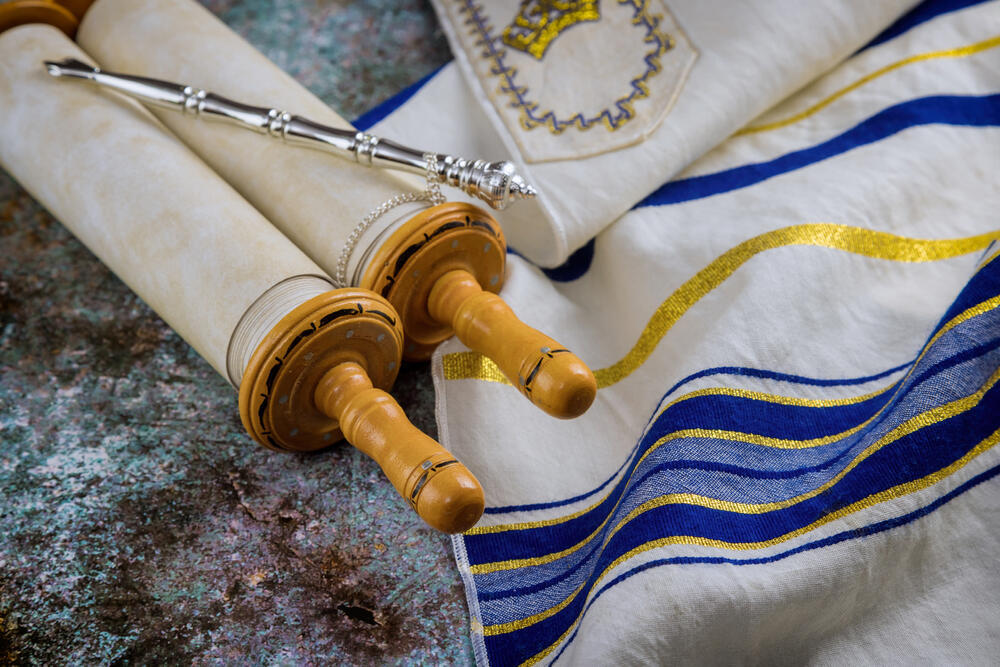
(Photo: Ungvar / Shutterstock)
We know that out of all the patriarchs, Abraham teaches us about kindness and good deeds. So if you want to know what it means to be a good person, Abraham is the person to look to, and this portion is the one to study.
So what can Abraham teach us about how to treat others and what living a life of kindness looks like?
Well, let’s examine the very first verse of the portion. It reads “Hashem appeared to him by the terebinths of Mamre; he was sitting at the entrance of the tent as the day grew hot.”
According to the simple explanation, the “He” here is Abraham, which begs the question of why he’s not mentioned by name, but maybe we’ll get to that later.
So Abraham is sitting by his tent at the heat of the day and God appears and talks to him.
What happened next?
“Looking up, he saw three figures standing near him. Perceiving this, he ran from the entrance of the tent to greet them and, bowing to the ground.”
In other words, Abraham is in the middle of talking to God Himself when he notices three people in the desert who need shelter and food.
What does he do? As my friend Rabbi Efrem Goldberg says, he put God on hold and answered the call waiting.
Abraham literally tells God, “Hang on. I have to welcome these strangers into my home.”
In other words, Abraham teaches us that if I have to choose between praying or fulfilling a commandment pertaining to my relationship with God or to help out a stranger, God takes the back seat.
What a profound lesson.
In today’s world, where religion is often used to encourage violence or terror in the name of some God, Judaism here tells me, “Before you become all religious and work on your connection to God, make sure you, first and foremost, treat others with respect and kindness.”
It is also worth mentioning that while the verse explains that God paid a visit to Abraham, it doesn’t say that God communicated with him in any way.
Perhaps, since Abraham was recovering from a circumcision, God is teaching us, sometimes, your presence is enough. Sometimes visiting someone who is in physical or emotional pain, just the visit itself, being there for them, with no words necessary, can make all the difference.
What does Abraham’s kindness achieve? How does it change him as a person and how does it change the situation?
Well, the commentary explains that these weren’t just three men. They were actually angels.
The Torah continues and says that Abraham indeed prepared food and fed his guests. Then it says something very interesting.
“He took curds and milk and the calf that had been prepared and set these before them; and he waited on them under the tree as they ate.”
The words “He waited on them” is the interpretation of the words but if you read the words literally, it says “He stood over them.”
Why is that interesting?
Because if you go back to the second verse, it says, “Looking up, he saw three figures standing near him. Perceiving this, he ran from the entrance of the tent to greet them and, bowing to the ground.”
Here too, the words “Near him” is not the literal translation of the words. It says that they stood over him.
So in the beginning, the Torah says they stood over him, and just a few verses later, after he takes care of them and makes sure that they have eaten and drank, it says he stood over them!
What are we to learn here?
That when you act in a kind way, it doesn’t only give the recipient of your kindness something. It gives you something too.
Before his kindness, the angels stood over him. But after he was kind and took care of them, he achieved a level of righteousness that exceeds even angels. Now he stood “Over” the angels.
Sometimes, giving leads to receiving.
Another important lesson from the fact that these “Guests” were “Standing over Abraham” is that he felt the weight of hospitality on his shoulders.
Meaning, he didn’t say “Let someone else host them.” He felt the responsibility on his shoulders to act.
In a world where someone can be attacked on the street and others will just walk by and ignore it, Abraham teaches us to stand up for what’s right.
That includes speaking up for what’s right, for the truth, even when difficult or risky. We each need to feel the responsibility on our shoulders to remind the world what morality is.
Onward.
So far, we’ve learned that Abraham chose kindness over talking to God and his kindness elevated him to a level higher than the angels.
So how deep does Abraham’s kindness run? The answer is: very deep.
The next story in the portion is about Sodom and Gomorrah, two cities that lacked any morality and were deeply corrupt.
God says something fascinating.
“Then Hashem said, "The outrage of Sodom and Gomorrah is so great, and their sin so grave!
I will go down to see whether they have acted altogether according to the outcry that has reached Me; if not, I will take note."
God has to “Go down” to check if they are indeed evil or not? God can’t see exactly what is going on without Him ‘coming down’ to examine the cities?
The lesson here is, God didn’t need to come down, but He is telling us that before we judge someone, always make sure to understand the circumstances that led to the act you are judging.
God had to “Come down” to Sodom before destroying the city to teach us that before you reach any conclusion about someone, make sure you “Go down” into their lives to understand their experience.
Back to Abraham.
So what does Abraham do when he finds out that God is going to destroy these two cities?
After all, they were evil cities with no redeeming factors.
So what does he do? Does he accept God’s decree? Does he warn them? Does he mourn them?
No, he debates God in their defense and tries to convince Hashem to spare them.
As part of this heated debate, the Torah mentions the concept of prayer for the very first time.
So what is the very first prayer in the Torah? Is it someone asking for health? Wealth? A new car? A bigger house? A raise at work?
No. The very first prayer in the Torah is someone, in this case Abraham, praying not for himself, but for others.
We often view prayer as a personal opportunity to ask God for things. The Torah here says that prayer is first and foremost an opportunity to ask for things for others.
A famous story is told about a big rabbi who was asked by his student before the high holidays what the student should be thinking about and focusing on during his prayers. The rabbi answered in three words.
On someone else.
Abraham teaches us to use the power of prayer to ask Hashem to be kind to others.
And two final lessons.
When Abraham is debating God, something that might seem strange by the way, but that many leaders in the Torah did including Moses, Abraham says something strange that I never paid attention to.
He says to God, “Maybe there are some righteous people in those cities. How could you destroy them if they have some good people there?”
It’s a very interesting dialogue, but one thing I never noticed is that when Abraham makes that argument, he doesn’t say, “Maybe there are some righteous people in the study hall learning Torah!” Or “Maybe there are some righteous people there in synagogue praying.”
Here is what the verses say.
“Abraham came forward and said, "Will You sweep away the innocent along with the guilty?”
What if there should be fifty innocent within the city; will You then wipe out the place and not forgive it for the sake of the innocent fifty who are in it?
Far be it from You to do such a thing, to bring death upon the innocent as well as the guilty, so that innocent and guilty fare alike. Far be it from You! Shall not the Judge of all the earth deal justly?"
There are three words there that are interesting.
“Within the city…”
What do those words add?
He could have just said “What if there should be fifty innocent.”
He says “in the city”. Perhaps the lesson here is that often times, there are very righteous people, good people, leaders right in front of us. They are among us. They are “Within the city.”
Being righteous isn’t reserved for the observant or the religious. Everyone can achieve their level of righteousness, even if they are simple people “Within the city.”
And finally, as mentioned, Abraham prays to God to reverse His decree.
The Talmud explains that from that prayer, we learn that we, too, are to pray. The source for the morning prayer of Shacharit is that prayer of Abraham’s.
Well, there is one very obvious and very strong question.
We learn about prayer from this story? But God rejected Abraham’s pleas and he destroys Sodom and Gemora, despite Abraham’s prayers.
We are supposed to learn about prayer from a prayer that was rejected??
The answer is yes. Why? Because understanding prayer means understanding that God hears our prayers, but sometimes He says no.
Sometimes, we are asking for something we think is good for us. God says no because He knows better. He knows that sometimes, what I think is good for me is really, ultimately bad for me.
There is a famous story I’ve mentioned before. When I was in high school, a boy named Nachshon Wachsman was abducted by terrorists.
The entire country prayed for his safe return. Israel launched an operation in which they failed to extract him and he was killed.
Nachshon’s mother, at his funeral, famously said that we shouldn’t think that all of our prayers weren’t heard. She said God heard our prayers, and for whatever reason, God’s answer was no.
The reason this is the source for our morning prayer is because Hashem is teaching us that praying for something doesn’t mean you’ll get that thing. Sometimes, like in this case, God hears you and says no.
This is something I’ve learned countless times in my life, including most recently when I was banned from entering Australia.
I prayed that they reverse their decision but my prayers were rejected and the answer was no.
Only a few days later, after being able to give the talk virtually, after seeing that the org that was supposed to bring me in to raise money ended up raising more because of all the media my story got, and after the Iran war breaking out, did I understand that God said no, not because He didn’t hear me. He said no because I was supposed to stay in Israel so I can be here for my family during those difficult days.
God heard me, said no, and I quickly understood why He said no. It was for my own good.
Shabbat shalom.