


Teenage girls carry large wooden planks through rolling green hills. One lifts a hoe beneath a cloud-streaked sky while her friend pauses to rest from working the land. Another, dressed in a long striped dress, weeds a patch of earth in a pastoral mountain setting — a scene reminiscent of Heidi.
These are just a few of the moments captured by Israeli photographer Maya Meshel, who spent five years documenting young women living in Maoz Esther, a wildcat outpost near the settlement of Kokhav HaShahar in Judea and Samaria, known internationally as the West Bank.
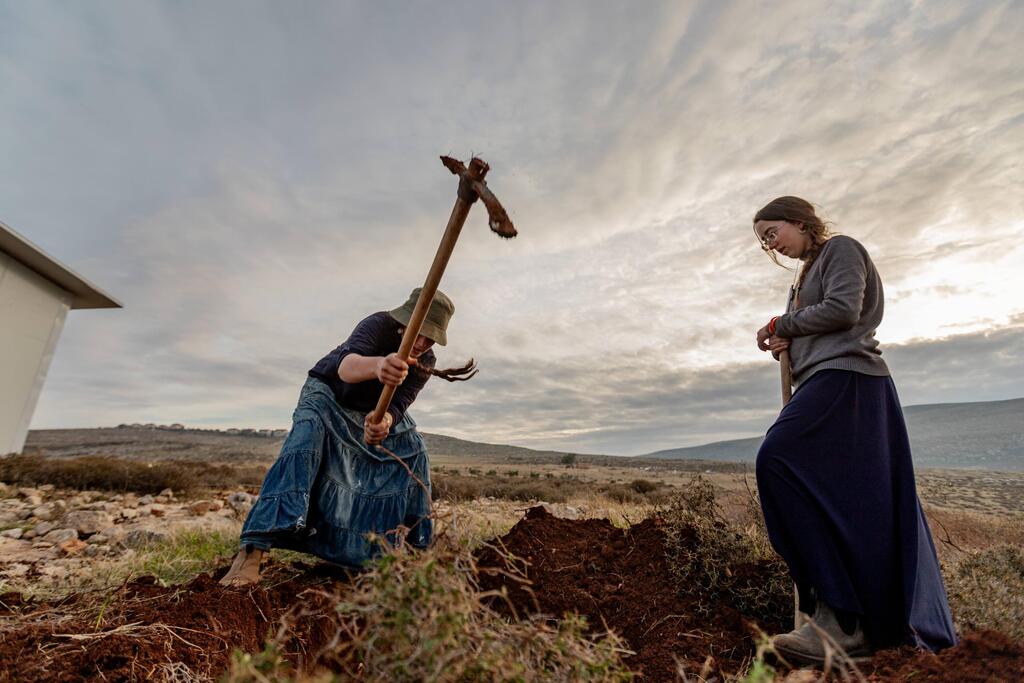
The photo series, part of the annual Local Testimony exhibition now on display at the Eretz Israel Museum in Tel Aviv through February 7, appears under the category “Long Exposure.” It covers the years 2021 to 2025 — a period of dramatic transformation for Maoz Esther. Once known as “Girls’ Hill,” the remote hilltop now houses roughly 20 young families.
Though the images depict scenes of pastoral labor and youthful resilience, they were taken in territory considered occupied and disputed under international law. Israel has not annexed the West Bank, which Palestinians claim as part of a future state, and many countries view outposts like Maoz Esther as illegal, even under Israeli law. These small settlements are built without official authorization, though some are later retroactively approved by the government.
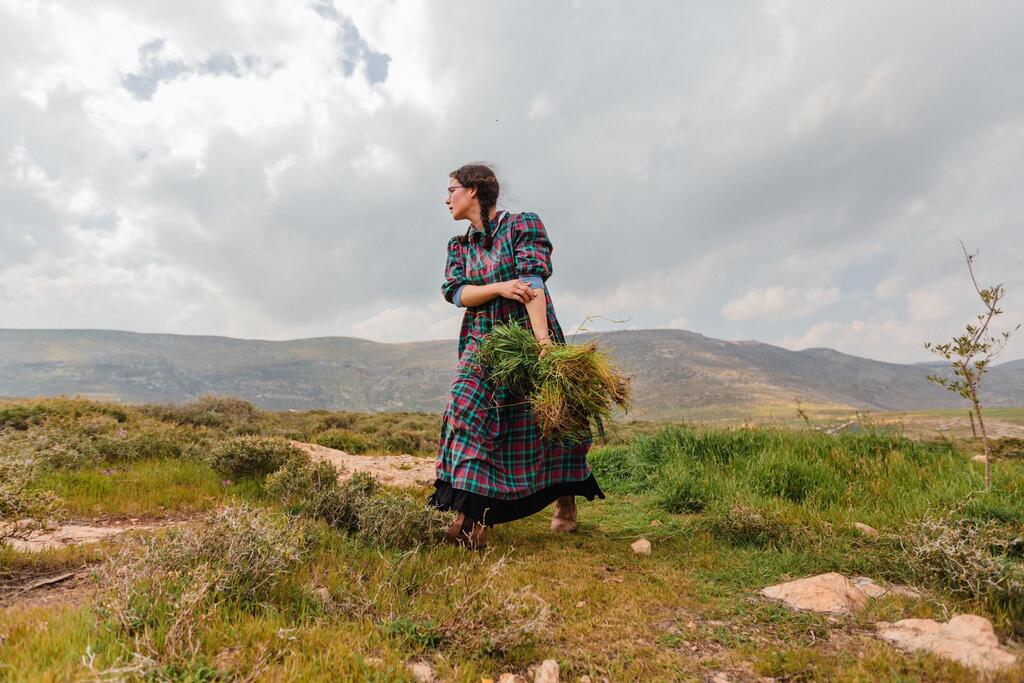
(Photo: Maya Meshel)
“They captivated me,” said Meshel. “The girls were very suspicious at first. They didn’t understand what I wanted from them. But trust slowly formed, and I began to take photos as part of the project. I stayed in touch, and they came to see the importance of documenting their lives. It became a kind of historical record.”
Meshel began by reaching out to two young women, Efrat Ben Natan and Shalhevet Goldstein, who were among those who reestablished Maoz Esther in its current form. Goldstein, now in her twenties, was two years old when her family was evacuated from the Gaza settlement of Kfar Darom during Israel’s 2005 disengagement — a unilateral withdrawal that saw all Israeli settlers removed from the Gaza Strip. She later became engaged to Ahuvia Sandak, a teenage settler activist who was killed in 2020 during a police chase, sparking controversy and protests in right-wing and religious Zionist circles.
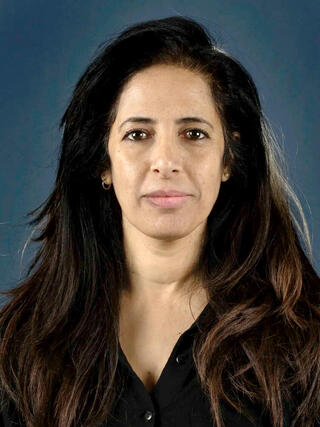 Maya Mehsel Photo: Dana Bar Siman Tov
According to Meshel, conditions in the outpost were extremely harsh. “The land was covered in thorns and weeds. The access road would become impassable mud in winter. It felt like summer camp, except it never ended,” she said. “There were eight girls living there alone. Today, 20 families live there, from different parts of the country. Some of the girls married and moved on.”
Maoz Esther was founded in 2005 by a youth group called Youth for the Land of Israel, later renamed Nachala, a religious-Zionist movement promoting settlement expansion in the West Bank. The outpost is named after Esther Galia, a resident of nearby Kokhav HaShahar, who was killed in a 2002 shooting attack. After a pause in permanent residency, teenagers began spending weekends at the site. When Meshel began photographing in 2021, eight girls aged 15 to 19 were living on the hilltop.
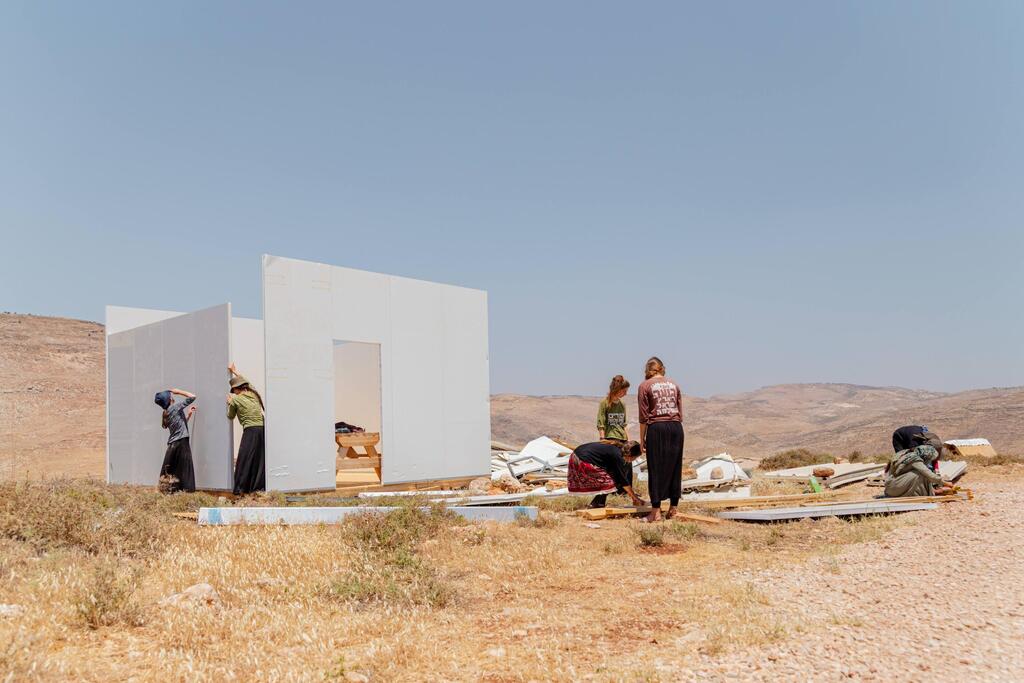
(Photo: Maya Meshel)
The outpost has been demolished and rebuilt dozens of times since its establishment; five of those demolitions occurred in the past eight years alone.
“Their lives were intense,” Meshel recalled. “They woke at 5:30 a.m., farmed the land and cleaned up after demolitions. Each time, they had to rebuild from scratch, learning new skills as they went. They studied Torah during the day and stood night guard shifts. There was no formal school, but they prepared independently for their matriculation exams.”
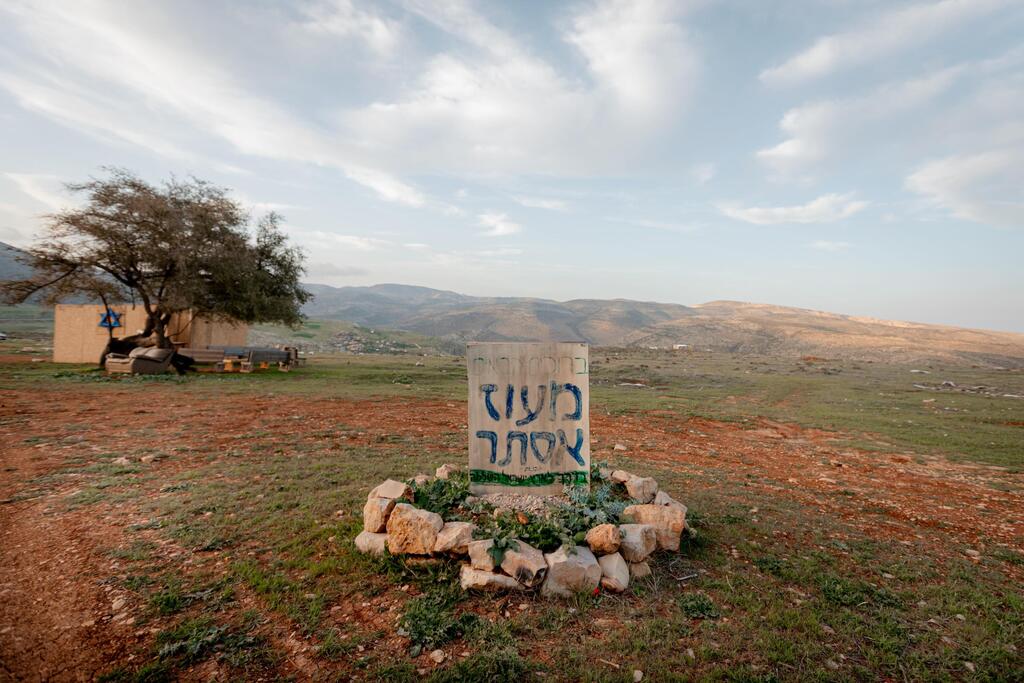
(Photo: Maya Meshel)
Despite the lack of infrastructure, she said, most of the girls earned their high school diplomas, and some have since gone on to pursue academic studies.
‘It’s important for us to speak to the people of Israel’
One of the young women photographed, Shoham Shoshana Or Yisrael, 23, describes it from her perspective: “It took us a little time to understand what she wanted, and what we understood was that she was documenting us first and foremost out of personal interest, and that she believed that in a few years these photos would have value — a bit like the documentation of the founding of the kibbutzim and the pioneers at the time the state was established. She said there is something here that is part of a historical process. We agree, and we also felt that we came here to change something, that we came to continue, essentially, the Zionist process.”
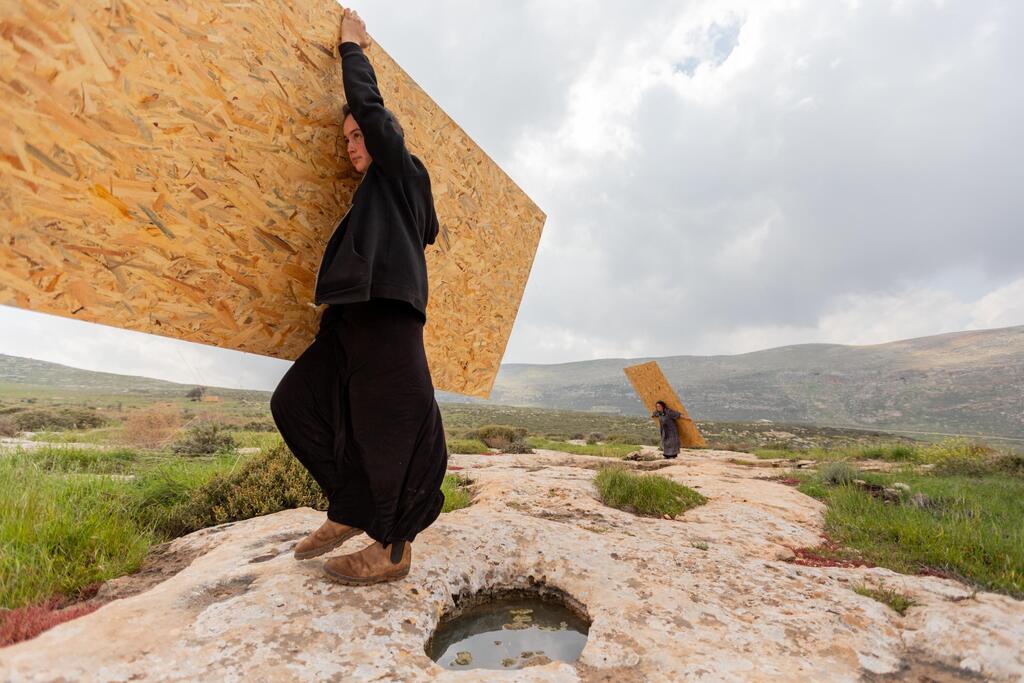
(Photo: Maya Meshel)
“We want there to be documentation of the next stage of Zionism — of settlement,” she adds. “We’re very happy that the photos were accepted into the Local Testimony exhibition at the museum. The very fact that you see images of settlement, of building, of the Jewish people settling their land — that’s already a good beginning. One day, when we build the Hilltops Museum, we’ll have Maya’s photos to display there. That’s how we saw it, and that’s also what we understood from her.”
Over those five years, Maoz Esther changed. It is no longer “the Girls’ Hill.”
“That’s right. Maya’s photos really show things that almost no longer exist today at Maoz Esther. They still exist on newer hilltops. Meaning, somewhat collapsing houses with a youth group — in our case, girls; elsewhere it might be boys — somehow surviving day to day, with a lot of chaos around, demolitions of old structures. Today, if you come to Maoz Esther, that’s really not what you see. There are still other hilltops, for example Or Ahuvia, which we work with a lot in cooperation, and it’s now more at that early stage. Maya went to photograph there as well, to document a new hilltop being established from scratch. She said she’ll come back to Maoz Esther too, God willing, soon, to photograph the present — to show the gap between one house with a few girls and 20 families with 60 children.”
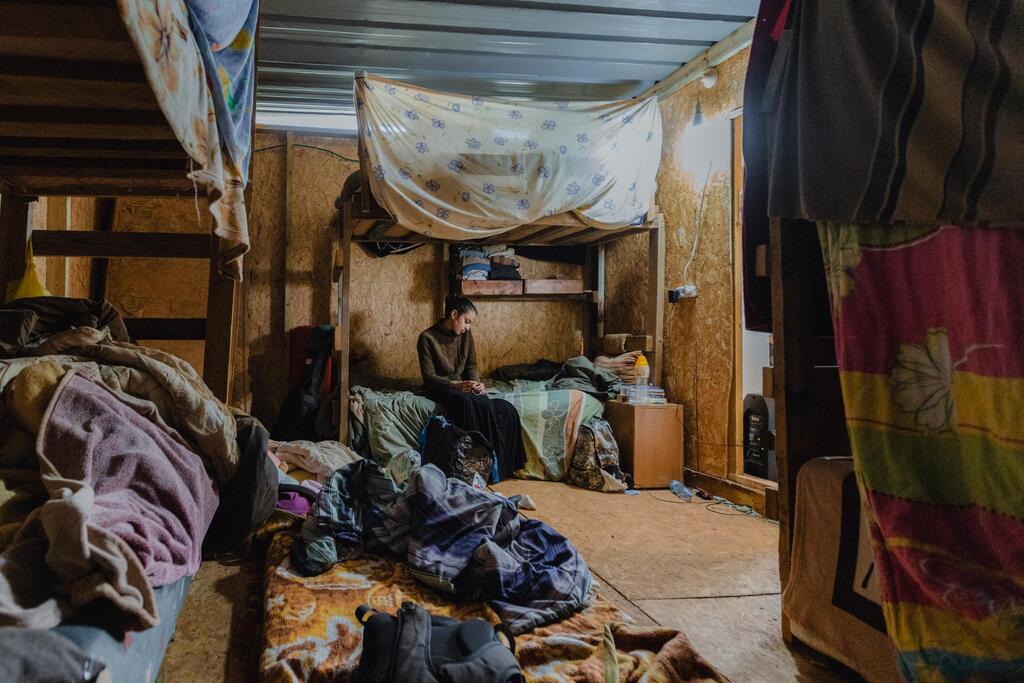
(Photo: Maya Meshel)
Is it also important to you to show positive sides of settlement in Judea and Samaria, given that it’s often portrayed differently in the media? There is frequent coverage of a rise in nationalist crime against Arabs since the start of the war, and of phenomena that cast the hilltops, isolated farms and this population in a negative light.
“It’s important for us to speak to the people of Israel. We want this process of settlement, and this next stage, to be something everyone is partners in. I’d be happy if people from the center of the country, or even from other communities that don’t really know what’s happening here, would understand what’s going on. My hope, my dream, is that they’ll connect, join in, and want to be part of it too. We want to settle the entire Land of Israel. That’s not something four girls can do on their own. We need the people of Israel for that. We want everyone to connect to this — it’s very, very important to us.”
Backing from the current government
Meshel lives in Jerusalem and defines herself as modern Orthodox. “I also photograph girls in Rahat, and I also photograph people who support the Palestinians — I do any project that interests me,” she says. “There’s no political agenda here, but there’s no question that I’m amazed by what they’re doing. I’m simply there to photograph, to document this story.”
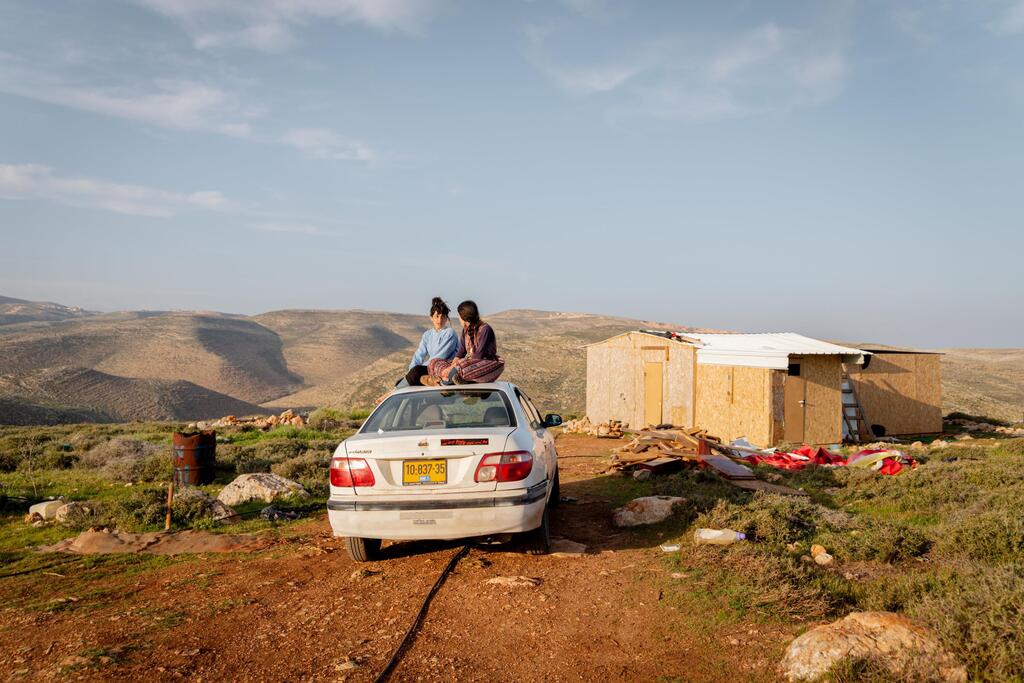
(Photo: Maya Meshel)
There is something unusual about the sight of all the work tools in the photographs. We don’t usually imagine a place built entirely by teenage girls.
“It’s amazing. Nothing interests them except settling the land. They formed a serious group of girls. They had a rule that anyone who wanted to be there couldn’t have a smartphone. In recent years they bought one smartphone for the hilltop, and through it they organize all the videos and upload stories, because they realized that social media is a way to gain exposure, show the work and receive support.”
The fact that this was an all-girls hilltop did not stem from a feminist ideology. The girls’ outlook was that the entire nation has a role in settling the whole Land of Israel. On various occasions they emphasized that the location — outside the fence, on land registered as private in the land registry but without an active claimant — was chosen deliberately. The message was unequivocal: a demonstration of presence to make clear who the land belongs to, and a call on the entire people of Israel to join and continue building.
The caption next to the Maoz Esther photos in the Local Testimony exhibition reads “the West Bank.” “That bothered some of the people around me,” the photographer says, “but fine. I’m not going to flip tables over it. They gave me enormous exposure.”
Although the outpost was not established by a government decision and was never formally regulated, under the current government it suddenly received room to grow without interference.
“No one is dismantling anything there, and no one will,” Meshel says. “Since the last elections they’ve had backing. Nothing will be demolished today. It’s no longer the Girls’ Hill — it’s the Families’ Hill.”