

Real-world violence against Jews has helped intensify a “spiral of hate” on social media, according to a report submitted to Australia’s royal commission on antisemitism and social cohesion, established after the Hanukkah massacre at Bondi Beach in Sydney, where 15 people were murdered.
The report mapped the scale of anti-Jewish hate online in Australia from October 2021 to March 2026. It was prepared by researchers at a multidisciplinary research center at Deakin University that specializes in the study and prevention of hate crimes, incitement and ideologically motivated violence.
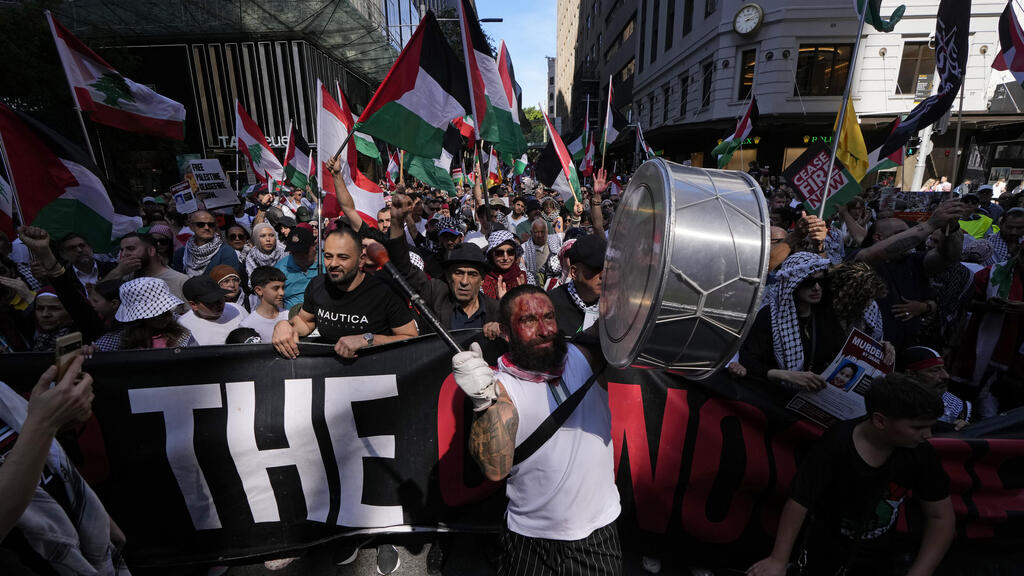
The study examined the connection between online hostility and antisemitic incidents that took place in the real world.
According to ABC News Australia, the report describes a troubling reality: anti-Jewish hate rose sharply and consistently online after the October 7, 2023, Hamas terrorist attack. The Hanukkah attack at a Chabad event on Bondi Beach in Sydney last December led to a further increase in online hate.
Dr. Matteo Vergani, a sociologist at Deakin University and one of the report’s authors, told the commission that the findings were especially relevant to the management of digital platforms, with an emphasis on identifying online hate crimes and taking action before they move from the keyboard into the real world.
The report’s authors found that, on average, when a physical act of offline violence occurred, the number of anti-Jewish posts on the social media platform X increased by about 3.4 posts above the expected baseline over the following 24 hours.
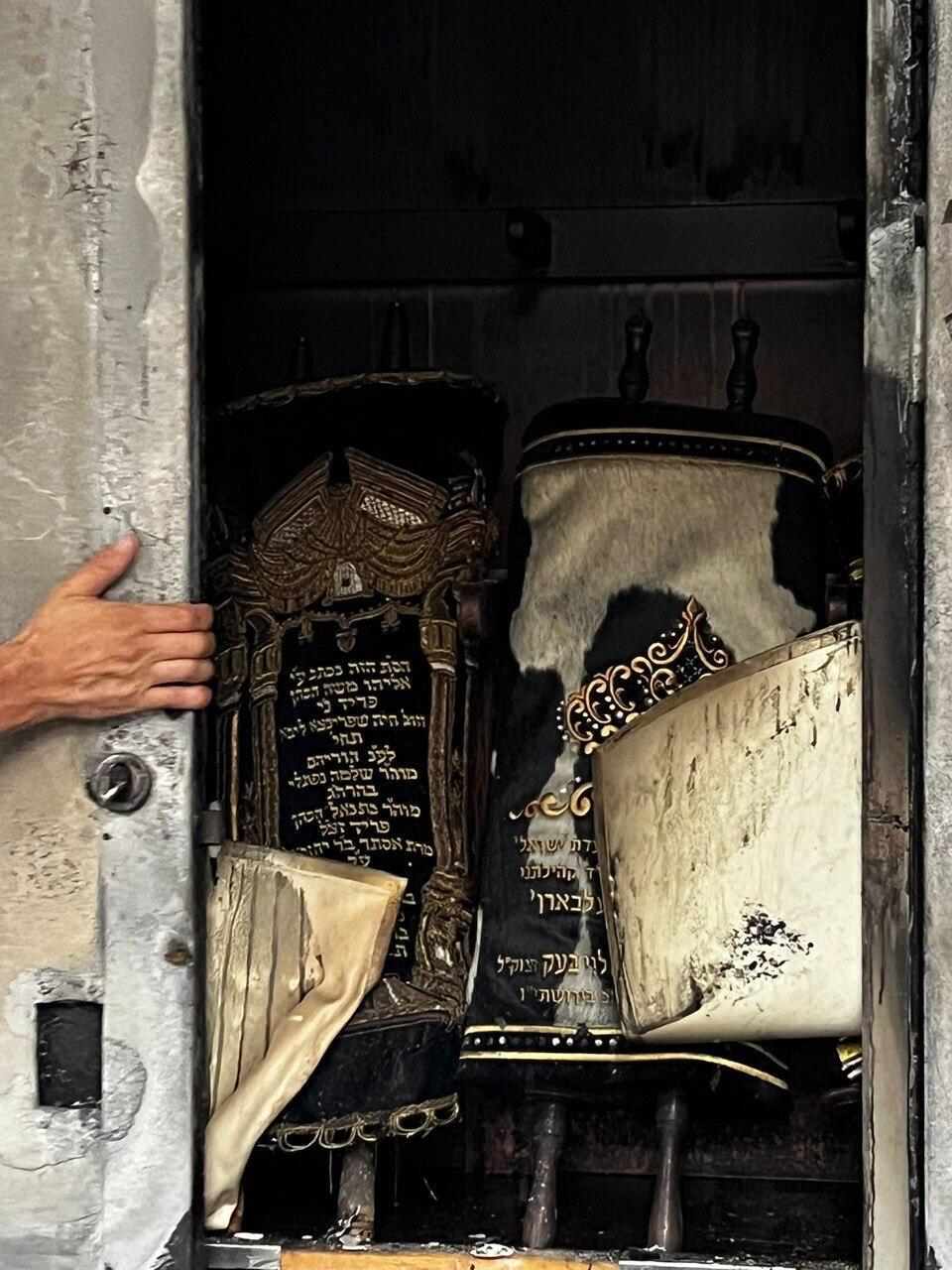
Burned Torah scrolls at Adass Israel Synagogue in Melbourne
(Photo: Adass Israel Synagogue in Melbourne )
These violent incidents affecting the Jewish community drew public attention, creating opportunities for people with antisemitic views to express them online, the report said.
“Real-world violence emerges as a stronger driver of online anti-Jewish hate,” the report stated.
The authors also examined the role of harmful conspiracy theories in amplifying and sustaining online hate. They focused on a conspiracy theory that spread prominently on X after the December 2024 arson attack on the Adass Israel Orthodox synagogue in Melbourne, falsely claiming the fire had been staged by the Jewish community.
Three suspects were arrested and charged over the arson attack.
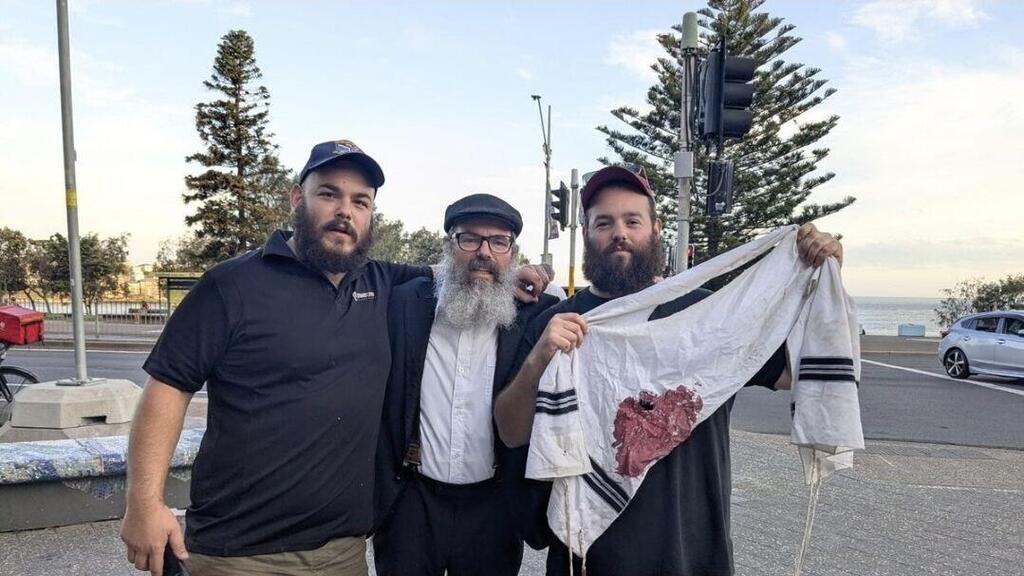
Bloodstained tallit from the Bondi Beach terror attack scene
(Photo used under Section 27A of the Copyright Law)
“In the case of the Melbourne synagogue arson, false claims against the Jewish community were not only correlated with anti-Jewish hate, but helped sustain and amplify it,” the report said. “This conspiracy sustained anti-Jewish hate over extended periods and perpetuated itself.”
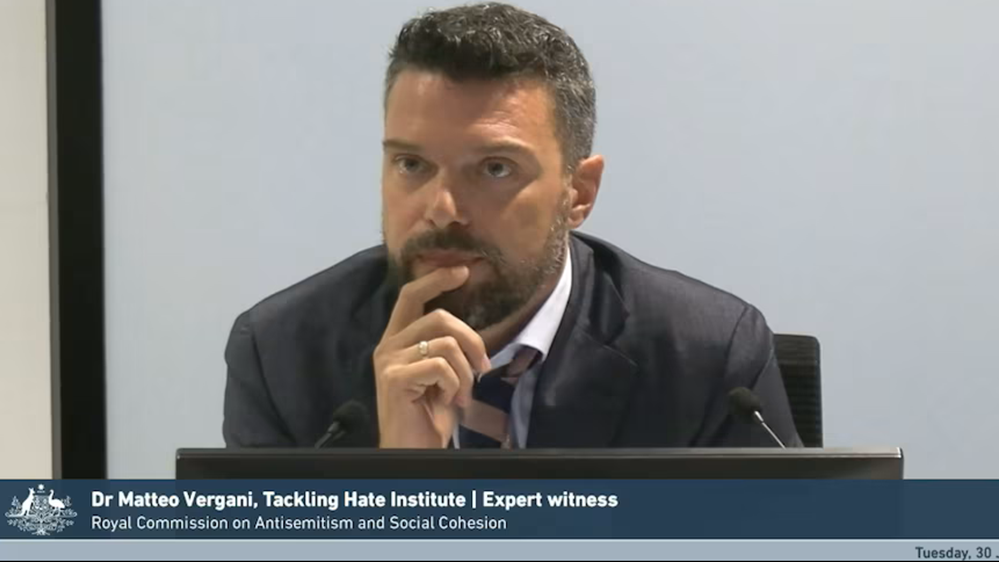
Dr. Matteo Vergani
(Photo: ABC News)
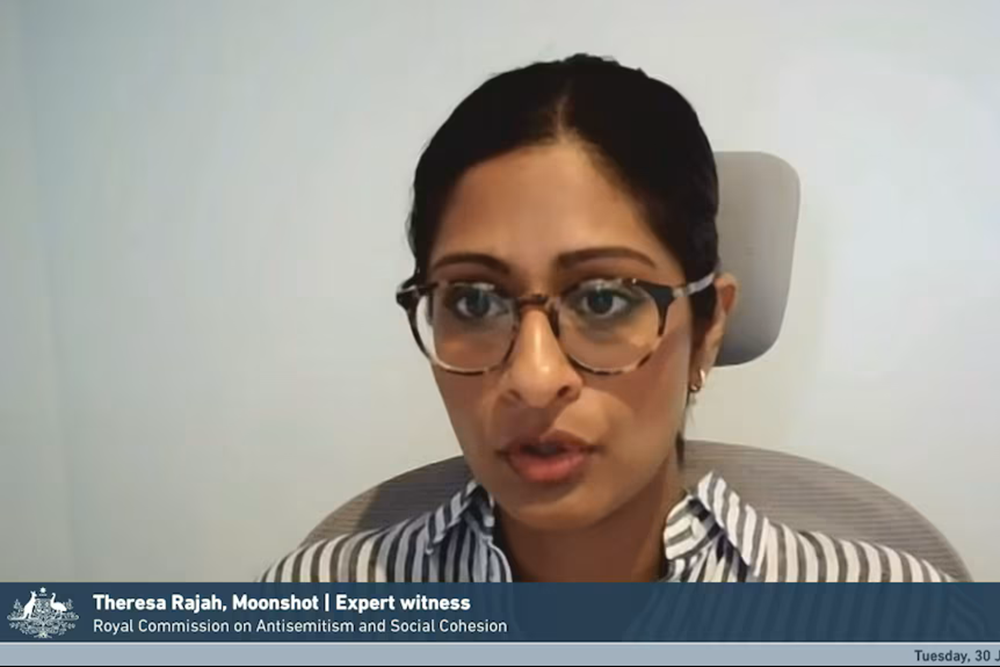
מנהלת Moonshot תרזה ראג'ה
(צילום: ABC News)
Earlier this week, the commission also heard from representatives of Moonshot, an organization that works to steer people away from violent and extremist content online. One tool used by the group is a pop-up shown to people using certain hashtags, search terms or other online pathways linked to violent content.
Moonshot director Theresa Rajah told the commission that the pop-up links to a landing page where users can access tailored support services.
“We are seeing a real sharp increase in the number of minors involved in violent extremist ideologies,” Rajah said, stressing the lack of dedicated online tools that can prevent young people from being exposed to such content.