


Greenland, the vast Arctic island once publicly coveted by U.S. President Donald Trump, is not a place where one expects to encounter Jewish history. The world’s largest island, stretching over more than two million square kilometers, is among the most remote and extreme places on Earth. Roughly 80% of it is covered in thick ice, and its population of about 57,000 is largely Inuit. A formal Jewish community has never existed there.
And yet, among glaciers, forgotten ports and military bases, a small, persistent and surprising Jewish story has taken shape over centuries.
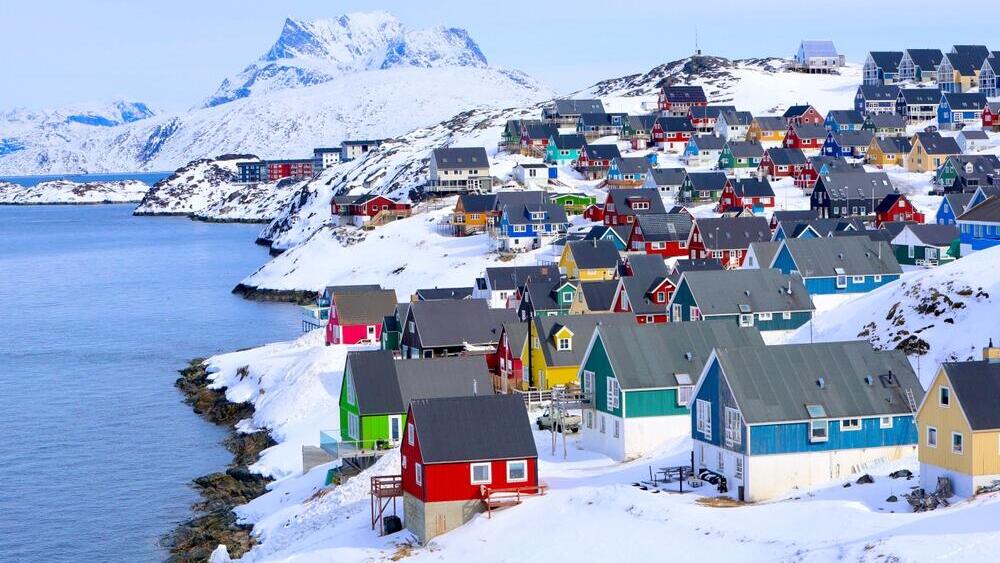
Jews never built permanent synagogues in Greenland. Still, Jewish figures — military chaplains, soldiers, scientists, medical workers and even whalers — left their mark, proving that Jewish identity, faith and hope can endure even at the edge of the world.
As of 2025, the only Jew living permanently in Greenland is Paul Cohen, a translator who has lived in the town of Narsaq since 2001. Cohen and his family run a tourism business renting holiday cabins. Even at the far end of the world, he says, Jewish travelers find their way — and are reminded that the Jewish spark, even amid the ice, has never gone out.
From Jewish whalers to Arctic prayer
According to research by historian Vilhjalmur Orn Vilhalmsson, the earliest Jewish presence in Greenland likely dates back to the 16th century. Jews were active in the Dutch whaling industry, whose ships operated in Arctic waters around Greenland. Among ice floes, fog and stormy seas, Jewish prayers may have been uttered for the first time on Greenlandic soil.
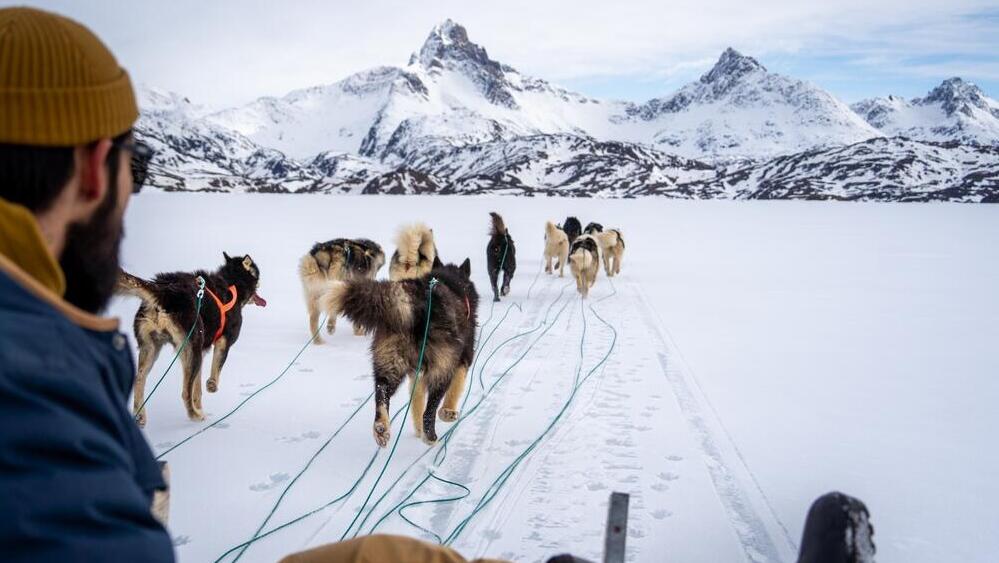
Sled dogs in Greenland
(Photo: Lasse Jesper Pedersen/ Shutterstock)
In the 20th century, Greenland became a brutal and groundbreaking arena for scientific research. One of the most remarkable figures to work there was Dr. Fritz Loewe, a Jewish meteorologist born in Berlin in 1894. In 1928, Loewe joined a research expedition led by Alfred Wegener to study Greenland’s climate and ice cover deep in the island’s interior.
The mission became a fight for survival. During a supply run to the remote camp, local workers quit, leaving Loewe and his colleagues to haul heavy equipment alone in temperatures plunging to minus 54 degrees Celsius. By the time Loewe reached the camp, his toes were severely frostbitten. When gangrene set in, a colleague was forced to amputate them using only a pair of scissors and a penknife.
After the expedition’s senior scientist died, Loewe assumed leadership and led the remaining team to safety after completing the measurements. He returned to Greenland in 1931 with his family and a German film crew that documented the mission. But the rise of Hitler ended his career in Germany. Loewe was fired, briefly arrested and forced to flee.
He later taught at Cambridge, moved to Australia and became a central figure in Australian science, founding the meteorology department at the University of Melbourne.
‘The northernmost minyan in the world’
World War II transformed Greenland into a strategic outpost. After Denmark fell to Nazi Germany in 1940, Danish envoy Henrik Kauffmann signed an agreement allowing the United States to defend Denmark’s Arctic territories. In 1941, the U.S. Air Force established a base at Thule, later known as Pituffik Air Base, and thousands of American soldiers arrived — including an unprecedented number of Jews.
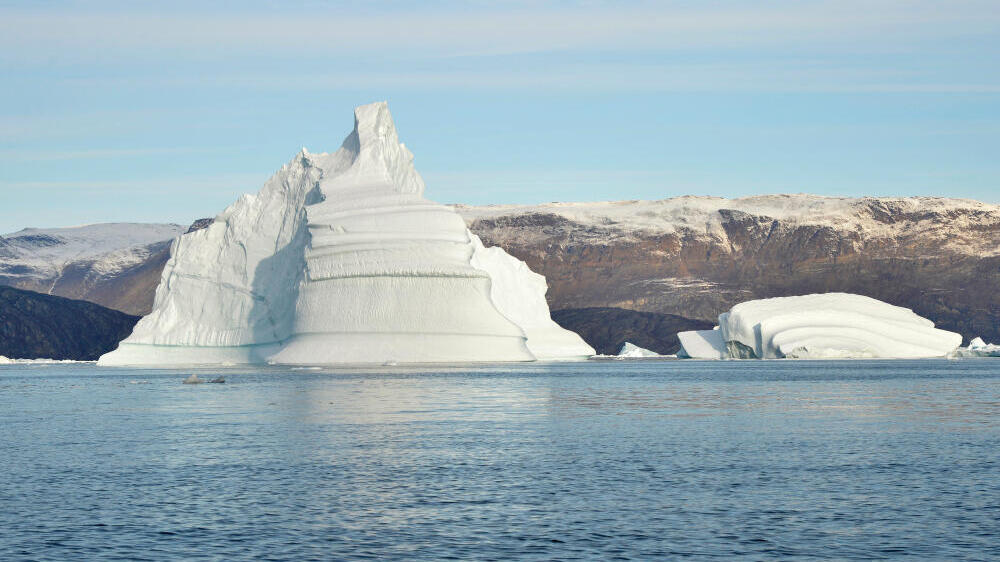
Part of the Kangertittivaq fjord in eastern Greenland
(Photo: Shutterstock)
At Thule, Jewish soldiers organized what became known as “the northernmost minyan in the world.” Airman William J. Gordon and Pvt. Mautice Betman founded the group, jokingly calling it B’nai Thule. Holocaust survivors from Berlin prayed alongside Jewish soldiers from Morocco, drafted into the U.S. Army — a rare human mosaic in the heart of the Arctic.
Military chaplains operated along the so-called Northern Route, a chain of bases in Greenland, Iceland and the North Atlantic that protected Allied supply convoys. Rabbis traveled between isolated outposts, carrying Torah scrolls, prayer books and kosher food. For Passover, matzah, wine and Haggadahs were flown in by military aircraft, an unprecedented logistical effort.
Services were often held in temporary metal huts while snowstorms raged outside. Inside, wrapped in heavy coats and fur boots, soldiers found a sense of warmth and community stronger than any heater.
Keeping kosher at the edge of the world
In the 1950s, Greenland was also home to Rita Scheftelowitz, a religiously observant Jewish nurse. Raised in Denmark and saved during the Holocaust by her teacher, a Righteous Among the Nations, Scheftelowitz arrived in western Greenland in 1955 as a volunteer.
Keeping kosher was a challenge but not an impossible one. She lived mostly on locally caught kosher fish. Twice during the winter, supplies were dropped to her by airplane. One package included matzah for Passover, sent by her mother in Denmark.
When she met visiting Jewish relatives from Germany, she parted from them with the words, “Next year in Jerusalem.” She later moved to Israel, started a family, and eventually returned to Denmark.
From Greenland to the Israeli Navy
One of the most surprising links between Greenland and Jewish history is the ship that became the first vessel of the Israeli Navy.
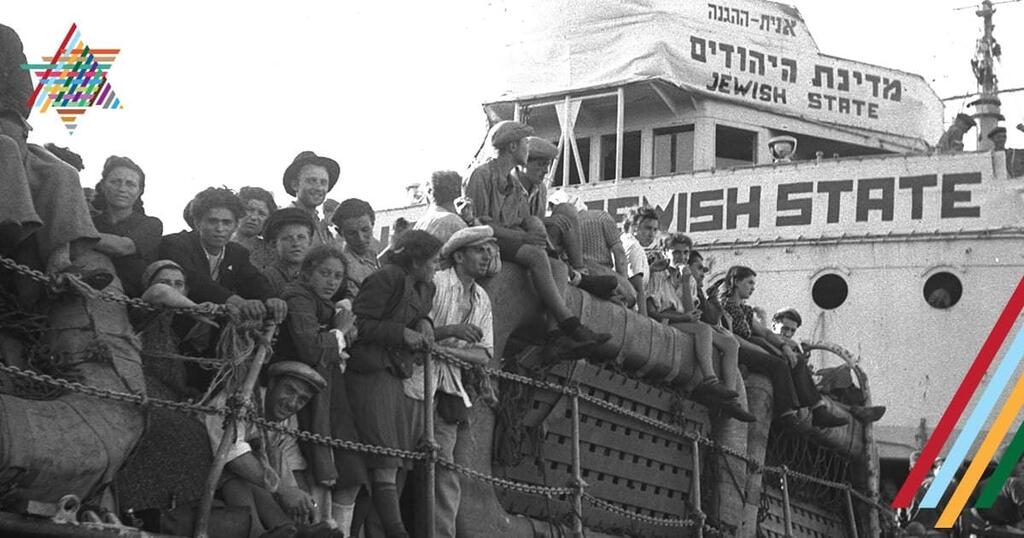
Jewish refugees from Europe wait aboard the Haganah ship 'Jewish State' ahead of their arrival at the port of Haifa in 1947
(Photo: GPO)
Originally built as the Northland for the U.S. Coast Guard, the icebreaker was designed to operate in Greenland’s harsh Arctic conditions. During World War II, it patrolled Greenland’s coast and helped prevent Nazi Germany from establishing critical weather stations. In 1941, it captured a Norwegian vessel carrying German spies and radio equipment.
After the war, the ship was quietly purchased by agents of the Haganah. Renamed Medinat HaYehudim — “The Jewish State” — it sailed from France in 1947 carrying 2,664 Holocaust survivors toward Mandatory Palestine. The British intercepted the ship, and the refugees were deported to Cyprus.
With the establishment of Israel, the vessel became the first ship to enter service in the Israeli navy, later renamed INS Eilat, and took part in the War of Independence.
Greenland is vast, frozen and forbidding. Yet across centuries, it has been touched by Jewish hunters, scientists, soldiers and dreamers — a reminder that Jewish history has unfolded not only in expected places, but also, quietly and stubbornly, at the farthest edges of the world.