

Swastikas have been spray-painted on the walls of an abandoned palace commissioned by Jordan's King Hussein in Jerusalem in the 1960s, adding to years of vandalism at a historic hilltop site that some archaeologists identify as the biblical capital of King Saul.
The red and black Nazi symbols were discovered this week by tourists visiting the unfinished structure, which has stood neglected since construction was halted by the 1967 Six-Day War.
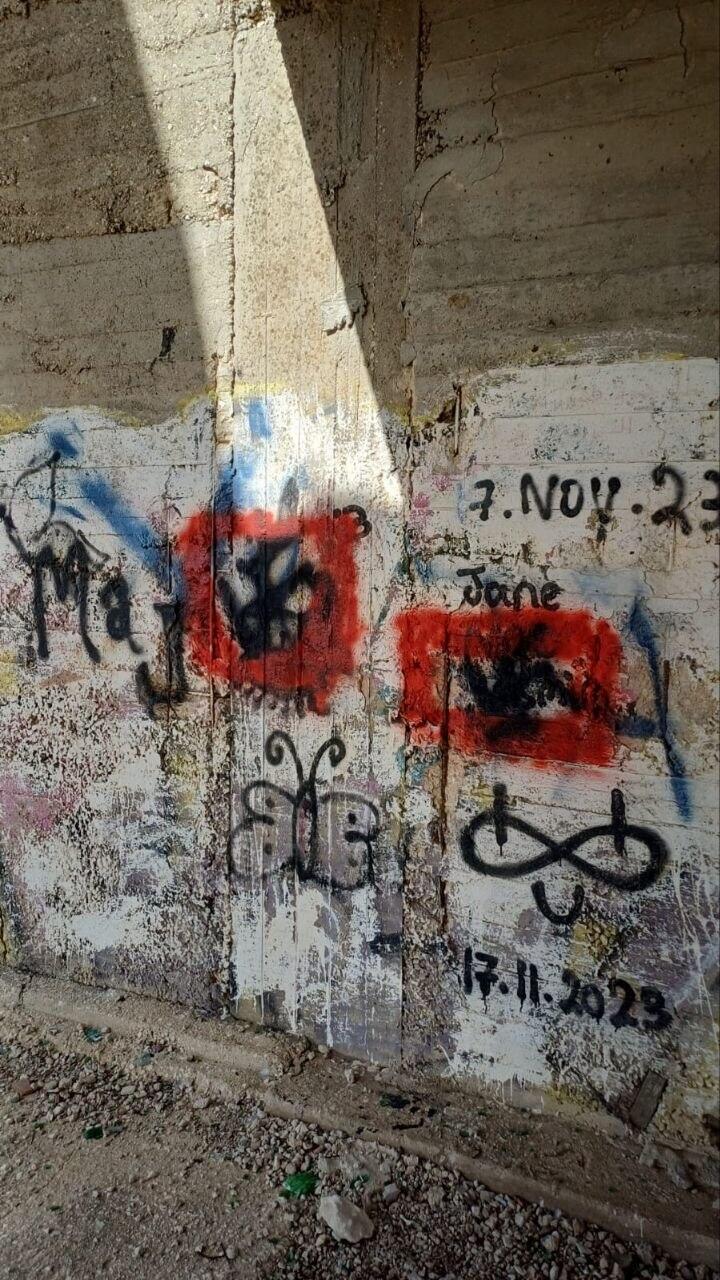
Perched atop one of Jerusalem's highest hills, the skeletal remains of the planned summer palace have become a prominent landmark and a target for graffiti. Previous vandalism included a large mural depicting Palestinian terrorist Leila Khaled, known for her involvement in aircraft hijackings.
The site, also known as Gibeah of Benjamin, is identified by some scholars as the biblical city from which Saul, the first king of Israel, ruled.
According to the Bible, Gibeah was also the setting of the account of the Levite's concubine in the Book of Judges, an episode that led to a devastating conflict between the Israelite tribes and the tribe of Benjamin.
The hill's archaeological significance has been debated for decades.
American archaeologist William Foxwell Albright conducted excavations at the site during the 1920s and 1930s, uncovering an Iron Age fortress that he identified as Saul's stronghold.
Archaeologist Paul Lapp returned to excavate the site in 1964.
However, Albright's identification has never gained universal acceptance. Some researchers have challenged his interpretation of the archaeological remains, while others have suggested that biblical Gibeah should instead be identified with the nearby village of Jaba.
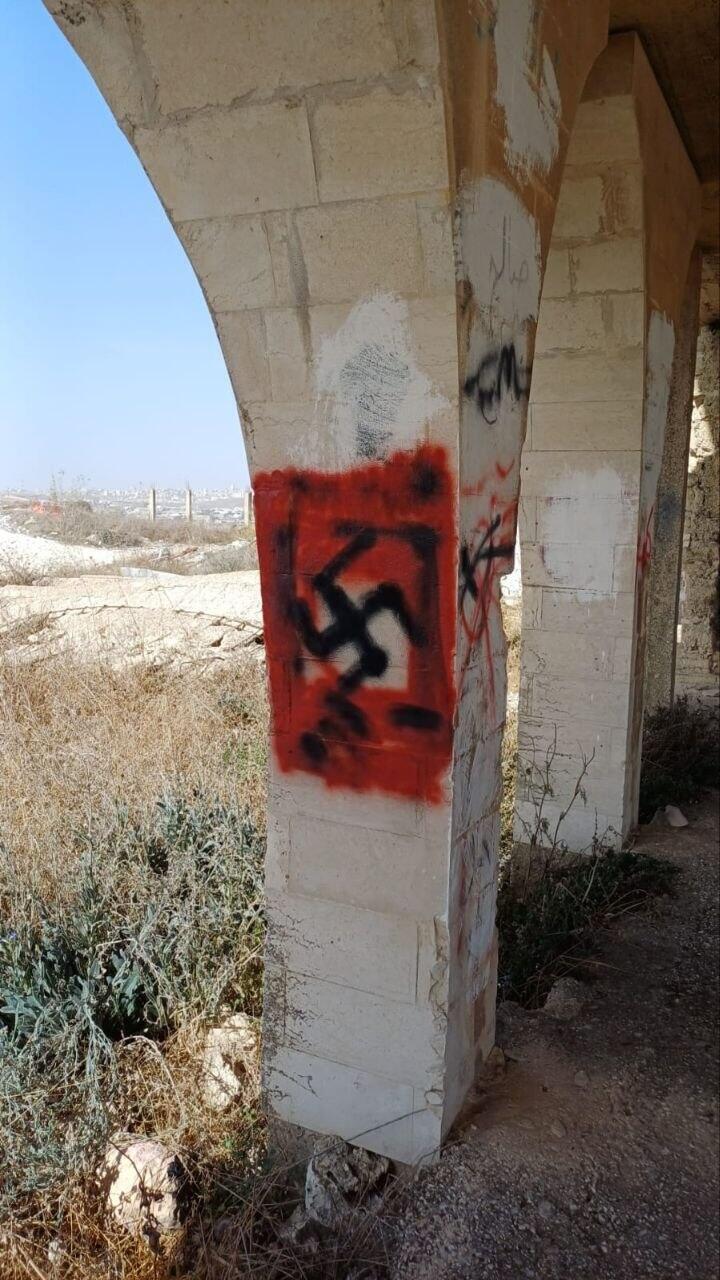
A swastika spray-painted on unfinished Jordanian king's palace in Jerusalem
In the mid-1960s, when the area was under Jordanian control, King Hussein began constructing a summer palace on the hilltop.
The planned three-story residence was designed to stand on arches built from Jerusalem stone. Hussein may have selected the location because of its historical significance, although the reason for his choice remains uncertain.
Construction came to an abrupt halt during the Six-Day War in June 1967, when Israel captured East Jerusalem and the surrounding area from Jordan.
The project was never completed.
For nearly six decades, its exposed concrete skeleton has remained on the hill, without exterior walls and surrounded by discarded materials, broken concrete and rusting metal.
The columns and walls of what was intended to be a royal residence have gradually become covered in graffiti.
Before the swastikas appeared, one of the structure's walls featured a large portrait of Leila Khaled, a member of the Popular Front for the Liberation of Palestine who became internationally known for her involvement in aircraft hijackings.
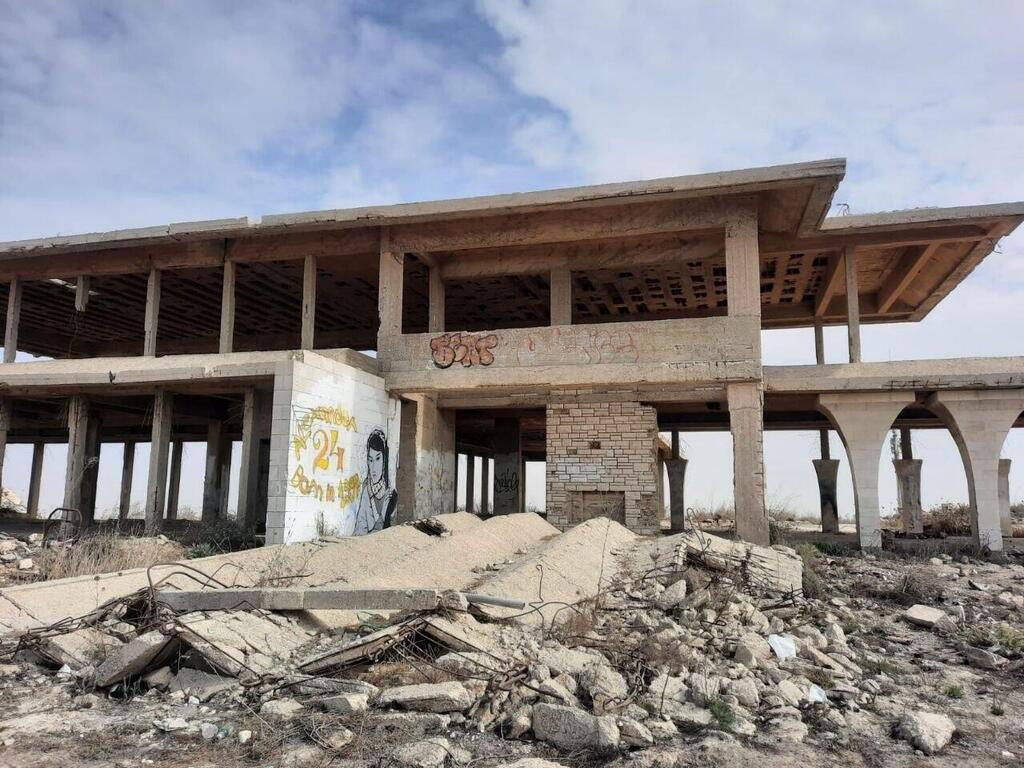
A large mural depicting Palestinian terrorist Leila Khaled on unfinished Jordanian king's palace in Jerusalem
The mural depicted Khaled wearing a keffiyeh and holding a rifle, reproducing the imagery of a widely circulated photograph of the Palestinian terrorist. The painting has since been removed.
The latest vandalism prompted criticism over the site's prolonged neglect and calls for authorities to implement existing plans to develop and preserve the historic location.
Ran Yishai, a former Israeli ambassador and head of research at the Jerusalem Center for Applied Policy, warned that the absence of effective oversight had left the site vulnerable to extremists.
"As everywhere else, there is no vacuum in Jerusalem either," Yishai said. "Where the State of Israel does not exercise control, others will. It will not remain empty."
Yishai, who previously served as director-general of the Ministry of Jerusalem and Heritage, described the appearance of Nazi symbols at the site as a warning.
"That is how neo-Nazis enter a historic site in the heart of Jerusalem and paint swastikas on its walls," he said.
"We all know what swastikas mean, and anyone who thought they belonged to the distant past was reminded by Hamas in the communities surrounding Gaza that they are very much a part of the present," he added, referring to the Hamas-led October 7, 2023, attack on southern Israel.
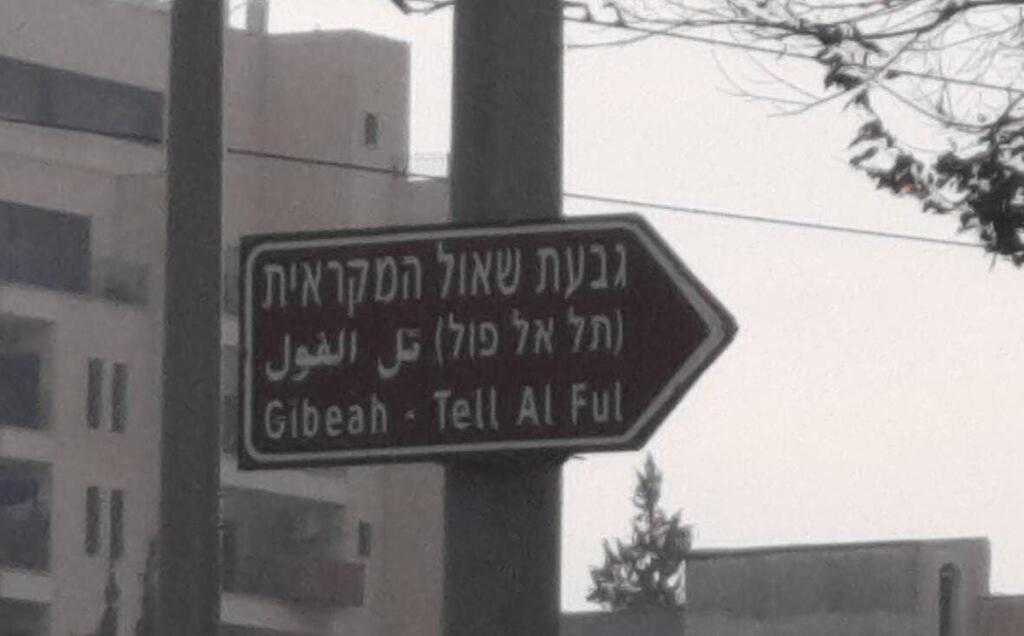
A sign pointing to Gibeah
"We would be better off not waiting for this to develop in Jerusalem as well."
Yishai called for the implementation of longstanding proposals to develop the site, which he referred to as biblical Gibeah of Saul.
"There are many plans to develop biblical Gibeah of Saul, and now is exactly the time to start implementing them," he said.
"If we are not there, Hamas murderers will be there. And they will not stay there, just as they did not stay in Gaza on October 7."