

In April, the Holocaust Museum of Curitiba opened the exhibition “Jerseys Against Hatred,” (Camisas Contra o Ódio) a pioneering exhibition featuring 36 jerseys from national teams and football clubs across more than six countries that, in recent years, have worn messages against antisemitism, racism, gender-based violence, religious intolerance, terrorism and war. The exhibition will travel to São Paulo in June.
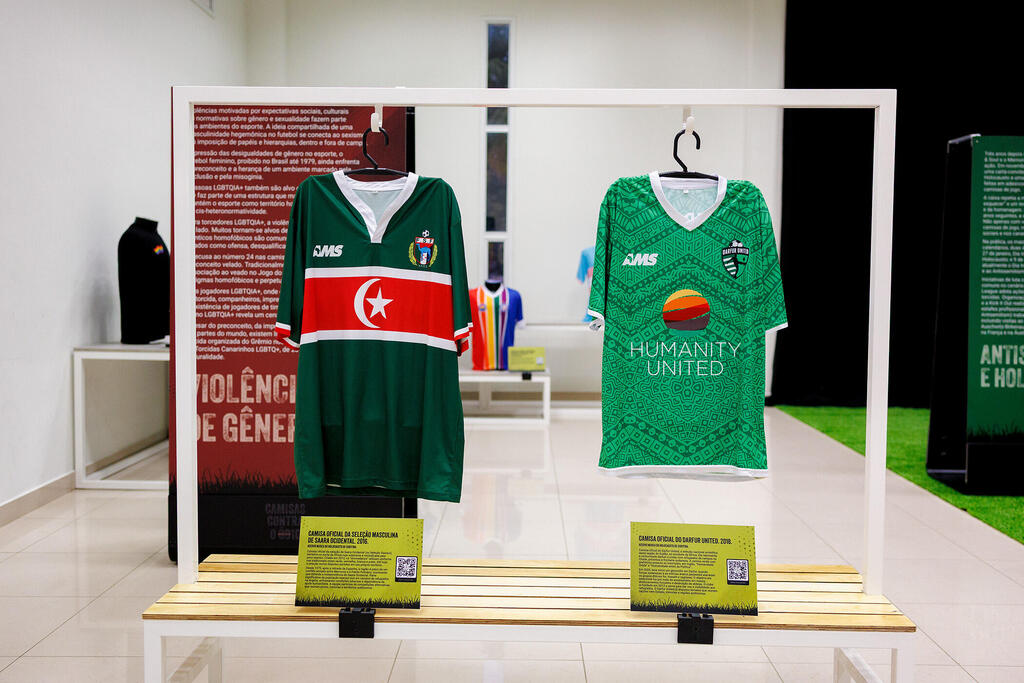
Divided into six thematic modules, the exhibition brings together pieces from Brazilian clubs and national teams—including the men's and women's national sides—alongside international teams such as Borussia Dortmund (Germany), Shakhtar Donetsk (Ukraine), the United States women's national team, Israeli clubs, and Darfur United, a symbolic team formed by refugees from western Sudan.
Gallery
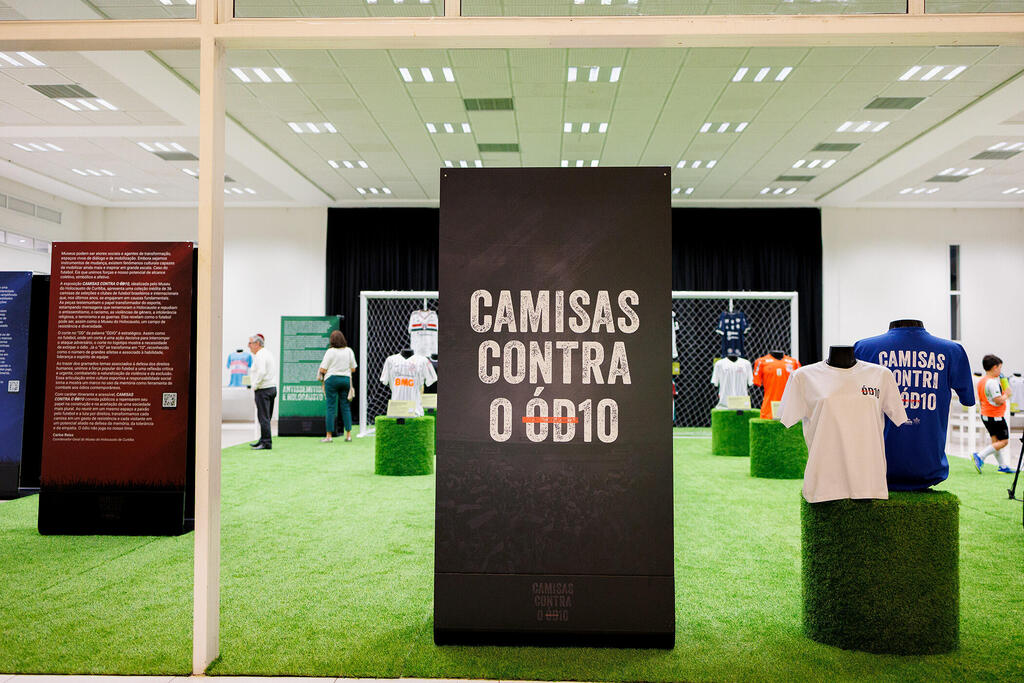
The 36 jerseys are no coincidence. The number equals twice 18, which in Jewish tradition represents the word Chai (חי) — “life” in Hebrew
(Photo: Maringas Maciel)
Worn by players such as Vinícius Júnior, Hulk and Germán Cano, the kits bear messages ranging from tributes to Holocaust victims and antisemitism awareness campaigns to anti-racist statements, revealing how sport can serve as a platform for social mobilization.
“Football allows us to reach audiences who might otherwise never set foot in a Holocaust museum. It is a way we found to speak with society about urgent issues — and to do so in a way that truly connects with people,” says Carlos Reiss, General Coordinator of the Holocaust Museum of Curitiba.
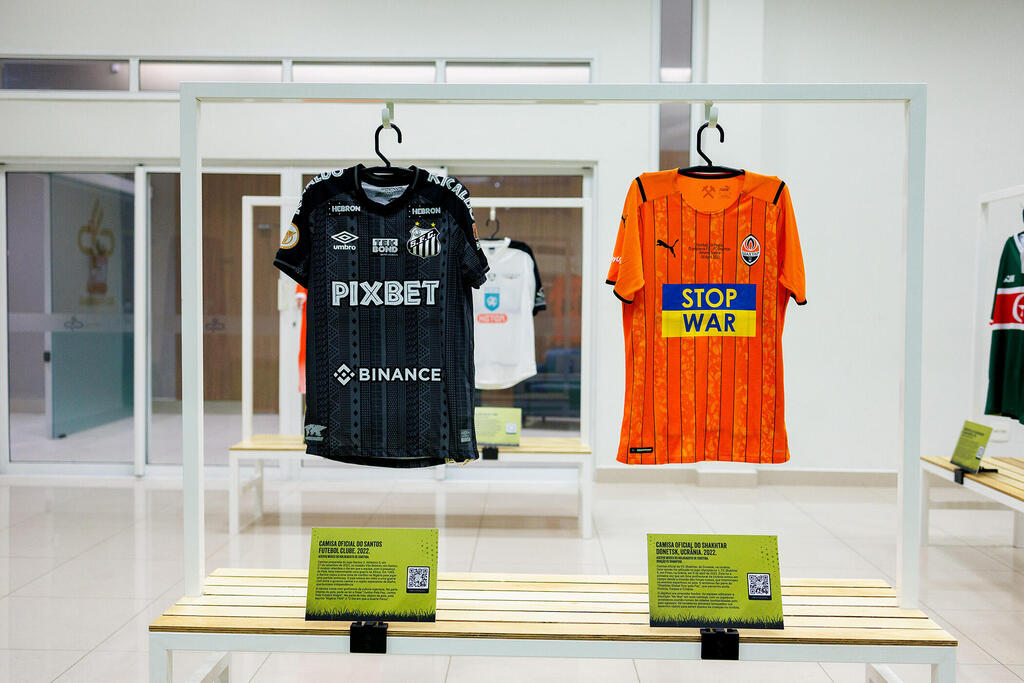
It is a way we found to speak with society about urgent issues — and to do so in a way that truly connects with people
(Photo: Maringas Maciel)
The idea came about naturally. The first piece to enter the collection was a jersey from Sport Club Corinthians Paulista—one of Brazil's largest football clubs—worn in a match in November 2019. The kit, which features a Star of David, was part of the pioneering campaign “A Star to Remember,” created by Tech & Soul in partnership with the São Paulo Holocaust Memorial. The jersey was acquired by Amnon Czerny Z”L, a Holocaust survivor who lived in Curitiba, and donated during the International Holocaust Remembrance Day ceremony on January 27, 2020. Amnon passed away in September of that year, at the age of 84.
“We noticed that clubs began incorporating Holocaust remembrance dates into their own calendars—such as January 27th and November 9th, which marks Kristallnacht. We reached out, the clubs were incredibly receptive, and things grew beyond what we expected: we built the collection and wanted to share all of this material—and that's how the exhibition came to be,” says Reiss.
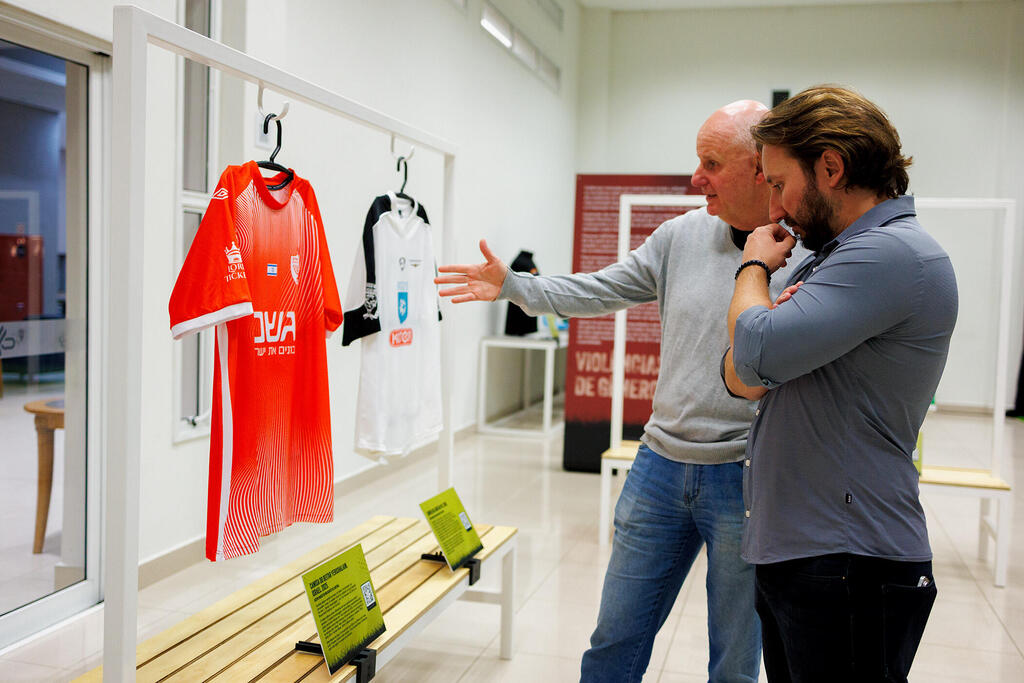
The kits bear messages ranging from tributes to Holocaust victims and antisemitism awareness campaigns
(Photo: Maringas Maciel)
The exhibition, which travels to São Paulo later this year, has the support of the São Paulo Holocaust Memorial, the Canarinhos LGBTQ+ Supporters Collective (Coletivo de Torcidas Canarinhos LGBTQ+), the Football Applied Studies and Research Group (Grupo de Estudos e Pesquisas Aplicadas ao Futebol) of the Federal University of Goiás and the Observatory of Racial Discrimination in Football (Observatório da Discriminação Racial no Futebol). The artistic concept is by designer Michel Neuhaus.
Discrimination on the Pitch
Although football is a space for celebration and belonging, it continues to reflect the prejudices of broader society. According to anti-discrimination charity Kick It Out, the 2024-25 season saw a record 1,398 discrimination reports across professional, grassroots and online football in England—more than double the number recorded just four seasons ago.
Racism remains the most reported form of discrimination, with 245 incidents in professional football, but abuse is rising across multiple categories
(Photo: Maringas Maciel)
Racism remains the most reported form of discrimination, with 245 incidents in professional football, but abuse is rising across multiple categories. Reports of sexism and misogyny grew by 67%, driven largely by a surge in online abuse. Transphobic incidents doubled, faith-based abuse rose sharply, and ableist discrimination increased by 45%.
Yet football has also been a stage for responses to hatred. In January 2024, in a match against Bochum, German club Borussia Dortmund took to the pitch wearing a jersey bearing the inscription “#WeRemember.” The gesture was part of “Remembrance Day in German Football,” an initiative reinforcing German football's commitment to Holocaust memory.
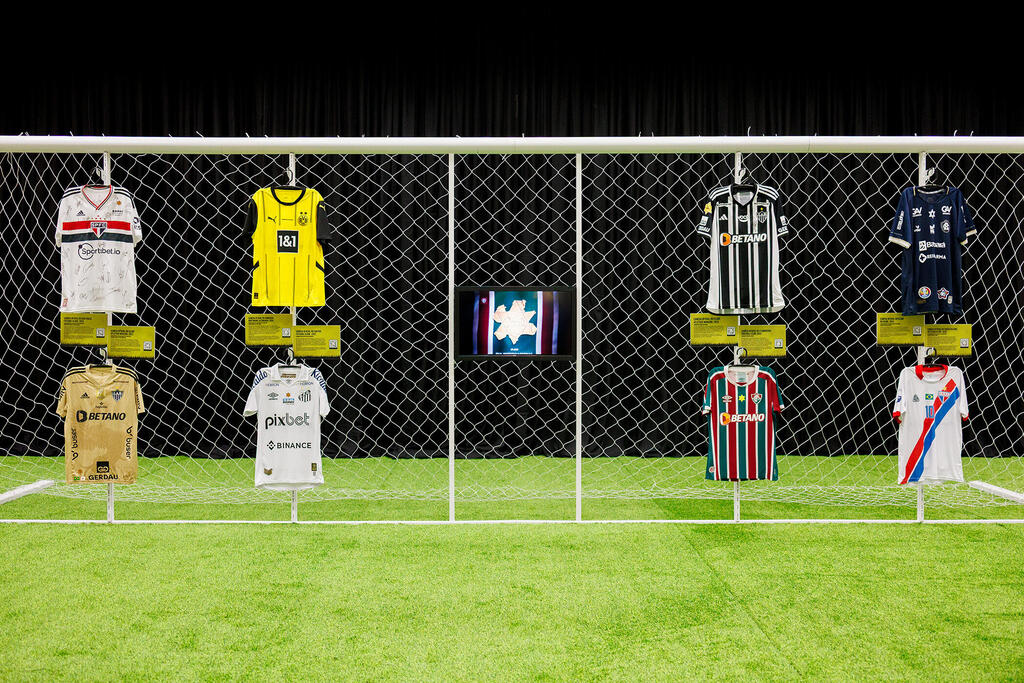
The first piece to enter the collection was a jersey from Sport Club Corinthians Paulista—one of Brazil's largest football clubs—worn in a match in November 2019
(Photo: Maringas Maciel)
The club also runs campaigns against antisemitism, including visits by fans and staff to Nazi concentration camps, and actively participates in programs combating hate speech. “We contacted the club's board and they immediately agreed to send us from Germany not just the jersey, but also a scarf with inscriptions against antisemitism,” says Reiss.
Another example comes from Brazilian football. On June 17, 2023, at the Cornellà-El Prat stadium in Barcelona, the Brazilian national team faced Guinea in a friendly match. In an act of solidarity with Vinícius Júnior — who had been repeatedly targeted by racist abuse in Spanish football — the Brazilian Football Confederation (CBF) turned the occasion into a statement against racism. For the first time in their history, Brazil took to the pitch in a black kit for the first half. Before kick-off, the players sat together on the grass and observed a minute of silence in protest against racism.