

More than 2,000 Jewish leaders from across North America, the largest number since before the pandemic, gathered this week in Washington for the annual General Assembly of the Jewish Federations of North America (JFNA). This year’s GA was far from a routine philanthropic event. It took place against the backdrop of dramatic events shaking the Jewish community in the United States: unprecedented levels of antisemitism and the election victory of Zohran Mamdani as mayor of New York City.
“The ground beneath our feet is burning,” many participants told me during the conference’s intense three days. And still, anyone who was there felt one dominant thing: a powerful show of strength by American Jewry, one not seen in years.
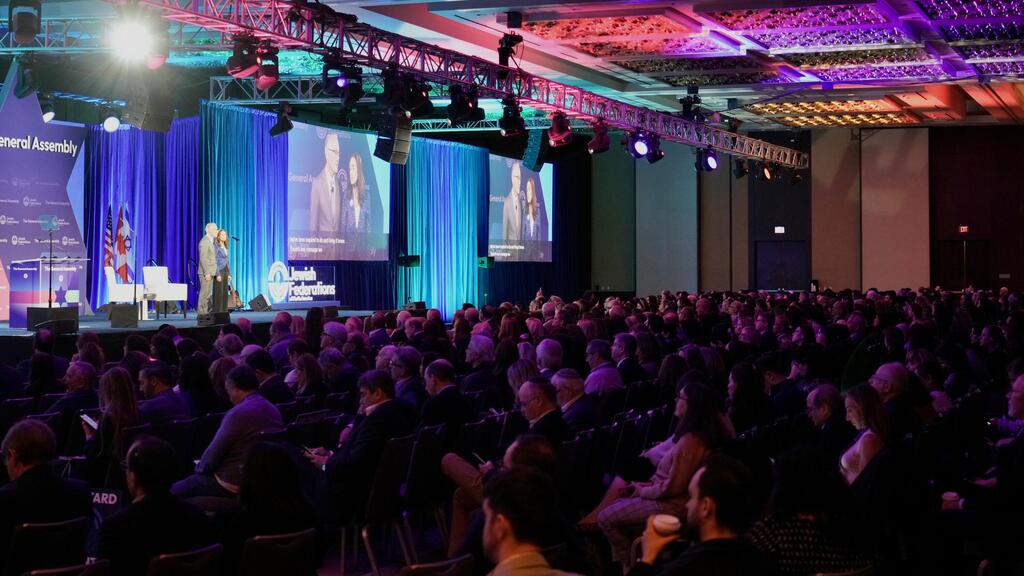
A historic 908 million dollars for Israel
On October 8, 2023, the day after Hamas’s murderous attack, the Jewish Federations of North America — 141 federations across the United States and Canada — launched the largest emergency campaign in their history. The goal was half a billion dollars. Two years later, the results speak for themselves: 908 million dollars were raised and transferred to Israel, an unprecedented sum that funded lifesaving missions, urgent medical care, economic support, community resilience and initial recovery efforts.
“We could not have imagined the scale of the mobilization,” said Eric Fingerhut, president and CEO of JFNA. “When we launched the campaign, we knew only the federation system could raise what Israel needed in its darkest hour. But what happened went beyond anything we imagined.” The conference formally marked the closing of the emergency campaign.
Now, with the war over and all surviving hostages home, the federations are shifting to a new phase: “Rebuild Israel,” focused on long-term recovery for a post-traumatic Israeli society. “The time has come to invest in rebuilding, rehabilitation and long-term healing,” federation leaders said at the GA.
‘The ground is burning’: antisemitism in North America
But the conference was not only about Israel. It was also, and perhaps primarily, about what is happening at this very moment to the Jewish community in North America.
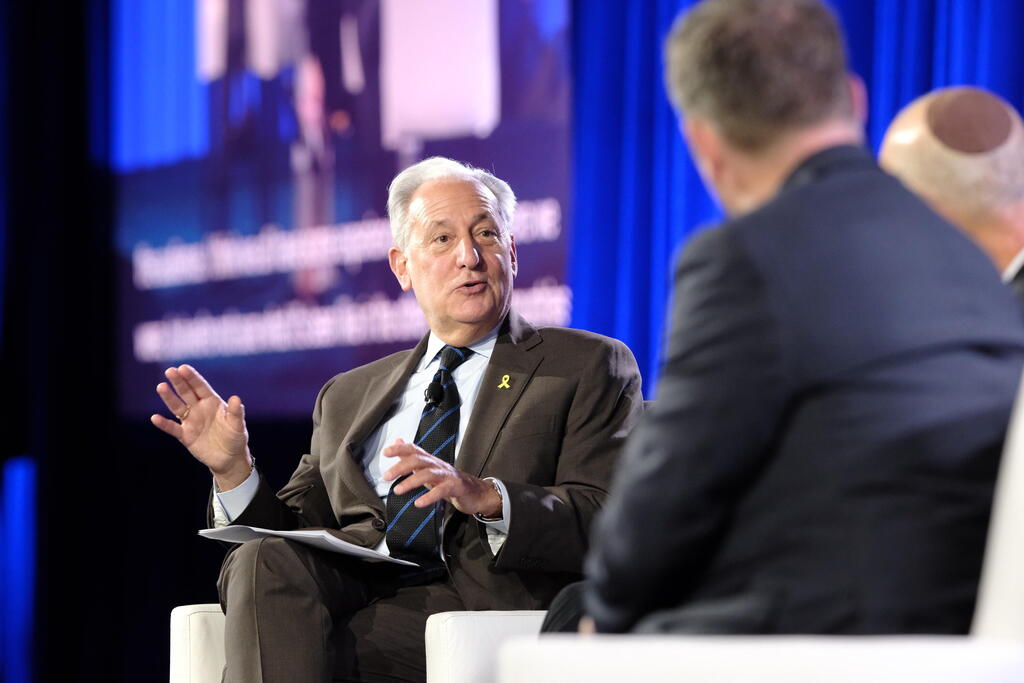
Eric Fingerhut, president and CEO of JFNA
(Photo: Jewish Federations of North America)
“In Israel they fought with guns and tanks,” Fingerhut said. “In America we fought for the hearts and souls of Americans.” He described the wave of antisemitism that has swept the continent since October 7: violent protests outside synagogues, boycotts against Jewish artists and writers, near-daily bomb threats, arson and physical attacks. “We were the target, just as the western Negev was the target of Hamas on October 7.”
The numbers are stark. Since 2023, the Jewish community has spent more than 750 million dollars on security — all from private donors. Fourteen percent of federation budgets now go to security.
LiveSecure, the security initiative established after the Pittsburgh synagogue massacre, has become a full professional security network for every community. Every Jewish community has a security director, all connected through a system supported by AI threat monitoring. Former Mossad chief Yossi Cohen serves as an advisor to the federations’ security network. Every day, attacks on Jewish targets in North America are thwarted thanks to the system. Threat information is shared with law enforcement, which acts quickly. Individuals threatening Jewish institutions are arrested immediately and often prosecuted.
Avinatan Or reveals new details from Hamas captivity during the event
(Video: Jewish Federations of North America)


The network holds a database of more than 13,000 Jewish institutions across North America and monitors tens of thousands of threats. Last week alone, it identified 3,400 individuals threatening the Jewish community — threats to murder Jews, not casual hostile comments. The system relays information to law enforcement, which moves swiftly to neutralize threats.
Even so, Fingerhut said, “We need to be smarter. Every week we prevent attacks, but there were two we did not stop — the murders of two young Jews in Washington, Yaron Lisanski and Sarah Milgram, and the antisemitic arson attack on participants in the rally for the hostages in Boulder, Colorado, where Karen Diamond, 82, was killed and seven others were wounded.”
He described the depth of today’s antisemitism: “We never imagined it would seep into every part of Jewish life — careers, education, art, culture. Book bans targeting Zionist authors. Film festivals refusing to screen Jewish filmmakers’ work. They use Israel as a pretext because they assume every Jew is a Zionist and responsible for Gaza. This used to be unacceptable in American public life.”
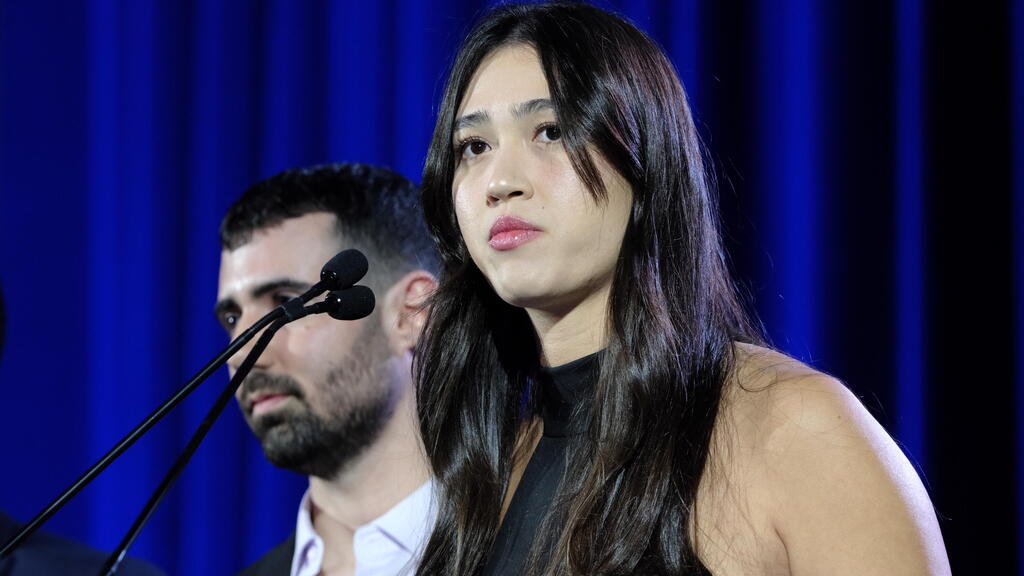
Noa Argamani
(Photo: Jewish Federations of North America)
Fingerhut added that while the community has created strong physical protections, normalization of anti-Jewish violence is a growing danger. “It is not dangerous to be a Jew in America today because we have security everywhere. You will see guards outside synagogues, at every school, at every community center. Luckily, the government is on our side and working to protect us.”
In Canada, an even grimmer picture
In Canada, the situation is even worse. Richard Marceau, vice president of the Centre for Israel and Jewish Affairs (CIJA), said antisemitism is at its highest level since World War II. Seventy percent of religious hate crimes in Canada target Jews, despite Jews comprising less than three percent of the population.
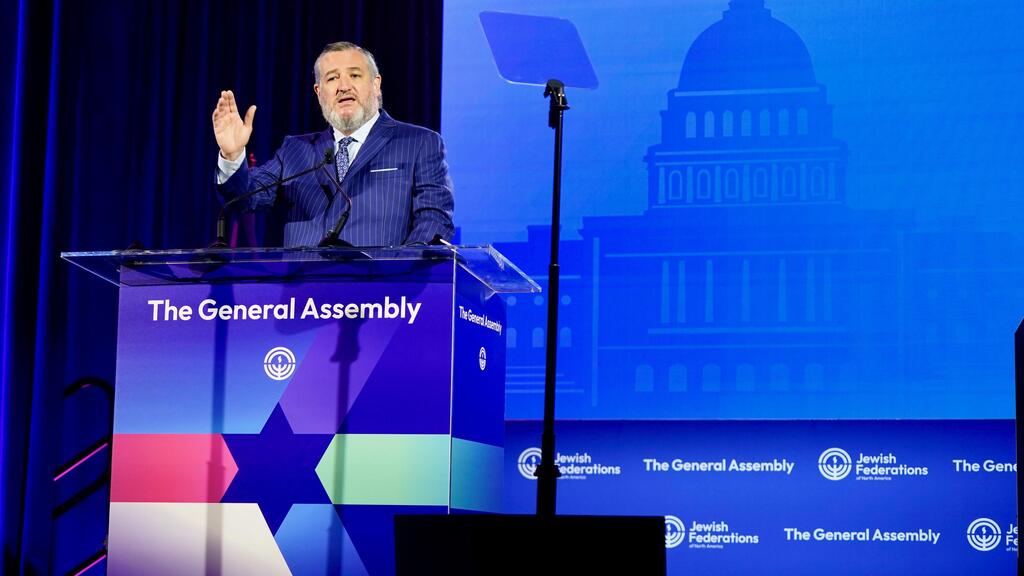
Senator Ted Cruz
(Photo: Jewish Federations of North America)
Synagogues have been set on fire, shots fired at ultra-Orthodox schools, mezuzahs torn from doorways and children wearing kippot attacked in the street. “Canadian Jews no longer feel safe displaying Jewish symbols,” Marceau said. Yet he described a community mobilizing in response: Jewish lawyers filing pro bono lawsuits against unions or schools that fail to protect Jews, and Jewish doctors organizing to fight discrimination in the healthcare system.
‘The October 8 Jews’: a renewed awakening
Out of this fear emerged something surprising: a dramatic rise in Jewish engagement. “The October 8 Jews,” one federation leader called them — people who woke up and realized the world they thought they lived in no longer existed.
JFNA surveys show a major increase in interest in Jewish community life, synagogue attendance and Jewish education. “The threat made us stronger,” said Heidi Gantwerk, head of the San Diego Federation.
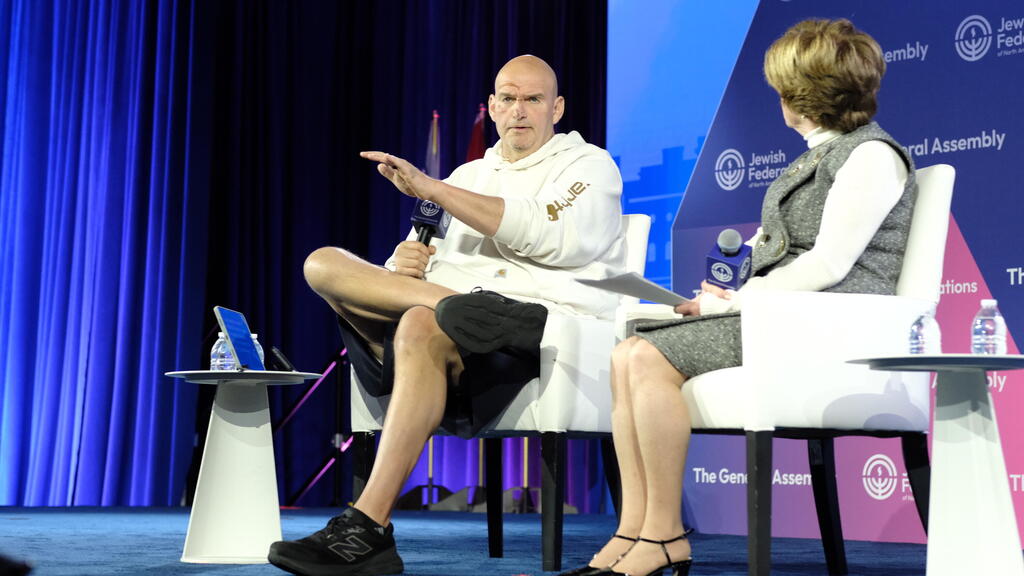
Senator John Fetterman
(Photo: Jewish Federations of North America)
Gantwerk’s federation has had a brother-sister partnership with the Shaar HaNegev region for 27 years. She experienced the events of October 7 in real time, receiving updates from safe rooms about residents trapped under fire. She received the report of Shaar HaNegev Mayor Ofir Libstein’s murder as it happened. “It broke my heart. I did not sleep for four months. We know everyone there,” she said.
The federation mobilized immediately, providing millions in aid to devastated communities. A month later, they brought 200 Shaar HaNegev students to San Diego for respite. They sent multiple solidarity missions and raised significant funds. One donor offered 5 million dollars if the federation could match it. They quickly raised 1.6 million and invested heavily in strengthening Shaar HaNegev’s education system. “Strengthening Israel is strengthening ourselves,” Gantwerk said, her voice breaking.
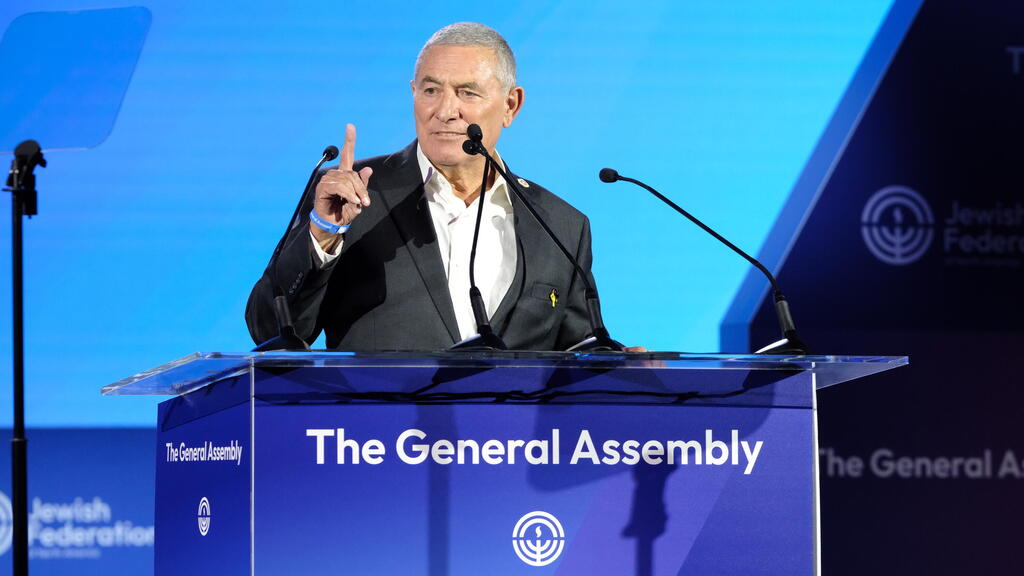
Doron Almog Chairman of the Jewish Agency
(Photo: Jewish Federations of North America)
San Diego also faces a surge in antisemitism and anti-Israel activity. “We fought back,” Gantwerk said. “We built a coalition of 40 Jewish organizations and are working to bring in non-Jewish partners to respond to antisemitism and create positive expressions of support for Israel.” They confronted college administrations protecting Jewish students, challenged medical students calling to kill Zionists, and demanded accountability. While half of American Jews report removing Jewish symbols in public, San Diego’s community remains openly and proudly Zionist.
Gantwerk receives death threats. Emails calling her a “Jew killer” arrive regularly. One day, bomb threats targeted 91 synagogues in her region. None closed. “We have strong relationships with law enforcement. They are extraordinary. I would rather invest this money in Jewish education, but I have no choice but to allocate more and more to security.”
Rahm Emanuel warns: ‘No candidate will travel to Jerusalem in 2028’
One of the conference’s most dramatic moments was a speech by Rahm Emanuel, former chief of staff to President Obama and former mayor of Chicago, often mentioned as a future Democratic presidential contender. “Do not expect presidential candidates in 2028 to visit Israel the way Obama did in 2008,” he said, using a Baskin-Robbins metaphor: “In 2028 there will be 31 flavors. Some of those flavors will not like mint-chocolate. No one will leave America to fly to Jerusalem.”
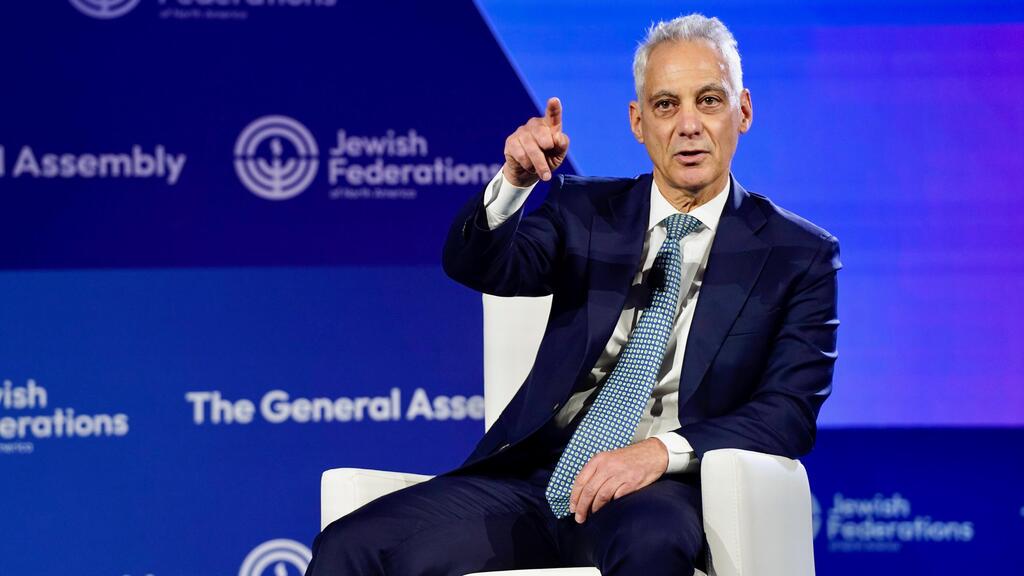
Rahm Emanuel, former chief of staff to President Obama
(Photo: Jewish Federations of North America)
He described American Jewry as “on the edge of a cliff” and warned that antisemitism from both the left and the right could bring an end to the American Jewish “golden age.” “Our task is a long-term rebuilding of the narrative around Israel’s needs. If we do not grasp the depth of the situation, we will never fix it,” Emanuel said in a panel with conservative CNN commentator Scott Jennings.
Becky Caspi, head of JFNA’s Israel office, summarized the new mission: continued rebuilding of Israel through projects such as 100 million dollar loan programs for small businesses, partnerships with Tekuma and support for resilience in the western Negev and the Galilee.
A community refusing to be afraid
The GA in Washington was not only a summary of two devastating years. It was a powerful demonstration of a community refusing to yield to fear. Two thousand people attended. Hundreds of millions of dollars have already been deployed. Thousands of volunteers returned home with a clear mission: rebuild Israel and rebuild Jewish life in North America.
As Eric Fingerhut said during the closing plenary, “The Jewish community of North America has stood with Israel since 1948 and always will.”
Fingerhut, like many at the GA, is deeply concerned about declining support for Israel among young people. “There has always been disagreement, but small percentages. You are still talking about 80 to 90 percent of Jews who identify with Israel, support Israel, feel Zionist. Even among young people exposed to hatred on campuses and from their professors, the majority still identify with Israel. And many who say they are ‘against Israel’ turn out, when pressed, to simply oppose the Israeli government. It is not a lost cause. It requires attention.”
He noted that young Americans, including Jews, are being targeted with anti-Israel messaging backed by a billion-dollar campaign. “It reaches their phones constantly. It is a serious problem, but not hopeless. Most young people still understand and support Israel. And the good news is that young people can still be educated and influenced. But we need to invest in it. It is a major challenge.”