

Senior rabbis in the Breslov Hasidic movement are urging followers who have failed to report for military service not to register with the IDF merely to secure permission to travel to Uman for the annual Rosh Hashanah pilgrimage, according to a recording being circulated within the community.
The recording, published here for the first time, comes from a gathering held before last year’s Rosh Hashanah but is now being distributed ahead of the coming holiday.
At issue are young Haredi men who failed to appear when summoned by military authorities and are therefore subject to restrictions on leaving Israel. Some have reportedly considered agreeing to enlist or formally beginning the military induction process in order to have those travel restrictions lifted and allow them to visit the grave of Rabbi Nachman of Breslov in Uman, Ukraine.
Senior Breslov rabbis rejected that approach, even if it means followers must forgo the pilgrimage this year.
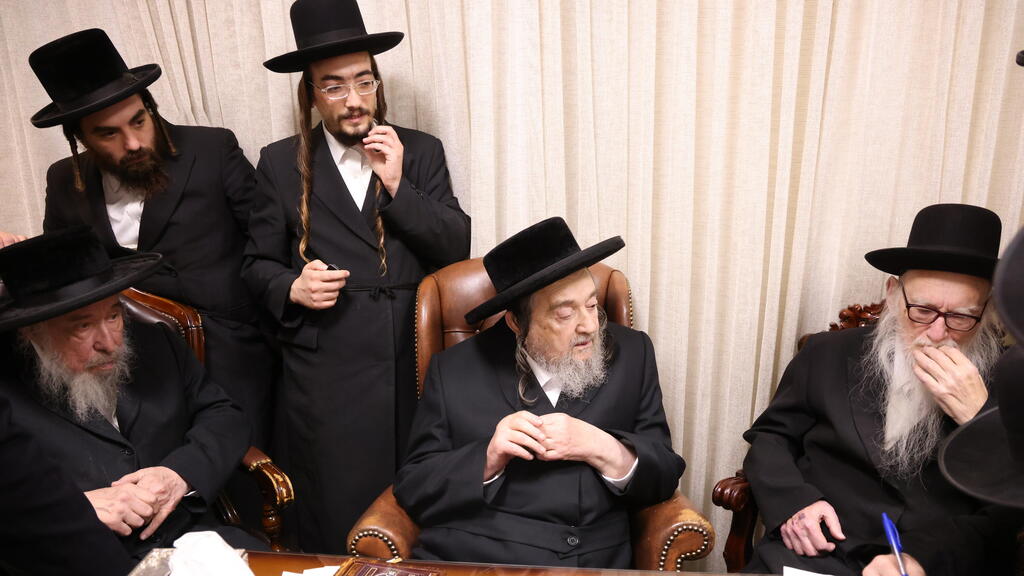
Rabbi Yaakov Meir Shechter, one of the movement’s most senior figures, is heard saying in Yiddish: “Breslov Hasidim have become accustomed to the idea that traveling to Uman requires self-sacrifice, and that is true, but one must know when that self-sacrifice is required. Here, self-sacrifice means not sacrificing oneself.”
Rabbi Natan Liebermensch, who has since died, said during the meeting: “We gathered today to discuss what should be done regarding travel to Uman for those of draft age, against the backdrop of the conscription crisis.”
Those present raised concerns that young men might try to travel without first resolving their military status and risk arrest.
Some followers, they said, have argued that they are prepared to be arrested and even serve time in military prison rather than enlist.
Liebermensch strongly rejected that option.
“That is not right, that is not right,” he said. “A young man will sit in prison with nothing to do 24 hours a day, and there they put him through difficult tests. How can a person take responsibility for that, and how can anyone know what will happen to him? It must be forbidden.”
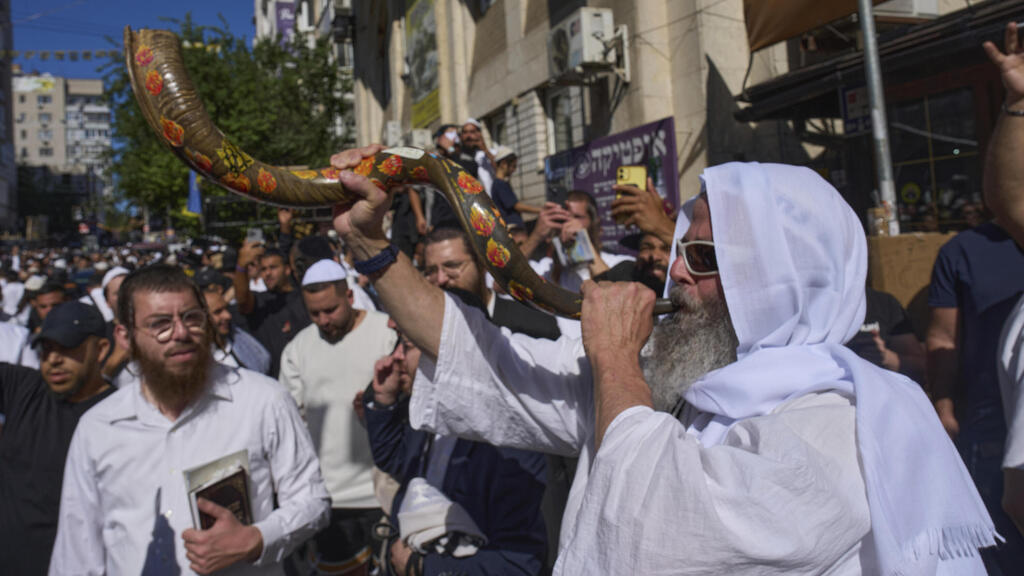
Blowing the shofar in Uman last year
(Photo: AP Photo/Efrem Lukatsky)
Shechter then called for the rabbis’ position to be summarized in writing and publicized throughout the community.
Liebermensch compared current obstacles to the pilgrimage with restrictions imposed in earlier eras.
“What difference does it make whether the Communists prevented us from traveling to Uman or the Zionists create difficulties and prevent us from being able to travel?” he said.
‘There is nothing to discuss, it is forbidden’
Another option raised during the meeting was what one participant described as the “induction process,” in which a young man formally declares his intention to join the military so that the order preventing him from leaving the country can be removed.
Rabbi Gewirtz, the rabbis’ secretary, explained the idea: “The young man declares that he is going to the army and that he will become a soldier, and then the travel ban is lifted and he can leave the country and travel to Uman.”
An aide immediately responded: “They already discussed this earlier, and the rabbis ruled that there is nothing to discuss. It is forbidden.”
Liebermensch added: “We do not know what the state will impose afterward on those who have agreed to enter the army.”
Participants also said that while the issue was clear to the rabbis present, some within the wider community questioned whether military prison posed such a serious religious danger.
Shechter responded sharply: “Then it must be made clear that military prison is the army.”
Rabbi Yosef David Shechter, Rabbi Yaakov Meir Shechter’s grandson, said some activists regarded the rabbis’ position as excessively strict given the importance Breslov followers attach to spending Rosh Hashanah at Rabbi Nachman’s grave.
He asked how forcefully the prohibition should be enforced.
Shechter replied: “The three of us, the leaders of the Hasidic movement, must announce and publicize this prohibition against traveling to Uman under such circumstances in the strongest possible terms.”
The pilgrimage to Uman is one of the central traditions of Breslov Hasidism, drawing large numbers of followers to Rabbi Nachman’s grave each Rosh Hashanah.
The recording reflects the growing collision between that tradition and Israel’s unresolved dispute over the military status of ultra-Orthodox men, with Breslov leaders making clear that, in their view, avoiding enlistment takes precedence even over the movement’s most important annual pilgrimage.