


On the occasion of International Holocaust Remembrance Day, the Center for the Study of European Jewry at Tel Aviv University on Tuesday published a new report examining how the Holocaust has been commemorated worldwide in recent decades. The findings point to a clear global trend: an increasing number of countries are placing the story of the Righteous Among the Nations at the center of Holocaust remembrance.
The 104-page report, titled For a Noble Cause, has received wide international attention. Its central article argues that over the past two decades, a trend that intensified in the past year, Holocaust commemoration has increasingly focused on museums and exhibitions dedicated to non-Jews who risked their lives, and often those of their families, to save Jews from extermination.
Gallery
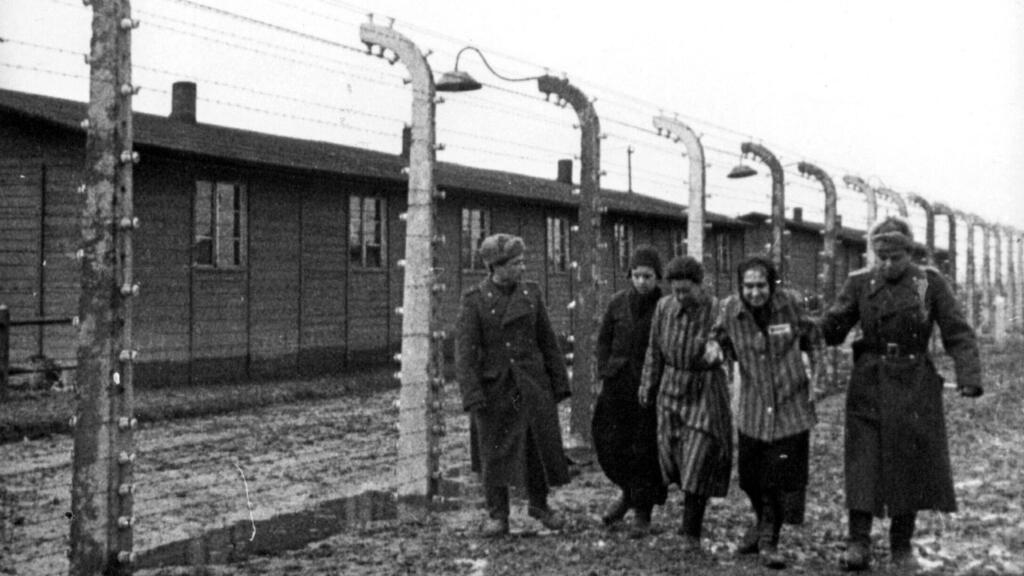
Soviet soldiers with survivors of the Auschwitz concentration and extermination camp after its liberation in 1945
(Photo: Reuters)
According to the study, this trend is evident in Japan, where the country’s two main Holocaust museums focus on Chiune Sugihara, the diplomat who saved hundreds of Jews. In Latvia, the primary Holocaust museum centers on Janis Lipke, a Righteous Among the Nations who used his position with the German air force to rescue Jews and hid them in a bunker beneath his home at great personal risk. In the Czech Republic, a “Museum of Survivors” opened in May 2025 on the site of the factory where Oskar Schindler employed about 1,200 Jews and saved them. Alongside an exhibition on Schindler, the museum also presents testimonies of Holocaust survivors.
Additional examples cited include museums and exhibitions in Tennessee in the United States, Bulgaria, China and the United Arab Emirates. In Tennessee, a new university exhibition focuses on the legacy of American prisoner of war Roddie Edmonds, who refused a Nazi order to identify and separate Jewish POWs from other soldiers.
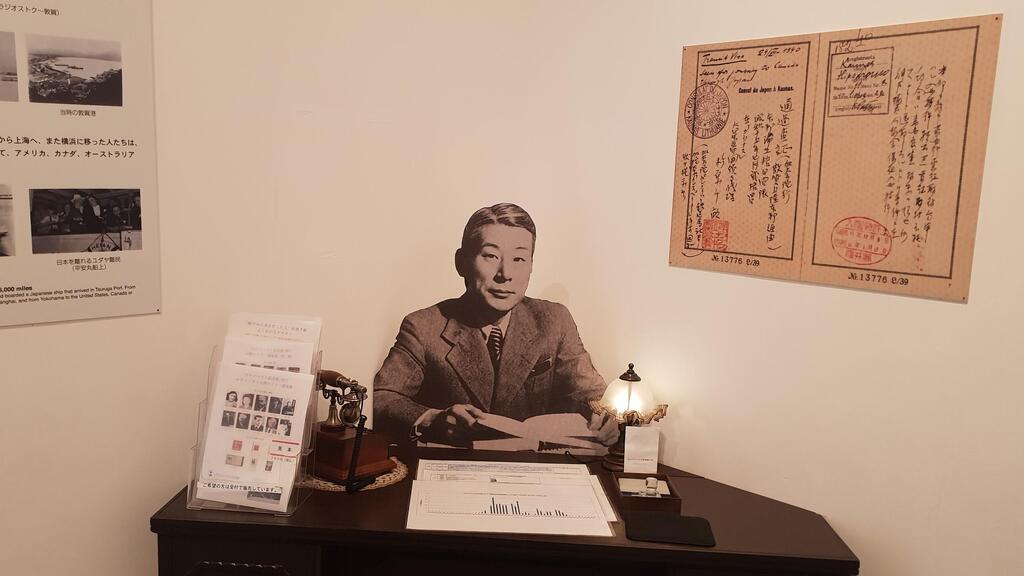
An installation honoring Chiune Sugihara at the Holocaust Education Center in Fukuyama, Japan, August 2025
(Photo: Tel Aviv University)
In Shanghai, an exhibition at the Jewish Refugees Museum highlights the work of Chinese diplomat Feng Shan Ho, who issued life-saving visas to Jews. In Bulgaria, the restored home of former deputy parliament speaker Dimitar Peshev is open to the public, educating visitors about his efforts to prevent the deportation of 48,000 Bulgarian Jews in March 1943.
Prof. Uriya Shavit, head of the Center for the Study of European Jewry, said the spotlight on the Righteous Among the Nations is welcome when framed as a lesson in humanity, humanism and the power of individuals to defy tyranny and do good.
“But it is crucial that the story of the Righteous Among the Nations be taught in context, and not as a blurring of the past,” Shavit said. “Those who rescued Jews were an extremely rare exception during the Holocaust.”
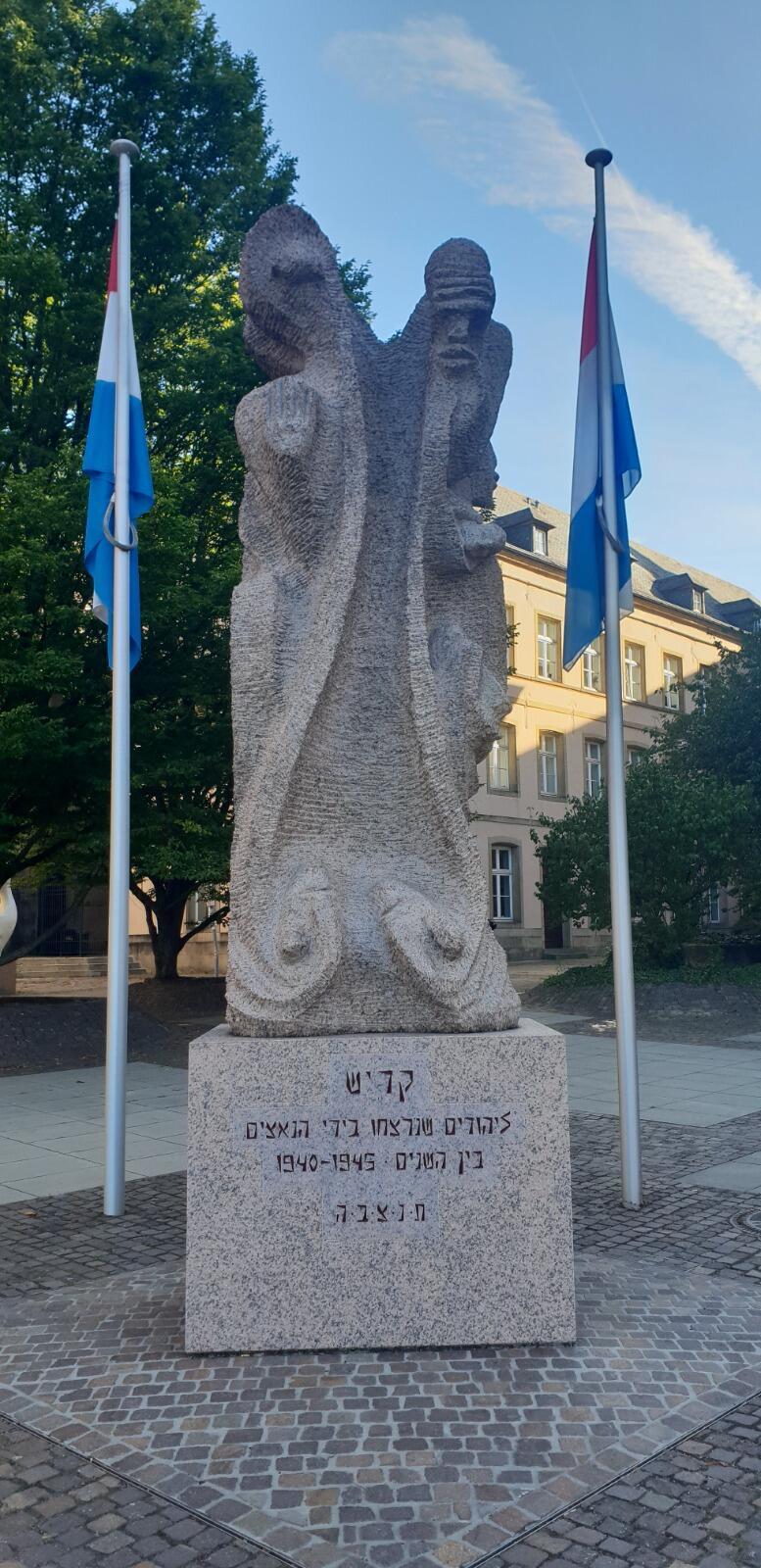
A Holocaust memorial in Luxembourg, August 2025
(Photo: Tel Aviv University)
Dr. Karl Junker, author of the article and director of projects at the center, warned that educators should ensure students visit museums and exhibitions focusing on rescuers only after receiving substantial instruction on the history of antisemitism, Nazism and the Holocaust.
“It is easier for educators to focus on the good rather than the evil,” Junker said, “but there is a real danger that emphasizing rescuers will obscure the harsh historical reality.”
In its policy recommendations, the center called on Israel’s education system to dedicate time in every classroom, ahead of Holocaust Remembrance Day, to studying the story of one Righteous Among the Nations as an expression of gratitude and recognition of the power of individuals to make a moral difference.
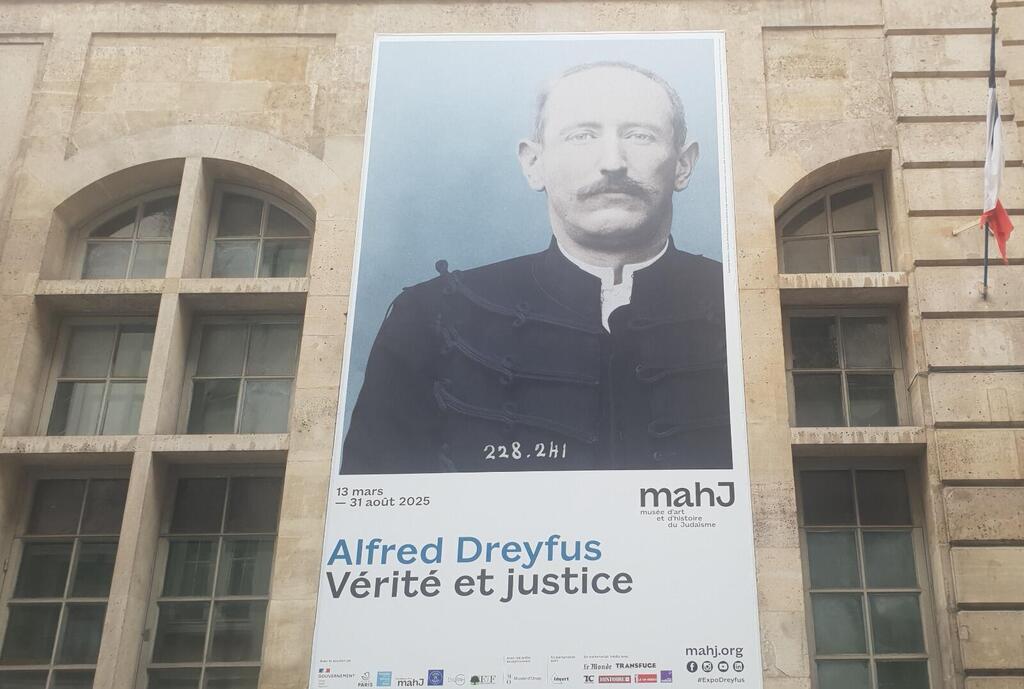
Alfred Dreyfus at the Museum of Art and History of Judaism in Paris, France, August 2025
(Photo: Tel Aviv University)
The report also includes an extensive analysis of a decision made this year by France, which received relatively little attention, to designate July 12, the date of Captain Alfred Dreyfus’ exoneration in 1906, as an annual national day marking “the victory of justice and truth over hatred and antisemitism.”
French President Emmanuel Macron, who announced the new national day, emphasized the importance of a determined fight against antisemitism. According to the report, however, France remains far from victory in that struggle, noting that the Dreyfus Affair continues to resonate because it reflects ongoing tensions over the identity and direction of the republic.
Other articles in For a Noble Cause examine King Charles III’s relationship with Judaism, the flourishing of Judaica philately, and a wide-ranging discussion of Stefan Zweig’s relationship with Judaism and Zionism, as well as the reasons for his renewed literary popularity in contemporary Israel.