

Nearly a decade ago, after an exhibition basketball game between Maccabi Tel Aviv and the Brooklyn Nets, a Jewish man named Leonard — a well-known Zionist activist — was assaulted while leaving the Barclays Center with his two sons. The children witnessed the violent incident.
Leonard, a prominent figure in New York’s Jewish community, was attacked by pro-Palestinian demonstrators. He was taken to a nearby hospital for treatment after sustaining a broken nose and requiring multiple stitches. The NYPD opened an investigation into the incident.
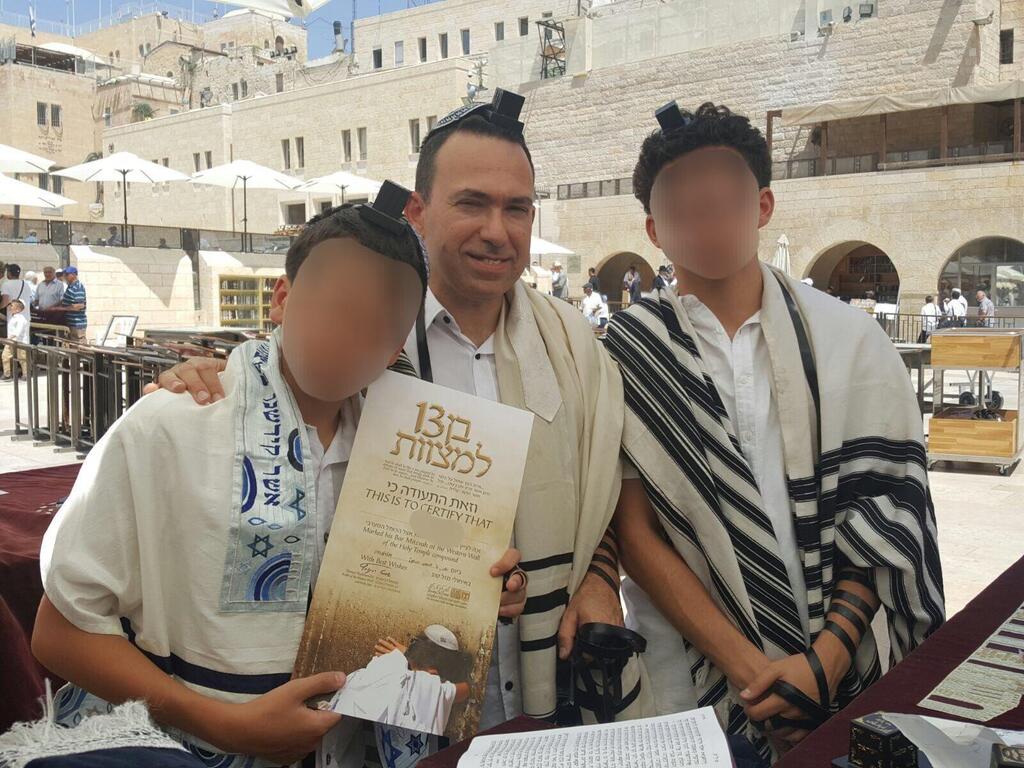
At the time, Leonard said he hoped the attack would only strengthen his sons’ values — and that one day, they would volunteer to serve in the IDF. Years later, that hope has been fulfilled: one son is already serving, and the other has just arrived in Israel to enlist.
D., 25, recently made aliyah and is expected to join the IDF as a lone soldier this December. He is following in the footsteps of his younger brother, Sgt. Y., 21, who has been serving as a combat soldier in the IDF’s Golani Brigade for the past two years. Both are supported by the Lone Soldiers Program run by Nefesh B’Nefesh, Friends of the IDF, and Garin Tzabar.
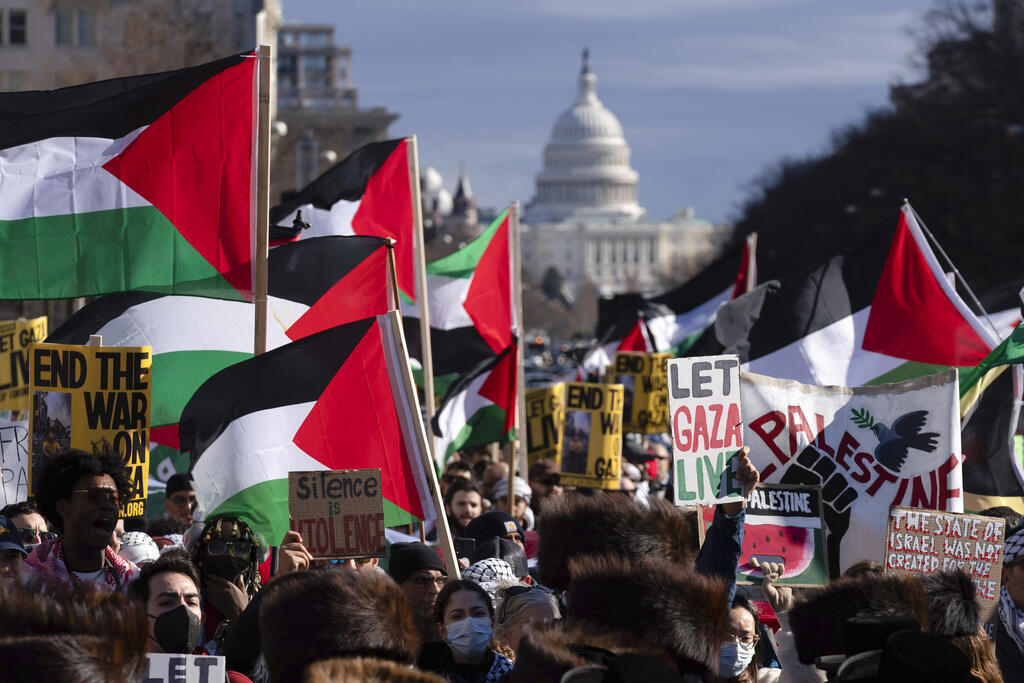
(Photo: Jose Luis Magana/AP)
“When you experience something like that in front of your kids, it can either break you or make you stronger,” Leonard said. “For me, seeing them in uniform, serving in the IDF — that’s the real victory. It shows we didn’t break; we chose to take it one step further.”
Leonard says the incident didn’t diminish his pride in being Jewish. “It happened in October 2014, right after Operation Protective Edge. I was there with my sons, who were 14 and 10 at the time. One of my friends got into an altercation with pro-Palestinian protesters who showed up waving Palestinian flags to provoke. My friend grabbed one of their flags — I don’t condone what he did, but they clearly came to provoke, and he fell into their trap.

D. and Y. at Ben Gurion Airport
(Photo: Courtesy)
“When we left the game, a crowd surrounded us and I was suddenly punched in the face, right in front of my kids — even though I hadn’t taken the flag,” he recalled. “They were in shock. It was an incredibly difficult moment, but also a powerful lesson. We realized we could grow stronger from it.”
Leonard says the atmosphere in New York today reminds him of that time. “There’s a tsunami of anti-Israel sentiment. But I try to focus on the future — on how we can give the next generation the tools to face it. Not just through social media, but through knowledge and real Jewish pride.”
'I didn’t flee the US'
When asked what motivated him to immigrate to Israel, D. says it was a decision shaped over years. “I’ve wanted to make aliyah since I was 19,” he explained. “At first, I didn’t really understand why I felt drawn to Israel. I thought maybe it was because I wanted to live near other Jews, but there are plenty of Jewish neighbors in Long Island. I thought maybe it was about living in a free democracy, far from antisemitism — but Long Island is a democracy too, and we don’t have terror attacks or antisemitic crime there.”
By the time he turned 22, D. says his understanding had deepened. “I realized my connection to Israel was something more profound — not just about moving to another country. I didn’t flee the United States. I chose to live in a place that holds immense meaning for me. A place where I can live a full Jewish life, be part of Jewish society in a deeper way, and contribute directly to the future of our country.”

D. and Y. at the Western Wall
(Photo: Courtesy)
Like his father, D. says the events of October 7 only reinforced his decision to make aliyah and serve in a combat unit. “I believe every Jew contributes to Israel’s security and prosperity — in direct or indirect ways, spiritually and practically,” he said. “As a person of faith, I feel it’s a great privilege to give back through military service, while also having the option to study Torah when needed.”
D. hopes to join the Givati Brigade, which he has long admired. He adds that the antisemitic attack on his father — like any act of antisemitism — only strengthened his determination. “Sometimes Jews in the Diaspora can feel alone in a hostile world. That feeling can break you — but it can also give you strength. In the end, what holds you up is yourself, your family, and your faith.”

Givati Brigade soldiers operating in Gaza
(Photo: IDF)
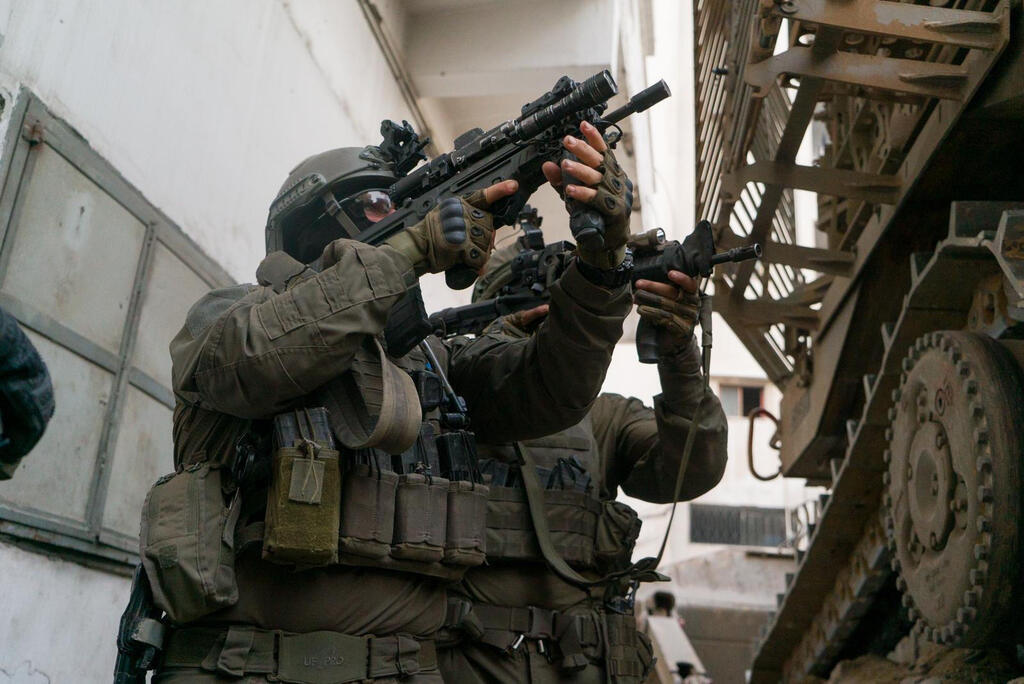
Holani Brigade soldiers operating in Gaza
(Photo: IDF)
Leonard shared that his younger son, Y., flew to Israel right after high school and chose to stay. He officially made aliyah just one month before October 7. He spent Sukkot in the U.S. with family, but when the war broke out, he didn’t hesitate. “People were trying to leave Israel,” Leonard said, “and he insisted on returning, putting down roots, and joining a combat unit.”
Unlike Y., D. spent a year in Israel doing volunteer service after high school, then returned to the U.S. for college. His decision to enlist was part of a longer journey. “It wasn’t something that happened overnight,” he said. “The war only strengthened my resolve to make aliyah.”
D. and Y. at Ben Gurion Airport
(Video: Courtesy)


“The war didn’t deter my sons — it did the opposite,” says Leonard. “Y. was already in Israel when it broke out, and it only strengthened his resolve to fight. For D., it gave him an extra push and accelerated a desire that was already burning inside him. For both of them, it solidified the decision to be part of the story of the State of Israel — not to stand on the sidelines.”
Leonard says he and his wife raised their sons with strong Zionist values and a deep connection to Israel. “They grew up surrounded by close Israeli friends, involved in educational programs, and taking frequent trips to Israel. That was the air they breathed. But the decision to make aliyah and enlist in combat service — that came from them. You can’t force a child to join the IDF. It has to come from within.”
He acknowledges that having both sons in combat units is not easy. “Of course I live in constant worry,” he admits. “But I also feel enormous pride. They didn’t want to just watch from afar. They wanted to be part of the Jewish and Israeli story — and I admire them for that more than anything.”
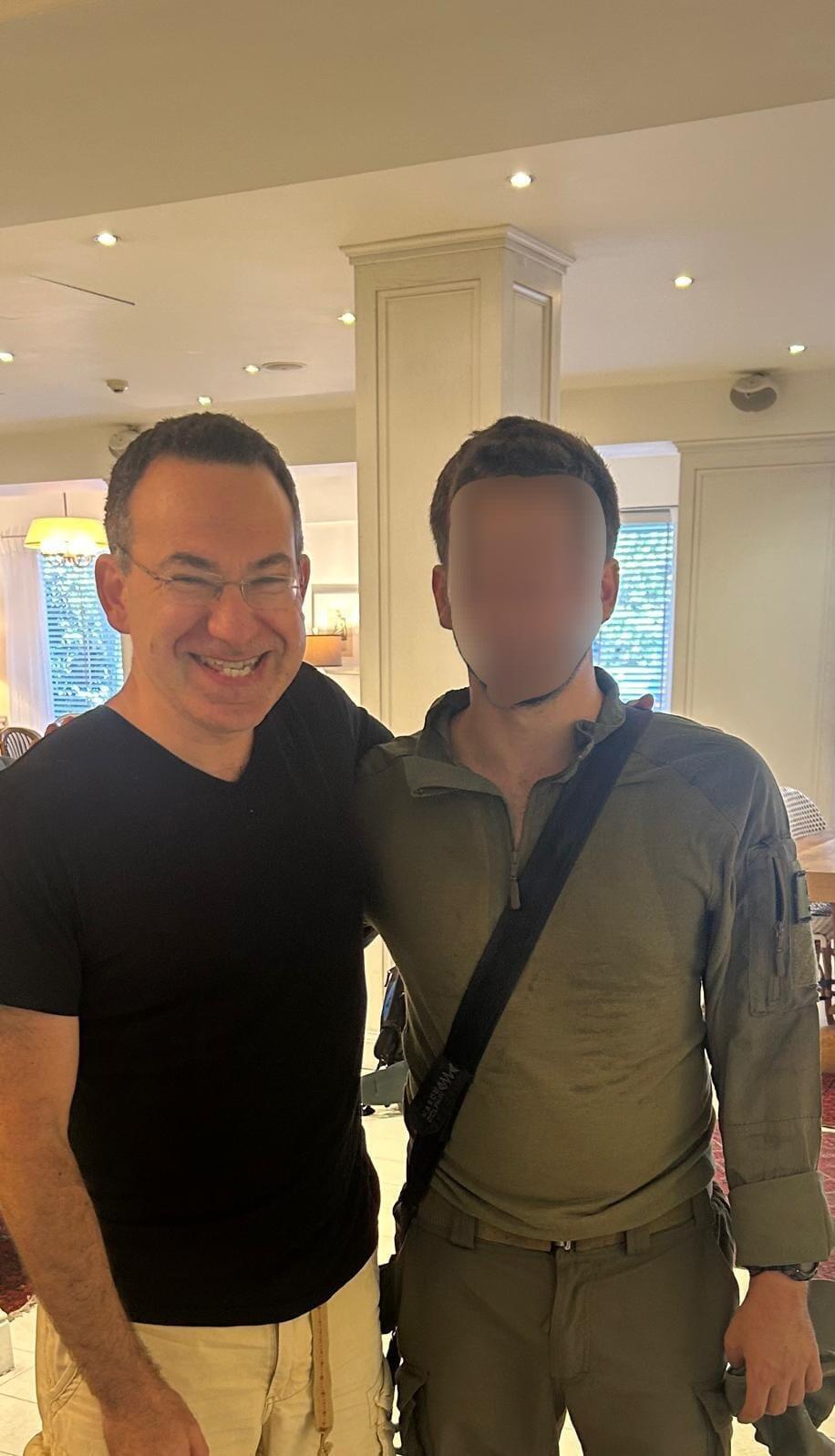
Leonard and Y.
(Photo: Courtesy)
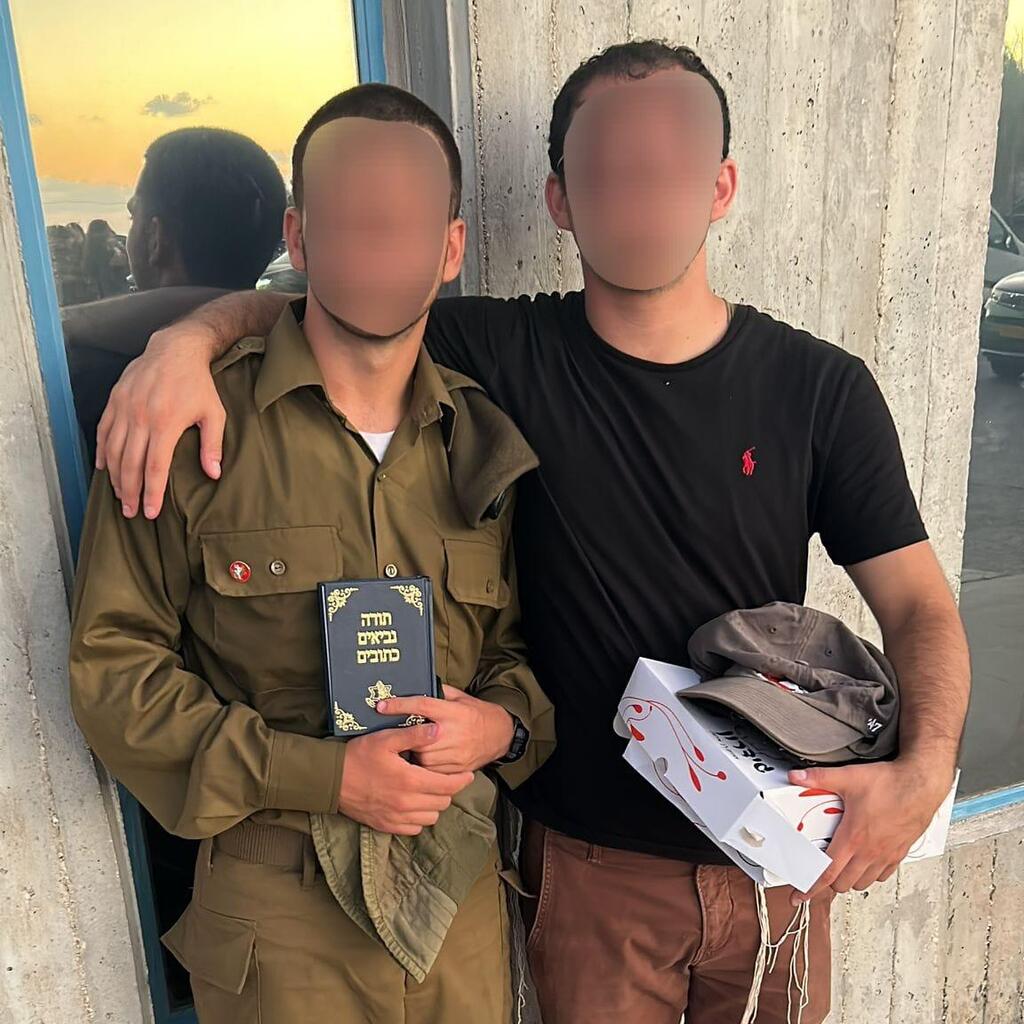
Y. and D.
(Photo: Courtesy)
Noya Govrin, Deputy Director of Military and Community Relations at the Nefesh B’Nefesh-FIDF Lone Soldiers Program, says the story of these two brothers is a powerful example. “Especially during such a challenging time, their decision to live here and serve the country reflects the spirit of solidarity and purpose that defines our lone soldier community,” she says. “At Nefesh B’Nefesh, we’re proud to support them every step of the way, and see them as role models for a new generation building their future in Israel.”
Nefesh B’Nefesh is a nonprofit organization founded in 2002 by Rabbi Yehoshua Fass and Tony Gelbart. Its mission is to support Israel’s national goals through aliyah and to remove the financial, professional, logistical and social barriers facing new immigrants from North America. Friends of the Israel Defense Forces (FIDF), founded in 1981, is dedicated to supporting IDF soldiers, wounded veterans and bereaved families.