

Over the past year, Israel has carried out strikes in Iran, first in Operation Rising Lion and later in Operation Roaring Lion. But it turns out that as early as World War II, Jews were fighting on Iranian soil as part of the struggle against Nazi Germany.
“The fighting in the region took place because of Britain’s concern at the time over a possible German takeover of Iran’s southern oil fields, and also over the risk of supply routes to the Soviet Union being cut off,” said Lt. Col. (res.) Assaf Efrati, deputy director general for information and education at the Museum of the Jewish Soldier in World War II.
Gallery
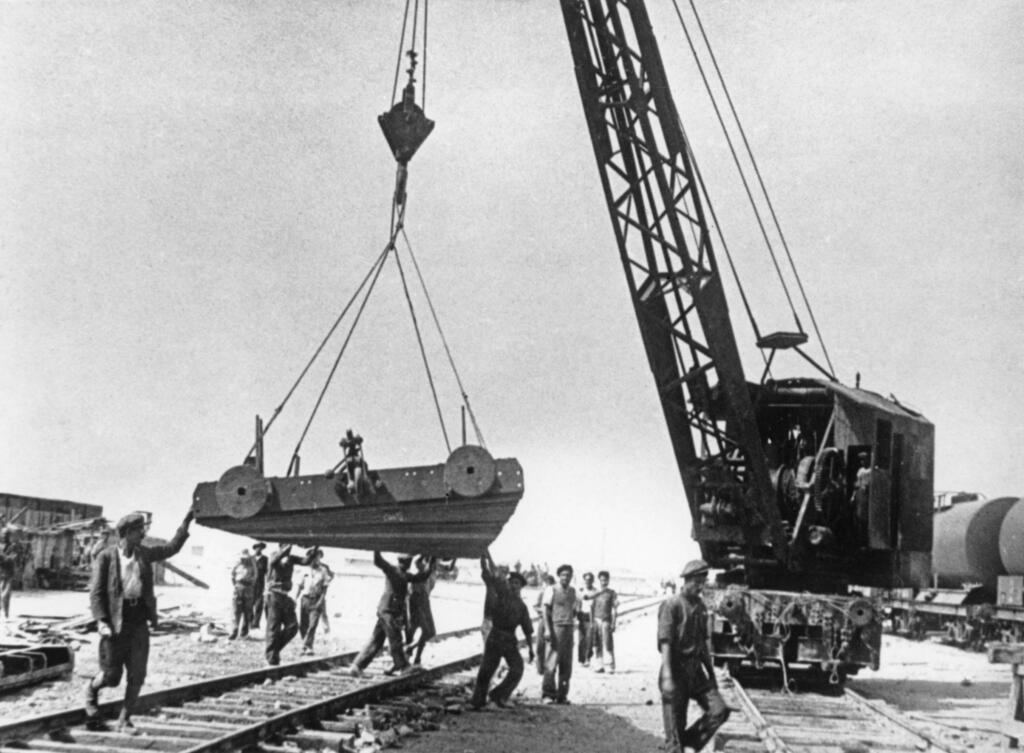
A crane in Iran dismantles parts of railway cars for shipment to the Soviet Union during World War II
(Photo: Hulton Archive / Getty Images)
A shah sympathetic to Germany
Efrati said that to understand Iran’s strategic position during World War II, one must look at its history. In December 1925, after consolidating control over regional power centers — including suppressing local autonomy in the oil-rich Khuzestan region — Reza Shah Pahlavi was declared ruler by the Majles, Iran’s parliament, founding the Pahlavi dynasty. His rise, which began with a 1921 coup backed indirectly by Britain, marked the end of the weakened Qajar dynasty and the start of rapid centralization.
“The nature of his rule was controversial,” Efrati said. “On one hand, he was seen as a force for modernization in Iran. On the other, his use of brutal force and reliance on ethnic preference to secure the Pahlavi dynasty effectively delayed the development of modern democracy and pluralistic governance in Iran.”
In 1935, the government officially changed the country’s name from the Western term “Persia” to “Iran,” its historical name and one long used domestically.
After the Nazis rose to power in 1933, and especially after Germany launched World War II, German soldiers and diplomats actively sought to influence strategic and economic developments in Iran, India and the Arab Middle East, Efrati said. “Among the goals of Germany’s 1942 summer offensive in the Soviet Union was to capture the Caucasus and from there invade Iraq and Iran, in hopes of severing supply routes into the Soviet interior.”
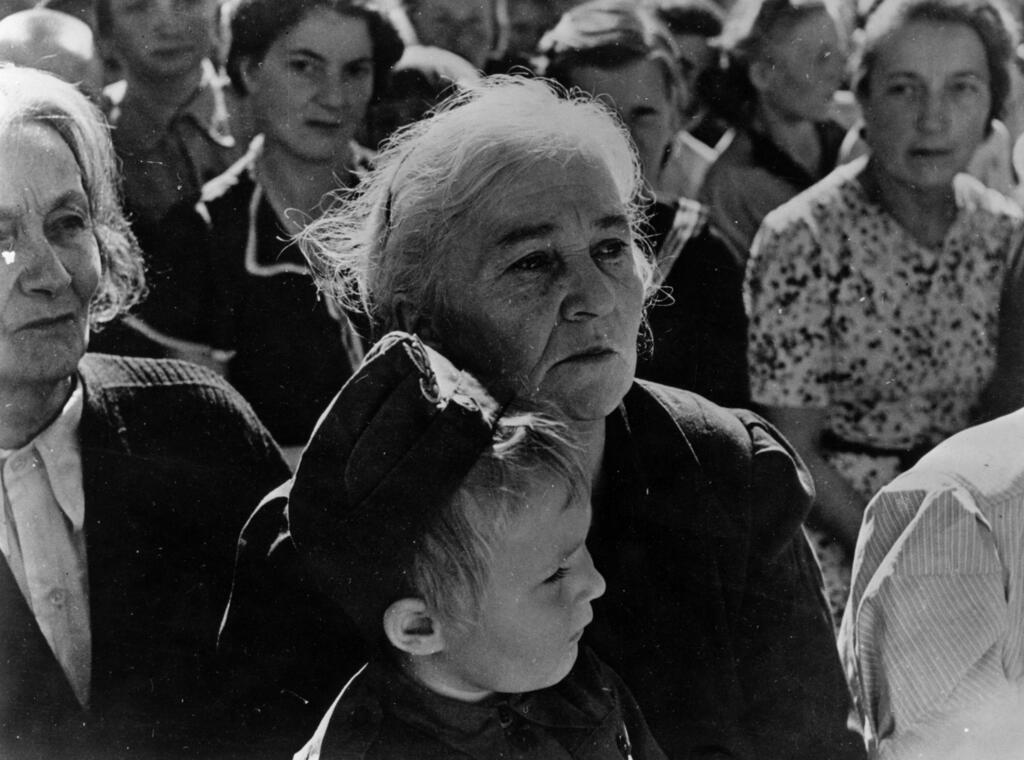
Polish refugees who arrived in Iran, circa 1945
(Photo: Three Lions / Getty Images)
Was Reza Shah sympathetic to Germany?
“Yes,” Efrati said. “Unlike Britain or the Soviet Union, Germany did not have a record of intervening in Iran’s internal affairs or occupying its territory. Reza Shah sought to learn from Germany in political management and industrial technology. He also wanted to reduce trade with the Soviet Union. By 1940–1941, nearly half of Iran’s imports came from Germany, and 42% of its exports went there.”
Did this affect the Jews living in Iran?
“Iranian Jews, during the rule of Reza Shah and later his son Mohammad Reza Pahlavi, enjoyed many rights and freedoms they had not previously experienced, including relative cultural and religious autonomy, economic opportunities and political rights,” Efrati said. “They also benefited from the Pahlavi dynasty’s more secular domestic policies. The Iranian government informed the Germans that it viewed Iranian Jews as fully assimilated into broader Iranian society.”
Efrati also noted that many Polish Jews reached Iran. Of the 116,000 Polish refugees allowed to leave the Soviet Union in 1942 — where some had fled in 1941 or been deported in 1939–1940 — many passed safely through Iran on their way to British-controlled Mandatory Palestine or to Britain. Some joined British military units.
From neutrality to the Allied camp
Reza Shah declared Iran neutral at the start of World War II, wary of both Soviet and British ambitions. Despite the economic benefits of ties with Germany, he viewed it as overly committed to expansion and racist ideology.
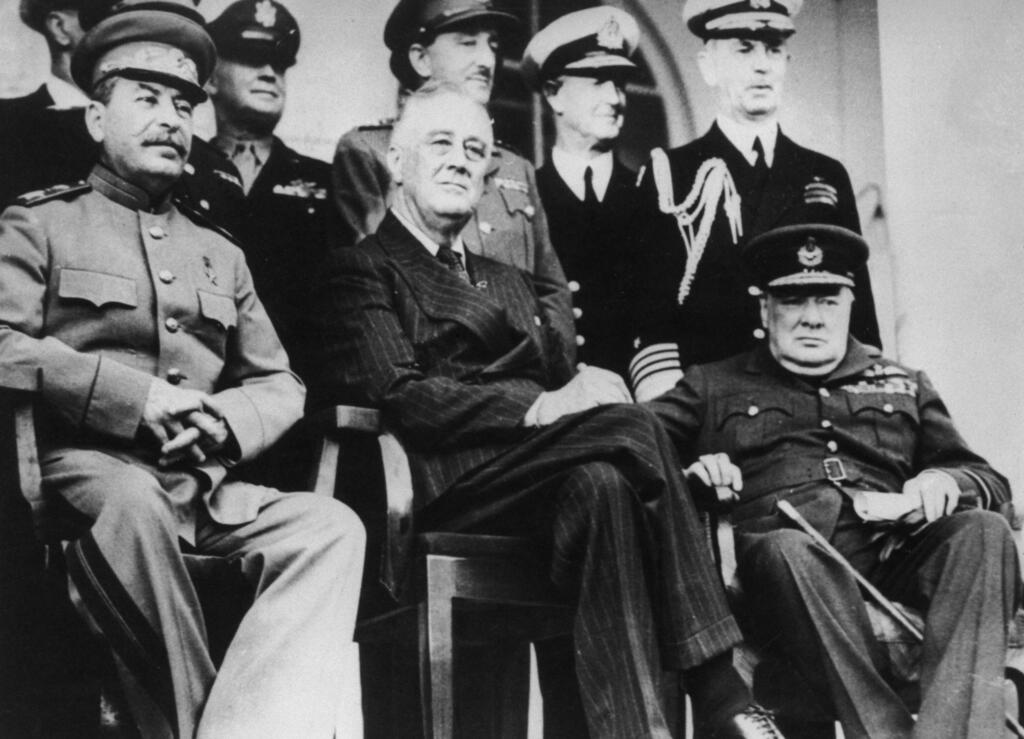
A historic conference in Tehran attended by Churchill, Franklin D. Roosevelt and Stalin
(Photo: Hulton Archive / Getty Images)
The British, for their part, were not fond of Reza Shah. After Germany’s dramatic victories against the Soviet Union in the summer of 1941, British forces occupied southern Iran and Soviet forces took the north.
“They used Reza Shah’s refusal to expel German nationals as a pretext,” Efrati said, “but in reality they were concerned that a successful German campaign in the Caucasus would not stop at Iran’s borders, and that continued Iranian neutrality would hinder supply routes to the Soviet Union.”
The Allies also sought to protect British-controlled oil fields, channel military supplies to the Soviet Union via the Trans-Iranian Railway linking Tehran with the Persian Gulf and the Caspian Sea, and halt German intelligence activity in Iran.
On Sept. 11, 1941, British envoy Sir Reader Bullard met Iranian Prime Minister Mohammad Ali Foroughi to demand Reza Shah’s abdication in favor of his son, Mohammad Reza Pahlavi, who was seen as pro-British. Five days later, on Sept. 16, Reza Shah abdicated, went into exile and left his son on the throne.
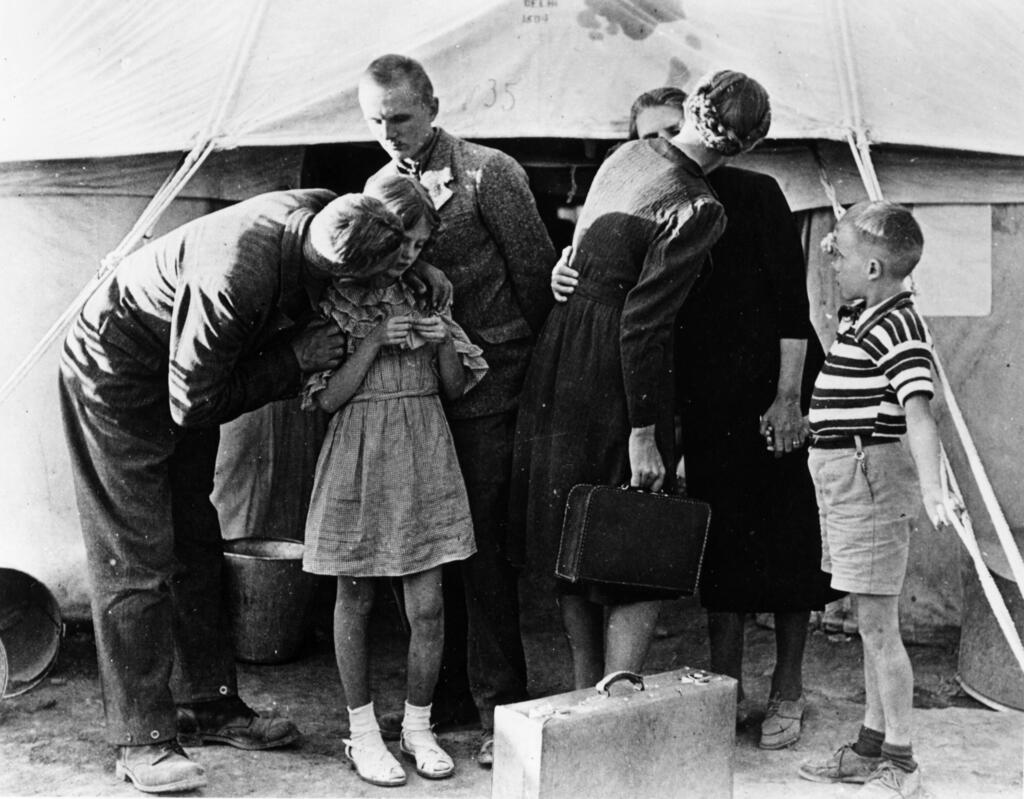
Polish refugees who arrived in Iran, 1945
(Photo: Three Lions / Getty Images)
In January 1942, Iran, the Soviet Union and Britain signed a tripartite alliance treaty recognizing Iran’s territorial integrity, sovereignty and political independence. The Allies also pledged to protect Iran’s economy from wartime disruption and, crucially, to withdraw within six months of the war’s end. By spring 1942, Iran had severed ties with the Axis powers and expelled their nationals, and on Sept. 9, 1943, it declared war on Germany.
Between World War II and Israel’s War of Independence
Chaim Herzog, Israel’s sixth president, served as an intelligence officer in the British Army during World War II. The museum that bears his name, located at Latrun, highlights the stories of 1.5 million Jewish soldiers who fought between 1939 and 1945.
Among them were Jews who served in the Iranian theater. One was Robert (Rovka) Bar, born in 1899 in Pardubice, Czechoslovakia. He immigrated to Mandatory Palestine in 1927 and enlisted in the British Army in 1940. Stationed in Iran, he served as a liaison between British and Soviet forces coordinating the transfer of equipment from the United States to the Soviet Union.

The Museum of the Jewish Soldier in World War II, named for President Chaim Herzog
(Photo: Courtesy of the museum)
“The Persian Corridor was a supply route that ran through Iran into Soviet Azerbaijan,” Efrati explained. “Through it, British aid and American supplies were delivered to the Soviet Union under the Lend-Lease program.” The massive logistical operation, conducted between 1941 and 1945, aimed to send military and civilian aid from the United States and Britain to the Soviet Union as it fought Nazi Germany on the Eastern Front.
The route began at Persian Gulf ports in southern Iran and Iraq, crossed Iran from south to north and ended in Baku or at Caspian Sea ports. It also operated in reverse: thousands of Polish refugees, including many Jews, escaped the Soviet Union via Iran thanks to the Allied presence. Iran became a critical transit point between the horrors of Eastern Europe and safety. Among the Jewish refugees were the “Tehran Children,” including who later became the museum chairman, Haim Erez.
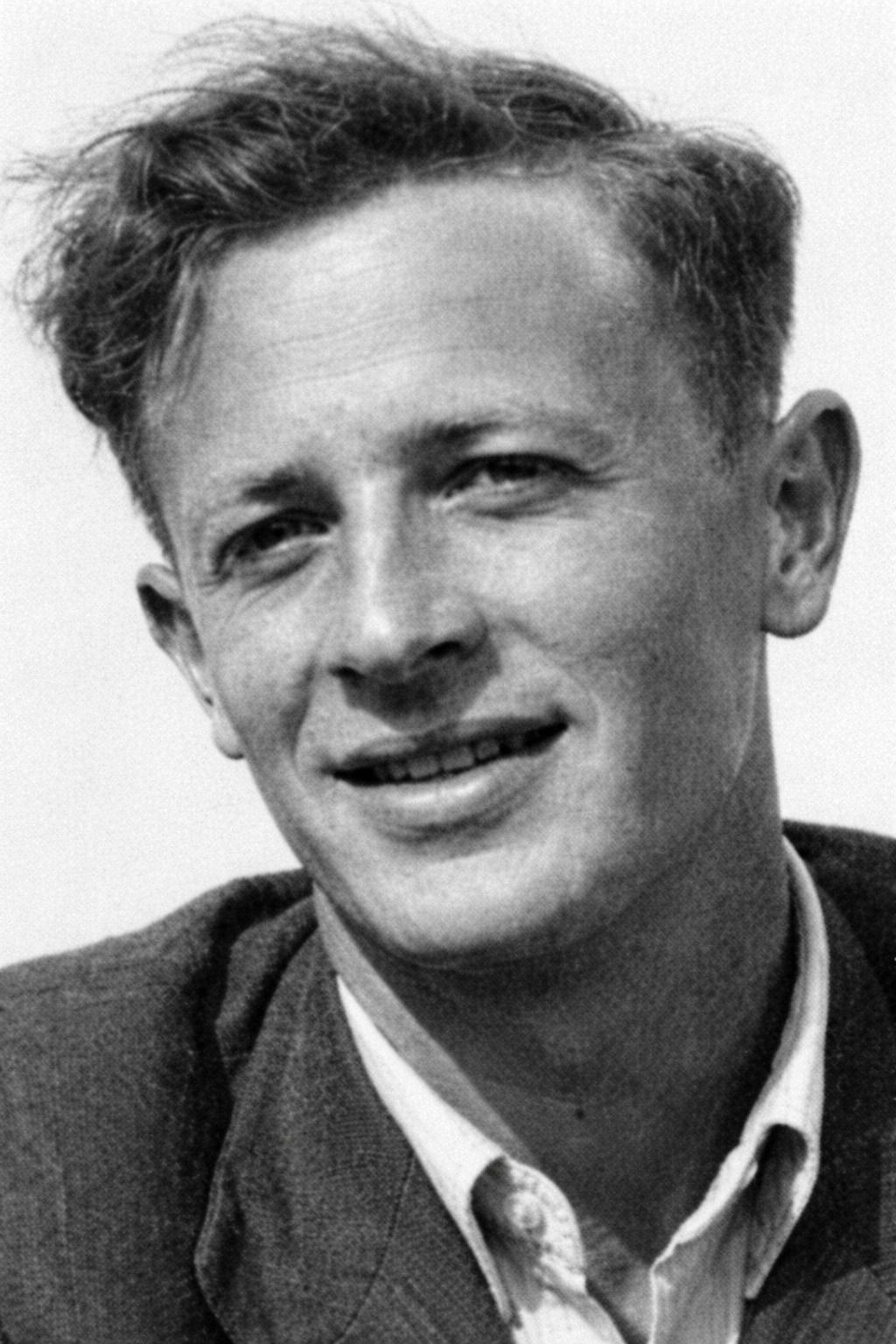
Zvi Zaviri, who served in the British Army during World War II and was later killed in action at Latrun
Another Jewish soldier in the corridor was Zvi Zaviri, born in 1912 in Grodno, Poland. He immigrated to Mandatory Palestine in 1930, studied at the Mikveh Israel agricultural school and later worked as a farmer. In 1936, he joined the staff of the Ahava youth village in Kfar Bialik as an agriculture teacher and farm manager.
During World War II, Zaviri enlisted in the British Army and served as a military censor in a unit operating in Iraq and Iran, handling equipment transfers to the Soviet Union. After the war, he returned to Kfar Bialik and published poems and stories in children’s newspapers.
During Israel’s War of Independence, he rejoined the fighting and took part in Operation Bin Nun Bet, the second failed attempt to capture the Latrun complex and open the road to Jerusalem. On May 31, 1948, he was killed in action and buried in Na’an. He is survived by his wife, Hava, and daughter, Danit. Two years later, his remains were reinterred in the military cemetery in Nahalat Yitzhak.
The technician who became a legendary commander
Another Jewish soldier who served in Iran and later commanded a renowned intelligence unit was Dr. Reuven (Peter) Blum. Born in Munich in 1924, he immigrated as a teenager and in September 1940, at just 16, enlisted in the Transjordan Frontier Force, a British unit. He trained in communications and electronics and was sent with his unit to Bandar Abbas in Iran, where he spent about six months, as well as to the Syria-Turkey border.
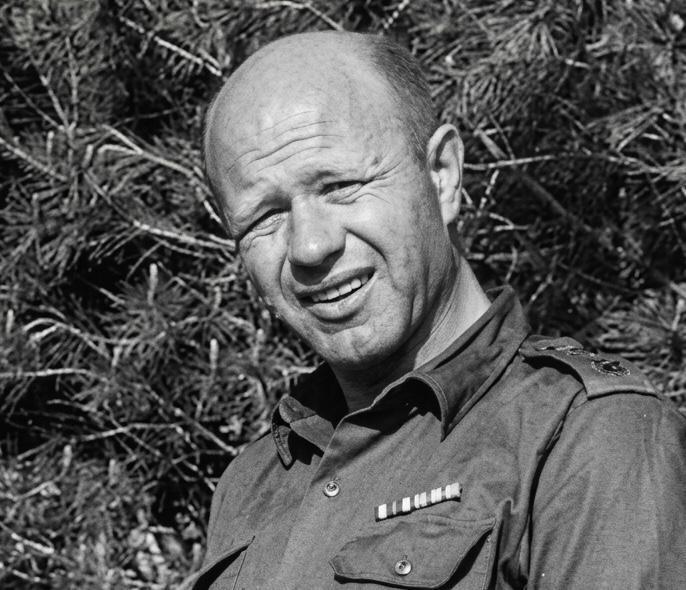
Reuven Blum, who later commanded the unit that would become Unit 8200
(Photo: The Israeli Intelligence and Heritage Center)
After his discharge, Blum studied physics and mathematics at the Hebrew University of Jerusalem and joined Unit 515 of Israel’s Military Intelligence Directorate, later becoming its commander. The unit was eventually renamed Unit 8200. He retired with the rank of lieutenant colonel in 1966 and died in 2015.
Efrati also noted that many Jews fought in the Soviet Army, including Fiodor Karpovich Parparov. Born in 1893 in Velizh in the Russian Empire, he joined the Communist Party in 1918 and volunteered for the Red Army in 1919. He served in the Russian Civil War and later in intelligence roles, including assignments in Germany, where he gained access to Foreign Ministry documents and the Nazi Party.
In October 1941, he was stationed in Iran as part of the Soviet NKVD intelligence service. After the war, he took part in preparations for the Potsdam Conference and the Nuremberg trials. He reached a rank equivalent to colonel and received two Orders of the Red Banner and the Order of the Red Star. He died in 1960 and was buried in Moscow.
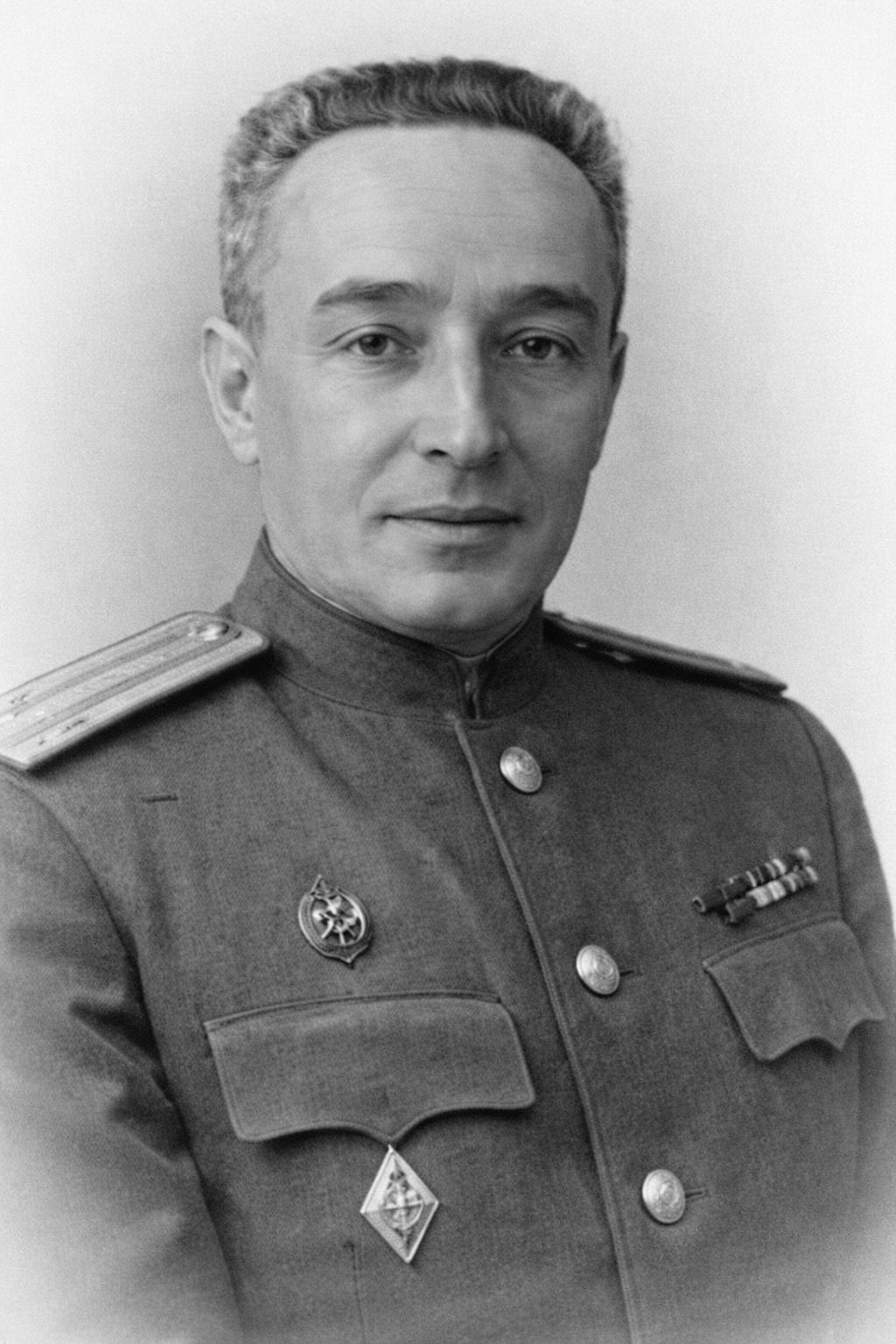
Fiodor Karpovich Parparov
“Alongside the story of the victims, Holocaust Remembrance Day is also an opportunity to highlight the story of Jewish fighters,” Efrati said. “The stories of Bar, Zaviri, Blum and Parparov, who operated in the distant Iranian arena, show how they turned their unique skills into operational tools that helped secure critical supply routes, maintain vital links between powers and assist in rescuing refugees.”
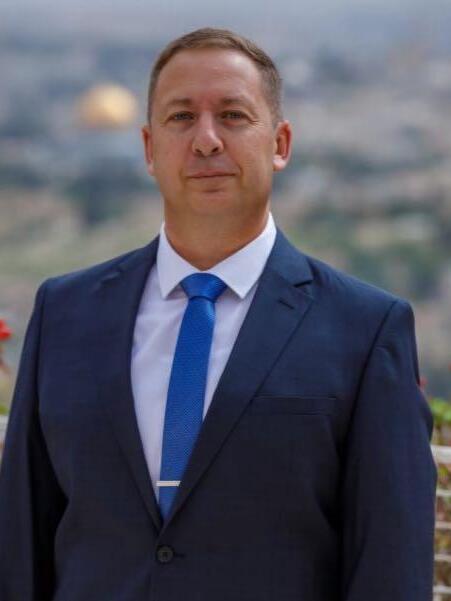 Assaf EfratiPhoto: Eliyahu Yanai
He added: “Their lives illustrate the decisive contribution of some 1.5 million Jewish soldiers to the Allied victory over the Axis powers — not only through their presence on the battlefield, but through their initiative in complex operations, their engagement at strategic points and their determination to help defeat the Nazi war machine.”