

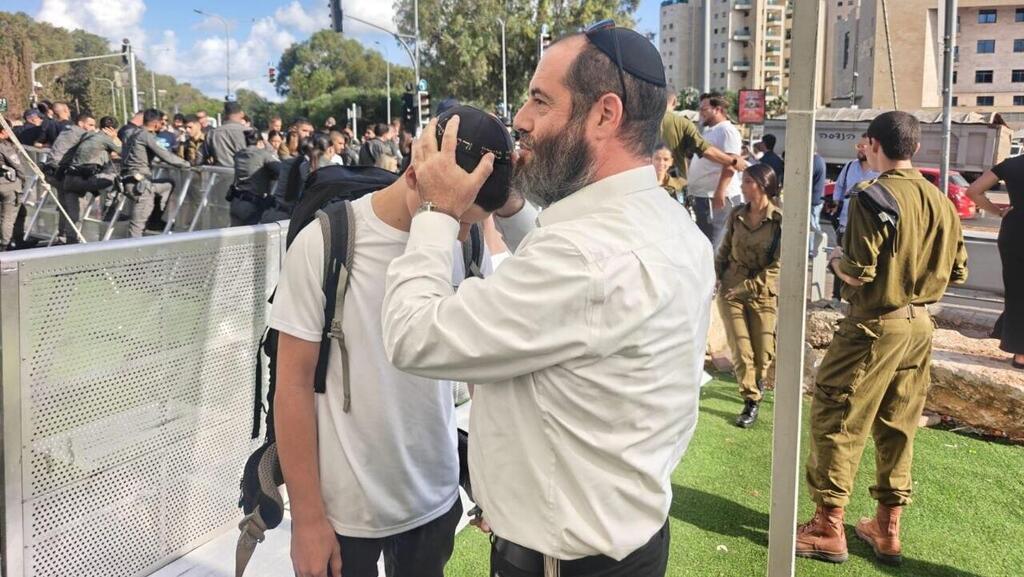
Ultra-Orthodox extremists arrived Sunday morning at the IDF recruitment center at Tel Hashomer and tried to block the path of 500 new Haredi recruits entering the base.
About 300 of the recruits are slated for combat tracks — the Hetz Company, the Hasmonean Brigade and the Netzah Yehuda Battalion — and had to make their way past protesters shouting, “We will die rather than enlist.”
Yosef Friedman of Modi’in Illit told ynet, “I didn’t sleep last night. I’m extremely excited. It is a great privilege to defend the country.”
Friedman studied at Betzavta, a Haredi combat hesder yeshiva, and is enlisting in Netzah Yehuda. Like him, Itamar Reinhold, a graduate of the Nitzotz Ba’Emunah pre-military academy, is joining the IDF’s first Haredi battalion.
“I simply wanted to be part of it. My brother served in Netzah Yehuda, he fought throughout the war in Gaza and he inspired me,” Reinhold said.
Shmuel Cohen, another Haredi recruit joining the battalion, said, “It is very important to me to contribute to the country and be part of the system that protects all of us.”
The three are joining Netzah Yehuda, which was established to allow members of the Haredi community to perform meaningful combat service while maintaining their religious way of life.
Training in the battalion lasts about eight months and includes basic combat training and advanced training through Rifleman 07 certification. During the Swords of Iron war, the battalion operated primarily in the Gaza Strip, as well as in the West Bank and Lebanon. Its troops killed hundreds of terrorists, located weapons and carried out counterterrorism missions in their sectors.
Another track offered to the new recruits is the Hetz Company in the Paratroopers Brigade’s 202nd Battalion. The company is made up exclusively of Haredi soldiers, and admission requires a dedicated screening and selection process.
Candidates are tested on their fitness, determination and motivation to serve in a unit that operated during the war on four fronts: the West Bank, the Gaza Strip, Lebanon and Syria. The company took part in offensive operations, planned arrests and border defense missions, and also participated in operations to recover for burial the bodies of hostages held in Jabaliya.
Meanwhile, the Hasmonean Brigade is also continuing to expand, with its first regular battalion, the Yonatan Battalion, set to absorb some of the new recruits.
Over the past six months, the battalion has operated in southern Lebanon, carrying out missions to defend northern Israeli communities and destroy terrorist infrastructure used by Hezbollah. Its soldiers located and neutralized launchers that were already loaded and aimed toward Israel. They also captured a member of Hezbollah’s Radwan Force, who was later taken into Israel for questioning.
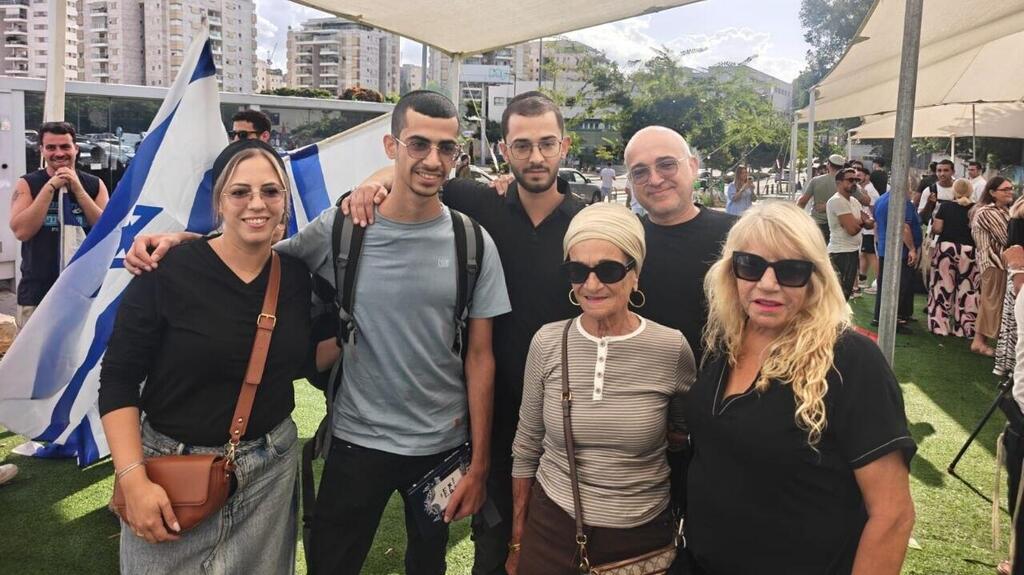
(Photo: Shomer Israel Association)
Alongside the combat tracks, about 200 Haredi youths are enlisting Sunday in technological and logistical roles through the Ma’alot Tzur and Project Yoav programs, which allow them to acquire a profession and gain experience during their military service.
Those programs, like the combat tracks, are adapted to the Haredi way of life and the needs of the soldiers.
Yossi Levy, a reserve lieutenant colonel and CEO of the Shomer Israel organization, said Sunday morning, “Today we are seeing a significant leap forward. The Haredi youths arriving at the induction center are proving that it is possible to combine strict adherence to a Torah-based identity with a direct contribution to national security on the front line.”
“Our mission is to continue building a support system that will allow them to perform meaningful service while maintaining their way of life,” he added.
Haredi military enlistment remains a divisive issue in Israeli society and in the political system. With the country now in an election period, the Haredi recruitment day also became a stage for political speeches and statements.
Among those who arrived were Yisrael Beytenu Chairman Avigdor Liberman and Moti Leitner, chairman of the Haredi Public Party.
“The days when the Haredi leadership was ashamed of you and did not stand behind you are over,” Leitner told the recruits. “We are proud of you. Those whose Torah study is truly their calling should receive protection that allows them to continue studying without fear or persecution. Those who are not devoted full time to Torah study should serve.”
Liberman said he came to salute the Haredi youths who had chosen to enlist.
“This is an expression of the principle that ‘all of Israel is responsible for one another,’ of social solidarity and of what we expect from everyone,” he said. “The state must strengthen those who enlist and deal firmly with all draft dodgers and those who incite against service.”