

Dganit Timor Jenshil grew up in Merkaz Shapira, a stronghold of the national religious sector in Israel. Like many girls in that community, she dreamed of becoming a youth‑group leader in the Zionist youth movement Bnei Akiva.
“When I reached the age for training, they never even offered me a chance,” she recalls. “I do see myself as an educational figure, and when I asked why, they said: ‘Can you commit to not wearing pants?', and I didn’t understand what that had to do with being a leader.” She felt it was an irrelevant and unrelated demand and ultimately did not become a leader in Bnei Akiva. In hindsight, she is glad, as it opened doors to different places for her.
Gallery
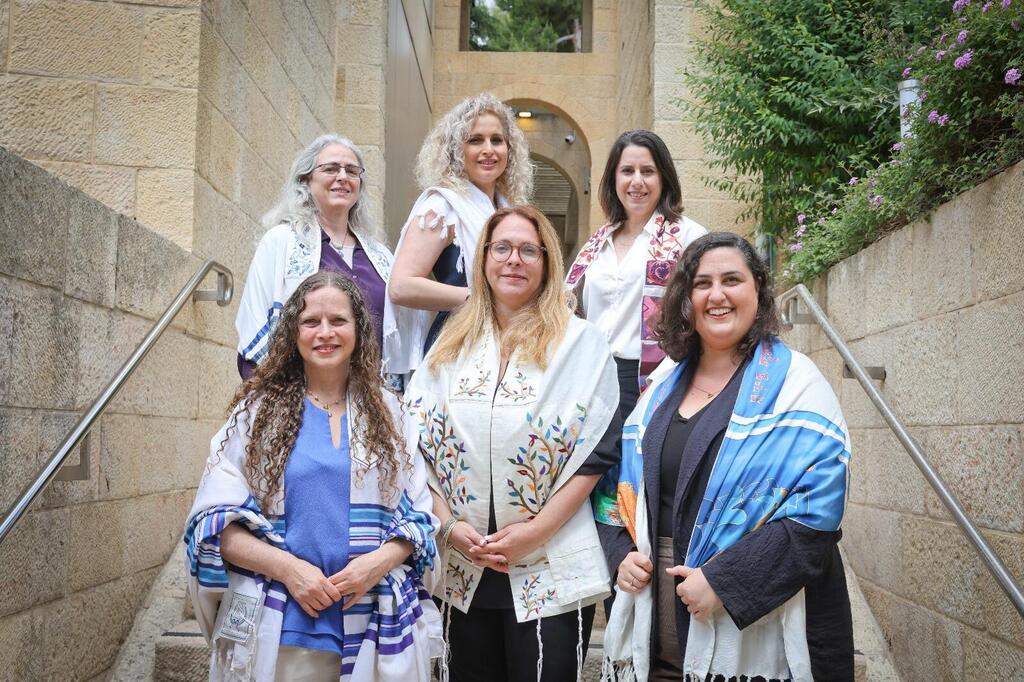
Top from left: Yael Schweid, Adi Segal, Dganit Timor Jenshil
Bottom from left: Zehavit Kalif, Shirley Zfat Davidai Dr. Maayan Morag
(Photo: Yonit Schiller)
The cold shoulder she got from the youth movement was only the starting point of a spiritual quest for belonging. In the end, she found a place in the Reform movement. Timor Jenshil, a resident of Tzur Hadassah, is one of six women recently ordained at the Jerusalem campus of Hebrew Union College after four years of study and a required thesis.
These women come from diverse backgrounds and push back against old assumptions about Reform Judaism. None of them speaks with an American accent, and none had rabbinic leadership in the Reform movement as their expected path.
“When I began to be a thinking woman, I started to understand I really had no place in the religious realm. I had no active role, and women certainly did not lead in the religious‑public space,” says Timor Jenshil. She studied in a state religious school.
“I remember the teacher said that religious girls do not serve in the army. My mother served in the army and she is religious, so I knew many religious girls served in the army. The teacher just had a more conservative approach,” she recalls. “I had a breaking point, because it was clear to me that I would serve in the army. I joined the Education Corps and decided I wouldn’t define myself, and if a certain religious place didn’t suit me, it didn’t mean there was no other place that did.”
Timor Jenshil is Chief Operating Officer and Director of Outreach at Hebrew Union College’s Taube Family Campus in Jerusalem. At one point she decided to “jump in” and join the seminary’s ordination program for Reform rabbis. For years she worked in informal Jewish education and in diaspora Jewish organizations. “I fell in love with the Reform movement; it touched my heart, and I also felt embraced,” she says.
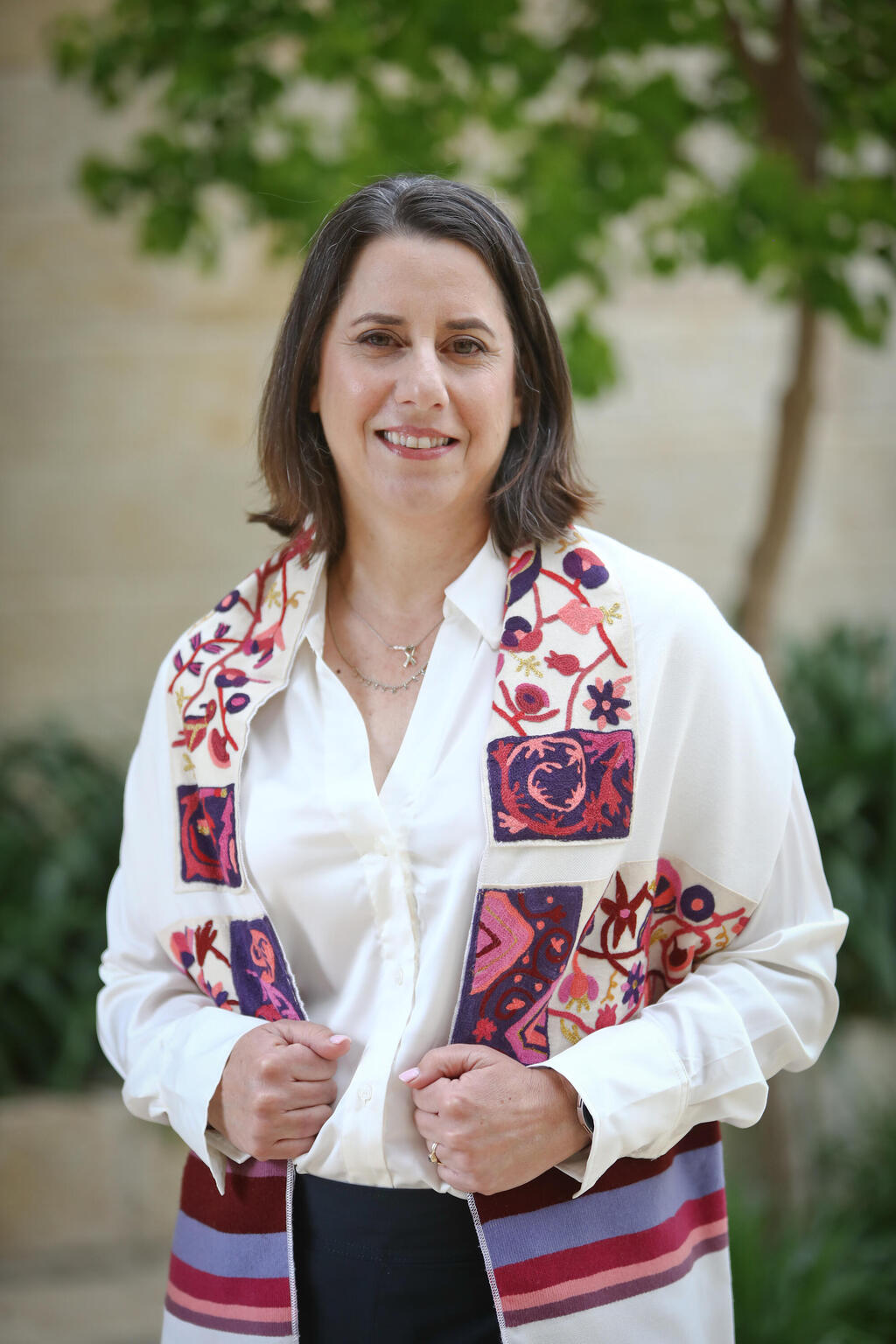
Dganit Timor Jenshil. "My father was worried someone would try to harm me"
(Photo: Yonit Schiller)
How did your family react to your decision to become a rabbi?
“My mother of blessed memory, who died last year, was very moved. When my daughter read from the Torah at her bat‑mitzvah and I did too, she said in excitement, ‘I cannot believe I was privileged to this.’ At my son’s bar‑mitzvah, she was excited because she held the Torah scroll for the first time.
"My father’s initial reaction to the ordination program was: ‘I worry someone will try to harm you because of this, I worry about you.’ I told him there are already so many women rabbis, it’s not a big deal. The public is more familiar with it, and it’s no longer unusual. He attended my ordination ceremony."
Taking back ownership
Shirley Zfat Davidai also comes from a religious Zionist background. She grew up in Ra’anana. “Unlike Timor Jenshil, my parents grew up in religious homes but had already moved away from strict observance.
They sent us to religious schools, but at home they’d close the shutters and watch TV on Shabbat,” she says. “I really wanted to live up to the ideals taught in Bnei Akiva, so I hid what went on at home and managed to become a youth leader."
The newest rabbis and honorees of the 2025 Rabbinic Ordination at Hebrew Union College in Jerusalem
(Photo: Neri Yarden)


She describes a deep desire to belong, but was always hitting a glass ceiling. “I studied at Midreshet Maon in the South Hebron Hills, but they weren’t teaching Talmud yet. Then I studied humanities at university, but it never felt like a good fit. No matter how hard I tried to belong, gender always played a role.
"I couldn’t truly be part of it, couldn’t really feel at home. Every Talmud study felt like sneaking. When it comes to reading from the Torah, you can't be part of the ceremony, but only a spectator. That gender gap pushed me out. By the time I met my partner, who’s also a lawyer, I was already speaking fluent secular Israeli."
After her children were born, she found herself telling them stories from Chazal (Jewish sages). “I’d tell them about Rabbi Shimon Bar Yochai, or about Rabbi Yohanan and Resh Lakish. Every formerly observant Jew wants their kids to be the same and to get familiar with the language. I said to myself: Who will tell them if not me? That’s when I came back to Bit Hamidrash,” she shares.
She began her return through the secular Beit Midrash at BINA. “The word ‘rabbi’ wasn’t simple for me. It’s a loaded word, especially in a home that rebelled against rabbinic authority. But I wanted to learn, and that brought me here, the Reform movement. These four years have been years of discovery, discovering myself again within this world. Today I’m ready to say ‘spiritual’ again, and ready to say ‘rabbi’ again.”
Zfat Davidai co-authored (with Ayala Dekela) a children’s book, The Non-Secret Club – Women Telling Talmud (Yedioth Books publication), a modern retelling of Talmudic stories. Her upcoming book, Ayalot, will explore the myth of “the Doe” in the Zohar.
“I spend a lot of time reworking Jewish texts and bringing them back into our culture. The goal is to take ownership of our stories again,” she says. “Hebrew poet Hayim Nahman Bialik is my inspiration, especially his Book of Legends, compiled with the editor Yehoshua Hana Ravnitzky."
Zfat Davidai, a trained attorney and law lecturer, now serves as rabbi of the “Kodesh VeHol community in Holon. The community made headlines after fighting city hall over land allocation for a Reform synagogue. The court ruled in the community’s favor.
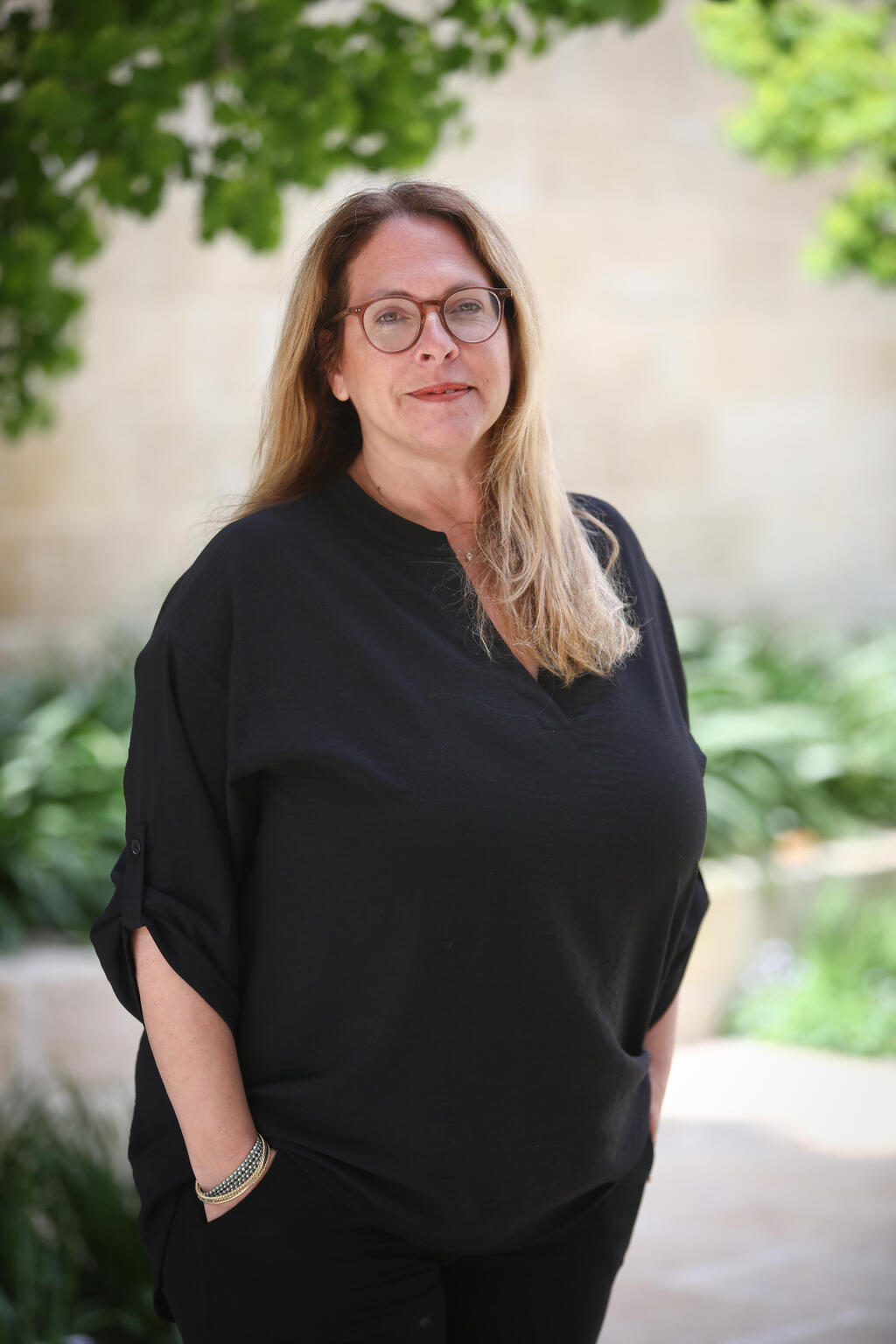
Shirley Zfat Davidai
(Photo: Onit Schiller)
“Beyond that legal battle, the community runs educational programs from preschool through elementary school, and now those programs are at risk of closing,” she notes. “Holon has a vibrant community of young families seeking a liberal Jewish life. I live in Hod HaSharon, and my connection with the Holon community is truly moving. The court ruling gave us support, but there’s often a gap between legal decisions and what happens in practice."
“This is my identity, and it matters to me”
Zehavit Kalif grew up in what she calls a “hardcore secular” home. As a teenager, she recalls seeing her secular father reading the Talmud. “It was a total shock to me, wondering what he has to do with the Talmud?" He said, ‘If you disagree with something, you have to know what it is you’re disagreeing with. You can’t ignore it'."
Over time, she went on to pluralistic Jewish study programs. “I love it because I relate to the connection when learning with a partner and discovering new insights in the text. I also come from a home where people love reading."
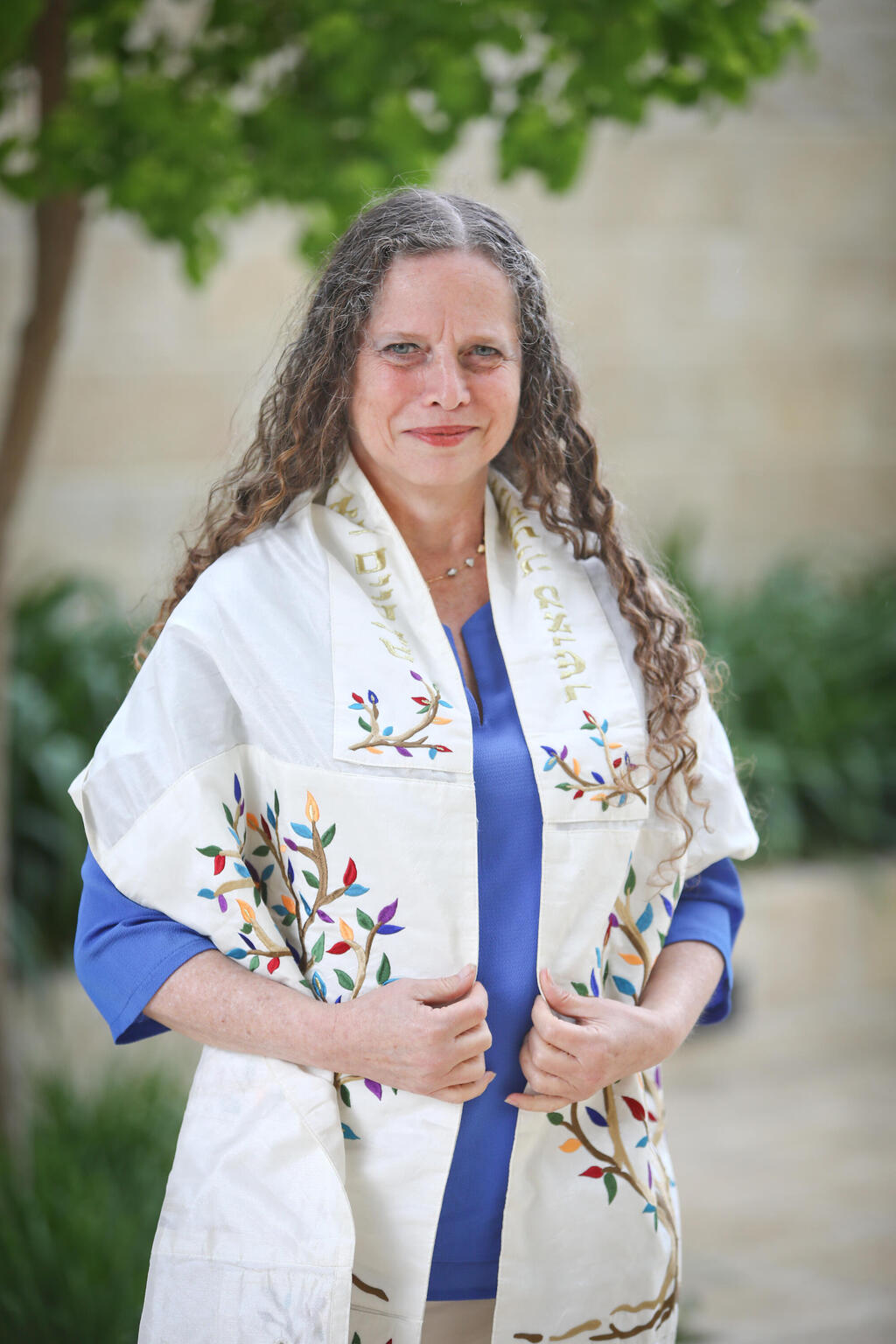
Zehavit Kalif
(Photo: Yonit Schiller)
She has spent over two decades teaching and guiding a weekly Torah study group at the Beit Daniel congregation in Tel Aviv. Kalif, who previously worked at Beit Hatfutsot (now ANU – Museum of the Jewish People) serves as a Jewish-Israeli culture instructor for teachers through the Ministry of Education, leads continuing education courses, in addition to being a teacher herself.
Dr. Maayan Morag also works in education. She holds a Ph.D. in Jewish Studies from Tel Aviv University, and now works with municipalities through the "Council for Hebrew Education".
"My father was born in Morocco and came to Israel at age 5. When he arrived, he felt he had to give up everything connected to Judaism to be Israeli,” she says. “My mother’s family also originates in North Africa; she’s from a Tripolitanian background. Some tradition remained with my grandparents; they made kiddush, but my family led an entirely secular life."
How did your family relate to the Reform movement?
“Honestly, I didn’t even know about the Reform movement until later in life. But when I told my grandmother, my father’s mother, that I had an aliyah to the Torah at age 30 in a Reform synagogue in the U.S., she said: ‘But we hate Reform Jews’... It actually amused me.
"On my father’s side I have strictly Orthodox uncles, and on my mother’s side I have an Orthodox aunt who lives in Brooklyn. I understand the history behind the perception that Reform Judaism is the opposite extreme. In Israeli society it might look like that, but it’s not. It’s actually a source of connection."
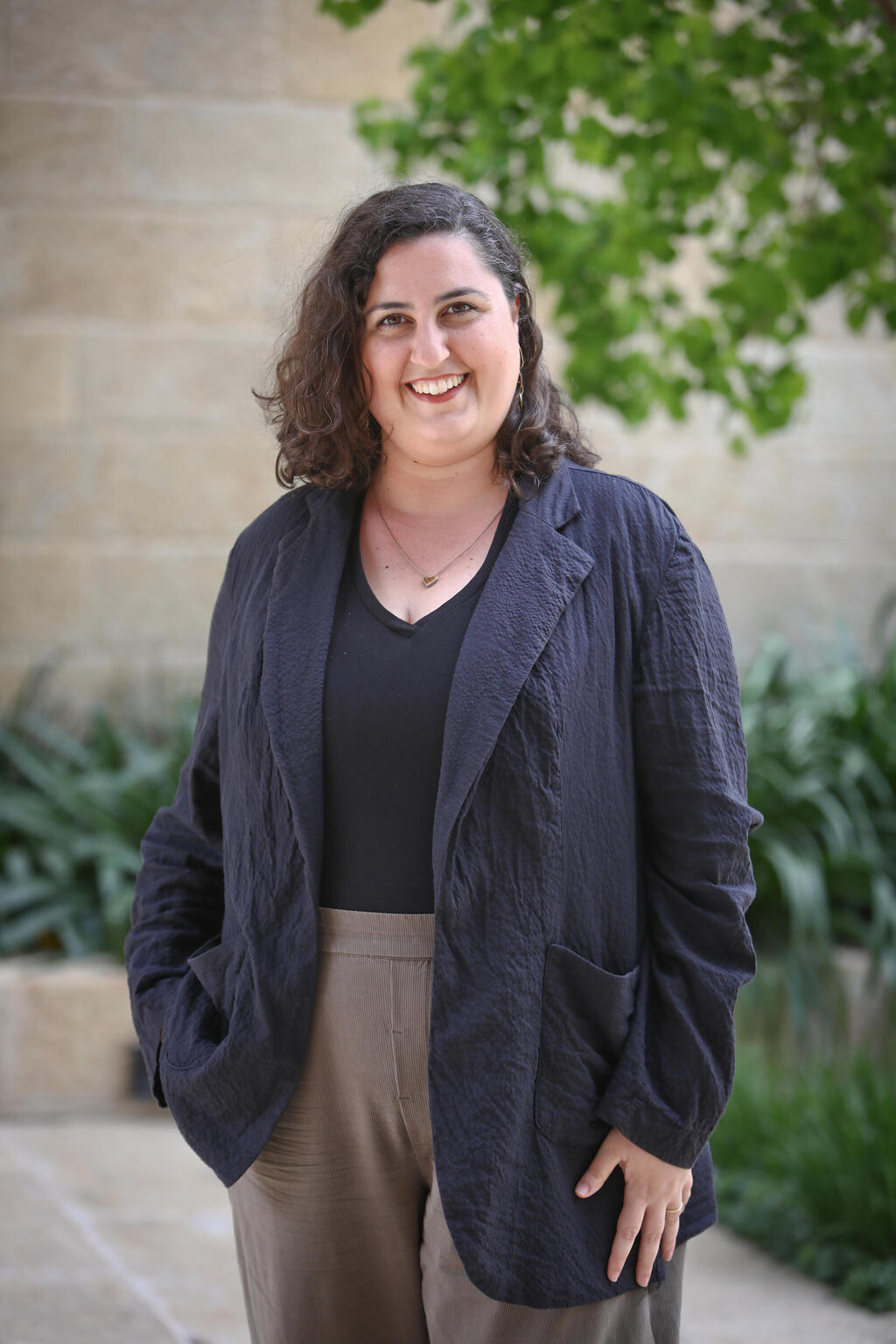
Dr. Maayan Morag
(Photo: Yonit Schiller)
She says her family is very proud of her ordination, though there were moments of hesitation along the way. “My father holds a very strong secular identity, so sometimes the resistance came from the opposite direction, asking me questions like, ‘So, are you becoming religious? Why do you need this? You have a Ph.D. in Jewish studies, why do you need the rabbinic part too?’ He doesn’t like rabbis,” she explains.
And how do you respond?
“I tell him that for me, this is a natural continuation of everything I’ve done. I pursued my Ph.D so I could truly feel at home in the beit midrash, becoming a true scholar of Jewish texts. The synagogue was a space I’d been excluded from without even realizing it. When I was younger, I discovered how much I was shut out from the beit midrash.
"Later, I realized there was this entire other space I never even knew I could belong to. So, just as I gained a sense of ownership in the beit midrash, I now feel that same ownership in the synagogue. This is my culture, this is my identity, and it matters deeply to me."
You live in Tel Aviv and work for an organization that focuses on Israel’s public education system. What is your stance on accusations of religious coercion in schools, raised by groups like the Secular Forum?
“There are indeed attempts to impose religious content in the school system and other areas of Israeli society. I think we should resist that; it’s wrong for one sector to try to impose its worldview on another.
"But it would be a real loss if secular Israelis define their entire Jewish identity only through rejection. Our job is to help people feel at home in their culture and find their place within it. This isn’t religious coercion, as there’s no attempt to make anyone switch communities or adopt beliefs. But public education must engage with identity and values.
“I think many people feel disconnected. And when political power merges with religion the way it has, it pushes people further away from their own identity, and then my father ends up telling me, ‘So, are you religious now? Are you praying now?’ No. Prayer is mine too. It’s not just someone else’s."
A pair of female rabbis
Yael Schweid, a clinical psychologist, is a longtime active member and leader of the Shir Chadash Congregation (an acronym that stands for equation, Israeli, reform) in Zur Hadassah.
She is the niece of the late Prof. Eliezer Schweid, a renowned scholar and recipient of the Israel Prize in Jewish thought. “I grew up in a very secular and very Zionist home,” she says. “My uncle held Shabbat gatherings at his home, but we didn’t. My parents were highly educated and cultured, but not spiritual or religious."
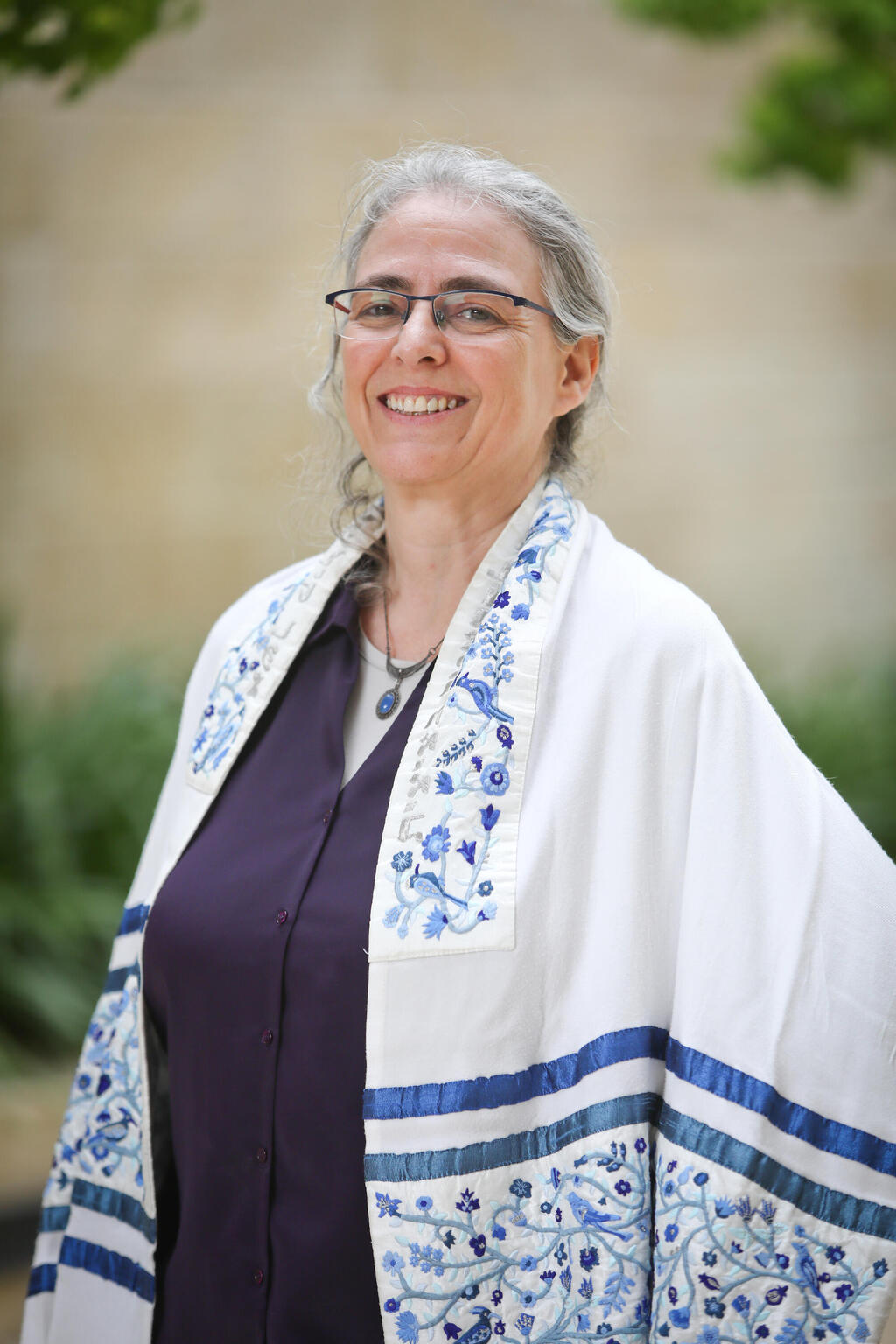
Yael Schweid
(Photo: Yonit Schiller)
Even so, from a young age, she had spiritual questions. She found no answers in Orthodoxy. “When I attended the Ashkenazi Orthodox synagogues near my home in Jerusalem, nothing related to me. The women’s section was upstairs, so you could barely see what was happening, and no one handed me a prayer book or told me where we were in the service."
During her undergraduate studies, she majored in psychology and Jewish philosophy. “I had a powerful encounter with theology and Jewish philosophy, especially Maimonides, but later I set it aside,” she says.
The real shift came when she moved to Zur Hadassah in 2000 and encountered the Reform community. “It was a revelation. It was the first time I walked into a synagogue and people greeted me, handed me a prayer book, and showed me where we were in the service. The prayers included Hebrew poetry and Israeli songs, and I felt at home. That’s where my path began, and it eventually led to the rabbinate."
Schweid, divorced and a mother of three, met her partner, Naomi Ben Ari, at Hebrew Union College. Ben Ari was ordained a year earlier. “We met here. Naomi was a second-year student, and I was in my first year.
"The second-year students were asked to welcome the new students of the first year, and Naomi was the one who welcomed me. That’s how we met,” she says. Now, both are ordained rabbis. A romantic partnership between spiritual leaders might seem unimaginable in the Orthodox world, but the Reform movement embraces LGBTQ inclusion.
What led you to become a spiritual leader?
“At some point, working one-on-one as a psychologist wasn’t enough. I felt the need to do something broader. Our society needs healing. I work a lot with post-trauma patients, but not only that. I hope to serve as a regional rabbi for the Reform movement in the Eshkol region, part of the Gaza border communities, and to take part in communal healing there.
"This is a good moment to mention that Reform rabbis in Israel earn very little. There’s no state or municipal funding, only what the reform movement can provide from its limited resources, so it’s very hard to make a living from it."
In light of complaints from many immigrants from the former Soviet Union about mistreatment and lengthy investigations about their Jewish roots by the Orthodox rabbinate, Schweid notes that in Reform communities, “They can come as they are, without apologizing for who they are, without feeling ashamed if they don’t know the prayers, and they can participate in prayer and ceremony without gender separation."
Like Schweid, Adi Segal is also a psychologist. She chairs the health committee in Kiryat Ono, where she lives, and is completing her Ph.D. in Hermeneutic and Cultural Studies at Bar-Ilan University, exploring mothers’ narratives of stillbirth within the Israeli-Jewish women.

Adi Segal
(Photo: Yonit Schiller)
Segal was raised in Kibbutz Shamir, a secular kibbutz of the HaShomer HaTzair movement in northern Israel. “My mother came from a Moroccan immigrant family. She was born in Jerusalem and attended a religious school. She met my father during her army service, and the rest is history,” she says.
Segal was drawn to spirituality and Jewish texts early on. “I remember sitting at a Geshar seminar studying Talmud with the boys. But on the kibbutz, that kind of thing had no legitimacy.”
Segal says she deepened her Jewish learning out of a sense that Israeli society is being torn apart. “I was looking for tools to get out of the therapy room. I’ve worked for years with trauma, bereaved families, terror survivors, survivors of sexual assault, and more.
"October 7 happened while I was already at the college, and I immediately joined the effort to support those impacted. My outlook is that I have a moral obligation to face suffering, to set my own needs aside and be present for others, within my limits. I’m trying to figure out how to do that in Israeli society. In the end, it’s like halacha; I’m trying to restore spirit through the practice of Reform rabbinic leadership.”
A moment for reflection
Rabbi Talia Avnon-Benveniste, Director of the Israel Rabbinical Program at Hebrew Union College, reflected on the milestone: “Each of these women comes from a rich professional background. People arrive here from incredibly diverse paths, driven by a desire to be part of repairing Israeli society. They take the brave and beautiful step of investing four, five, or six years in rabbinic studies, which are primarily composed of intensive, high-level Jewish scholarship."

Hebrew Union College, NY. "We are seen as a gateway into Jewish life"
(Photo: Alexandre Tziripouloff / Shutterstock.com)
One of the points of criticism Orthodox voices often raise against Reform Judaism is its inclusive stance toward interfaith marriage. Last year, HUC’s American campus decided to allow rabbinical students with non-Jewish partners to complete their ordination. No such policy has been adopted in Israel.
“This decision reflects an approach where, if someone is in a committed relationship during their studies, the program will seek to engage their partner, ideally encouraging a process of conversion, but it won’t make ordination conditional on the partner being Jewish,” Avnon-Benveniste explains.
“The American context is different from ours. Even there, they haven’t abandoned the ideal of a Jewish or converted partner, but they are engaging with the reality on the ground. We are seen as a gateway into Jewish life, even while some claim we are a gateway out."
In the U.S., some senior Reform rabbis have been engaged in self-criticism, particularly in light of young members of Reform congregations embracing anti-Israel and pro-Palestinian movements. During the current war, Rabbi Ammiel Hirsch stated in an interview: “We have placed too much emphasis on our universal commitment of Judaism, and perhaps we erred in not placing enough emphasis on our commitments to the Jewish people."
“We are committed to self-examination,” says Avnon-Benveniste. “That includes looking at our history and our present. It’s reflected in our education system and our training programs. There have been moments in our history when the choices we made came at a high cost. The educational decisions made in the early 2000s, for example, have consequences we’re seeing today, including how some young Jews relate to Zionism. We know how to reflect and take stock."
At the HUC ordination ceremony in Jerusalem, an honorary doctorate was awarded to the former president of the Supreme Court of Israel, Justice (Ret.) Esther Hayut
Dr. Nachman Shai, the campus dean, said: “These six new rabbis are now entering the public arena to shape the future of Israeli society, a society whose core values have been eroded. That is their next and greatest challenge. They will fight in their communities for equality, justice and peace."
The newly ordained Reform rabbis are also encouraged by signs of feminist awakening within Orthodox communities, especially the growing movement of female Torah scholars seeking rabbinic ordination. “Alongside growing extremism, there are also liberal trends within Orthodoxy,” says Rabbi Shirley Zfat Davidai.
"We’re seeing the beginning of women’s ordination even in Orthodox spaces. The Reform movement has been doing this for 100 years. You can’t stop progress. Even the ultra-Orthodox are moving forward, it’s all a matter of time. The real question is: where do people connect? Where do they find the place that’s right for them? Where do I connect as a woman? Where will my daughter find her place?"