

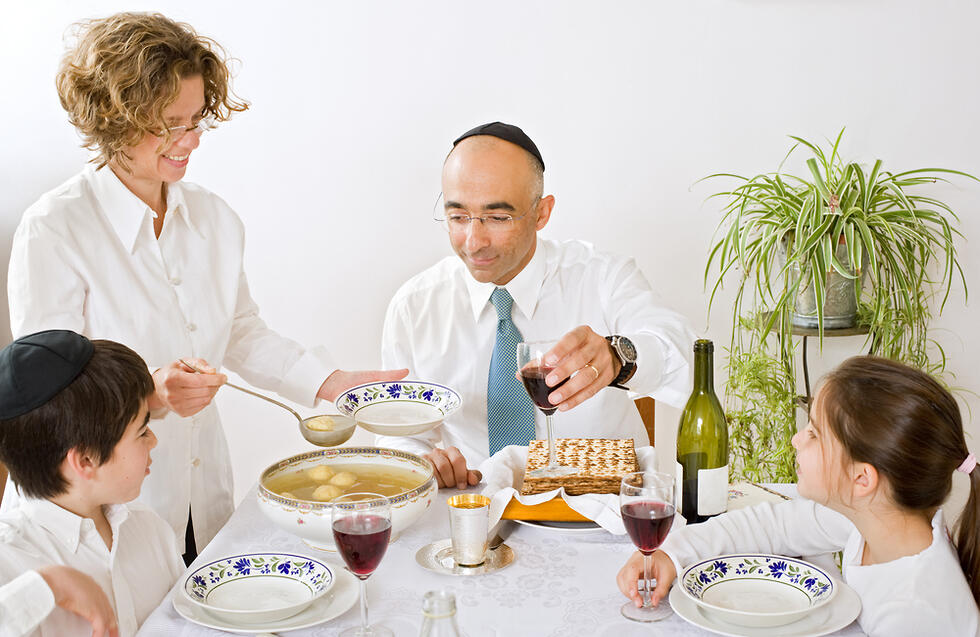
One of the central commandments of the Seder night is to tell the story of the Exodus to your children, V’higadeta L’Vincha. Not to lecture them, but to tell them a story. That matters more than we might think. Stories are not just entertainment. Stories shape our experience of reality.
If the story you were given as a child was that you're not good enough, not valuable, not lovable, then that becomes your experience of life. That becomes the lens through which you see every relationship and every challenge. Steve Jobs, when he learned he was adopted, had two stories competing in his mind. One said: "I was abandoned. I'm unlovable." The other said: "These new people chose me. They love me." He had to decide which story he was going to live with. That story he chose shaped everything that followed.
Our beliefs shape our reality. For decades, everyone believed it was physically impossible to run a mile in under four minutes. Then Roger Bannister did it in 1954. Less than two months later, someone else did it too. Within eighteen months, ten people had broken that barrier. It wasn't physical. It was a story people told themselves.
The story we tell our children at the Seder table is not a history lesson. It is cementing their identity, their sense of purpose, their understanding of who they are and why they matter. This is what has carried us through everything we have endured as a people. No other nation has this kind of empowering foundational story. There are religions and traditions across the world, yes. But a nation, a family, who collectively walked through an experience like this and made it the core of who they are? That is unique.
The story of our enslavement in Egypt and supernatural redemption teaches us the fundamentals of life. If shapes our identity, mission and values. It tells us there is a God, which means there is purpose to life and that there is meaning, even in suffering. It tells us that God loves us unconditionally. We did nothing to earn our way out of Egypt. We were simply taken out. The entire foundation of Judaism rests on the concept of unconditional love and the love that God shows us and that we are supposed to show one another.
The story gives us a mission. To be "chosen", to be “the first born” does not mean to be superior. It means carrying more responsibility.
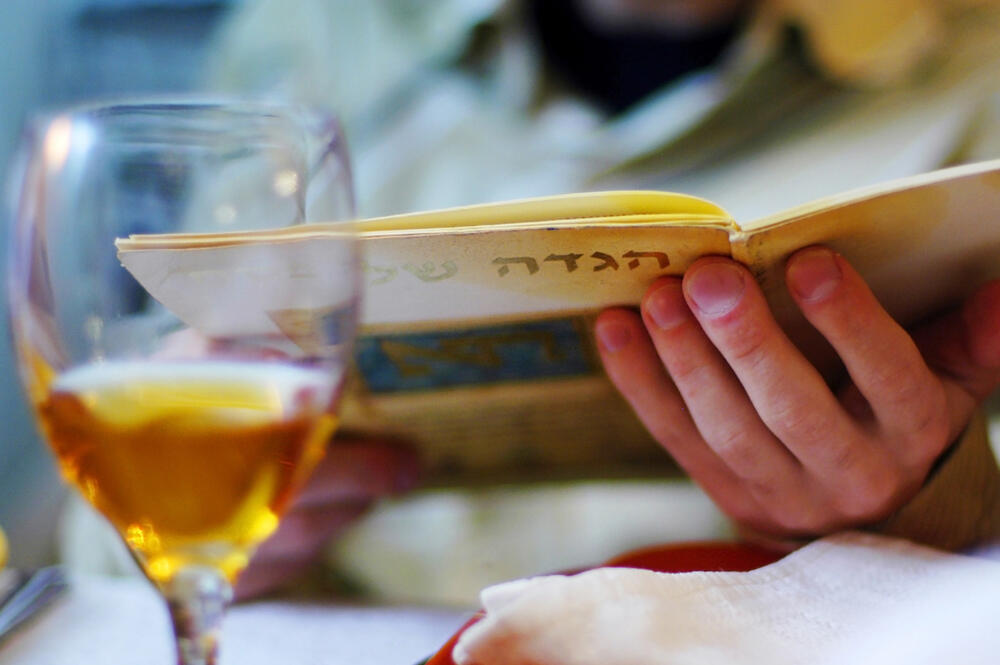
Reading the Haggadah
(Photo: ChameleonsEye / Shutterstock)
We are told to begin the story with the negative, with the reality that we were slaves, because that is what teaches compassion. The Jewish mission is to bring God consciousness to the world, not only for Jews, but for all humanity. Finally, the story tells us we have a destination. The Temple will be rebuilt, and it will stand as a beacon for all of humanity.
I think about a moment on the Aish rooftop over-looking the Temple Mount, about a month after October 7. I was speaking with Agam Berger's parents. Their daughter was still in captivity. I said to them: you are now part of the Jewish story. If the Tanakh were still being written, your chapter would be in it. You didn't choose this. You don't want this. But here you are.
I reminded them of Esther, taken into the palace against her will. She didn’t choose or want that either, and she could have played the victim. She could have let her circumstances define her entirely. But she didn't. She looked for the reason. She found her purpose inside the pain. It was the same with Yosef, sent down to Egypt by his own brothers. He could have been consumed by bitterness. Instead he said: God sent me here.
There is a field in psychology called narrative therapy. The core idea is that the narrative you give to your life creates your experience of life. If your narrative is that you are a victim, victimhood becomes your identity. If your narrative is that there is meaning in what you are going through, that shifts everything.
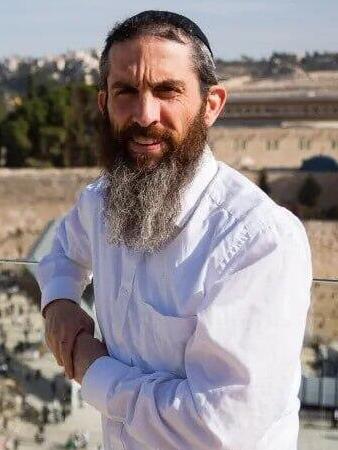 Rabbi Dov Ber Cohen Photo: Courtesy
This is exactly what Judaism does at the Seder. It gives us a narrative. There is a God. God cares about us. God took us out of Egypt for a purpose. We have a mission to spread God’s light in the world and we know how the story ends. It ends with peace, not only for the Jewish people, but for the entire world.
Standing on that rooftop with Agam's parents, looking out at the place where the Temple once stood, I said: I know this is a time of destruction. But at the end of it all, it is going to work out. We have immense resilience as a people, and that resilience comes from the story we have been telling our children for over three thousand years. Agam's mother said to me: "I know the war is not over. But you have given me strength."
That is the power of a story. That is what happens at the Seder table when you pass it on to the next generation. You are not just recounting history. You are giving your children an identity, a purpose, and the resilience to find meaning inside whatever the world throws at them.
This Passover, I encourage you to ask yourself: what stories are we telling ourselves? What stories are we teaching our children? Those stories will create their reality. Choose the right story.
- Rabbi Dov Ber Cohen is an author, a senior lecturer at the Aish World Center in Jerusalem and founder of Living in Tune: Authentic Jewish Mindfulness which offers online courses and in-person retreats