

An exceptionally well-preserved ritual purification complex dating to the late Second Temple period has been uncovered at the foot of Jerusalem’s Temple Mount, near one of the main ancient entrances to the compound.
The complex was discovered near the Triple Gate, the easternmost of the Huldah Gates, during archaeological excavations in the Ophel, an area stretching below the southern wall of the Temple Mount in Jerusalem’s Old City.
The purification complex discovered at the foot of the Temple Mount
(Photo: East Jerusalem Development Company)


The excavations are being led by Prof. Uzi Leibner and Prof. Orit Peleg-Barkat of the Hebrew University of Jerusalem’s Institute of Archaeology. Its location and monumental character suggest that the complex was intended to serve the tens of thousands of Jewish pilgrims who came to Jerusalem and underwent ritual purification before entering the Temple.
At the center of the complex, which was built in the early first century CE, is a large plastered pool measuring about 12 by 9.5 meters, with steps descending to its floor from all four sides. Northwest of the pool stands an impressive ashlar-stone building containing four rooms, three of which were identified as large public ritual baths. The entire complex covers about 280 square meters.
One of the ritual baths survived in extraordinary condition to its full height of 4.2 meters, including the stone vault above it and the shaft through which water was supplied. The complete preservation of a Second Temple-period structure from its foundations to its roof is extremely rare in Jerusalem, particularly at such a central and historically significant location close to the Temple Mount.
Gallery
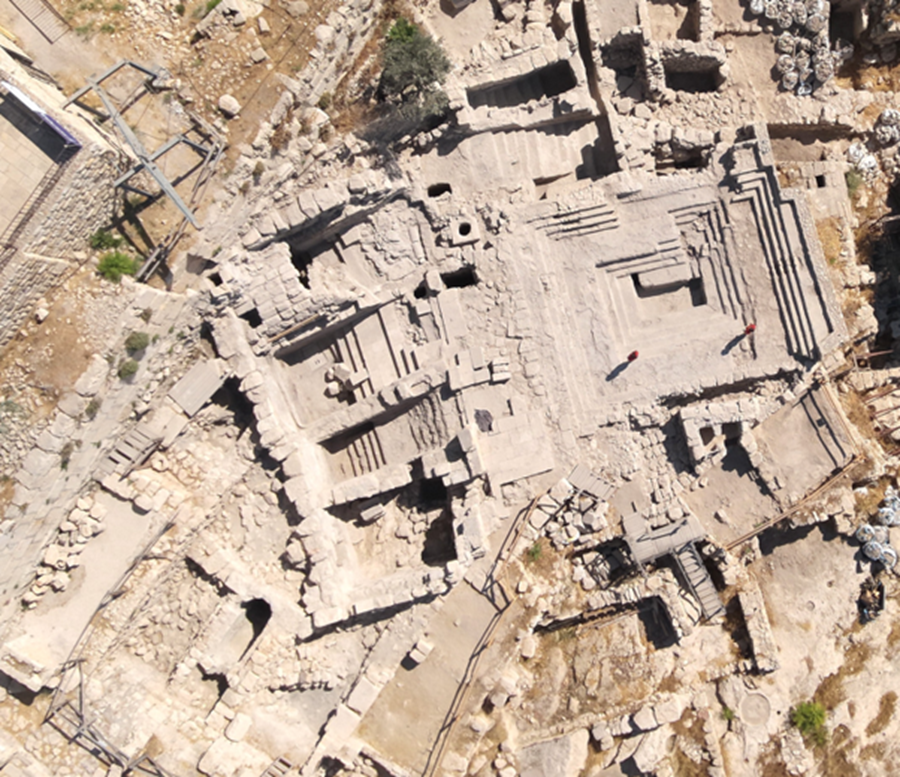
The monumental purification complex discovered at the foot of the Temple Mount
(Photo: Emil Sadikov)
Two of the ritual baths contain carefully cut ashlar steps. Between the large pool and the ashlar building is a forecourt paved with large, finely dressed stone slabs.
“The discovery of a monumental ashlar structure devoted entirely to purification, located at the foot of the Temple Mount and close to one of its gates, is unprecedented,” Leibner and Peleg-Barkat said.
“The character of the complex goes directly to the heart of our research into the archaeology of pilgrimage during the Second Temple period and the questions we are examining: How was the area surrounding the Temple Mount designed to regulate the many pilgrims arriving at the Temple Mount compound in Jerusalem, and what activities and rituals took place near its gates?”
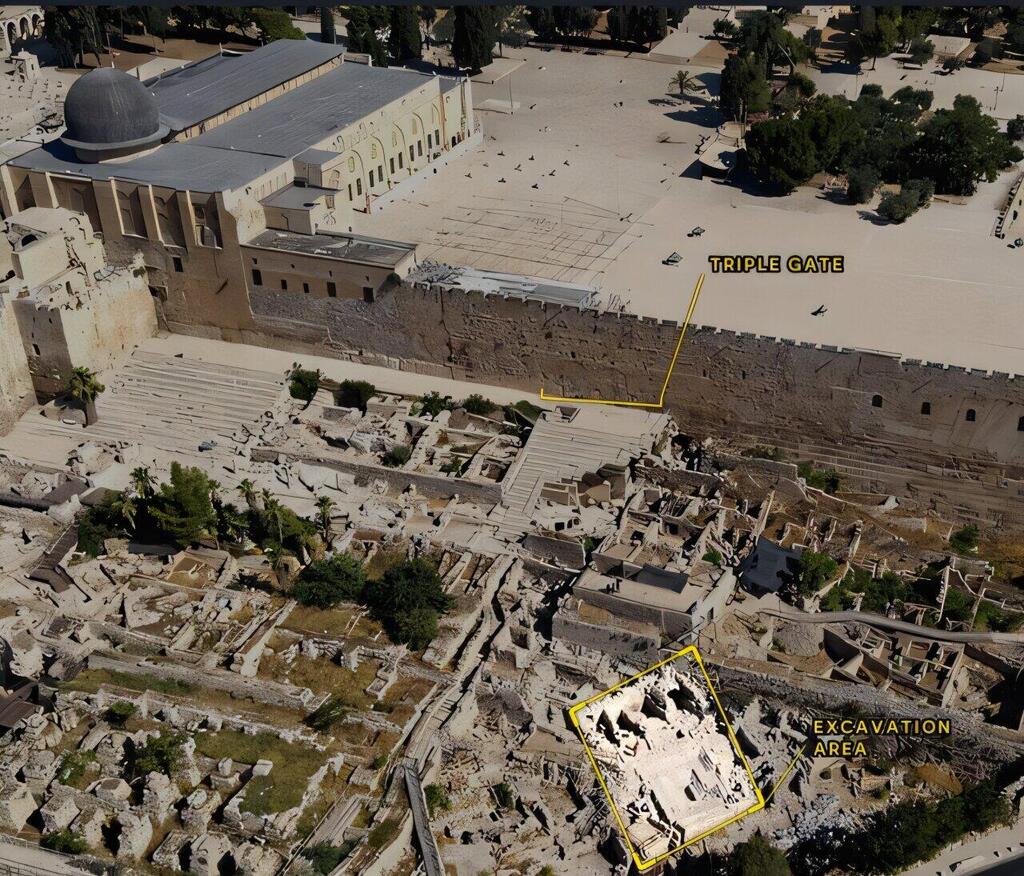
The monumental purification complex at lower right, the steps leading to the Triple Gate and Al-Aqsa Mosque at upper left
(Photo: Emil Sadikov)
The ritual baths and pool were connected to an extensive drainage system made up of channels that in some places survived to a height of more than two meters. The channels carried water from the complex toward the Kidron Valley.
Their substantial dimensions indicate that very large quantities of water flowed through the system and suggest that the ritual baths and pool received their water from a permanent source of flowing water, possibly a branch of the aqueduct that supplied the Temple Mount during the Second Temple period.
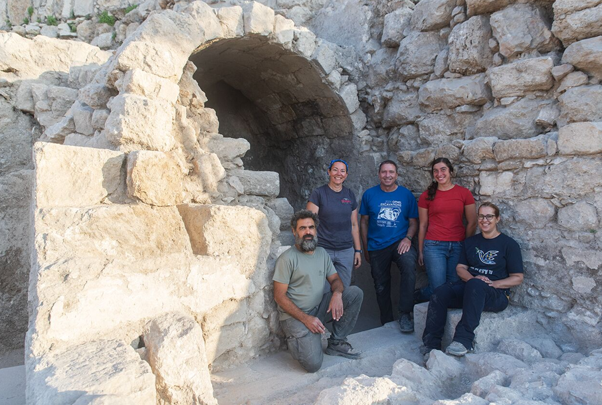
Members of the excavation team at the entrance to one of the ritual baths discovered at the complex
(Photo: Aubrey Mercado)
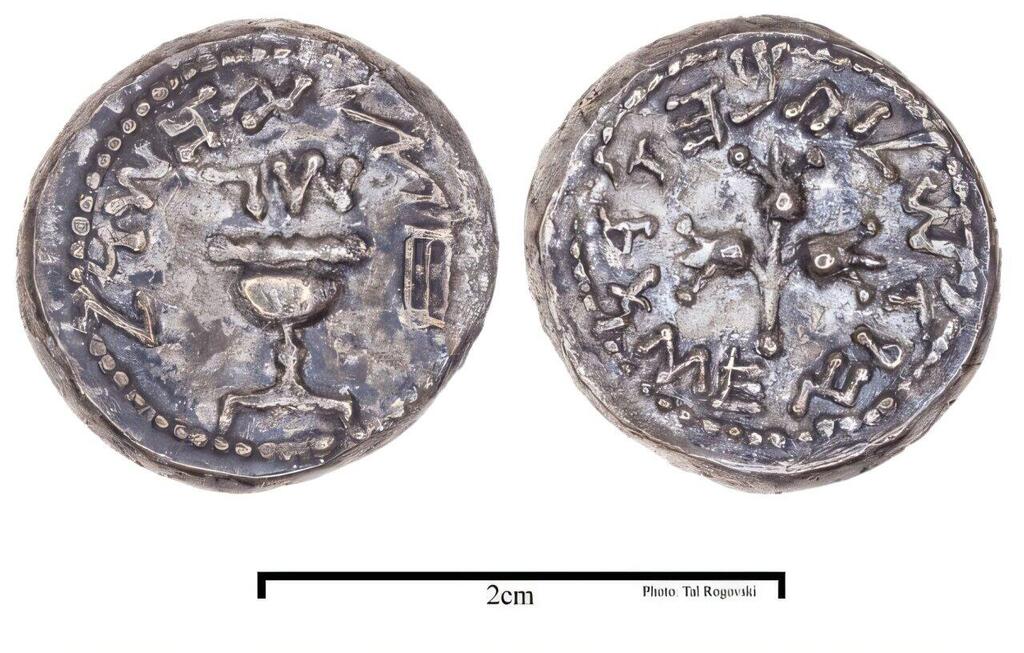
A silver half-shekel from the third year of the Great Revolt
(Photo: Tal Rogovsky)
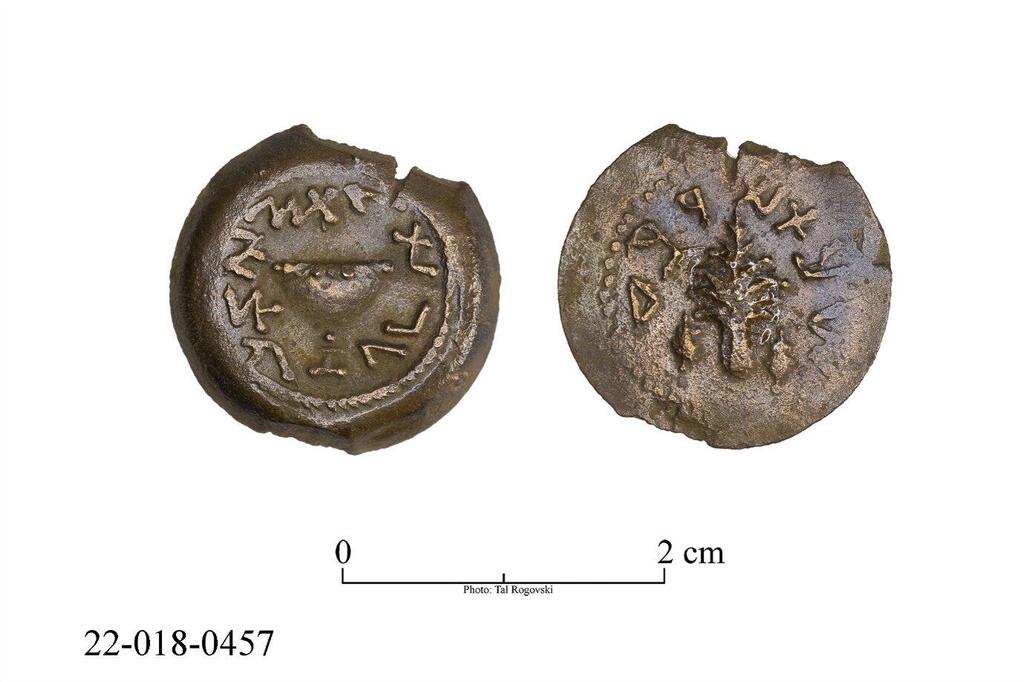
A bronze coin from the fourth year of the Great Revolt
(Photo: Tal Rogovsky)
The complex met a dramatic end in the summer of 70 CE, when Jerusalem and the Temple were destroyed by the Romans. Evidence of the destruction includes dozens of coins from the period of the Great Revolt that were found on the floors of the rooms and inside the destruction layer.
The excavations also revealed that the monumental complex was not the first public purification facility built at the site. Beneath it, the Hebrew University expedition uncovered remains of an earlier public complex, also built of ashlar stone and containing a large ritual bath, apparently dating to the first century BCE.
The discovery points to a long history of ritual purification activity in this area adjacent to the Temple Mount.
The find is the result of five excavation seasons in the Ophel involving students and volunteers from Israel and around the world. The excavations were conducted by the Hebrew University’s Institute of Archaeology in cooperation with the Armstrong Institute of Biblical Archaeology and funded by the Israel Science Foundation, the Armstrong Institute and the Hertog Center for the Archaeological Study of Jerusalem.
The excavation site is located in the Jerusalem Walls National Park, managed by the East Jerusalem Development Company. The excavations that led to the discovery also received assistance from the Jerusalem Municipality and Israel Police.