


“Messianism is not a dirty word,” said Maj. Gen. David Zini in his farewell address to the IDF, ahead of his appointment as head of the Shin Bet security agency. “We are all messianic,” he added, “messianic like David Ben-Gurion, messianic like the founding fathers of the nation... Tell me what messianism means, and I’ll tell you if I’m a messianist.”
So what exactly is messianism? According to Immanuel Etkes, professor emeritus in the Department of Jewish History at the Hebrew University of Jerusalem, the roots of messianic thought lie in the Bible. “The basic concepts to begin with are exile and redemption,” he explains.

“The God of Israel took the people out of Egypt, gave them the Torah and the Land of Israel, and made a covenant with them. Because the people broke the covenant, the punishment was destruction and exile. Redemption is God’s reentry into history to rescue the people of Israel from the state of exile.”
“There is no binding framework in Judaism that defines what redemption must be,” Etkes continues. “Over the generations, many different and even peculiar ideas have emerged on this issue. The Bible includes prophecies that describe redemption in terms of economic prosperity and political stability, focused solely on the people of Israel. But there are also prophecies with universal dimensions: ‘The wolf shall dwell with the lamb’ (Isaiah 11:6) describes a change in the natural order, while ‘They shall beat their swords into plowshares... Nation shall not take up sword against nation’ (Isaiah 2:4) refers to global peace. Redemption also has a spiritual aspect: ‘For out of Zion shall go forth the law, and the word of the Lord from Jerusalem’—meaning the God of Israel is accepted by all nations.”
How did the concept of messianism evolve in later generations?
“Professor Gershom Scholem, who published a seminal essay on the subject, argued that two main trends have shaped the development of messianic thought over the centuries. One is restorative, aimed at returning to a lost idealized past, essentially a restoration of former glory. The other is apocalyptic, involving dramatic upheavals in the order of the world and even the laws of nature.”
Was this discussed in early rabbinic literature?
“During the Mishnaic and Talmudic periods, there was extensive debate about when redemption would come and who the Messiah might be. One of the central questions the sages wrestled with was why redemption is delayed. One view held that it depends on the people of Israel repenting. Another view claimed that if the people do not repent, God will bring upon them such suffering that it will compel them to repent.”
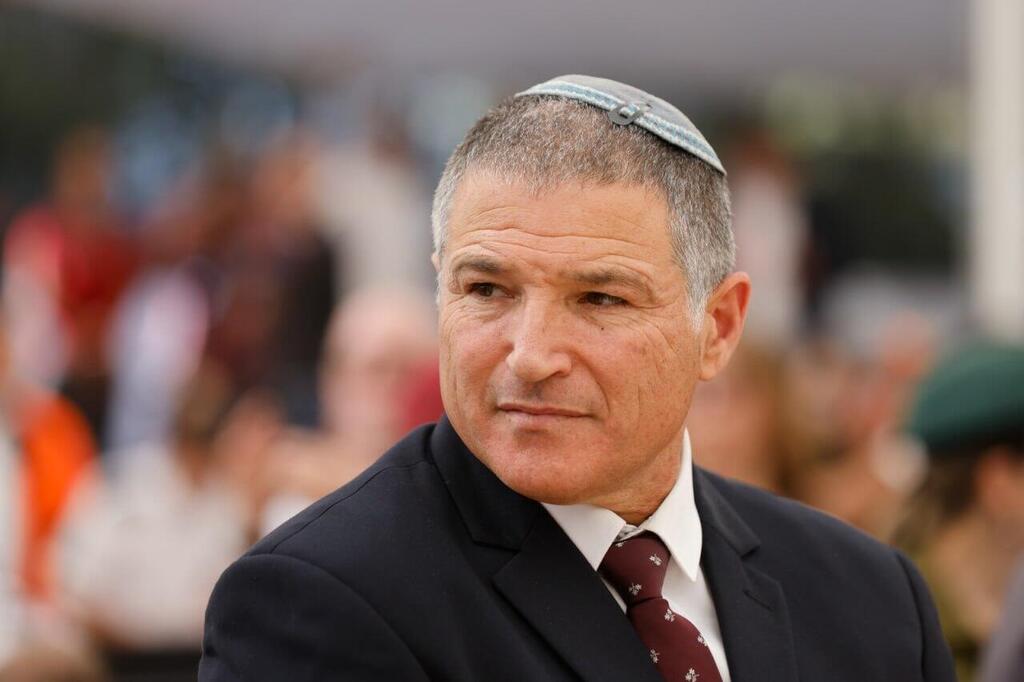
Shin Bet Director David Zini
(Photo: Olivier Fitoussi)
Etkes refers to a verse in Isaiah—‘I am the Lord; in its time I will hasten it’—and explains the rabbinic interpretation from Tractate Sanhedrin: “If they are worthy—I will hasten it; if not—in its time.” In other words, there is a fixed time for redemption, but if the people return to God, it may come sooner.
Was anyone able to bring structure to these ideas?
“One who attempted to systematize this topic was Maimonides—Rabbi Moses ben Maimon, the great 12th-century halachic authority. In his Mishneh Torah, he wrote that the Messiah will be a king from the House of David who studies Torah and compels the people of Israel to follow it, a king who fights Israel’s enemies. If he succeeds in freeing Israel from foreign rule, gathers the exiles and rebuilds the Temple, then he is the Messiah.”
Did that definition remain unchanged?
“Not at all. In later generations, thinkers continued to expand on the concept of redemption in ways that went beyond Maimonides' view. A striking example is Rabbi Nachman of Breslov, who told his followers that the Messiah would be a musician, one who composes melodies so beautiful that all the kings of the world would be captivated by him.”
Between Sabbatai Zevi and the Lubavitcher Rebbe
According to Etkes, it's important to distinguish between three concepts: messianic belief, messianic fervor and a messianic movement.
“Belief in the Messiah persisted for centuries as an abstract idea,” he explains. “Messianic fervor arises when historical events cause messianic expectations to intensify. For example, following the expulsion from Spain in 1492, a wave of messianic excitement broke out, with growing hopes that redemption was imminent.”
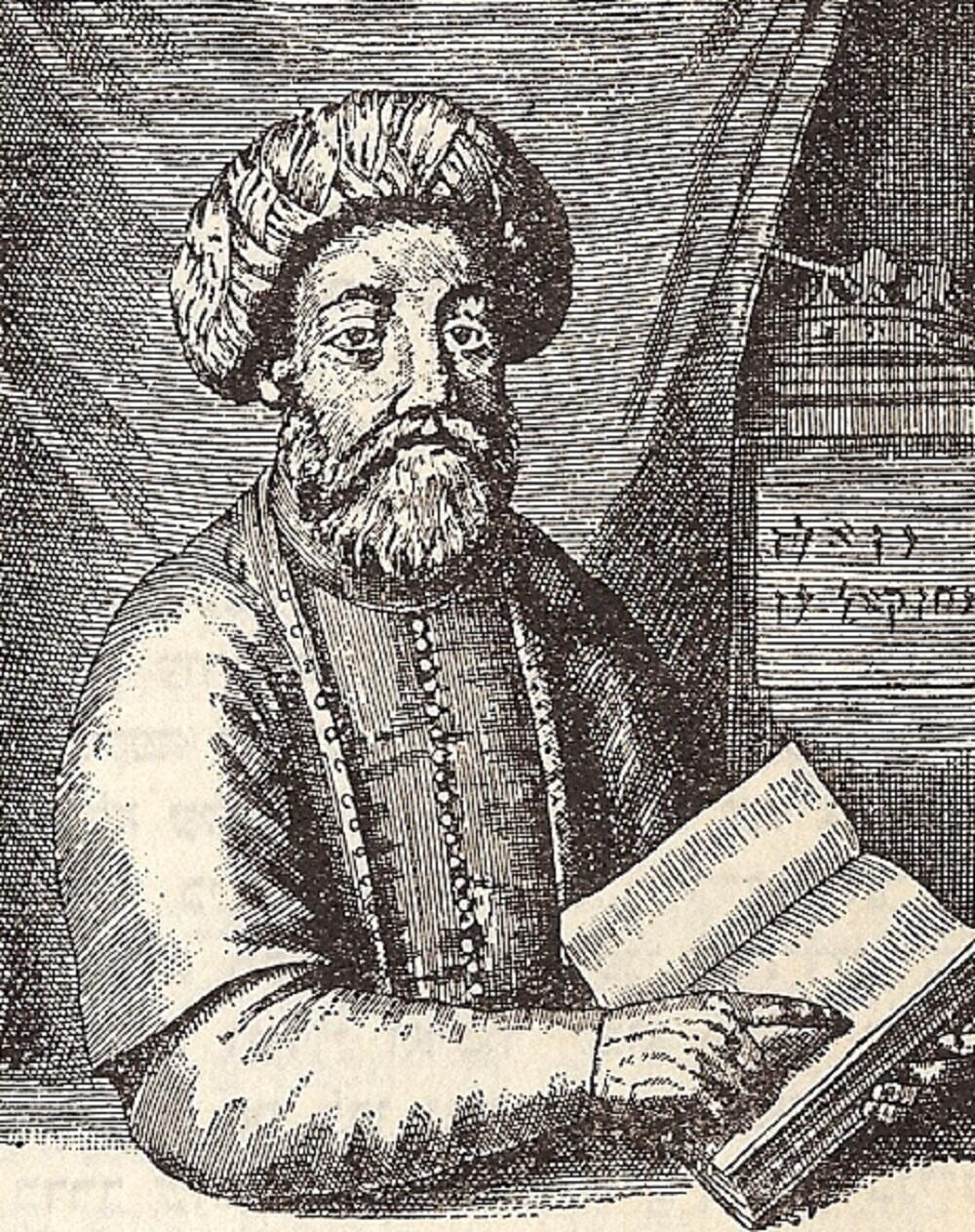
Sabbatai Zevi
What defines a messianic movement?
“When there is a specific person who is identified as the Messiah. The clearest example in Jewish history is the Sabbatean movement. In 1665, belief that Sabbatai Zevi was the Messiah spread rapidly throughout the Jewish world. The rumors were accompanied by tales of miracles and of warriors from the Ten Lost Tribes beginning to conquer the Land of Israel.”
Sabbatai Zevi was born in Izmir, and the center of the Sabbatean movement was located in Jewish communities within the Ottoman Empire. “Many believed that at any moment, Sabbatai Zevi would march to the sultan, remove the crown from his head and place it on his own, becoming ruler of the empire,” Etkes notes.
Eventually, however, the Ottoman authorities lost patience with the messianic frenzy. “Sabbatai Zevi was summoned to the Sultan’s palace and given an ultimatum: convert to Islam or be executed. He chose conversion.”
While most of his followers accepted that redemption had dissolved, a few hundred converts followed him into Islam. Among them, some began developing the radical idea that the Messiah’s apostasy was a necessary stage in the redemptive process.
“They even claimed that in the messianic age, traditional prohibitions would be reversed into commandments,” Etkes explains. “Thus emerged an underground Sabbatean sect, Jews who outwardly adhered to halacha but secretly performed ritual acts that subverted Jewish law, including transgressions of serious moral and sexual boundaries.”
A messianic storm swept through the Jewish world once again in the 18th century, this time around the figure of Jacob Frank (1726–1791), who drew inspiration from followers of Sabbatai Zevi in the Ottoman Empire and saw himself as Zevi’s reincarnation.
“He gathered around him a circle of followers in Poland who secretly conducted Sabbatean-style rituals,” says Prof. Etkes. “In early 1756, a group of Frankists was caught during one such ceremony. They were arrested, interrogated and admitted to committing serious transgressions, justified by the Sabbatean belief that in the messianic age, sins become mitzvot.
“After the rabbis of Brody placed a ban on the group, the Frankists turned to Mikolaj Dembowski, the bishop of Kamianets-Podilskyi, seeking his protection. Dembowski organized a public disputation between Frankist representatives and local rabbis, after which he ordered the public burning of volumes of the Talmud in the town square.”
In 1759, Frank and his followers formally approached the Catholic Church in Poland to request conversion to Christianity. At the same time, they sought another debate with Jewish leaders, this time to “prove” the infamous blood libel, the false claim that Jews used Christian blood in baking Passover matzah. The Church-sponsored debate took place in Lviv, and thousands of Frankists were subsequently baptized.
“But for the Frankists,” Etkes explains, “Christianity was little more than a facade. In practice, they continued to hold their original beliefs and to perform their rituals in secret for decades. The entire episode, including the Church-sponsored disputations, the burning of the Talmud and the ongoing battle against the Frankists, left a deep and painful mark on Polish Jewry.”
In the wake of the trauma surrounding Sabbatai Zevi, leading rabbis developed a deep suspicion toward messianism that lasted for centuries. “That didn’t stop Chabad from identifying the Lubavitcher Rebbe, Rabbi Menachem Mendel Schneerson, the seventh and last leader of the movement until his death in 1994, as the Messiah in the early 1990s,” Etkes notes.
However, he is quick to clarify that the comparison has its limits: “There is a major difference between Chabad and Sabbateanism. Chabad followers continued to strictly observe halacha and actively promoted Jewish values around the world.”
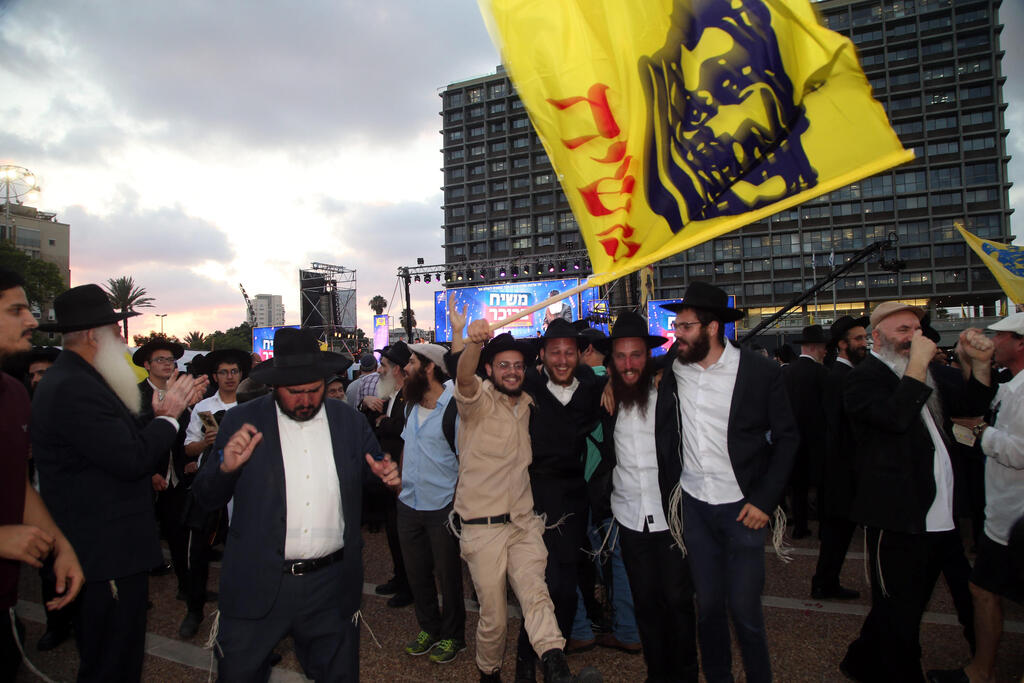
Chabad hasids flying a 'Messiah' flag
(Photo: Yariv Katz)
The Rebbe never explicitly declared himself the Messiah, but according to the meshichistim, a faction within Chabad who believe he is, the Rebbe also never denied the claim outright. They believe that on the 3rd of Tammuz 5754 (June 12, 1994), the date of his death according to the world, the Rebbe did not truly die but merely disappeared from view, and that he is still alive and will one day return as part of the redemptive process. It’s important to note that not all Chabad followers share this belief.
The impact of the Six-Day War
Prof. Etkes links modern expressions of messianism to the Gush Emunim movement and the religious-Zionist ultra-Orthodox stream. “In the weeks leading up to the Six-Day War, there was a genuine sense of existential dread; people feared a second Holocaust,” he recalls.
“Then, within just one week, there was a stunning military victory. In my book Messianism, Politics and Halakha: Religious Zionism and the Territories, 1967–1982, I describe how, the day after the war, religious-Zionist rabbis and thinkers claimed that a miracle on the scale of the Exodus had occurred. And then they took it a step further and asked: ‘What is God trying to tell us through these miracles?’”
And what was their answer?
“That this was redemption. That these are the Messianic days.”
But the idea of Atchalta DeGeulah, the beginning of redemption, had already surfaced with the establishment of the State of Israel in 1948. “At that time, there was a debate within religious Zionism about whether the founding of the state constituted redemption,” Etkes explains.
“On one hand, Jewish sovereignty had returned to the Land of Israel. On the other, most of the country and its leadership were secular. The solution was a kind of compromise: the prayer for the welfare of the state, written in that era, referred to Israel as 'the beginning of the flowering of our redemption,' a hesitant formulation.”
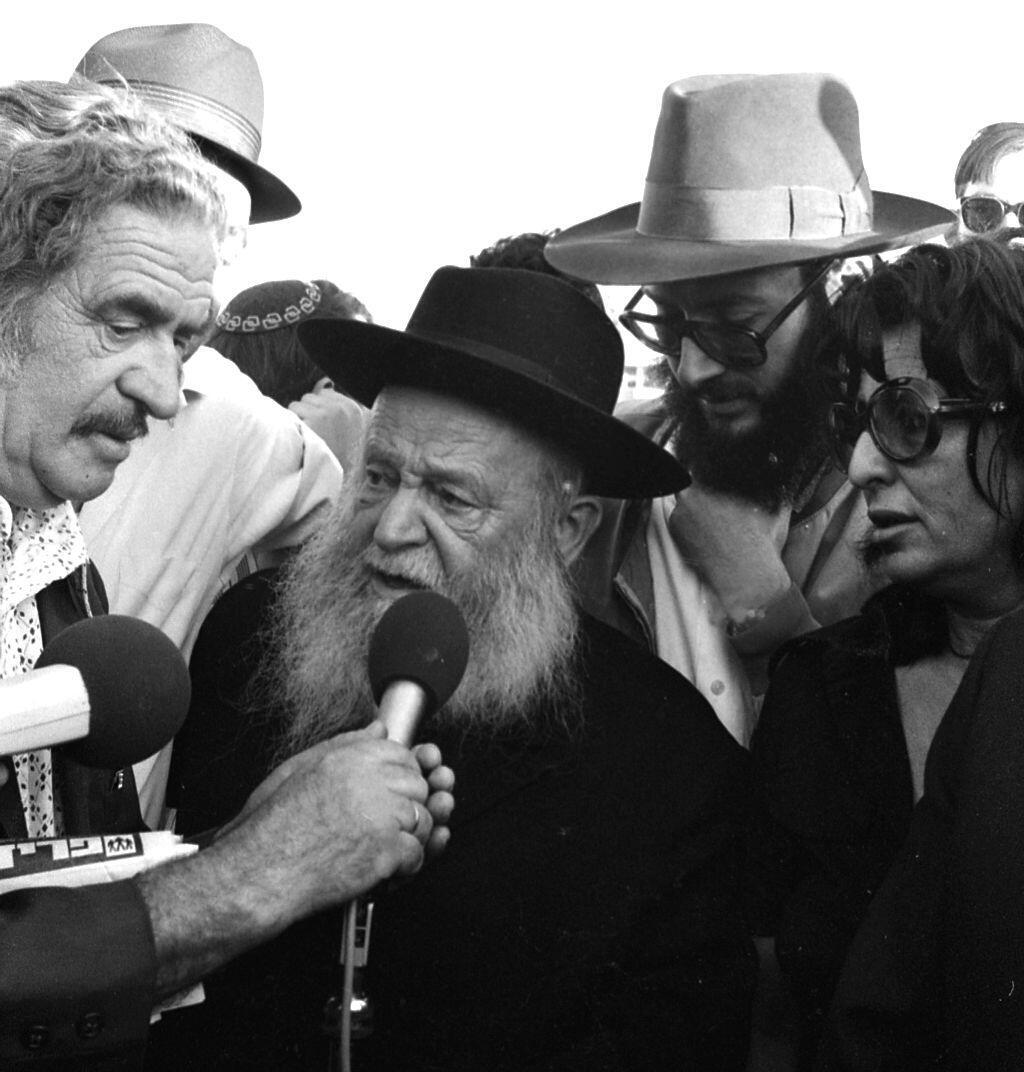
Rabbi Tzvi Yehuda Kook
(Photo: National Library)
In contrast, Rabbi Tzvi Yehuda Kook, head of the Mercaz HaRav yeshiva and son of the first Ashkenazi chief rabbi, Rabbi Abraham Isaac Kook, declared the very next day that the state was indeed the redemption. “But between 1948 and 1967, both he and his yeshiva were on the margins of religious Zionism,” Etkes notes.
“That changed dramatically after the Six-Day War. With the surge of messianic enthusiasm, Rabbi Tzvi Yehuda and his students quickly became the dominant intellectual force within religious Zionism. His view was deterministic: God was directing the process of redemption, and no internal or external actor, Israeli or international, could stop it. Still, it was incumbent upon us to actively advance the process. Since a core component of redemption, in his view, was Jewish control over the Land of Israel, it was necessary to promote settlement in all parts of the land and to reject any political agreement involving territorial compromise.”
Who translated this vision into action?
“The movement that implemented this vision was Gush Emunim. It was founded only after the Yom Kippur War, against the backdrop of the deep crisis the war triggered in Israeli society. Many people lost faith in the political and military leadership. The founders of Gush Emunim claimed that this widespread despair and disillusionment stemmed from a lack of faith.
“They argued that secular society had lost its way, and that the political leadership was weak and defeatist. Those who believed Israel was in the midst of a redemptive process, they insisted, had a duty to lead. That’s how the first settlement initiatives in the West Bank began, an effort to create facts on the ground in opposition to government policy, and with the aim of preventing any peace agreement that would involve territorial concessions.”
A time of miracles?
Prof. Etkes acknowledges that October 7 triggered a deep crisis within Israeli society, but he stresses a key distinction: “The belief that the entire Land of Israel should be part of the State of Israel has taken root in the mainstream of religious Zionism over the past several decades. But that position is usually justified on security grounds, not through messianic ideology.”
He explains that “the segment of society still keeping the flame of messianism alive is the ultra-Orthodox nationalist camp, Hardalim, represented in the Knesset and the government by the Religious Zionist Party. This helps explain the expressions of excitement in those circles following the outbreak of war.”
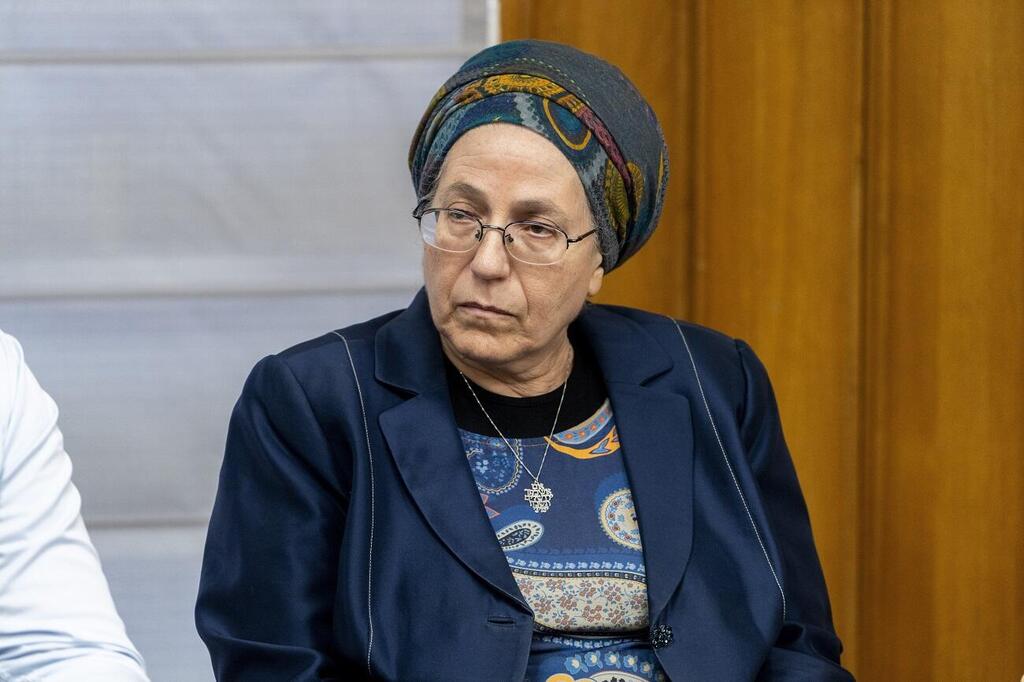
Minister Orit Strock
(Photo: Shalev Shalom)
Etkes points to statements by Minister Orit Strock, who was quoted as saying the current moment is “a time of miracles.” He interprets this as follows: “The so-called miracle is that now everyone finally understands there’s no one to talk to, no partner for peace. That opens the way to evacuate Gaza of its Arab residents and build Jewish settlements there. That, for them, is the realization of a messianic vision: that the entire Land of Israel must be under Jewish control.”
And what about Maj. Gen. Zini’s claim that even Israel’s founding leaders were messianic?
“It’s important to remember that Ben-Gurion and most of the Zionist leadership were secular Jews who did not see themselves as fulfilling a divine plan. The redemption they envisioned and worked for was a product of human initiative and effort, not a supernatural process.”