


A Jewish musical ensemble delivered a historic performance in Hebrew during Australia Day celebrations, singing at a nationally broadcast concert held at the foot of the Sydney Opera House.
The group, part of the Shir Project, sang “Od Yavo Shalom Aleinu” (“Peace Will Come Upon Us”) by Israeli singer Mosh Ben Ari and the band Sheva. Midway through, the Hebrew lyrics seamlessly transitioned into “I Am Australian,” a beloved folk anthem from 1987 often described as the country’s unofficial national song. The moment was widely praised and marked the first time Hebrew was sung onstage at the country’s official national holiday concert.
Shir Project performs in Sydney


The performance stood out not only musically, but emotionally. Ben Adler, 33, a violinist and director of the Shir Project, said the concert marked a personal and communal milestone. “I stood in that exact spot on October 9, 2023, when pro-Palestinian protesters burned an Israeli flag and shouted antisemitic slogans. It was frightening,” Adler said. “Tonight, we received love in the same place. It was our chance to respond to hate with our love.”
The ensemble’s appearance came just weeks after a deadly terrorist attack at Sydney’s Bondi Beach, where 15 members of the city’s Jewish community were killed. “We all knew people who were murdered,” Adler said. “They were in our thoughts during the performance. We prepared thoroughly, honored ourselves as musicians, and brought pride to our people as Jews. It was a very important moment for us.”
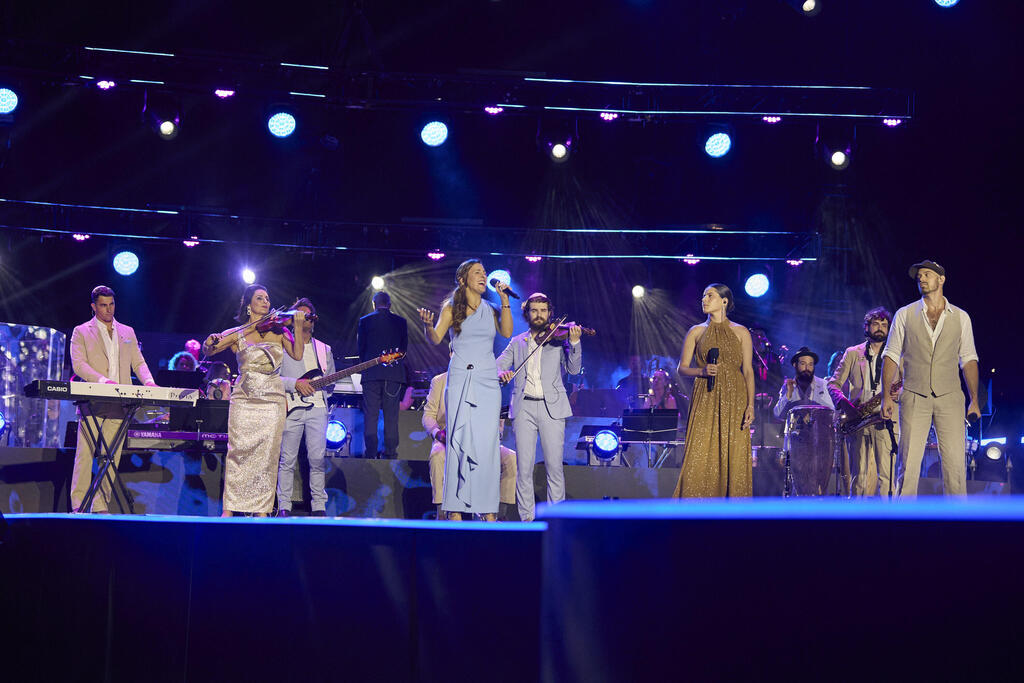
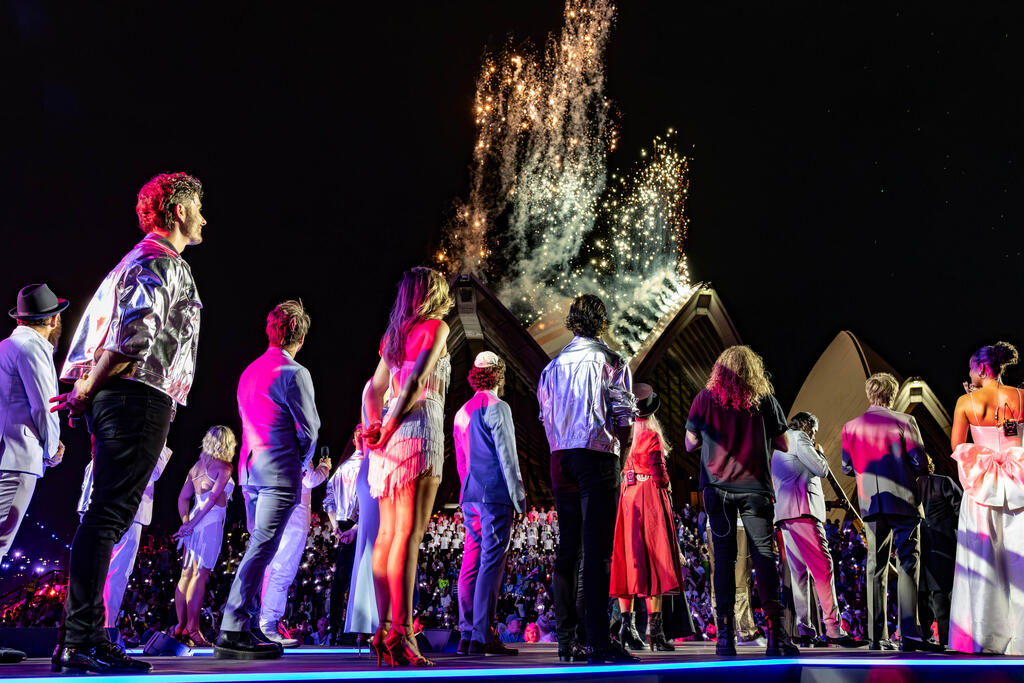
(Photo: Scott Ehler)
The Shir Project was launched in Sydney in 2022 as a revival of a previous initiative, “Shir Minds,” which operated between 2010 and 2020 and had hosted annual Jewish music festivals. After going dormant during the COVID-19 pandemic, Adler led efforts to restart the project with a new focus on strengthening Jewish identity through music—especially after the outbreak of the Israel-Hamas war in 2023.
The group’s first major performance took place in 2024 at a municipal cultural center that had previously hosted pro-Palestinian demonstrations. Adler described the long, difficult process of obtaining city approval. “We ended up announcing the location just hours beforehand to avoid interference,” he said.
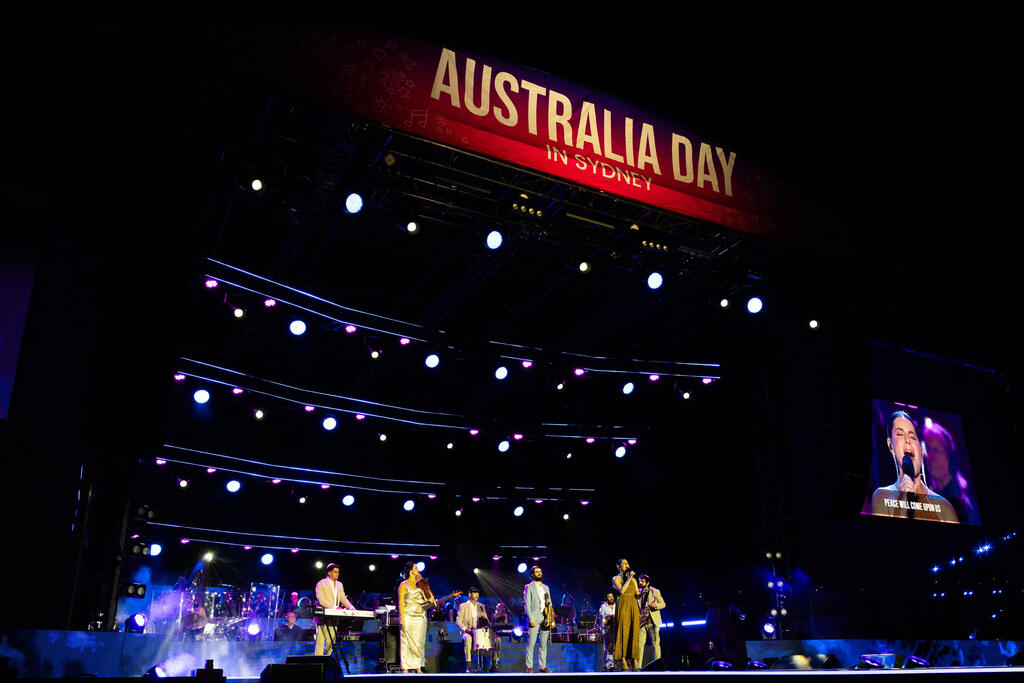
(Photo: Scott Ehler)
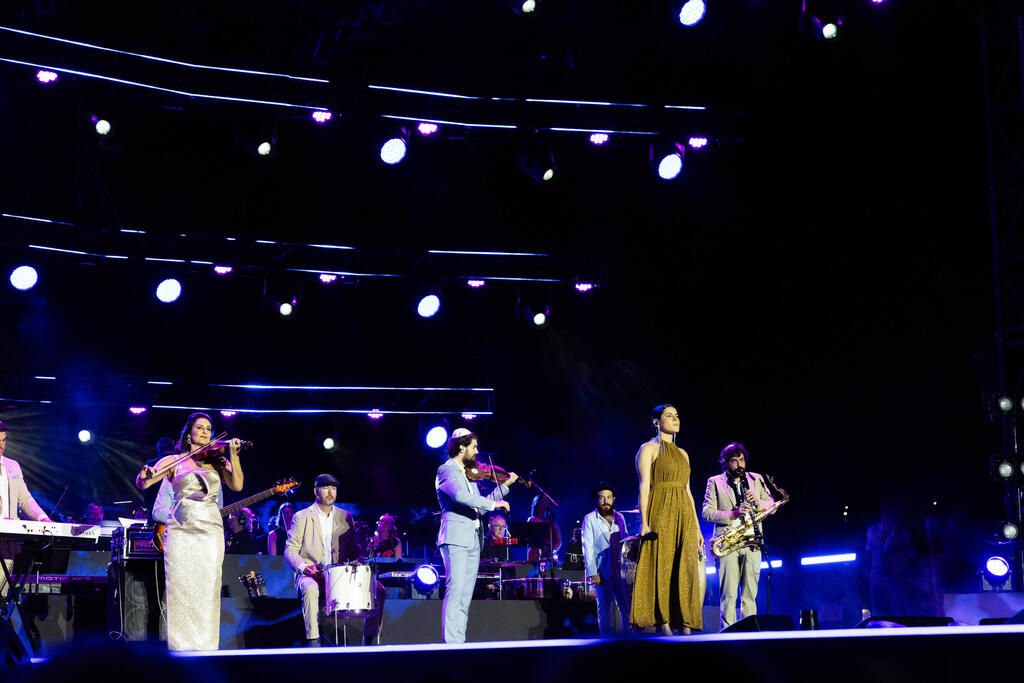
(Photo: Scott Ehler)
A year later, the performance drew 1,800 members of the Jewish community. “This time, we publicized the event and its location openly, and there were no protests,” Adler said. “We realized our project isn’t just a concert. It’s something deeper for the community. It’s uniting Australian Jews—especially now, as we’re performing in Melbourne as well.”
In the days following the Bondi Beach attack, the New South Wales government invited the Shir Project to perform at a memorial near the site. The ensemble introduced a new musical fusion—blending a Hebrew song with “I Am Australian.” “It was our biggest concert ever, with 20,000 people in the audience,” Adler said. “We sang ‘Ma’oz Tzur’ and then transitioned into the Australian song. The crowd was surprised and moved by the combination.”
The reaction was immediate. A day later, a New South Wales government official contacted the group and asked them to reprise the bilingual performance at the Australia Day concert. Wanting to avoid repeating the same Hanukkah song, the group chose a different Hebrew piece centered on peace and unity. “It was the right song at the right time,” Adler said.