

Yehuda Aharon Widawski, a Holocaust survivor who devoted decades of his life to restoring Jewish cemeteries in Poland, has died at the age of 107. He was Israel’s oldest Holocaust survivor.
In an interview with ynet seven years ago, Widawski described what he considered his revenge on the Nazis: “My revenge on the Nazis is that they lost, and we have the State of Israel. We are free and strong, and no one will ever be able to destroy us again.”
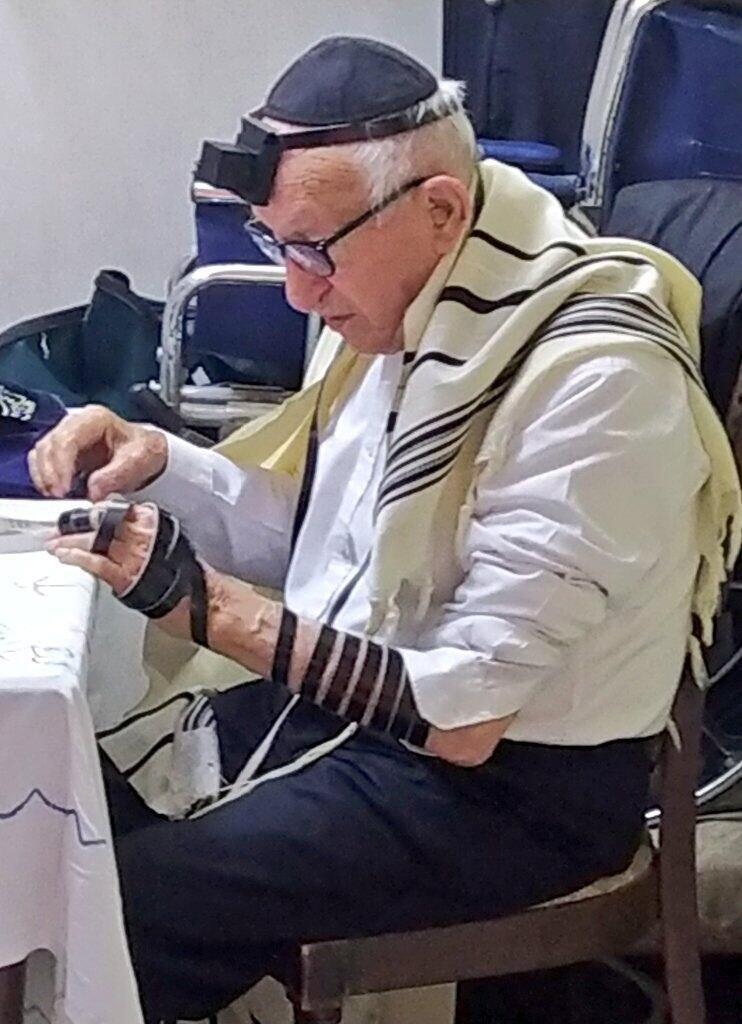
Widawski was born in 1919 in the Polish town of Turek, near Lodz, into a religious Zionist family. His father, Abraham, was a merchant, while his mother, Dobrish-Leah, was a homemaker.
He studied in a cheder under a young teacher named Rafael Yankelowitz, whose son, Zalman Ben-Yaakov, would later serve in Israel’s second and third Knessets on behalf of Agudat Yisrael.
After moving several times within Poland, the Widawski family settled in Lodz in 1933, where Yehuda Aharon managed the family textile business.
“On Shabbat, the stores in the city center were closed. There was a Shabbat atmosphere,” he later recalled. “There were yeshivas, rebbes and many Torah scholars, including my brother Gabriel, who studied at the famous Chachmei Lublin Yeshiva.”
When the Nazis invaded Poland in 1939 and Lodz’s Jews were eventually forced into the ghetto, Widawski and 14 members of his family lived together in an apartment there until August 29, 1944.
That day, the final transport from Lodz left for the Auschwitz-Birkenau extermination camp, carrying members of the Widawski family.
His parents were sent to their deaths together with his older brother Gabriel. His younger brother, Chaim Moshe, died at Buchenwald, while his sister Yocheved was murdered at the Stutthof camp in Poland.
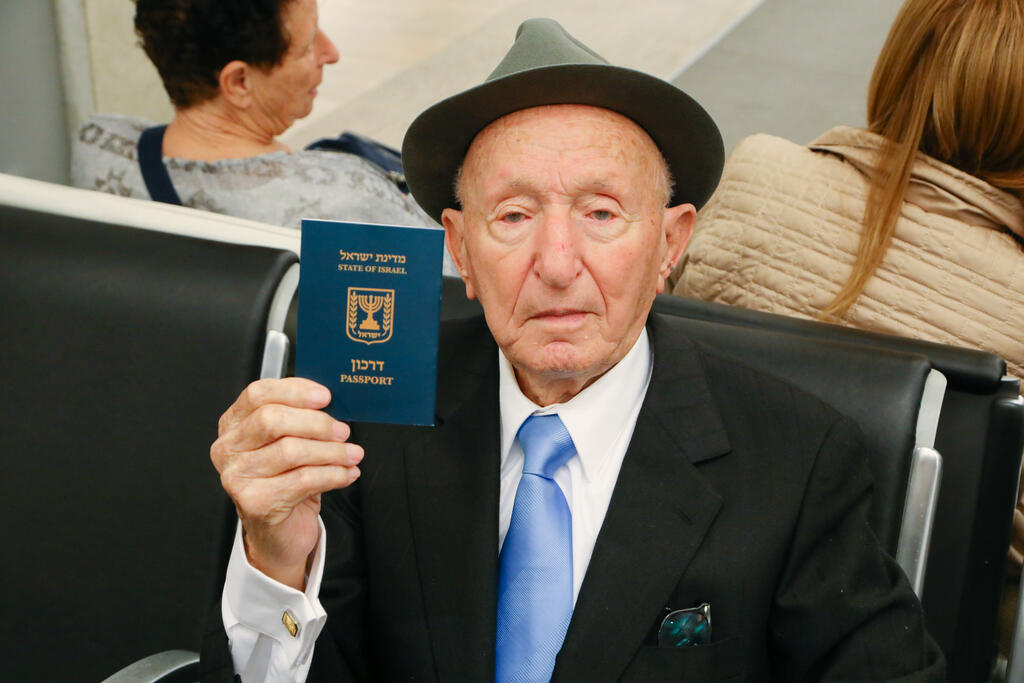
Yehuda Aharon Widawski with his Israeli passport
Only Widawski and his brother Yehoshua survived the selection. After a short period at Auschwitz, they were transferred to the Friedland forced labor camp near Breslau, where prisoners worked at a German factory assembling aircraft wings.
Widawski recalled that when he and other prisoners were asked about their professional skills, everyone claimed to be an engineer, factory worker or aviation specialist. He alone admitted that he was a merchant.
“I was convinced that honesty would cost me my life,” he told Ynet. “But to my surprise, the German manager shouted: ‘You are all liars. There is only one honest man here. Give him a double portion of hot food.’”
Widawski became the informal leader of the group. When the Germans raised their production quota from six aircraft wings a day to eight, he devised a plan under which the prisoners would set aside two completed wings so that, whenever production fell short, they could use them to make up the difference and appear to have met the quota.
Alongside hunger and the physical burden of the work, the prisoners were forced to make an exhausting daily journey to and from the factory.
“Every day we walked nine kilometers each way,” Widawski recalled. “It was terrible, but we lived with the hope that we would get through it.” The ordeal ended on May 9, 1945, when the camp was liberated by Red Army soldiers.
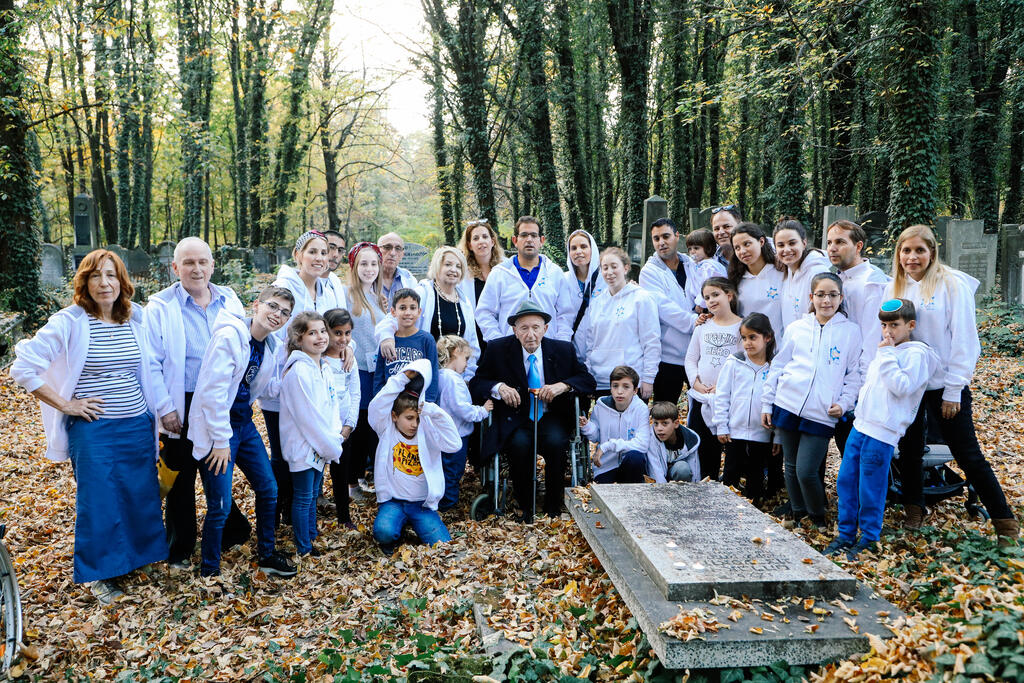
Widawski at the Jewish cemetery in Lodz, where he restored thousands of gravestones
Widawski returned to Lodz after the war and married Dobrish, née Wassercug, who had survived alongside her brother Menashe and their mother. Their son Avraham was born in Poland.
In 1950, the family immigrated to Israel and settled in Tel Aviv, where their daughter Leah was born and named after her grandmother who had been murdered in the Holocaust.
Nearly three decades later, in 1978, Widawski decided to return to Poland, then still behind the Soviet Iron Curtain.
He was stunned by what he found. The Nazis, he discovered, had not only destroyed Jewish communities and seized their property but had also devastated Jewish cemeteries across the country.
A search for his grandmother’s grave in the neglected Jewish cemetery in Lodz eventually brought Widawski to the city’s mayor, who granted him access to municipal archives.
Using the records he obtained, Widawski began mapping the enormous section of the cemetery where victims of the Lodz Ghetto had been buried during the war.
Nearly 200,000 Jews were buried at the cemetery over roughly two centuries. Between 1939 and the liquidation of the ghetto in 1944, about 50,000 Jews were buried there.
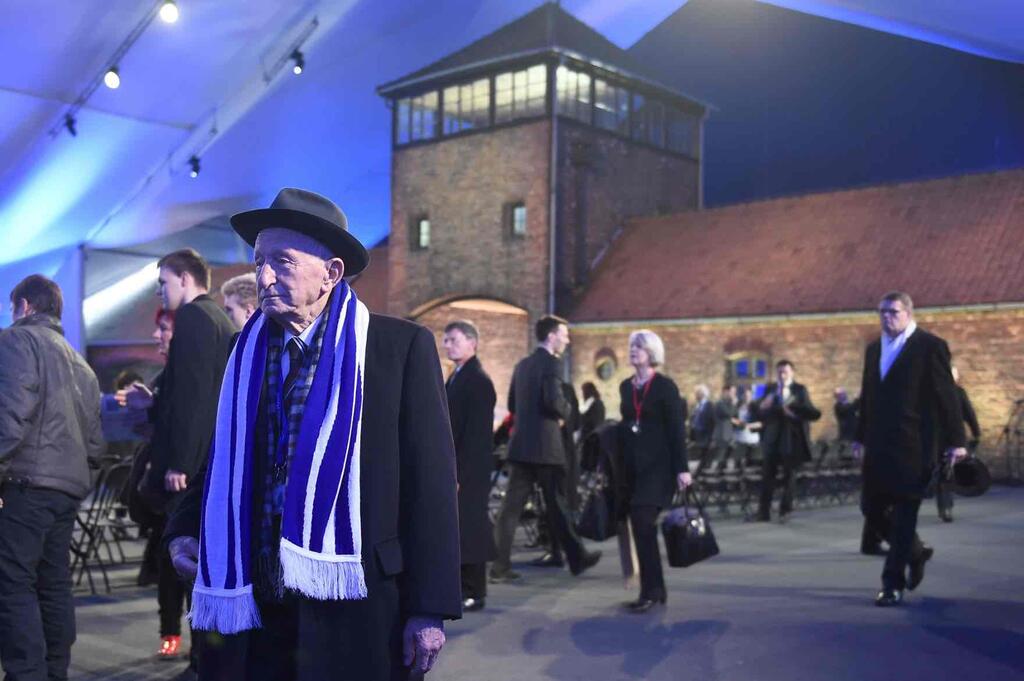
Widawski at a ceremony in Auschwitz
With the help of surviving documentation, Widawski succeeded in identifying and erecting gravestones on more than 3,000 graves.
In the Polish town of Sochaczew, he located the grave of Rabbi Avraham Bornstein, the first Sochatchov rebbe and author of Avnei Nezer, and helped establish an ohel, a structure traditionally built over the graves of prominent rabbis, at the site. Rabbi Shmuel Bornstein, author of Shem MiShmuel and the second Sochatchov rebbe, is also buried there.
Beginning in 1978, Widawski traveled to Poland dozens of times in an effort to preserve more Jewish cemeteries and graves. Among his projects was the restoration of the ohel over the grave of Rabbi Israel Taub, the first Modzitz rebbe, known by the title of his work Divrei Yisrael.
His extensive connections in Poland made him a prominent figure in efforts to preserve Jewish burial sites, and many people seeking family graves or attempting to recover property stolen during the Holocaust turned to him for help.
His work received national recognition in 2012, when Yad Vashem selected him to light a torch at Israel’s official Holocaust Remembrance Day ceremony.
President Isaac Herzog mourned Widawski on Sunday, recalling meeting him when he was 104. “I was saddened to hear of the passing of Yehuda Aharon Widawski, of blessed memory, an Auschwitz and Nazi camp survivor, at the age of 107,” Herzog said.
“When he was 104, I had the privilege of hosting Yehuda at the President’s Residence together with his wonderful family. I was moved to hear his life story and about his decision to return to Poland years after immigrating to Israel in order to search for his grandmother’s grave.”
“That search became his life’s work,” Herzog continued. “For decades, Yehuda worked to locate and restore Jewish cemeteries and graves in Poland and helped identify more than 3,000 graves.”
“Yehuda once said that his revenge on the Nazis was that they lost, and that we have the State of Israel,” Herzog said. “Indeed, his life was a remarkable testament to the victory of life, remembrance and national rebirth. May Yehuda’s memory be blessed.”