


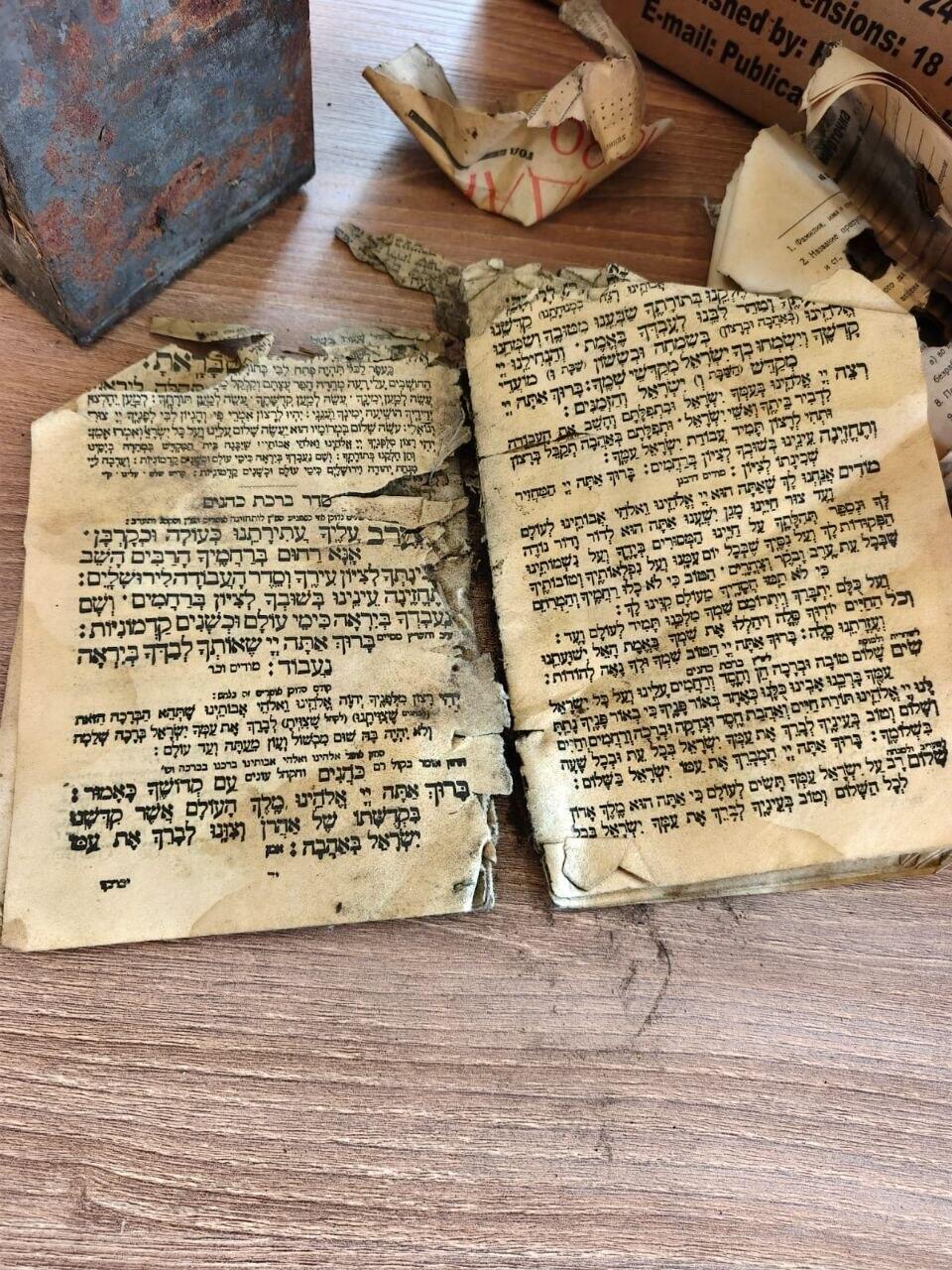
During renovation work at a Jewish educational center in the Russian city of Kostroma, workers discovered a rare historical artifact hidden behind wooden panels on an exterior wall: a prayer book containing Chabad’s “Meah Shearim” machzor, or High Holiday prayer book, printed in 1913 in a one-time edition. The book, apparently concealed for decades, offers a glimpse into the life of the local Jewish community during a period when Soviet authorities sought to suppress religious life.
The discovery was made last Friday during work to restore the exterior walls of a historic wooden building. Workers climbed the scaffolding and began dismantling the wooden beams when they suddenly noticed the prayer book hidden behind them.
At the time, Chabad emissary Rabbi Nissan Ruppo of Kostroma was visiting Chabad-Lubavitch headquarters at 770 Eastern Parkway in New York.
“The workers on the scaffolding began dismantling the wooden beams and suddenly a rare prayer book from 1913 was revealed to them,” he said. “We believe someone took a ladder and hid the book behind the beams on the outside of the building. I was very, very moved when I heard the news. We intend to display this book in the community museum in the city.”
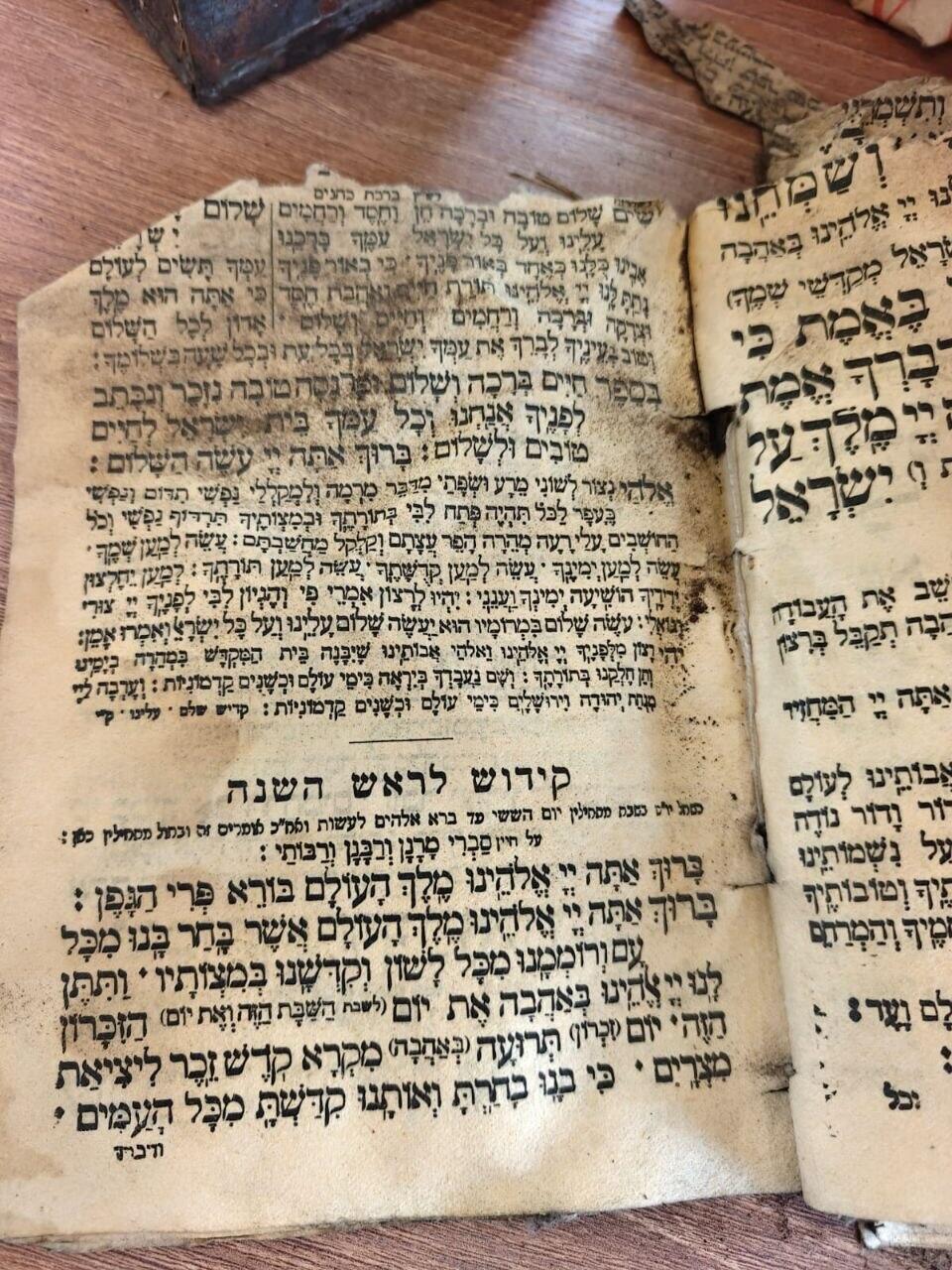
Rosh Hashanah Kiddush
(Photo: Mendy Mor Yosef)
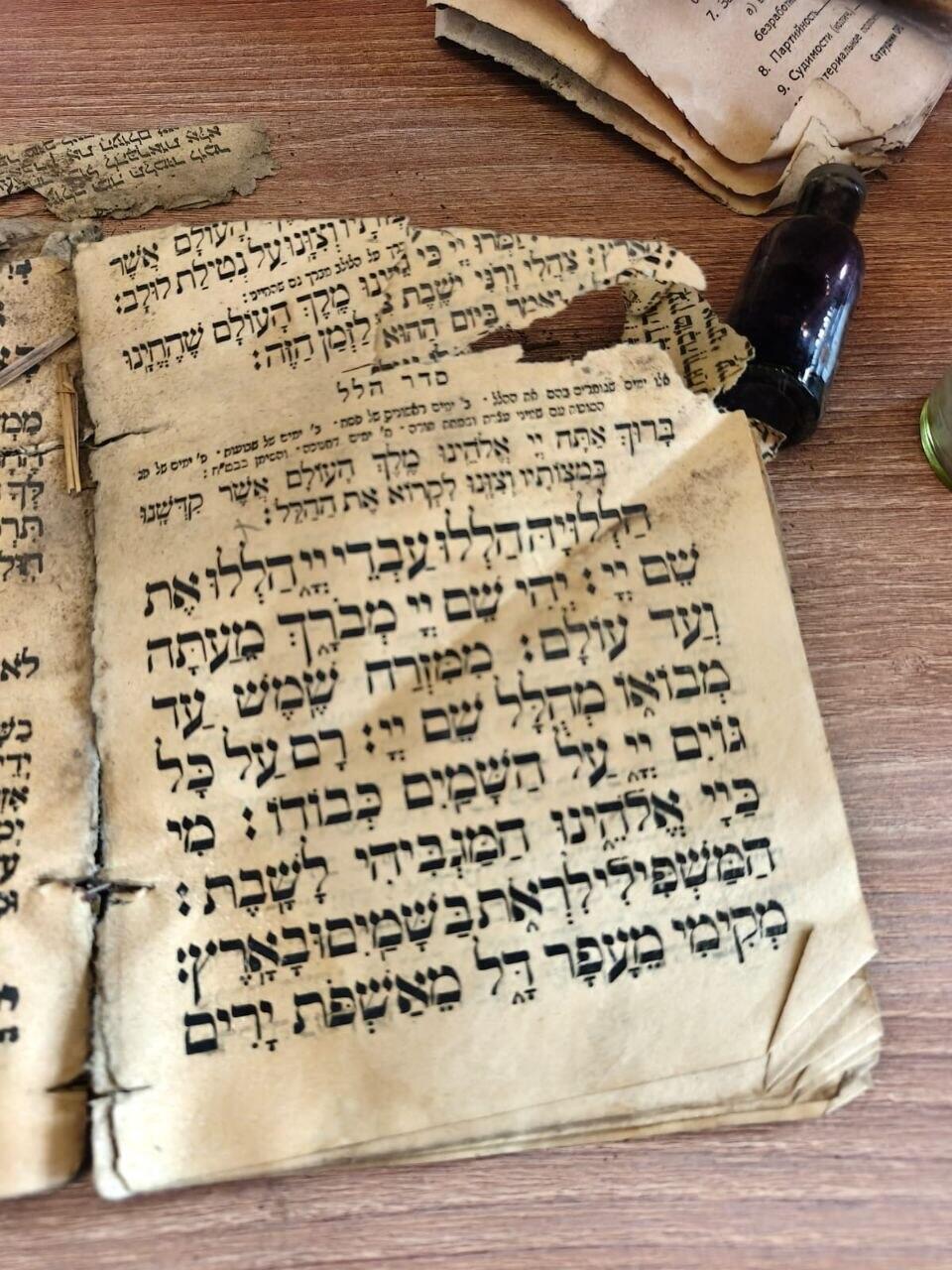
Hallel service in the prayer book
(Photo: Mendy Mor Yosef)
The book contains several dozen pages. Some have survived intact, while others were stained or torn over the years. It is a prayer book containing Chabad’s “Meah Shearim” machzor, printed in 1913 to mark 100 years since the death of Rabbi Shneur Zalman of Liadi, the founder of Chabad Hasidism, who died in 1813.
The building where the book was found was constructed in 1880 and purchased in 1892 for the city’s rabbi at the time, Rabbi Zvi Hirsch Schneiderman. In 1903, construction began on the city’s central synagogue in its courtyard, and the building was completed in 1907.
In 1930, Soviet authorities confiscated the entire complex, which included the synagogue, the rabbi’s residence and the educational center. Only beginning in 1994 did authorities gradually start returning the buildings to the Jewish community.
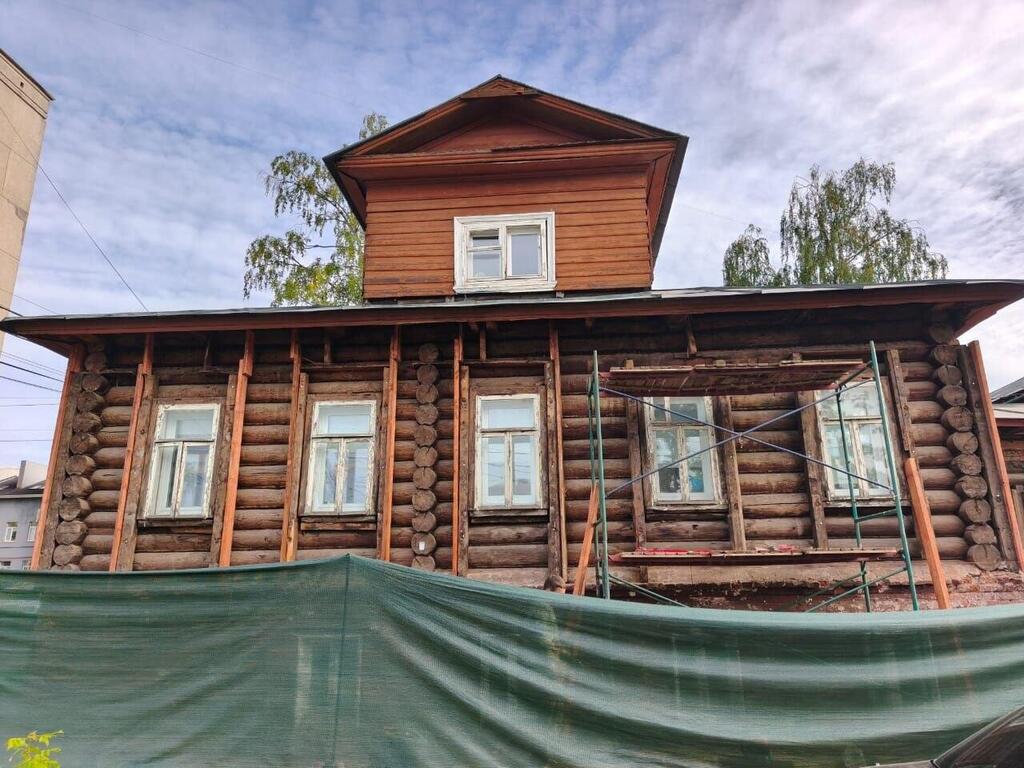
The building where the prayer book was found
(Photo: Mendy Mor Yosef)
The rabbi’s former residence, which today serves as an educational center housing a kindergarten and day school, was renovated inside. In recent years, however, its exterior walls began to deteriorate, forcing the community to undertake restoration work.
“We had to remove the outer layer and repair the walls,” Ruppo said.
It was during that work that the book was uncovered, transforming in an instant from a hidden object into an artifact of historical and emotional significance for the community.