

This week, on the 18th of Elul (Thursday), marks the anniversary of the death of the Maharal of Prague, who during his lifetime authored major works and sermons on Jewish law, aggadah, the Bible and more. His thought influenced many streams within Judaism, including Hasidism, the Jewish Enlightenment and Religious Zionism.
To mark the occasion, Jews from around the world gather in Prague for a memorial event in his honor. The rabbi, who was both widely known yet remains in many ways an enigma, left behind abundant writings but never revealed where he had acquired his vast knowledge or from whom he studied. Nor do we know with certainty what he looked like.
The Maharal, Rabbi Judah Loew ben Bezalel, was born in Poland in the first half of the 16th century and rose to prominence as a rabbi in his homeland. He later moved to Moravia, in today’s eastern Czech Republic, where he served as chief rabbi of several communities. From there he relocated to Prague and became head of a yeshiva. After several years in Poland, where he served as rabbi of Poznan, he returned to Prague and assumed the role of the city’s chief rabbi, the position with which he is most closely associated.
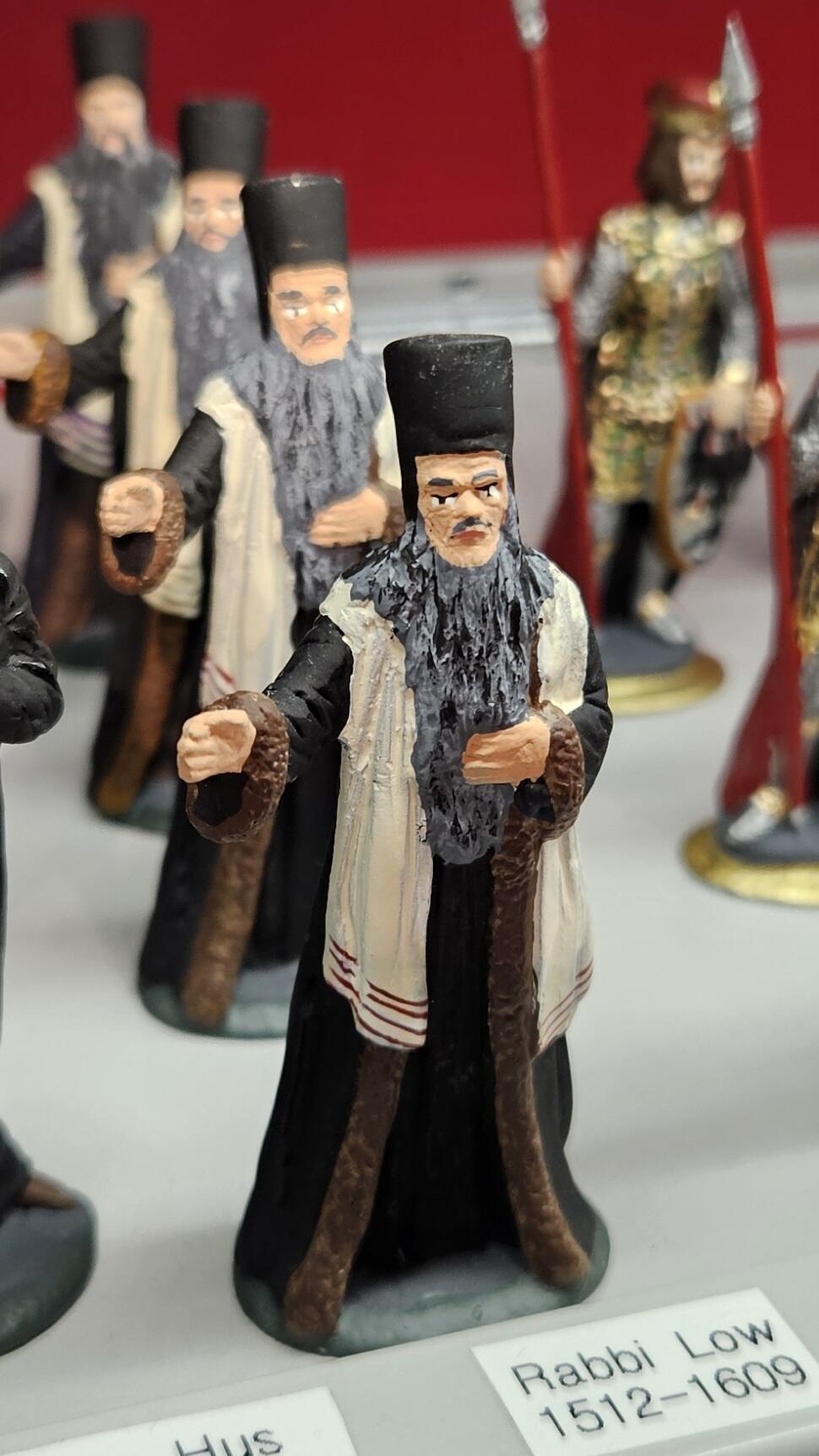
As a pioneering rabbi and thinker, his figure also entered the realm of legend, tied to the story of the creation of the Golem of Prague — a tale that made him one of the most famous rabbis in Jewish folklore and even in Czech popular tradition.

Golem of Prague figurines in a souvenir shop in Prague
(Photo: Dor Ben-Ari)
Because the Maharal came to be regarded as a symbol of Prague, a statue of him was placed in 1914 on the façade of the city’s new city hall, which still houses the mayor and city council. The work was created by Ladislav Šaloun, one of the Czech Republic’s most celebrated sculptors, whose art adorns many of Prague’s streets. Šaloun portrayed the rabbi as a magician or alchemist in the style of the city’s 16th-century mystics — a product of the artist’s imagination, more myth than realism.
Although the Maharal is well known as a mystical figure in both Jewish and Czech culture, a study of his writings and his approach to Kabbalah only deepens the mystery. Strikingly, among the many areas in which he wrote, he never addressed Kabbalah directly, and there is no mention of the Golem in his works.
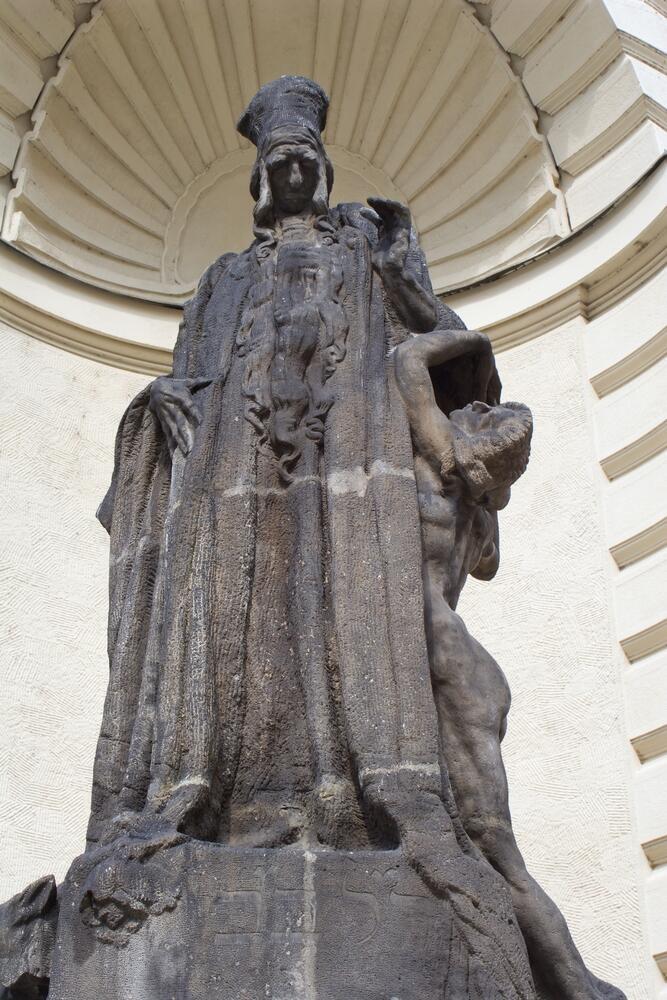
A statue of the Maharal of Prague was placed in 1914 on the façade of the city’s new city hall
(Photo: Shutterstock)
While tradition linked him with the creation of the Golem, his writings contain only scattered references to Jewish esoteric thought, with no systematic treatment. This may reflect the norms of his era, on the eve of the rise of the Kabbalah of Rabbi Isaac Luria, when only a handful of scholars engaged with mystical teachings and it was uncommon to write about or publish them.
Only after the Maharal’s death did Prague become a major center for the printing and dissemination of Kabbalistic works. By its very nature, Jewish mysticism was reserved for a select few, leaving us unable to gauge how deeply the Maharal himself was engaged with it.
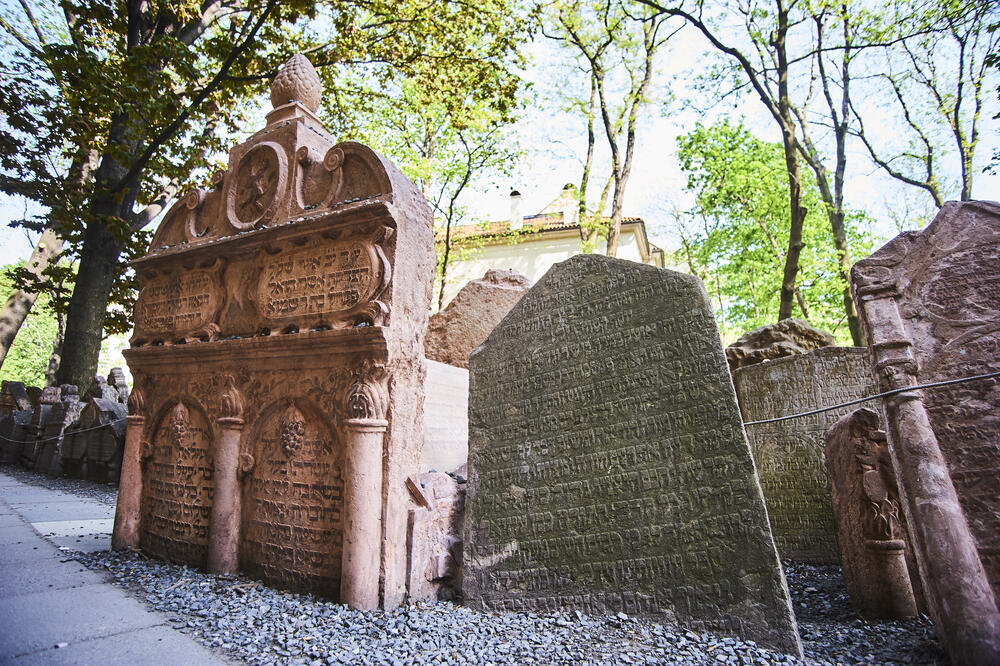
The Maharal’s grave in the Old Jewish Cemetery in Prague
(Photo: Petr Bonek/shutterstock.com)
A rare glimpse comes from his disciple David Gans, in his book Tzemach David. In 1592, the Maharal was invited to the Prague palace of Holy Roman Emperor Rudolf II. Gans, aware of the restrictions on revealing mystical secrets, recorded only that the two spoke of matters “sealed, hidden and concealed.” These three words remain the sole contemporary testimony hinting at the Maharal’s involvement with Kabbalah — a tantalizing clue that leaves more questions than answers about one of Judaism’s most enduringly enigmatic figures.
An elitist study hall
In fact, the Maharal’s greatness in Prague and his enduring influence came less from his role as a mystic or the city’s chief rabbi than from his position as head of its study hall. His educational work is linked to the first mention in Jewish history of the kloyz he founded in Prague — an elitist, independent study house separate from the local community. It was intended for advanced scholars only, and some of the greatest rabbinic minds of Ashkenazi Jewry studied and taught there.
Beyond that, with the rise of Hebrew printing and drawing inspiration from Sephardic Jewry, the Maharal developed his own system of study. According to this method, Jewish learning should begin with the Bible, continue with the Mishnah, and only later culminate in the Talmud. This approach became the foundation of what is today one of the most familiar patterns of study in the Jewish world, and may even have elevated the standing of Bible study in modern Judaism.
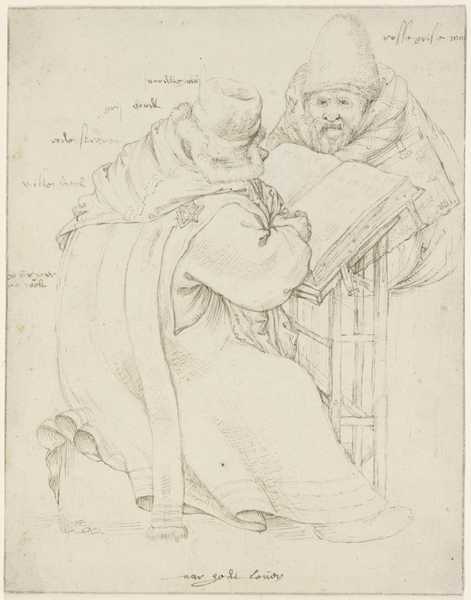
Two Scholars by Dutch painter Roelant Savery
Thus, in contrast to the statue of the Maharal that depicts him as a sorcerer — an imaginary image that for many became his actual likeness — there may exist a painting that captured his real appearance, or at least someone resembling him more closely. The work was created by the Dutch painter Roelant Savery, who served under Emperor Rudolf II as part of the imperial court’s relocation to Prague. During his time in the city, Savery often depicted what Prague was truly made of: its people.
As part of his journey, he entered the Jewish quarter and painted two men in a synagogue under the title “Two Scholars.” Their foreign dress and the Star of David badges they wore leave little doubt they were Jews, most likely pictured in study or prayer. The clothing appears to be that of Polish Jews, the Maharal’s country of origin. Was Savery portraying two rabbis? Could one of them be the Maharal himself? We may never know. But at the very least, the painting offers a clearer impression of how a Jewish scholar in Prague’s ghetto dressed and looked during the Maharal’s time.
Comparing Savery’s painting with the city hall statue, we see two versions of the Maharal — much as he is remembered as a dual figure. On one hand, the Maharal of legends and miracles; on the other, the learned rabbi of books and the study hall. Both aspects, embodied in one man, left a profound mark on Jewish life that endures to this day.
- Dor Ben-Ari is a tour guide and historian living in Prague.